In Bangkok, wastewater treatment plant costs vary widely by scale and technology. For a 50 m³/day decentralized plant, CAPEX starts at THB 1.9M (OPEX: THB 0.8–1/m³), while a 40,000 m³/day centralized facility can exceed THB 40B (OPEX: THB 3.50/m³, per BMA 2024). Collection systems alone account for >60% of contract value, and life cycle cost assessments (LCCA) show decentralized systems have lower environmental costs but higher net cash flow per m³. This guide provides tech-specific cost breakdowns, supplier benchmarks, and an ROI calculator to help buyers optimize investments.
Why Bangkok’s Wastewater Treatment Costs Are Opaque—and How to Fix It
Land acquisition for wastewater treatment in Bangkok industrial zones currently averages THB 50,000 per square meter, often representing the single largest variable in decentralized project CAPEX. For a factory manager in a food processing plant near Samut Prakan, this opacity manifests as a nightmare of conflicting quotes. One vendor may propose a 100 m³/day system for THB 2M, while another quotes THB 8M for the same capacity. Without a standardized breakdown of wastewater treatment plant cost in Bangkok, buyers are left unable to distinguish between a "budget" system that will fail compliance within two years and a high-performance system designed for long-term ROI.
The primary drivers of this price volatility are unique to the Bangkok Metropolitan Administration (BMA) region. High land scarcity forces many industrial players to consider underground or high-density vertical systems, which escalate civil engineering costs. BMA permitting delays, which can range from 6 to 12 months, add significant "soft costs" that are rarely detailed in initial equipment quotes. According to historical data from the Yannawa plant, collection systems—the pipes and pumps leading to the plant—often dominate the budget, accounting for over 60% of the total contract value.
To fix this lack of clarity, procurement managers must move beyond "price per unit" and adopt a structured framework. This involves separating the initial capital expenditure (CAPEX) from the long-term operational expenditure (OPEX), while accounting for Bangkok-specific compliance standards. By utilizing technology-specific parameter tables and a localized ROI calculator, plant engineers can justify budgets to stakeholders based on total lifecycle costs rather than just the lowest initial bid.
Wastewater Treatment Plant Cost Framework: CAPEX vs OPEX Breakdown for Bangkok Buyers
Collection systems for centralized wastewater projects in Bangkok account for over 60% of total contract value, shifting the primary financial burden from treatment technology to civil infrastructure. This high ratio is largely due to the complexity of Bangkok's "klong" (canal) networks and the necessity of routing sewers along main roads where daytime work is restricted. For decentralized industrial systems, the CAPEX breakdown is more equipment-heavy, typically ranging from THB 50,000 to THB 100,000 per m³/day of capacity.
| Cost Category | Percentage of Total Project | Bangkok-Specific Considerations |
|---|---|---|
| Equipment (CAPEX) | 40% – 60% | Includes MBR modules, DAF units, and pumps. Import duties may apply for high-spec membranes. |
| Civil Works | 20% – 30% | High costs for underground reinforced concrete tanks due to Bangkok’s soft clay soil. |
| Collection/Piping | 10% – 20% | Can exceed 60% for municipal contracts; lower for on-site industrial decentralized plants. |
| Permitting & Legal | 5% – 10% | BMA compliance certification and EIA (Environmental Impact Assessment) fees. |
Operational expenditure (OPEX) is where the long-term viability of the investment is determined. In Bangkok, the BMA currently proposes a sewage treatment rate of THB 3.50/m³, which serves as the benchmark for industrial users evaluating whether to treat on-site or discharge to a municipal sewer. Energy consumption typically represents 30% to 50% of OPEX, followed by chemical dosing (20%–30%) and sludge disposal. For hazardous industrial sludge, disposal costs in Thailand range from THB 500 to THB 1,500 per ton, making efficient sludge dewatering systems for Bangkok’s wastewater plants a critical component for reducing daily running costs.
Scale economies significantly influence these figures. While a 100 m³/day decentralized plant may have a CAPEX of THB 5M–10M, a centralized facility treating 40,000 m³/day benefits from an OPEX drop of approximately 30% per cubic meter once the 10,000 m³/day threshold is crossed. However, for most Bangkok-based industrial buyers, the decentralized model remains the most viable due to the lack of immediate access to centralized sewer connections in newer industrial zones.
Tech-Specific Costs: MBR vs DAF vs A/O Systems for Bangkok Projects
Membrane Bioreactor (MBR) systems in Bangkok require a CAPEX of THB 80,000 to 120,000 per m³/day but reduce land footprint by 60% compared to conventional activated sludge. This technology is increasingly favored in the Bangkok Metropolitan Region because it produces effluent high enough in quality (COD <50 mg/L, TSS <5 mg/L) to meet international water reuse standards. For facilities aiming for zero-liquid discharge or those limited by THB 50,000/m² land costs, MBR systems for Bangkok’s land-constrained sites offer the most efficient use of space.
| Technology | CAPEX (THB/m³/day) | OPEX (THB/m³) | Best Use Case in Bangkok |
|---|---|---|---|
| MBR (Membrane Bioreactor) | 80,000 – 120,000 | 1.2 – 1.8 | Water reuse, luxury malls, high-density industrial zones. |
| DAF (Dissolved Air Flotation) | 30,000 – 60,000 | 0.8 – 1.2 | Food processing, textile, and metalworking pre-treatment. |
| A/O (Anaerobic/Oxic) | 40,000 – 70,000 | 0.5 – 0.9 | Municipal sewage and large-scale worker dormitories. |
| SBR (Sequencing Batch Reactor) | 45,000 – 75,000 | 0.7 – 1.1 | Variable flow industrial sites with limited space. |
For industrial pre-treatment, particularly in sectors like food and beverage or cosmetics, DAF systems for Bangkok’s industrial pre-treatment are the industry standard. These systems excel at removing Total Suspended Solids (TSS) and Fats, Oils, and Grease (FOG), typically achieving 95% and 90% removal rates respectively. DAF systems have a lower CAPEX than MBR but require a consistent investment in chemical coagulants and polymers, which can fluctuate based on local supply chain pricing in Thailand. For a detailed technical comparison, buyers should consult a DAF system selection guide for Bangkok’s industrial buyers to match equipment specs with their specific influent characteristics.
When the primary goal is cost-effective treatment of domestic-strength sewage for large residential or commercial complexes, the WSZ series integrated sewage treatment systems (A/O technology) provide the lowest OPEX. These systems are often installed underground to preserve surface land value, meeting BOD <30 mg/L standards with minimal mechanical intervention. To further optimize costs, integrating high-efficiency sludge management, such as a plate-frame filter press, can reduce the volume of waste transported off-site, directly impacting the bottom line.
Centralized vs Decentralized: Cost, Compliance, and Deployment Trade-offs
Decentralized wastewater treatment systems in Bangkok achieve a lower lifecycle cost (LCCA) for environmental impact compared to centralized systems, despite higher individual net cash flow requirements. While centralized plants like the Thon Buri facility benefit from massive scale, the "C-fertilizer" scenario (converting sludge to fertilizer) shows a financial deficit of approximately -5.58 THB/m³ when environmental externalities are factored in. For the private investor, the choice between connecting to a BMA centralized plant and building a decentralized system often comes down to the "time-cost of money."
| Feature | Centralized (BMA) | Decentralized (On-site) |
|---|---|---|
| CAPEX | THB 1M – 2M per m³/day (Total) | THB 50,000 – 100,000 per m³/day |
| Deployment Time | 5 – 10 Years (Infrastructure dependent) | 6 – 12 Months |
| Land Requirement | 0.5 – 1.0 m² / m³ | 0.1 – 0.3 m² / m³ (with MBR) |
| Compliance Control | Subject to BMA grid reliability | Direct control over effluent quality |
Compliance standards in Bangkok are becoming stricter as the 2025 BMA effluent guidelines take full effect. Centralized systems generally meet BOD <20 mg/L and TSS <30 mg/L standards, but decentralized systems are often required to go further, especially if the water is being reused for cooling towers or irrigation. In these cases, advanced disinfection is required. Utilizing ClO₂ generators for Bangkok’s decentralized disinfection ensures that effluent meets WHO reuse standards (COD <50 mg/L) without the residual toxicity associated with traditional chlorine gas. This is particularly relevant for hospital wastewater treatment compliance in Southeast Asia, where pathogens must be eliminated before discharge into urban waterways.
The deployment timeline is perhaps the most significant non-monetary cost. The Yannawa plant experience highlighted that even with a completed treatment facility, delays in the collection system can render the plant under-utilized for years. For a Bangkok factory needing to meet immediate regulatory pressure or expand production, a decentralized modular system is the only way to ensure compliance within a single fiscal year.
Bangkok Supplier Benchmarks: CAPEX, OPEX, and Selection Criteria
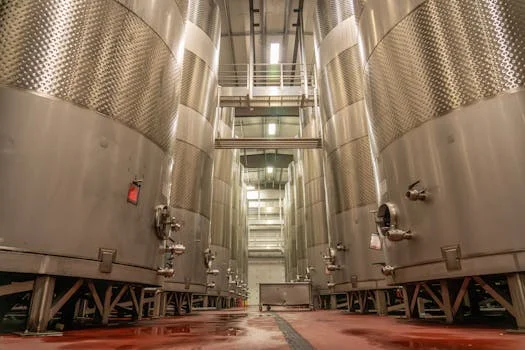
Energy-efficient wastewater treatment designs in Thailand can reduce OPEX to THB 0.8–1.2 per m³, significantly lower than the standard BMA sewer tariff of THB 3.50 per m³. When evaluating wastewater treatment plant suppliers in Thailand, it is vital to distinguish between firms that offer "off-the-shelf" modular tanks and those providing custom-engineered solutions. Modular systems typically offer a 15% lower CAPEX (THB 50,000–80,000/m³) but may suffer from higher OPEX if the blowers and pumps are not optimized for Bangkok's high ambient temperatures and humidity.
| Supplier Type | Typical CAPEX (100 m³/d) | OPEX Efficiency | Support Level |
|---|---|---|---|
| Modular/Integrated | THB 5M – 7M | High (Automated) | Standard Warranty |
| Custom Civil/Engineered | THB 8M – 12M | Variable (Manual) | Project-Specific |
| Low-Cost/Local Assembly | THB 3M – 5M | Low (Chemical Intensive) | Limited |
Selection criteria for Bangkok projects must prioritize OPEX transparency. A common "red flag" in quotes is the omission of sludge disposal plans and hidden labor costs. A supplier that does not account for the THB 500–1,500/ton hazardous waste disposal fee is effectively under-quoting the lifecycle cost by 15-20%. Buyers should demand a 24-month OPEX projection that includes energy (kWh/m³), chemical consumption (g/m³), and a 24/7 local service contract. given the complexity of bangkok wwtp compliance standards, suppliers must demonstrate a track record of successful BMA inspections and provide case studies of similar industrial wastewater treatment cost in Thailand.
ROI Calculator: How to Justify Your Wastewater Treatment Investment in Bangkok
The average payback period for industrial wastewater reuse investments in Bangkok ranges from 5 to 9 years, depending on current BMA sewer fees and Thailand Board of Investment (BOI) tax incentives. To justify a wastewater treatment plant capex breakdown to a board of directors, engineers must quantify both the avoided costs and the potential for resource recovery. For example, a 100 m³/day MBR system might require an THB 8M investment, but if it allows a factory to reuse 80% of its water, the savings on municipal water purchases and sewer fees can be substantial.
| ROI Step | Calculation Formula | Example (100 m³/day MBR) |
|---|---|---|
| 1. Total CAPEX | Equipment + Civil + Permitting | THB 8,000,000 |
| 2. Annual OPEX | THB/m³ × Volume × 365 | THB 1.2 × 100 × 365 = THB 43,800 |
| 3. Annual Savings | (Sewer Fee + Water Cost) × Volume × 365 | (THB 3.50 + THB 15) × 100 × 365 = THB 675,250 |
| 4. Simple Payback | CAPEX / (Savings - OPEX) | 8,000,000 / 631,450 = 12.6 Years* |
| 5. BOI Adjusted | Payback with 3-year Tax Holiday | ~8.5 Years |
*Note: Payback periods are significantly shortened when considering the avoidance of regulatory fines, which can reach THB 10,000+ per day for non-compliance in Bangkok industrial zones.
To optimize the ROI, buyers should investigate the Thailand Board of Investment (BOI) incentives. Many water conservation and environmental protection projects qualify for a 3-year corporate income tax exemption on 100% of the investment. When these tax savings are combined with the reduction in BMA sewage fees and the lower environmental costs of decentralized systems, the "net present value" of the project often becomes positive much faster than a standard equipment depreciation schedule would suggest.
Frequently Asked Questions
What is the average cost per m³ for wastewater treatment in Bangkok?
The cost ranges from THB 0.8 to THB 3.50 per m³. Decentralized industrial systems typically operate at the lower end (THB 0.8–1.2/m³) through efficient on-site technology, while the BMA’s standard municipal sewer rate is THB 3.50/m³.
How much does a 50 m³/day wastewater treatment plant cost in Bangkok?
A 50 m³/day plant typically requires a CAPEX of THB 1.9M to THB 5M. A basic A/O system starts near THB 1.9M, while a high-performance MBR system for water reuse will range from THB 4M to THB 5M due to membrane and automation costs.
What are the hidden costs of wastewater treatment plants in Bangkok?
The most significant hidden costs are collection systems (>60% of contract value), land costs (THB 50,000/m²), and sludge disposal (THB 500–1,500/ton). Additionally, the 6–12 month BMA permitting process can add substantial indirect costs.
Is decentralized wastewater treatment cheaper than centralized in Bangkok?
Yes, in terms of initial CAPEX per project (THB 50k–100k/m³ vs THB 1M–2M/m³ for centralized infrastructure) and OPEX. However, centralized systems may offer a better long-term LCCA deficit (-5.58 THB/m³) when managed at a massive municipal scale.
What are the best wastewater treatment technologies for Bangkok’s industrial zones?
DAF (Dissolved Air Flotation) is best for industrial pre-treatment (95% TSS removal), while MBR (Membrane Bioreactor) is preferred for sites with limited land or those requiring high-quality water for reuse. A/O systems remain the most cost-effective for simple domestic sewage treatment.