What Makes Soft Drink Wastewater Difficult to Treat
Soft drink bottling wastewater must be characterized by source because the pollutant load changes with the production campaign. SSI Aeration identifies chemical oxygen demand (COD), biological oxygen demand (BOD), and total suspended solids (TSS) as the principal pollutant groups, but these umbrella terms can conceal compounds that respond differently to biological treatment, flotation, filtration, and membrane separation.
The potential contaminants are extensive: fructose, fats, artificial sweeteners, flavoring agents, dissolved sugars, coloring agents, oils, fruit juice concentrate, preservatives, sodium, detergents, sucrose, syrups, potassium, wasted drink, nitrates, and machine lubricants. Lactose, grease, caustics, and bicarbonates may also be present, according to SSI Aeration. Their presence and relative concentration depend on how product is handled, cleaned, spilled, and diverted into the wastewater system.
Map these compounds to the relevant production stages. SSI Aeration identifies bottle washing, heating, cooling, product filling, cleaning in place, manufacturing, blending, packaging, carbonizing, and floor sanitizing as potential contamination points, with bottle washing generally one of the largest contributors. Product changeovers add another variable because shared lines must be rinsed between products.
Before comparing IFAS with alternative equipment, request source-specific average and peak flow, COD, BOD, TSS, pH, temperature, fats, oils and grease (FOG), and proposed reuse flow. Include production days, campaign schedules, cleaning frequency, syrup-handling losses, and any stream diverted to reuse. The supplied research does not provide soft-drink-specific IFAS sizing ranges, so a defensible equipment size cannot be inferred from production volume alone. The industrial ETP and DAF selection guide provides a broader framework for separating physical, biological, and polishing duties.
How IFAS Fits into a Soft Drink Treatment Plant
IFAS combines suspended-growth activated sludge with fixed-film media carriers, allowing biological treatment to retain both freely suspended microorganisms and carrier-attached biomass. Dataintelo reports in its October 2025 IFAS market research that this configuration supports BOD removal, nitrification, and total nitrogen reduction under the high-strength, variable-load conditions characteristic of food and beverage manufacturing. That makes IFAS relevant to a biological retrofit, but it does not make it a complete treatment train.
A practical sequence begins with source control, followed by flow and load equalization. Screening and solids removal protect downstream equipment, while oil and FOG removal may be necessary when the stream contains concentrated product, lubricants, or cleaning chemicals. Biological treatment follows; clarification or membrane separation then removes biomass. Disinfection is added where required, and the final destination determines any additional polishing.
Condorchem identifies bottle washing, boiler purges, pasteurizer rinsing, CIP and machine rinsing, and product changeover rinsing among the main soft-drink effluents. Each needs separate assessment because the plant average may conceal a short, high-strength slug that upsets equalization and biological treatment.
IFAS addresses biodegradable organics and nitrogen; it does not independently remove every oil, suspended solid, dissolved salt, or polishing requirement. Upstream DAF pretreatment for soft drink wastewater can handle floatable material, while downstream clarification, filtration, or membranes may be needed.
| Process stage | Primary engineering duty | Selection evidence required |
|---|---|---|
| Source control and equalization | Contain concentrated wastes and balance flow and load | Stream-by-stream flow, COD, BOD, TSS, pH, temperature, and FOG |
| Screening and solids removal | Protect biological and membrane equipment | Solids characteristics, peak flow, screen size, and grit load |
| Oil or FOG removal | Remove floatable material that can impair biology | FOG profile and requirement for DAF pretreatment |
| IFAS biological treatment | Remove biodegradable organics and, where configured, nitrogen | Organic load, nutrients, temperature, aeration capacity, and carrier arrangement |
| Clarification or membrane separation | Separate biomass and control solids carryover | Target effluent quality and downstream reuse or discharge constraints |
| Disinfection and polishing | Address microbial and dissolved-water-quality requirements | Reuse destination, permit conditions, and product-contact controls |
If the required outcome is membrane-quality solids separation, an MBR wastewater treatment system may provide a different process boundary from an IFAS retrofit. The correct comparison is by final duty, not by generic equipment category.
Compare IFAS, MBR, Anaerobic Treatment and DAF
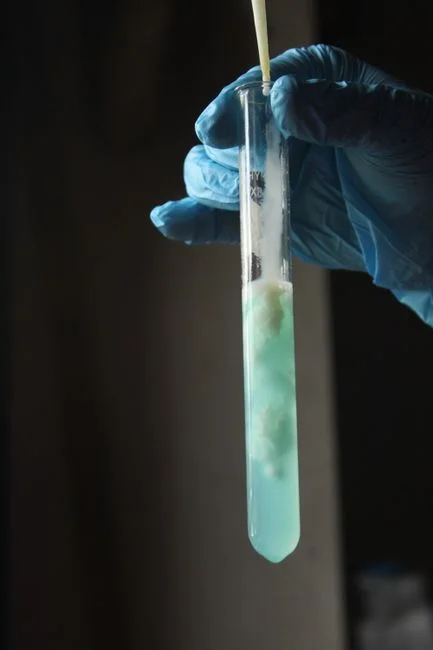
IFAS, MBR, anaerobic treatment, and DAF perform different jobs: IFAS and MBR provide biological treatment, anaerobic treatment reduces COD without aeration, and DAF removes floatable and suspended material. The best train may use more than one of them.
For an existing activated-sludge basin, IFAS is primarily a retrofit-oriented way to add biological capacity and enable nitrification or total nitrogen reduction. An MBR integrates activated sludge with submerged membrane separation, so it can combine biological treatment with solids separation in a more compact process. HydropureWater lists MBR capacities from 10 to 2,000 m³/day, filtration below 1 μm, and a footprint 60% smaller than conventional systems. These are catalog specifications, not guaranteed performance at a particular bottling plant.
Anaerobic treatment is a different biological route. Condorchem reports 85–90% COD reduction for UASB or EGSB systems and states that the process must be at least 25°C to work and perform well. Hot bottle washes, boiler purges, and labeler effluents may help satisfy that condition, but the temperature must be demonstrated at the reactor inlet and maintained through adverse periods.
DAF is pretreatment rather than the biological core of the train. HydropureWater’s catalog lists 4–300 m³/h across 13 standard models and identifies food processing as an application. DAF can remove oil, FOG, and suspended or colloidal solids before they interfere with biological treatment.
The strongest supplied reuse example comes from the IEOM Society International study on soft-drink wastewater. It combined MBR with antifouling nanofiltration and reported effective COD, BOD, and TSS reduction, supporting reuse for bottle washing, cooling towers, and irrigation. The study also reported a production-efficiency improvement of up to 40% for bottle-washing reuse. This is a study result, not a universal savings guarantee for every plant.
| Technology | Primary job | Strongest fit in the treatment train | Main decision issue |
|---|---|---|---|
| IFAS | Biological removal of biodegradable organics; nitrification and total nitrogen reduction where configured | Retrofit of a compatible activated-sludge basin | Basin geometry, carrier retention, aeration, mixing, and sludge withdrawal |
| MBR | Integrated biological treatment and membrane solids separation | Reuse destinations requiring low suspended solids or membrane-quality clarification | Membrane fouling, energy demand, cleaning, solids concentration, and capital cost |
| Anaerobic UASB or EGSB | High COD removal with low aeration demand | Warm, concentrated process streams | At least 25°C operating condition, retained biomass, and downstream polishing |
| DAF | Removal of oil, FOG, and suspended or colloidal solids | Upstream protection for biological or membrane equipment | Feed characteristics, recycle performance, sludge handling, and required removal duty |
IFAS and MBR are not mutually exclusive. An IFAS stage can feed clarification or an MBR, while the final selection depends on the required effluent quality and reuse destination.
Build a Treatment Train Around the Reuse Objective
Reuse quality must be defined as a destination-specific requirement before polishing equipment is selected. The IEOM study used MBR and antifouling nanofiltration to reduce COD, BOD, and TSS and supported reuse for bottle washing, cooling towers, and irrigation, with bottle-washing reuse associated with a production-efficiency improvement of up to 40%. Those destinations should not be treated as interchangeable because each introduces different exposure, process, or regulatory constraints.
Bottle washing requires control of residual organic material, suspended solids, and microbial accumulation within the washing system. Cooling towers require a stable water quality that avoids scaling, biological growth, and excessive organic loading. Irrigation introduces exposure and public-health considerations that do not apply to closed-loop service water. The supplied research does not establish universal reuse limits for every jurisdiction, so the buyer must obtain the quality specification for each intended use.
For service water or a less demanding reuse stream, evaluate whether clarified biological effluent is adequate before buying membrane polishing. Condorchem distinguishes pre-treated water used for services and process applications, and it notes that RO or nanofiltration reject water has a high salt concentration but little organic matter or suspended solids. Such reject streams should not be confused with high-COD production wastewater.
Available polishing steps have different purposes. Multi-media filtration is intended to remove suspended solids, turbidity, and colloids, including protection of downstream RO. Ultrafiltration is intended to remove bacteria, colloids, and suspended solids. An MBR wastewater treatment system combines biological treatment and membrane separation.
Where the train must protect reverse osmosis, multi-media filtration equipment addresses upstream solids removal; ultrafiltration systems provide a different membrane-separation barrier; and industrial reverse-osmosis equipment is a final desalination and dissolved-contaminant step rather than the primary biological reactor. Product-contact reuse also requires hygienic design, validation, and controls beyond bulk water chemistry.
Decide Between Retrofit and New Equipment
Dataintelo’s October 2025 market research reports that IFAS retrofits typically provide 30–50% greater volumetric treatment capacity and 20–35% lower sludge production than conventional systems. The same source states that retrofit capital cost is typically 40–65% lower than equivalent greenfield biological nutrient removal construction and that installation can be completed in months rather than years. These are reported market-level ranges for food-industry applications, not guaranteed results for soft drink bottling.
A retrofit is credible only if the existing asset can accept the process. Check available aeration-basin volume, structural capacity for carriers, media-retention screening, blower capacity, mixing, sludge withdrawal, maintenance access, and available footprint. Missing one of these elements can shift the comparison toward a new unit or a broader rehabilitation project.
New-build is more defensible when basin geometry is inadequate, equipment is incompatible, no viable aeration or retention system remains, major rehabilitation is required, or the existing plant cannot reliably produce the specified reuse quality. In those cases, a packaged biological system may offer a more controlled boundary than modifying a deteriorating asset.
Energy also affects the decision. Dataintelo reports that optimized IFAS typically consumes 15–25% less aeration energy per unit of BOD removed than alternatives such as MBR, while noting that operating conditions determine actual use. Site blower efficiency, airflow, head, dissolved-oxygen control, and loading must therefore be included in a project-specific comparison rather than applying the reported percentage directly.
The same source describes a broader market valued at $2.8 billion in 2025 and projected to reach $5.1 billion by 2034, representing a 6.9% CAGR during 2026–2034. These are market indicators, not plant performance figures. The IFAS energy consumption and ROI guide provides further context for evaluating retrofit economics.
| Decision test | IFAS retrofit is favored when | New equipment or broader retrofit is favored when |
|---|---|---|
| Existing basin | Volume, structure, and mixing can accept carriers and retention screens | Geometry is inadequate or the basin requires major rehabilitation |
| Aeration and utilities | Existing blowers and controls can meet the duty | Blower, oxygen-transfer, or utility upgrades dominate the project |
| Final quality | Existing clarification and polishing can meet the reuse requirement | Higher-quality reuse requires a new solids-separation or membrane train |
| Construction disruption | Short tie-ins are acceptable for an operating plant | Long shutdowns or extensive civil work are tolerable |
| Commercial basis | Comparable retrofit and new-build scopes are priced | Supplier provides a performance-guaranteed new-build scope |
Specify and Commission the System
Procurement should begin with a complete characterization rather than a request for an IFAS reactor size. Ask for average and peak flow, daily and seasonal load, COD, BOD, TSS, pH, temperature, FOG, nutrients, and proposed reuse flow for each source. Where campaign production or CIP dumping drives peaks, require the event duration, concentration, frequency, and available equalization volume.
Every supplier should define the train boundary. For IFAS, require the carrier type, aeration and mixing arrangement, media-retention system, sludge handling, control strategy, redundancy, footprint, utilities, and lifecycle costs. For alternatives, require the same boundaries so that the comparison is functional rather than equipment-specific. Chemical dosing must be tied to identified treatment duties, including pH correction or nutrient balancing where needed; an automatic chemical-dosing system should be specified from the chemical demand and control response, not selected by default.
Use pilot or side-stream testing where wastewater variability is material. Compare treated COD, BOD, and TSS; sludge production; aeration demand; and stability across representative operating conditions. A supplier’s nameplate capacity is not a substitute for measured performance on the plant’s wastewater.
Commissioning should verify media distribution, retention-screen integrity, blower control, mixing, sludge withdrawal, sampling points, alarms, and operator training. Check whether each source can be isolated and whether the control system handles production upsets without carrying a concentrated slug directly through the biological stage.
| Procurement stage | Required deliverable | Acceptance evidence |
|---|---|---|
| Characterization | Source-by-source flow and load dataset | Sampling plan, monitored campaign data, and uncertainty log |
| Concept selection | IFAS, MBR, anaerobic, DAF, or combined train | Design basis, treatment objectives, and mass balance |
| Supplier evaluation | Defined equipment and system boundary | Guaranteed duty, utilities, footprint, controls, and lifecycle assumptions |
| Pilot or side-stream trial | Representative feed and operating range | COD, BOD, TSS, sludge, aeration, and stability results |
| Commissioning | Installed train and operating procedures | Functional tests, training records, and performance verification |
Sludge dewatering remains a separate procurement decision. For sludge requiring dewatering, the plate-and-frame filter press catalog specifies filtration areas from 1 m² to 500 m² and manual, hydraulic, or fully automatic PLC-controlled operation. Match press area and operating mode to sludge volume, solids concentration, and cycle-time requirements.
Frequently Asked Questions
Is IFAS or MBR better for soft drink wastewater reuse?
IFAS is primarily a biological retrofit for adding treatment capacity and enabling nitrification or total nitrogen reduction. MBR combines biological treatment with membrane solids separation and is more relevant when the reuse specification requires membrane-quality clarification. The decision should be based on final effluent quality, reuse destination, existing basin suitability, membrane-fouling exposure, energy demand, and lifecycle cost. The IEOM study supports MBR plus antifouling nanofiltration for bottle washing, cooling towers, and irrigation, but its results are not a universal guarantee for all plants.
How much does an IFAS retrofit cost?
Dataintelo’s October 2025 research reports that IFAS retrofit capital cost is typically 40–65% lower than equivalent greenfield biological nutrient removal construction. A site-specific quotation is still required because civil work, blower capacity, media-retention screens, controls, sludge handling, tie-ins, and reuse polishing can change the scope materially. Ask suppliers to price the same retrofit and greenfield boundaries and include installation, commissioning, utilities, media replacement, and sludge-disposal costs.
What data are needed to size IFAS equipment?
No defensible equipment size can be selected without source-specific flow and load data. The minimum basis should include average and peak flow, daily and seasonal loads, COD, BOD, TSS, pH, temperature, FOG, nutrients, and reuse-flow requirements. Include production campaigns, CIP events, product changeovers, and the available equalization volume because averaging a concentrated slug can understate the required reactor and pretreatment performance. The supplied research does not establish soft-drink-specific IFAS sizing ranges.
What should a supplier document to reduce compliance and retrofit risk?
Require the supplier to define the treatment-train boundary, treatment duty, carrier or membrane arrangement, aeration and utilities, controls, redundancy, sludge handling, commissioning tests, and performance guarantees. For reuse, ask for the intended quality specification and applicable public-health and product-contact controls. Permit and reuse requirements must be checked for the actual discharge point and jurisdiction; the supplied research does not establish universal limits. A beverage plant wastewater due diligence review can provide a structured checklist for identifying missing site information before committing to equipment.