
How to Choose Between DAF and Clarifiers for Mining Wastewater
For mining and metals wastewater in Norman, choose DAF when the primary targets are suspended solids, oils, greases, and buoyant or conditioned colloids; choose a sedimentation or lamella clarifier when the stream contains predominantly settleable solids and hydraulic loading permits gravity separation. DAF uses 30–50 micron microbubbles and requires chemical coagulation and flocculation, while lamella clarifiers rely on settling and sludge recirculation. Neither technology alone guarantees metals compliance. The 2026 choice should follow wastewater characterization, pilot testing, pH control, sludge handling, and the required discharge or reuse standard.
The defensible selection rule starts with the waste stream, not the equipment category. Ask what must be removed, whether it floats or settles, how the flow changes during production and washdown, and where the recovered solids will go. Chemical use, operating labor, corrosion protection, and the treatment needed for sludge also belong in the comparison.
A conventional gravity clarifier relies on density-driven settlement in a larger basin. A lamella clarifier uses inclined plates to shorten the effective settling distance; the specified product also combines sludge recirculation, flocculation, and inclined-plate separation in one compact structure. Flotation is relevant when oil, FOG, buoyant material, or conditioned floc must be lifted. Gravity separation is relevant when the stream is dominated by solids that settle readily.
Dissolved metals require attention beyond physical separation. Chemical precipitation may be necessary before either separator, and permit compliance must be demonstrated for the complete train.
- Characterize representative wastewater.
- Run bench or pilot tests.
- Select coagulant and pH condition.
- Compare DAF and gravity clarification.
- Define the solids-handling route.
- Verify performance against the applicable permit or reuse criteria.
What Separates a DAF Unit from a Lamella Clarifier
DAF clarifies wastewater by releasing pressurized air as microbubbles that attach to solids, which rise and are removed by a skimmer. Clearwater Industries states that its DAF systems use 30–50 micron microbubbles to lift solids to the surface for skimming (Clearwater Industries, April 27, 2026). Kemco describes the same sequence: dissolve air under pressure, release it at atmospheric pressure in the flotation tank, and skim the floating material (Kemco Systems, 2026).
A lamella clarifier separates floc by gravity. Inclined plates provide the settling surfaces, while sludge recirculation and flocculation support solids capture. HydropureWater states that its lamella product is designed for flocculation and sludge recirculation and specifies surface loading rates of 20–40 m/h; this is a product specification, not a universal design rule for every mining stream.
The solids routes differ. DAF creates a floated fraction for skimming and can also withdraw heavier settled solids from a bottom collection zone. In a lamella clarifier, settleable solids concentrate in a sludge hopper or recirculation loop. The industrial DAF system proposal should therefore identify both removal mechanisms if the wastewater contains mixed solids.
One terminology correction matters during tender review: a DAF is itself a flotation clarifier. “DAF versus clarifier” is incomplete unless the alternative is identified as conventional gravity sedimentation, inclined-plate lamella clarification, or another defined separation mechanism.
| Feature | DAF | Lamella clarifier |
|---|---|---|
| Primary mechanism | Air bubbles attach to particles; the resulting floc floats | Floc settles between inclined plates under gravity |
| Relevant contaminants | Suspended solids, oils, greases, FOG, buoyant or conditioned particles | Predominantly settleable mineral solids |
| Conditioning | Chemical coagulation and flocculation are normally required for effective capture | Flocculation supports capture; sludge recirculation is part of the stated product configuration |
| Solids withdrawal | Skimming of float plus possible bottom-solids collection | Hopper withdrawal and recirculation |
| Key vendor evidence | 30–50 micron microbubbles; Clearwater Industries, April 27, 2026 | 20–40 m/h specified surface loading; HydropureWater product specification |
Mining Wastewater Properties That Change the Decision
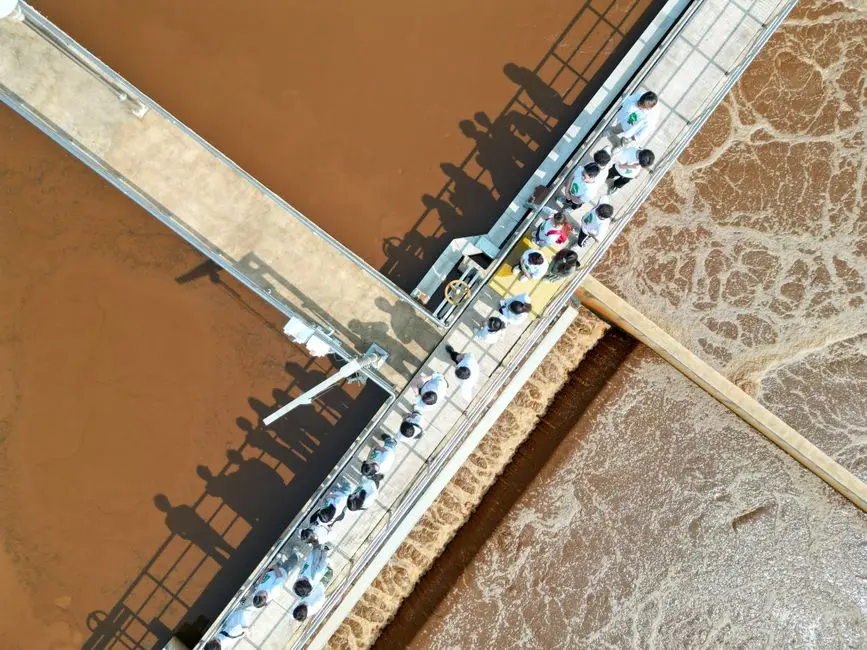
Reliable separator selection requires flow rate, instantaneous and peak flow, TSS, particle-size distribution, oil and grease, settleability, pH, alkalinity, specific contaminants, temperature, and the discharge or reuse target. Missing any of these inputs prevents a defensible comparison of hydraulic loading, chemical demand, or equipment size.
Oil, grease, FOG, and buoyant material make DAF the stronger primary candidate. Kemco identifies oils, greases, and suspended solids among the contaminants targeted by DAF (Kemco Systems, 2026). Conversely, a stream dominated by settleable mineral particles is generally better matched to gravity clarification, provided pilot results confirm that the particles settle within the available hydraulic loading. HydropureWater’s lamella product is explicitly designed for flocculation and sludge recirculation.
Fine colloids and low-buoyancy particles require chemical conditioning and pilot testing. Clearwater Industries states that proper coagulation and flocculation increase particle size and contact with microbubbles; it therefore pairs DAF with chemical conditioning rather than presenting flotation as a stand-alone pretreatment step (Clearwater Industries, April 27, 2026).
Mixed streams commonly need a staged train:
- Coarse screening or filtration and pH control.
- Chemical conditioning through an automatic chemical dosing system.
- DAF, lamella clarification, or both, depending on pilot results.
- Residual-solids filtration or polishing where required.
- Sludge dewatering.
Coarse screening may use a rotary mechanical bar screen where gross solids must be removed before chemical dosing and fine separation.
The reported 99.9% TPH removal in the 2012 Robert Gordon University dissertation should not be attributed to DAF. It came from an electro-coagulation unit treating a separate interceptor-effluent stream. The result supports the broader case for waste-specific treatment, not a DAF performance claim (Robert Gordon University, 2012).
| Dominant wastewater characteristic | First separator to evaluate | Required validation |
|---|---|---|
| Oil, grease, FOG, or buoyant solids | DAF | Oil and grease capture, chemical dose, float stability, recovered-water quality |
| Predominantly settleable mineral solids | Gravity or lamella clarification | Settleability, solids capture, hydraulic loading, sludge concentration |
| Fine colloids or low-buoyancy particles | Conditioned DAF or conditioned lamella clarification | Particle-size growth, capture efficiency, chemical consumption, pH range |
| Buoyant and settleable fractions both substantial | DAF and gravity clarification in series | Both train orders, intermediate solids loading, chemical demand, final polishing |
| Dissolved metals requiring removal | Chemical precipitation or other upstream treatment before solids separation | Metal species, residual concentration, solids generation, final permit or reuse result |
DAF or Clarifier: Decision Matrix for Norman Factories
DAF earns the advantage for oil-rich, FOG-rich, buoyant, or chemically conditioned floc, while gravity clarification earns the advantage when settleable solids dominate and chemical use must remain limited. Neither scoring advantage overrides hydraulic loading, recovered-water quality, corrosion exposure, or sludge disposition.
Clearwater Industries lists 304SS, 316SS, polypropylene, and other materials for its DAF systems, with availability depending on the specified application (Clearwater Industries, April 27, 2026). Require every bidder to identify wetted materials against the actual chemistry and temperature range; a generic “stainless steel” response is not enough.
Catalog figures can narrow the commercial shortlist but cannot size the plant. HydropureWater lists DAF capacity from 4–300 m³/h across 13 standard models. Clearwater Industries states that its COMPACT DAF uses one skid for flows of 66 GPM or less and a modular two-skid system for larger flows (Clearwater Industries, April 27, 2026). These are catalog-specific inputs, not site sizing rules. Actual selection depends on flow and solids loading.
| Selection criterion | DAF | Lamella or gravity clarification |
|---|---|---|
| Dominant contaminant | Oil, FOG, buoyant solids, conditioned floc | Settleable mineral solids |
| Physical mechanism | Microbubble attachment and flotation | Gravity settling, enhanced by inclined plates |
| Chemical dependency | Normally includes coagulation and flocculation | Depends on flocculation and recycle configuration |
| Concentrate route | Skimmed float; possible bottom solids removal | Hopper or recirculation loop |
| Footprint consideration | Evaluate the complete conditioned skid arrangement | Lamella equipment is presented as a compact integrated structure |
| Best combined-train case | Remove buoyant or conditioned solids before or after gravity separation | Remove heavy settleable solids before flotation or as final solids clarification |
If the wastewater contains both substantial buoyant contamination and substantial settleable solids, compare two configurations: DAF after clarification, and clarification after DAF. The sequence changes chemical demand, intermediate solids loading, float quality, sludge handling, and polishing requirements.
Send suppliers one consistent information request covering daily and peak flow, hydraulic loading, solids loading, chemical feed range, materials of construction, controls, skimmer or sludge-removal design, performance guarantees, and startup and shutdown requirements. Ask how each proposal handles sludge dewatering with a plate-and-frame filter press without assuming that either separator produces the same concentrate.
Pilot Testing and Scale-Up for a Norman Treatment Project
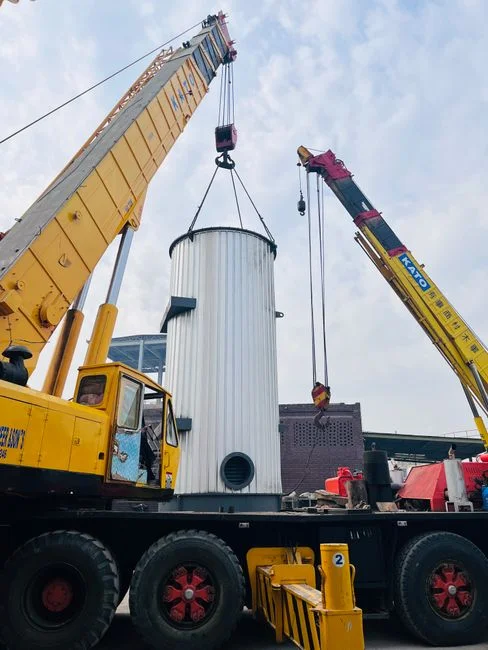
Site-specific wastewater data should determine the final DAF design, not a generic catalog model. Kemco’s methodology uses on-site visits, testing, and pilot studies to determine a plant’s requirements before final design (Kemco Systems, 2026). The same discipline should govern a clarifier or combined treatment train.
Test untreated and conditioned wastewater and compare solids capture, oil and grease removal where relevant, sludge volume, chemical consumption, recovered-water quality, and performance stability under representative production conditions. Include batching, washdowns, and variable production loads; a clean average-day sample does not establish peak-flow behavior.
Set acceptance criteria against the actual discharge, sewer, pretreatment, or reuse specification. The supplied research establishes no universal metals limit for Norman mining wastewater, so neither the buyer nor the supplier should invent one. A physical-removal result is not equivalent to permit compliance.
Define how sludge will be collected, stored, dewatered, and disposed of. Kemco identifies filter pressing as a method for reducing residual sludge moisture and hauling volume (Kemco Systems, 2026). The chosen plate-and-frame sludge dewatering filter press must be checked against concentrate characteristics and expected operating availability, not merely nominal solids volume.
Include operator controls, instrumentation, chemical storage, maintenance access, and corrosion-resistant construction in lifecycle acceptance criteria. Chemical feed should be tied to an automatic chemical dosing system with the required control range and fail-safe provisions. Convert pilot results into procurement requirements: verified water quality, documented chemical use, defined sludge route, controls narrative, materials schedule, and performance guarantees.
Frequently Asked Questions
What is the most important information needed to choose a DAF or clarifier for mining and metals wastewater?
Start with representative flow, instantaneous and peak flow, TSS, particle-size distribution, oil and grease, settleability, pH, alkalinity, temperature, contaminant-specific data, and the discharge or reuse target. Then obtain pilot results for solids capture, chemical consumption, sludge generation, and recovered-water quality. No reliable capacity choice should be made from equipment type or flow alone.
How should a supplier be selected for a Norman treatment train?
Require a wastewater-specific proposal that identifies the separation mechanism, chemical conditioning, wetted materials, sludge-removal method, controls, guarantees, and pilot results. The proposal should state how the train will meet the applicable Norman discharge, sewer, pretreatment, or reuse criteria rather than offering a generic removal percentage. Site-specific pilot evidence should carry more weight than catalog capacity.
Do DAF and clarification each guarantee compliance with metals limits?
No. Both are