Why Aiken's Sewer Capacity Makes Pretreatment a Strategic Compliance Issue
Aiken does not operate its own wastewater treatment plant; it relies on the Aiken County Horse Creek Wastewater Plant, operated by the Public Service Authority, according to the Aiken Chronicles (2026-02). An early-2024 audit found that nearly 95 percent of Horse Creek’s approximately 20 MGD permitted capacity had been sold, while the plant was processing about 12 MGD on average, the Aiken Chronicles reported (2026-02).
The local constraint is more immediate. At its January 12, 2026 work session, Aiken City Council received figures showing 0.41 MGD of remaining City capacity against approximately 0.50 MGD in pending approved development needs—a reported deficit of 90,000 gallons per day. These figures describe allocation pressure; they do not establish how much capacity any particular EV or automotive plant consumes.
That distinction matters because sewer-capacity constraints do not replace pretreatment obligations. EPA states that POTW local limits protect treatment operations, sludge processes, receiving waters, and the POTW’s NPDES compliance. For an Aiken-area manufacturer, this turns pretreatment into both a permit-control measure and capacity-protection measure. The oil-bearing industrial pretreatment strategy illustrates the engineering principle: reduce the contaminant load entering the sewer while documenting treatment performance.
Start With the Permit, Not the Equipment
EPA defines pretreatment standards as pollutant discharge limits that apply to industrial users, while local limits are site-specific requirements developed by the POTW. The governing provision is 40 CFR Part 403.5(c), and EPA states that POTWs impose local limits at the industrial user’s point of connection to the POTW collection system.
Before selecting equipment, request the following from the receiving POTW:
- Current industrial-user permit and local-limit ordinance;
- Approved pretreatment manual and applicable BMPs;
- Monitoring and sampling schedule, including analytical methods;
- Discharge-point drawing and flow-metering requirements;
- Spill-reporting procedure, fees, and enforcement provisions.
Federal prohibited-discharge standards are not a substitute for the POTW’s site-specific limits. EPA also notes that local limits may be numeric or narrative and can include BMPs. Confirm separately whether categorical pretreatment standards apply; the supplied research does not establish which category covers a particular Aiken-area EV or automotive facility.
| Permit document | Engineering question answered | Pre-procurement action |
|---|---|---|
| Industrial-user permit | What may be discharged, where, and under what monitoring conditions? | Attach the current permit to the design basis and acceptance criteria. |
| Local-limit ordinance and pretreatment manual | Which numeric limits, narrative restrictions, and BMPs apply? | Map each requirement to a treatment objective and control. |
| Discharge-point drawing | Is compliance measured before or after the proposed treatment equipment? | Identify the required point-of-connection discharge location. |
| Monitoring schedule and fee schedule | Which analytes, sampling methods, reporting events, and costs apply? | Include sampling hardware, laboratory support, and reporting tasks in the budget. |
The MBR and conventional activated-sludge comparison is useful for understanding broader treatment options, but it does not replace Aiken’s permit requirements. Likewise, the City of Aiken’s published residential and commercial sewer-rate schedule is financial context—not evidence of an industrial-user discharge limit.
Map EV and Auto Plant Waste Streams Before Designing the Train
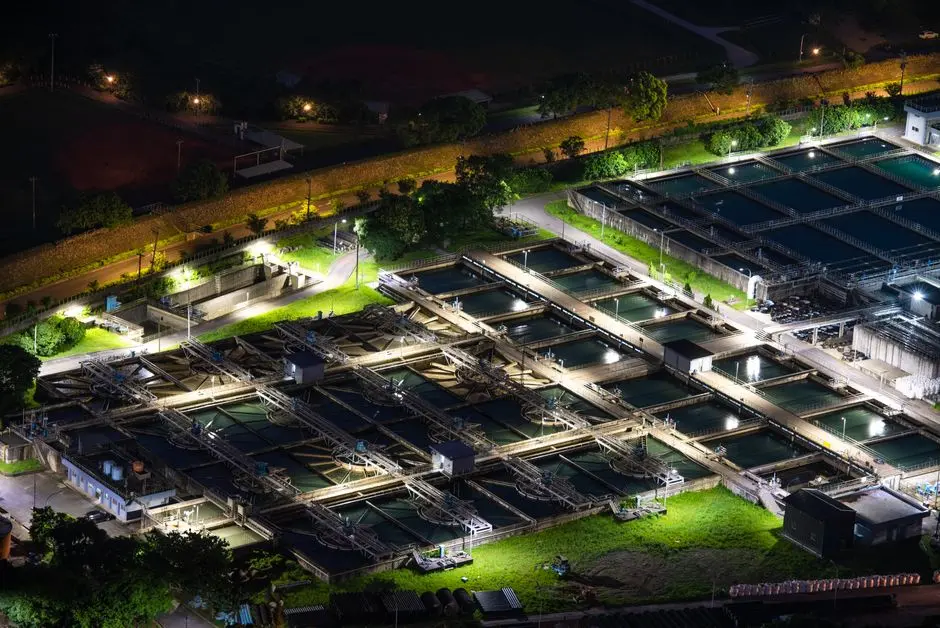
EV manufacturing wastewater and automotive plant wastewater should be characterized by source, not combined into a single facility average. Separate vehicle or component washing, paint and coating operations, floor and equipment cleaning, cooling and rinse water, hydraulic and process-water discharges, stormwater contact with vehicle areas, and domestic sewage where applicable.
For every stream, request average and peak flow, duration, batch frequency, oil and grease or HEM potential, suspended solids, pH, metals information, detergents, toxicity indicators, and current laboratory results. These inputs determine both treatment technology and peak hydraulic capacity.
| Source | Potential concern | Data to obtain | Design implication |
|---|---|---|---|
| Vehicle or component washing | Emulsified oil, detergents, suspended solids | Batch flow, chemistry, oil condition, TSS | Evaluate oil removal and DAF rather than assuming free-oil separation is sufficient. |
| Paint and coating operations | Paint solids, solvents, variable dumps | Solvent identity, batch volume, frequency, compatibility | Contain and segregate dumps; confirm treatment compatibility with the chemical supplier. |
| Floor and equipment cleaning | Detergent, grit, oil-bearing cleaner | Cleaner formulation, wash-down pattern, local drain routing | Segregate concentrated cleaner and exclude clean rinses where practicable. |
| Hydraulic, cooling, and process water | Oil, solids, metals, or treatment chemicals | Continuous versus intermittent flow and pollutant records | Determine whether reuse, segregation, or additional polishing is warranted. |
| Stormwater contacting vehicle areas | Oil, tire and pavement particles | Contributing area, drainage map, rainfall response | Keep uncontaminated stormwater separate; evaluate whether stormwater is within the permit scope. |
Source segregation prevents clean stormwater and low-contamination streams from increasing hydraulic and pollutant loading unnecessarily. The petroleum guide’s analogous streams include tank-bottom water, separator dumps, loading drip, vehicle-wash wastewater, hydrostatic-test water, and product-area stormwater; these examples show why slug-producing sources need separate controls.
Build an industrial-user flow and pollutant mass balance before sizing equipment. Sewer-capacity reports and residential average flows cannot substitute for plant data. Oil characteristics, emulsification, detergent use, and batch dumps determine whether physical separation, DAF, biological treatment, or another polishing process is justified. The hybrid wastewater treatment for automotive manufacturing provides additional source-segregation and reuse context.
Build a Source-Control and Pretreatment Process
The practical process sequence is source segregation and containment; equalization for flow and load control; oil and solids removal; DAF flotation; optional biological or adsorptive polishing when required; monitoring; and controlled discharge. Each stage needs an assigned purpose so the treatment train does not depend on equipment operation outside its intended service.
A DAF system for EV and auto plant pretreatment is suited to suspended solids, FOG, oil and grease, and colloidal matter. HydropureWater’s DAF catalog lists 13 models spanning 4–300 m³/h with automatic skimming. Those catalog figures establish an available equipment range, not a compliance guarantee or the correct size for a particular plant.
DAF should not be the universal front-line response to free-oil slugs. The petroleum pretreatment guide recommends a gravity or coalescing stage ahead of DAF for separator dumps and tank-drop events because free oil can interfere with flotation performance. EV and automotive plants should apply the same logic to coating dumps, concentrated wash water, and other episodic discharges.
Chemical treatment should follow source testing. An automatic chemical dosing for pretreatment controls can support pH adjustment and coagulant, flocculant, or demulsifier application, but the product and dose cannot be selected without identifying the oil and solids characteristics.
| Process stage | Primary purpose | Design evidence | Operating control |
|---|---|---|---|
| Segregation and containment | Keep clean or highly concentrated waste out of the general train | Drainage map, process inventory, batch schedule | Locked or covered dump valves, labeled drains, spill containment |
| Equalization | Moderate flow and pollutant loading | Peak instantaneous flow, batch volume, mass-load calculation | Level control, mixer operation, high-level alarm |
| Oil and solids removal | Remove free oil and settleable material before flotation | Oil characterization, emulsion testing, TSS data | Inspection, removal interval, differential-level monitoring |
| DAF flotation | Remove suspended solids, FOG, oil and grease, and colloidal matter | Design flow, load, required residual, treatment chemistry | Air saturation, float removal, chemical feed verification |
| Optional polishing | Address nutrients, dissolved contaminants, or stricter residual targets | Permit requirement and pilot or bench data | Monitor the specific regulated parameter |
| Compliance monitoring | Demonstrate performance at the required location | Permit schedule, sampling method, laboratory requirements | Calibrated flow, representative samples, chain of custody |
The petroleum guide gives a representative monitoring cadence: daily visual free-oil inspection, weekly TSS grab sampling, monthly HEM composite sampling, and flow-proportional composites when required. It identifies EPA Method 1664A for HEM analysis. These are examples to verify against Aiken’s permit, not an adopted monitoring schedule.
Best management practices should include spill containment, drip control, protected sampling points, segregated drains, covered dump valves, and written operating procedures. These controls reduce both discharge risk and the hydraulic load reaching the treatment system.
Choose Equipment by the Permit and Waste Profile
DAF, ultrafiltration, and integrated biological package systems serve different duties. A comparison helps procurement teams avoid buying a high-pressure polishing system when the controlling problem is oil removal—or treating a biological package as an automatic answer to local-limit requirements.
| Option | Removal mechanism and suitable duty | Operational constraints | Relevance to sewer pretreatment |
|---|---|---|---|
| DAF | Flotation of suspended solids, FOG, oil and grease, and colloidal matter; automatic skimming | Requires chemical optimization, air saturation, float removal, and attention to free-oil slugs | Directly relevant where the waste profile contains floatable pollutants |
| Ultrafiltration | Membrane separation of suspended solids, colloids, and bacteria; product data also position it for RO pretreatment | 0.03-micron PVDF membranes, automatic backwash and air scour, higher solids-loading sensitivity | Use when the permit or treatment objective requires membrane-level separation |
| Integrated biological package | A/O biological contact oxidation, sedimentation, and disinfection in a buried package | Requires suitable biodegradable influent, biological operating control, and sludge management | Consider when organic loading or permit objectives require biological treatment |
HydropureWater lists DAF capacity at 4–300 m³/h across 13 models. Its ultrafiltration product data list 2,000–40,000 L/h capacity, 0.03-micron PVDF membranes, and automatic backwash and air scour for municipal, rural, and RO-pretreatment duties. A stated turbidity acceptance criterion is not an Aiken sewer limit.
The buried integrated sewage-treatment package combines A/O biological contact oxidation, sedimentation, and disinfection, covers 1–80 m³/h, and is marketed for factories and rural sites. It is not automatically required for an EV or automotive facility.
No catalog capacity establishes compliance. Influent characterization, local limits, peak demand, sludge handling, redundancy, monitoring, and operating constraints determine the final selection. The petroleum guide reports typical permit values of 100–200 mg/L HEM and approximately 250 mg/L TSS; these are examples to verify, not enforceable Aiken limits.
Design for Startup, Acceptance, and Compliance Evidence
A supplier’s guarantee should be tied to an agreed influent characterization, relevant permit parameters, design flow, batch-load assumptions, treatment objectives, and available site utilities. Peak instantaneous flow must be distinguished from daily average flow because coalescer dumps or tank drops can create short-duration loading events that an average-flow calculation hides.
Factory and site acceptance should cover treatment performance, automatic controls, alarm response, chemical storage, float or sludge removal, maintenance access, and sampling-point access. Acceptance criteria should be written as measurable conditions, with the permit and accepted influent basis attached.
| Procurement package | Required content | Acceptance evidence |
|---|---|---|
| Design basis | Permit parameters, characterized influent, average and peak flow, batch assumptions, utility requirements | Approved process calculation and signed design basis |
| Equipment and controls | Capacity, materials, chemical compatibility, alarms, redundancy, access, power and drain requirements | Factory inspection, controls test, installation checklist |
| Performance test | Agreed sampling points, analytes, methods, operating conditions, and acceptance values | Signed test report with raw laboratory data |
| Operations and maintenance | Startup, chemical verification, inspection, calibration, float removal, maintenance, training, and support | Completed checklists, calibration records, and operator sign-off |
| Compliance file | Permit, local limits, flow and pollutant data, drawings, SOPs, chain-of-custody records, results, and corrective actions | Controlled document register and audit-ready archive |
The petroleum guide lists DAF screening references of a 20–30% hydraulic and air-to-solids safety margin and 60–90 psig micro-bubble pressure. Treat these as preliminary references only and confirm all values with the selected supplier and process designer.
The O&M plan should cover DAF startup, chemical feed verification, float removal, inspection frequency, calibration, spare parts, operator training, and sampling support. Because local limits may be numeric or narrative and may include BMPs, documentation is part of the treatment design. Related equipment and maintenance considerations are covered in the water-treatment parts and filter-media guidance.
A Practical Decision Framework for Aiken-Area EV and Auto Plants
- Can the team identify the permitted discharge point and current local limits? If not, stop equipment procurement and resolve the permit requirement first.
- Is the waste predominantly clean or reusable? Prioritize segregation and reuse instead of adding treatment capacity.
- Does the waste contain free oil, emulsified oil, FOG, suspended solids, or colloids? Evaluate an oil-removal stage followed by DAF, and verify chemical demand through source testing.
- Does the permit require nutrient, dissolved-contaminant, or very-low-residual control? Determine whether biological or adsorptive polishing is necessary.
- Are flows highly batch-driven? Require equalization or sufficient buffer capacity and a written slug-response procedure.
- Are sewer capacity or sewer fees material constraints? Evaluate treatment economics and reuse together.
The supplied research provides no Aiken-specific cost for EV or automotive pretreatment. Obtain a site-specific proposal rather than applying a generic cost claim. The industrial DAF decision guide provides a useful framing for separating process needs from equipment selection.
Frequently Asked Questions
How much does an EV or auto plant wastewater pretreatment system cost in Aiken?
The research provides no Aiken-specific price range for an EV or automotive pretreatment installation. Request a site-specific quotation based on permit parameters, waste characterization, average and peak flow, treatment scope, civil work, chemicals, sludge handling, monitoring, and utilities. Compare bids using the same design basis; a catalog price alone does not show whether the system can meet the point-of-connection discharge requirements.
Should an Aiken EV plant choose DAF or ultrafiltration?
Choose based on the waste profile and permit. DAF is directly relevant to oil, FOG, suspended solids, and colloidal removal. The supplied UF product data position ultrafiltration primarily around suspended solids, colloids, bacteria removal, and RO pretreatment. A pilot or bench comparison is the appropriate check when emulsified oil, membrane fouling, or a required residual concentration makes the selection uncertain.
What size should the pretreatment system be for an automotive plant?
Evaluate peak instantaneous flow, slug events, daily mass load, required removal efficiency, operating redundancy, and the DAF catalog’s 4–300 m³/h range together. Average daily discharge alone is not a defensible sizing basis. Obtain hydraulic and pollutant calculations tied to the plant’s own operating records and current permit.
How should an EV or auto manufacturer select a wastewater pretreatment supplier?
Require a proposal tied to the current permit, characterized influent, guaranteed performance criteria, controls, O&M, chemical and sludge handling, commissioning support, and compliance documentation. The transportation plant pretreatment compliance guide offers a useful comparison framework for documenting that basis.
What is the biggest compliance risk before sewer discharge near Aiken?
The largest risk is applying generic industry values instead of the POTW’s current local limits, or failing to document representative sampling, controls, laboratory results, and corrective actions. Confirm the applicable limits and point-of-connection discharge location with the receiving POTW, then align the treatment train, monitoring plan, and operating records with those requirements.
Related Equipment
- DAF system for EV and auto plant pretreatment — specifications, capacity range, and technical data