Why Shopping Mall Wastewater Is a Difficult MABR Application
MABR can suit shopping mall wastewater when the project needs compact, low-odor biological treatment, nutrient removal and potentially reusable effluent, but it is not a substitute for equalization or food-court grease control. Mall wastewater can fluctuate with foot traffic and include kitchen oil and grease, so characterize flows, BOD, COD, TSS, FOG and nutrients before sizing the plant. MABR uses membrane-mediated oxygen transfer to support simultaneous nitrification and denitrification. Fluence reports up to 90% lower aeration-energy use, while a 2025 Black and Veatch paper supports its use in new-build and retrofit applications. The right design must also address odor control, reuse or discharge requirements, operator capability and vendor performance guarantees.
A shopping mall combines public toilets, tenant operations, food courts, cleaning water and changing visitor loads. That combination produces both hydraulic and pollutant-load fluctuations rather than the comparatively stable domestic-sewage profile for which many packaged treatment systems are designed.
The EverythingAboutWater shopping mall case study documents varying pollutant loads linked to daily foot traffic and food-court activity, an undersized treatment plant with insufficient buffer capacity, and oil and grease entering the plant. It also identifies odor exposure inside the mall as a serious operating risk. These are site-specific lessons, not universal mall flow or loading factors.
MABR addresses aerobic biological treatment and oxygen transfer. It does not eliminate the need to characterize the wastewater, equalize flow and loads, control excessive FOG, protect downstream equipment or demonstrate compliance with the applicable discharge or reuse rules. Equipment selection should therefore begin with pretreatment and buffering requirements, not reactor capacity.
Commercial exposure matters as much as effluent chemistry. Odor, unreliable treatment or an unsupported reuse claim can disrupt mall operations even when the biological reactor itself remains online. Screening solids at the inlet and reviewing grease-control requirements are appropriate early checks; a mechanical bar screen or a project-specific DAF system for oil, grease and solids pretreatment should be selected only after the wastewater and reuse route are characterized.
Define the Project Basis Before Comparing Treatment Technologies
A defensible MABR proposal starts with measured flow, pollutant loading and a defined effluent destination; the supplied research does not establish a universal shopping-mall flow coefficient, reactor size or output limit. The buyer should require site data and local acceptance criteria rather than asking vendors to size from mall floor area alone.
| Design-basis input | Information the buyer must obtain | Why it affects MABR selection |
|---|---|---|
| Hydraulic load | Measured average and peak flow, operating hours, diurnal and seasonal variation | Sets equalization and reactor hydraulic capacity |
| Organic load | BOD and COD under normal and peak operating conditions | Determines biological loading and treatment resilience |
| Solids and FOG | TSS and oil and grease data from food-court and tenant sources | Defines screening, grease control and downstream solids handling |
| Nutrients | Ammonia, total nitrogen and total phosphorus | Defines nitrification, denitrification and nutrient-removal requirements |
| Physical conditions | pH, temperature and relevant toxicity information | Affects biological activity and treatment controls |
| Effluent destination | Permit, sewer-acceptance or nonpotable reuse criteria | Sets the treatment and disinfection boundary |
| Operations | Operator availability, maintenance access and service capability | Determines whether a packaged system is practical to operate |
Fluence identifies irrigation, dust reduction, toilet flushing and central heating and cooling make-up water as nonpotable reuse applications for MABR effluent. A mall may also consider landscape irrigation or cooling-tower make-up, but each destination requires its own water-balance and quality review. Treated effluent cannot be assumed suitable for every such use.
Ask the operator for operating records, current effluent results, permit or sewer-acceptance requirements, chemical consumption, odor complaints, maintenance history and planned tenant or expansion changes. The initial survey should cover operating days and peak periods under a sampling plan prepared by the responsible engineer. Related process-design questions for non-mall facilities are addressed in the SBR process design for hotel wastewater, but mall influent data must remain the controlling basis.
Before comparing bids, confirm whether the objective is discharge to a sewer, direct environmental discharge or internal reuse. Each option has a different compliance boundary, treatment requirement and commercial value case.
How MABR Fits the Mall Treatment Train
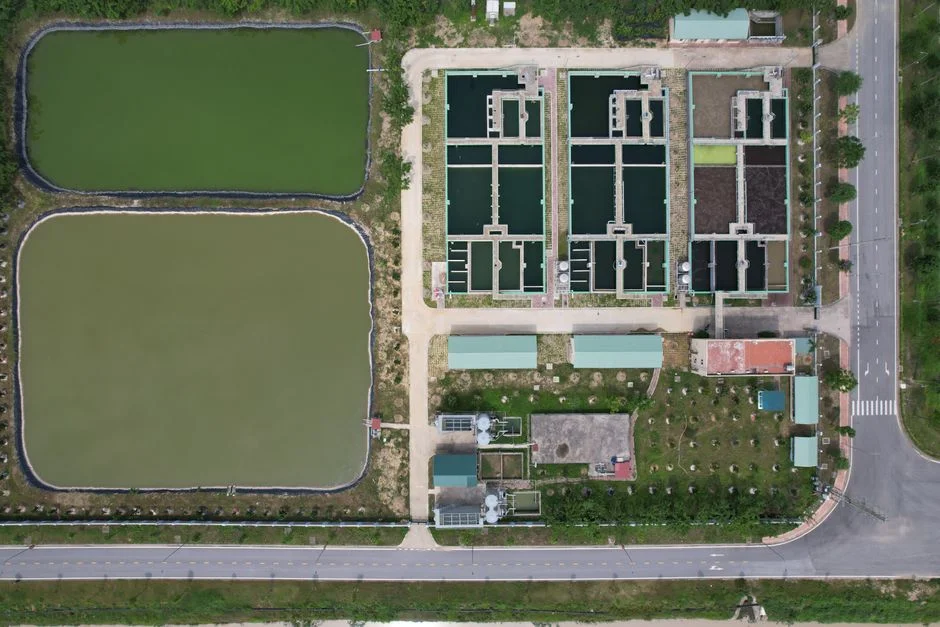
A membrane aerated biofilm reactor passes oxygen through a membrane to support an aerobic attached biofilm, while an anoxic region supports denitrification; Fluence describes this arrangement as simultaneous nitrification-denitrification in a single tank. That configuration can reduce footprint, but nutrient-removal performance still depends on influent characteristics, reactor configuration, loading and operational control.
| Process stage | Required decision | Evidence or information needed |
|---|---|---|
| Collection and screening | Protect the plant from tenant debris and solids | Waste stream survey and screen duty assessment |
| Equalization | Buffer hydraulic and pollutant-load variation | Measured flow and load profile; site volume and operating strategy |
| FOG and solids control | Prevent excess grease and solids from impairing biology or downstream equipment | Sampling, FOG characteristics and project-specific pilot or vendor design |
| Biological MABR stage | Provide aerobic treatment and biological nutrient removal | Design load, reactor configuration, aeration demand and control narrative |
| Solids separation | Separate biomass before discharge or reuse | Effluent solids limit and downstream process requirements |
| Disinfection | Apply only where the discharge or reuse route requires it | Regulatory or user quality criteria |
| Reuse or discharge | Match final water quality to its destination | Water balance, quality assessment and acceptance criteria |
Decentralized treatment can reduce pipeline, pumping-station and associated energy costs. Fluence identifies capital-expenditure savings from locating treatment near the point of need and operating-cost savings from lower aeration-energy use. Those are system-level effects and should appear in each bidder’s installed-cost and energy calculation.
Black and Veatch’s 2025 MABR paper states that attached-growth biomass can retain biological solids during disturbance, reduce washout and shorten recovery after wet-weather or load variations. That supports the technology’s resilience concept, but it is not proof that an untested configuration will tolerate this mall’s actual loading, FOG or operational interruptions. Site validation remains necessary.
For a new installation, packaged MABR can form the biological core of a decentralized treatment train. If the project also requires membrane separation, note that an integrated MBR membrane bioreactor is a different membrane-separation arrangement; MABR principally uses membranes to transfer oxygen. Existing civil assets should be evaluated through the underground integrated treatment-system layout and site constraints before choosing a retrofit.
The supplied sources describe MABR applications at tourism areas, resorts, remote sites and commercial facilities, but they do not provide a shopping-mall-specific MABR reference installation. Procurement should therefore demand MABR evidence under comparable wastewater, operating and effluent conditions.
Equalization, Grease Control and Odor Mitigation Decide the Real Performance
The EverythingAboutWater case study identifies a two-to-three-day buffer as essential for the subject mall’s variable wastewater; that is a case-specific finding, not a universal sizing rule. MABR cannot compensate for an absent or severely undersized equalization tank because the reactor still receives irregular hydraulic and pollutant loads.
Food-court FOG must be addressed as a source-control and pretreatment issue. Sampling should establish where grease enters the collection system, its characteristics and the load requiring removal. Excessive FOG can interfere with biological treatment, promote odor and create downstream maintenance problems. A DAF system for oil, grease and solids pretreatment is one candidate stage, but it should be justified by project testing and does not replace biological treatment.
Odor has more than one source. Inspect and maintain the collection infrastructure, grease-control equipment, vents and biological process independently. A low-odor MABR reactor cannot remove odors already generated in a deficient collection system, while a sealed treatment train can still be undermined by poor upstream maintenance.
Downstream processes also need explicit feed criteria. The EverythingAboutWater case study warns that its referenced UF application requires TSS below 20 ppm and BOD substantially lower than 40 mg/L to avoid membrane blockage. Those figures apply to that membrane application, not to every MABR installation. They demonstrate why proposed UF, disinfection or reuse stages need their own feed-water specification.
Where reuse requires additional treatment, a UV disinfection system should be evaluated against the selected reuse or discharge criteria. Do not assume that UV alone addresses nutrients, solids or FOG, or that MABR effluent automatically qualifies for nonpotable water reuse.
Compare New-Build MABR, MABR Retrofit and Conventional Alternatives
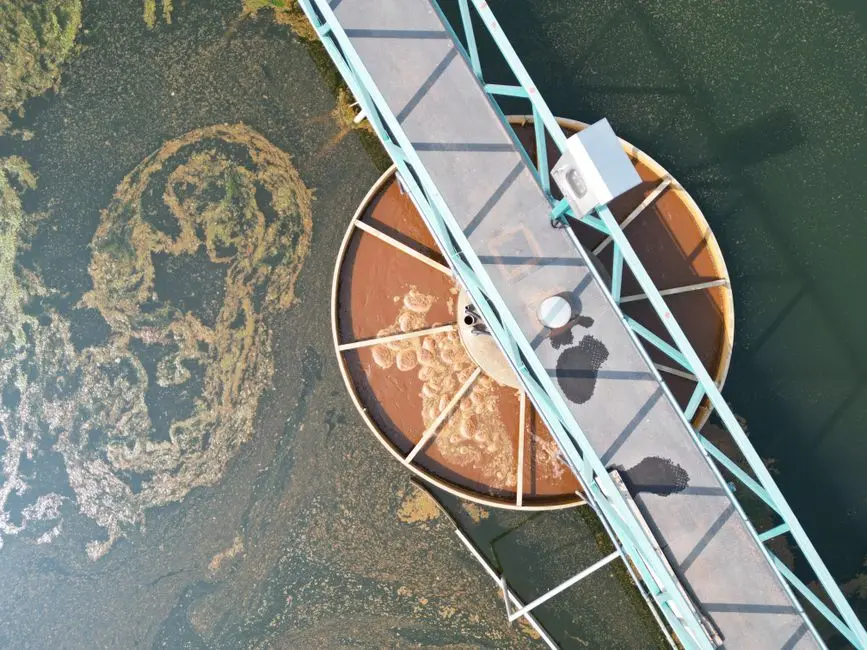
The procurement route depends primarily on existing asset condition, hydraulic capacity, controls, civil work and expansion needs; MABR should not be treated as the default technology.
| Option | Primary strengths | Key risks and buyer checks |
|---|---|---|
| New packaged MABR plant | Compact decentralized biological treatment; potentially concealed installation; integrated controls | Requires a complete design basis, equalization, pretreatment, utilities, reuse or discharge train and site civil works |
| Existing-basin MABR retrofit | Can add capacity and nutrient-removal capability to suitable infrastructure | Fluence describes SUBRE for existing basins with cited capacities of 2,000–100,000 m³/day, or 0.5–25 MGD; basin suitability, hydraulic profile, mixing and controls still require engineering review |
| MBR package | Combines biological treatment with membrane solids separation | Different process boundary from MABR; compare solids handling, membrane fouling controls, energy and reuse requirements |
| Conventional activated sludge | Established operating model and potentially lower membrane-specific risk | Compare footprint, aeration-energy exposure, nutrient-removal configuration, retrofit suitability and operator requirements |
Fluence reports up to 90% less aeration-energy use for MABR, together with a small footprint, quiet and low-odor operation and suitability for concealed installation. These are supplier-reported differentiators. A conventional system may remain preferable where the existing basin, staff and controls are suitable, or where the reuse objective requires more intensive solids separation than MABR alone provides.
Lifecycle claims require equal scrutiny. Fluence reports a four-to-five-year return-on-investment range for decentralized MABR treatment and reuse and a 24–60-month expected-results range for its hotel and resort solution, depending on irrigation-water cost. These are supplier-reported scenarios, not universal mall economics. Request the cash-flow assumptions, utility prices, reuse volume and boundary behind each figure.
For industrial analogies, the MABR design and technology assessment and MABR sizing and selection guide can help frame the questions, but their feedstocks do not establish mall performance. Use them as assessment references, not as substitute design evidence.
Validate Performance, Energy Savings and Reuse Claims
Published MABR results are reference points, not automatic guarantees for a mall installation. Fluence reports that the yearlong Stanford pilot at the Codiga Resource Recovery Center met California Title 22 reuse standards and produced total nitrogen below 3 mg/L and total phosphorus below 0.3 mg/L. Fluence’s CENTA trial also reported total nitrogen as low as 4.1 mg/L and total phosphorus as low as 0.4 mg/L after startup. Require suppliers to demonstrate equivalent performance under the mall’s design load, and specify the test methods, sampling protocol and guarantee conditions.
Energy claims must identify what is being compared. Fluence states that MABR can reduce aeration-energy use by up to 90% and overall energy use by as much as 50%; those are different metrics and cannot be substituted for one another. Ask for blower power, site conditions, average and peak demand, the conventional baseline and any assumptions about downstream pumping or solids handling.
For a reuse claim, complete a water balance and quality assessment for the intended destination. Irrigation, toilet flushing, cooling and heating make-up each impose different acceptance questions. The ultrafiltration system should be included only where its feed requirements and treatment objective are demonstrated; an automatic chemical dosing system should be priced only where chemical demand and control are established.
The acceptance plan should include commissioning tests, operator training, spare-parts availability, remote monitoring, response times and defined performance-review intervals. Also identify who owns routine maintenance, sludge removal and laboratory sampling, and how the mall will manage peak events, power interruptions and equipment faults.
Build a Supplier RFQ That Prevents Hidden Costs
A comparable RFQ must define the complete treatment train and commercial boundary, not just request a MABR membrane package. Missing equalization, civil work, FOG control, disposal or commissioning can materially change the installed cost.
| RFQ package | Required submission | Commercial check |
|---|---|---|
| Process and design basis | Process flow diagram, hydraulic profile, equipment schedule, design influent and control narrative | Confirm every bidder used the same wastewater and effluent basis |
| Civil and site works | General arrangement, foundations, access, odor controls, utilities and electrical requirements | Separate quoted work from equipment supply |
| Pretreatment | Screening, equalization, FOG control and solids handling | Identify excluded equipment and temporary measures |
| Operations | Staffing plan, consumables, chemicals, sludge removal and disposal | Price the complete operating cost |
| Performance and support | Guarantees, test protocol, references, warranty, spares, training and local service | Define remedies for non-compliance and service response obligations |
| Lifecycle and resilience | Energy calculation, utility demand, monitoring and contingency operation | State assumptions and exclude unsupported ROI headline claims |
Require the proposed guarantee basis to state a flow envelope, influent basis, effluent limits, test methods, sampling protocol, warranty conditions and consequences for non-compliance. Ask for reference projects with comparable wastewater characteristics, rather than references based only on installation type.
Include contingency plans for peak loads, holiday crowds, tenant changes, power interruptions and equipment faults. Published MABR examples do not remove the need for local resilience planning. Request the complete spare-parts schedule, including the valuation of critical items, through a treatment-parts and valve proposal.
Score bids on total installed cost, compliance risk, reuse value, energy consumption, footprint, maintainability, commissioning evidence and vendor support. Treat membrane performance as one criterion, not the decision by itself.
Frequently Asked Questions
How should MABR for shopping mall wastewater be sized?
Size it from measured average and peak flow, BOD, COD, TSS, FOG, nutrients, equalization strategy, reuse target and local acceptance criteria. No universal shopping-mall MABR size is supported by the supplied research. The responsible engineer should define operating-day and peak-period sampling before bids are accepted.
What cost and return can a mall expect from MABR?
Do not adopt a headline return as a budget. Fluence reports a four-to-five-year ROI range for decentralized MABR treatment and reuse and a 24–60-month expected-results range for its hotel and resort solution, depending on irrigation-water cost. Request each bidder’s installed-cost breakdown, utility assumptions, reuse volume, maintenance costs, financing treatment and cash-flow model before comparing these supplier-reported scenarios.
How should a mall select an MABR supplier?
Require evidence that the proposed design addresses equalization and FOG, not merely a MABR membrane claim. Evaluate guarantees and test protocols, commissioning support, local service capacity, spare-parts availability, operator training, energy calculations and comparable reference projects. A supplier that cannot define its design boundary, exclusions or performance remedy provides weak procurement assurance.
Should the mall retrofit its existing plant or install a new MABR package?
Choose a retrofit only after assessing basin condition, hydraulic capacity, equalization, mixing, controls, electrical supply, civil works, reuse treatment and future expansion. A new packaged train may be more appropriate where existing assets are unsuitable or the mall needs a more compact decentralized installation. Ask bidders to price and compare both routes against the same design basis.