In Turin, wastewater treatment plant costs for 2025 range from €1.2M to €15M for municipal projects (1,000–100,000 PE) and €800K to €8M for industrial systems, depending on technology and influent load. Local factors—such as Turin’s 44% energy consumption share (per SMAT data) and compliance with EU Directive 91/271/EEC—add 10–20% to national averages. This guide breaks down CAPEX, OPEX, and ROI for Turin-specific projects, including a calculator to compare MBR, DAF, and conventional systems.
Why Turin’s Wastewater Treatment Costs Differ from Italy’s National Averages
Turin's industrial wastewater treatment costs are currently 10-20% higher than the Italian national average due to localized energy tariffs and specialized influent requirements from the automotive and food processing sectors.Labor rates for wastewater treatment plant (WWTP) operators in Turin range between €28 and €35 per hour, compared to a national average of €22 to €28. This adds roughly 12% to the annual operating budget, as reported by the Turin Chamber of Commerce. The city's infrastructure is dominated by the Società Metropolitana Acque Torino (SMAT). While 80% of municipal WWTPs are connected to SMAT’s centralized network, this centralization requires industrial facilities to implement rigorous pre-treatment to meet SMAT’s strict intake standards, often increasing initial capital investment by 15-25%.
The influent variability in Turin is another significant cost driver. The city’s automotive legacy and thriving food processing sector contribute up to 30% of the total wastewater load. These effluents contain high concentrations of heavy metals and fats, oils, and grease (FOG), requiring specialized treatment stages such as Dissolved Air Flotation (DAF). Designing for these contaminants ensures compliance with local discharge limits—such as Chemical Oxygen Demand (COD) levels below 100 mg/L—which are more stringent than the general EU Directive 91/271/EEC limit of 125 mg/L.
| Cost Factor | Turin Average (2025) | Italy National Average | Impact on Total Budget |
|---|---|---|---|
| Electricity (Industrial) | €0.21 - €0.24 / kWh | €0.18 - €0.20 / kWh | +18% OPEX |
| Specialized Labor | €32 / hour | €25 / hour | +12% OPEX |
| Sludge Disposal | €110 - €150 / ton | €90 - €130 / ton | +10% OPEX |
| Compliance Strictness | Local (SMAT) + EU | National (D.Lgs 152/06) | +15% CAPEX |
Turin Wastewater Treatment Plant Cost Breakdown: CAPEX vs OPEX for 2025
Capital expenditure (CAPEX) for wastewater treatment in Turin typically ranges from €1,200 to €1,500 per Population Equivalent (PE) for municipal projects, while industrial pre-treatment systems average €800 to €1,200 per PE.Operating expenditure (OPEX) in Turin fluctuates between €0.25 and €0.45/m³ for municipal plants and €0.35 to €0.60/m³ for industrial systems. Energy consumption is the primary OPEX driver, often representing 44% of the total operating budget for SMAT-integrated facilities. To combat these high costs, some Turin facilities are adopting innovative solutions. A notable benchmark is the SMAT Collegno WWTP, which implemented a €6.2M Solid Oxide Fuel Cell (SOFC) plant to harvest energy from biogas, effectively reducing net energy costs by over 25% and providing a model for future energy-efficient upgrades.
Hidden costs frequently disrupt budgeting for Turin projects. Permitting fees for new installations can range from €50,000 to €200,000 depending on the environmental impact assessment requirements. Sludge disposal is another volatile cost, with local rates reaching up to €150 per ton due to limited landfill space in the Piedmont region. Additionally, industrial facilities discharging into the public sewer must account for SMAT connection fees, which can range from €10 to €30 per m³ depending on the pollutant load. For those looking for compact footprints to minimize civil costs, Turin’s compact MBR systems for urban wastewater treatment offer a viable alternative by reducing the land area required for sedimentation tanks.
| Cost Category (5,000 m³/day) | Conventional Activated Sludge | MBR System | DAF Pre-treatment |
|---|---|---|---|
| Initial CAPEX | €2.8M | €3.9M | €1.2M |
| Annual Energy Cost | €180,000 | €260,000 | €95,000 |
| Annual Chemical Cost | €45,000 | €35,000 | €110,000 |
| 5-Year TCO (Total) | €4.1M | €5.6M | €2.4M |
Choosing the Right Technology for Turin’s Wastewater: MBR vs DAF vs Conventional Systems
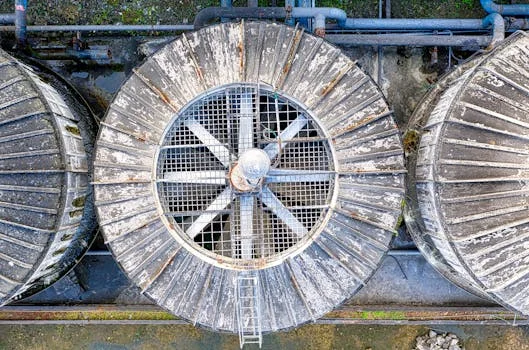
Membrane Bioreactors (MBR) are increasingly favored in Turin for their high effluent quality, achieving 99% TSS removal and 95% COD removal. This technology allows for direct water reuse in industrial cooling processes, which can offset the 30% higher energy consumption compared to conventional systems. For industrial sites where space is at a premium, Turin’s underground WWTP options for industrial sites provide a way to expand capacity without purchasing additional land.
Conversely, Dissolved Air Flotation (DAF) is the gold standard for Turin’s food processing and automotive industries. DAF systems excel at removing 90% of FOG and 80% of TSS, making them essential for pre-treatment before sewer discharge. While DAF has a lower CAPEX than MBR, its chemical costs are higher, typically ranging from €0.10 to €0.20/m³. Engineers often refer to Turin’s DAF system requirements and cost benchmarks to balance chemical OPEX against the risk of SMAT non-compliance fines. For municipal plants exceeding 50,000 PE, conventional activated sludge remains the most cost-effective solution due to its lower energy profile, provided the land is available.
| Parameter | MBR | DAF | Conventional (A/O) |
|---|---|---|---|
| COD Removal | >95% | 60-70% | 85-90% |
| Footprint | Very Small | Small | Large |
| Effluent Quality | High (Reuse Ready) | Pre-treatment Grade | Standard Discharge |
| Energy Use | 0.8 - 1.2 kWh/m³ | 0.2 - 0.4 kWh/m³ | 0.4 - 0.6 kWh/m³ |
Turin’s Compliance Checklist: Meeting EU and Local Discharge Standards
Discharge limits in Turin are governed by a dual-layer regulatory framework: the EU Urban Waste Water Directive 91/271/EEC and local SMAT-enforced thresholds that are often 20% stricter than national standards.To ensure 2025 compliance, engineers should verify that their systems meet the following Turin-specific thresholds:
- COD (Chemical Oxygen Demand): <100 mg/L (Local SMAT limit) vs 125 mg/L (EU limit).
- TSS (Total Suspended Solids): <30 mg/L (Local SMAT limit) vs 35 mg/L (EU limit).
- FOG (Fats, Oils, and Grease): <10 mg/L for industrial discharge to sewers.
- Total Nitrogen (N): <10 mg/L for plants located in sensitive areas near the Po River.
- Total Phosphorus (P): <1 mg/L for sensitive catchment areas.
The permitting process in Turin typically takes 6 to 12 months. It involves the Autorità d'Ambito (ATO3 Torinese) and SMAT for technical approvals. Industrial facilities must provide a detailed characterization of their influent, particularly for heavy metals like Chrome and Nickel in the automotive sector, which require specific DAF systems for Turin’s industrial pre-treatment needs to avoid toxic shock to the municipal biological stages.
ROI Calculator: Justifying Your Turin Wastewater Treatment Investment
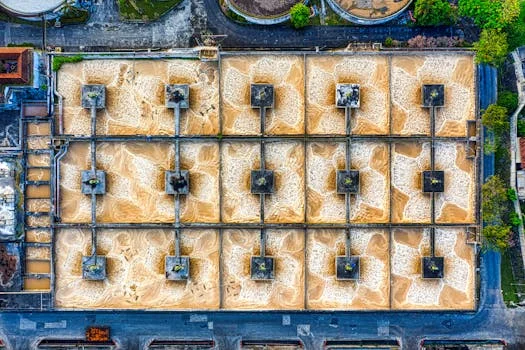
Water reuse savings in Turin currently range from €0.50 to €1.50/m³, depending on the required purity. For a facility processing 1,000 m³/day, water reuse alone can save up to €300,000 annually. The SMAT SOFC case study demonstrated that large-scale energy recovery can generate €1.2M per year in savings for municipal-scale operations. When presenting to stakeholders, it is crucial to include "avoided costs," such as the potential €500,000 maximum penalty for non-compliance with the Italian Environmental Code.
| Investment Scenario | Industrial DAF (Pre-treat) | Industrial MBR (Reuse) | Municipal Upgrade (SOFC) |
|---|---|---|---|
| Estimated CAPEX | €900,000 | €2,500,000 | €6,200,000 |
| Annual Savings | €120,000 (Fines) | €450,000 (Water) | €1,200,000 (Energy) |
| Payback Period | 7.5 Years | 5.5 Years | 5.1 Years |
| 5-Year ROI % | ~65% | ~90% | ~95% |
To assist with your specific project, we recommend utilizing a localized ROI calculator. By inputting your daily flow rate, current COD levels, and SMAT discharge fees, you can estimate whether an MBR or DAF system provides the fastest path to break-even. Most Turin-based industrial projects achieve a positive ROI within 5 to 8 years, significantly outperforming the 15