Why Wichita Falls Textile Factories Face a Harder Separation Problem in 2026
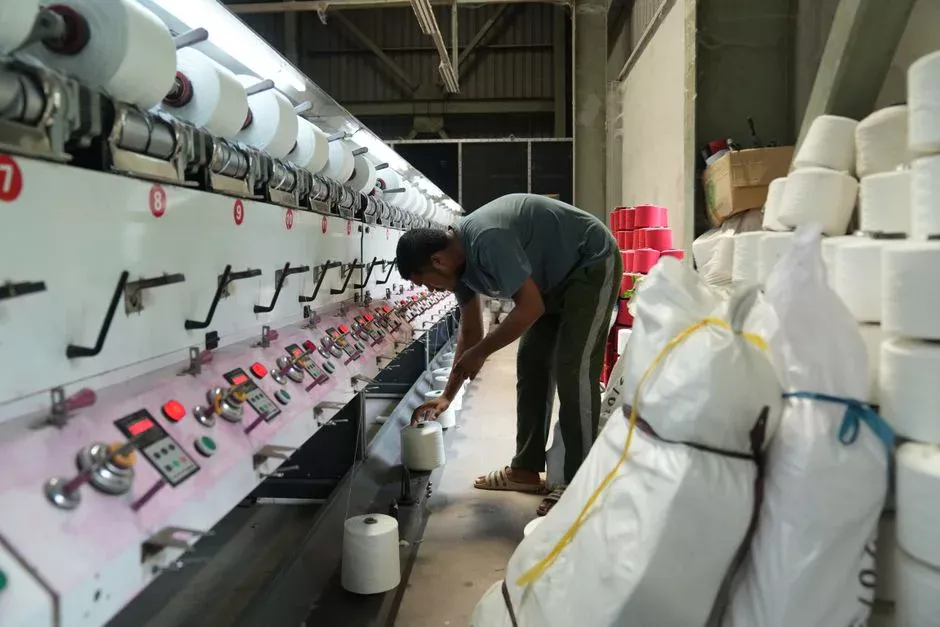
Wichita Falls textile effluent in 2026 consists of a complex mix of reactive and disperse dye liquor residues, loose fiber lint, sizing chemicals (PVA, starch, CMC), and high salt loads from neutralization, with a pH that swings between 8 and 11. This effluent character represents a load case that general-purpose DAF-vs-clarifier guides often overlook. Color from reactive dyes alone can push influent APHA above 2,000 units, while fiber and sizing residues stay suspended as low-density flocs that behave like colloids rather than settleable solids.
Discharge targets in the Wichita Falls sewer system are dictated by the City of Wichita Falls Industrial Pretreatment Program and the underlying Texas Surface Water Quality Standards (30 TAC §307). The practical design number for most plants is a 30 mg/L monthly average for both TSS and BOD, with 45 mg/L as the daily maximum—figures the City of Wichita Falls Public Works references when issuing SIU permits. Federal cost-curve work for industrial primary separation still anchors back to EPA 821-R-98-016 (the 1998 Detailed Costing Document for the Centralized Waste Treatment Industry), which remains a benchmark for comparing DAF and clarifier economics in U.S. industrial duty.
The EPA CWT dataset, Texas pretreatment numbers, and textile-specific solids character are not aligned by default, making the selection process more difficult in 2026. A clarifier designed for settleable metal-bearing sludge is not the same engineering problem as a basin catching PVA-coated fiber; the following sections identify which unit performs best on specific textile streams.
How DAF and Clarifiers Actually Separate Solids
Dissolved air flotation (DAF) separates solids by floating them using a cloud of microbubbles. A side stream of clarified effluent is pressurized to roughly 4–6 bar and saturated with air in a packed saturation tank. When that recycle stream is depressurized into the flotation cell, the dissolved air comes out of solution as a cloud of 10 to 100-micron bubbles. These bubbles attach to chemically conditioned flocs and lift them to the surface, where a rotating skimmer removes the float layer, while the clarified underflow exits through a bottom outlet.
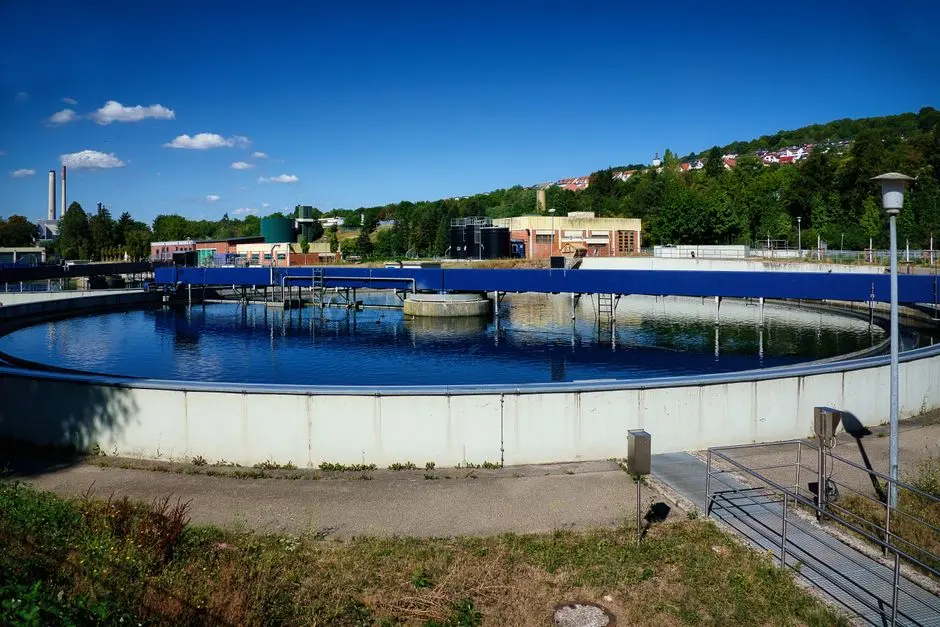
A gravity clarifier (circular or, more commonly in 2026 industrial duty, lamella plate) separates solids by letting them fall. Feed enters a center well, disperses through a quiescent basin, and settleable particles drop into a sludge hopper. Clarified water decants over an outlet weir. Lamella plates cut the footprint by stacking the effective settling area at 45–60° inside a compact tank.
The peer-reviewed characterization of these units is consistent across the literature. DAF provides better final water quality, rapid startup, higher rates of operation, and thicker sludge than sedimentation, and DAF systems need less space compared with conventional clarifiers (Academia.edu, FS-PRIM-003 Technology Fact Sheet for textile effluent plants). Literature also confirms that DAF is the appropriate tool for material that will not settle, including free and emulsified oil, grease, fiber, and low-density solids—the exact fraction that dominates reactive-dye textile effluent (spectrumwater.com, equipment-solutions/dissolved-air-flotation).
Side-by-Side: DAF vs Clarifier for Textile Effluent
The table below provides data for a Wichita Falls procurement engineer evaluating equipment, using typical ranges for textile duty based on EPA 821-R-98-016 and standard vendor literature for the DAF skid platform.
| Parameter | DAF (textile duty) | Gravity / Lamella Clarifier (textile duty) |
|---|---|---|
| Separation mechanism | Air bubble attachment, 10–100 µm microbubbles lift flocs to surface | Gravity settling, quiescent basin or inclined plates |
| TSS removal on textile feed | 70–90% on reactive dye + fiber streams; 85–95% on disperse dye after coagulation | 40–65% on the same stream; fibers and dye flocs frequently stay in suspension |
| Color / reactive dye removal | 60–85% as primary step with coagulant; rises to 90%+ with PAC addition | 20–40% standalone; most color passes through to biological stage |
| FOG and fiber recovery | Float layer recoverable; fiber resale viable from float | Fiber settles only when heavy; FOG tends to re-suspend |
| Footprint (m² per m³/h) | 0.08–0.15 for packaged skids (DAF 4–300 m³/h) | 0.5–1.5 depending on lamella plate count and basin depth |
| Hydraulic retention time | 20–30 minutes | 2–4 hours (conventional); 30–60 minutes (lamella) |
| Startup time | 15–30 minutes to bubble blanket stability | 2–6 hours to reach steady sludge blanket |
| Sludge solids content | 3–6% (thick float) | 0.5–1.5% (thin bottom sludge) |
| Sensitivity to flow swings | Tolerant up to ~1.5× design flow before effluent quality drops | Sensitive; surging resuspends blanket and breaches weir |
| Polymer / coagulant demand | 5–20 mg/L typical for textile floc; jar-test required | Lower, but ineffective on low-density solids without high dose |
| Mechanical complexity | Recycle pump, saturation tank, air compressor, skimmer, polymer skid | Sludge scraper / lamella plates, one or two pumps |
Textile fibers, dye flocs, and sizing residues are buoyant or near-neutral density, which is exactly the material a clarifier struggles with. DAF was designed to lift what will not fall, making it a better match for Wichita Falls dyehouse feed.
Capital Cost, O&M, and Land: What EPA Data Tells Us
The only authoritative federal cost dataset for DAF and clarifier economics in U.S. industrial pretreatment remains EPA 821-R-98-016 (December 1998). For DAF, the relevant tables are 2-48 through 2-66 (Section 2.8, Dissolved Air Flotation). For clarification, the relevant tables are 2-33 through 2-35 (Section 2.2.2, Clarification, Metals Options 2, 3, and 4). Both sections split capital from O&M and present data as curves indexed to flow in gallons per minute (gpm).
Two structural points in the EPA dataset matter for a textile decision. First, EPA distinguishes DAF systems by flow above and below 20 gpm (Tables 2-55 and 2-57). The 20 gpm split is meaningful for Wichita Falls mills because batch dyehouse discharge is a peaky duty—a 100 m³/h average can swing to 200+ m³/h during a wash cycle, and modified DAF variants with equalization integration are the cost curve that applies. Second, the clarification section presents separate O&M cost curves for Metals Options 2, 3, and 4 (Tables 2-34 and 2-35). Although the original dataset is metals-focused, the relative ranking transfers to textile duty: clarifiers carry lower mechanical costs, while DAF carries higher polymer and energy use but a far smaller land envelope.
Land is a critical variable for capital committees. Per EPA 821-R-98-016 Section 2.2.2 (Figure 2-29) and Section 2.8 (Figure 2-52), a clarifier needs roughly 4–8× the land area of an equivalent DAF at the same flow. A Wichita Falls plant sitting on 2 acres with a 50 m³/h dyehouse discharge will feel that difference immediately.
When a Wichita Falls Textile Plant Should Pick DAF
DAF is the preferred primary unit for most Wichita Falls textile plants in 2026. The trigger conditions are concrete: the plant runs reactive or disperse dyes, has less than ~200 m² available footprint, generates fiber that has resale value, or discharges to a POTW that applies heavy TSS and BOD surcharges. DAF's higher primary removal directly cuts the surcharge line on the monthly treatment bill, and the float sludge at 3–6% solids dewaters economically on a small filter press without the dilution water a clarifier underflow drags in.
Two engineering details determine whether DAF alone meets the 30 mg/L BOD monthly average. First, polymer selection must be jar-tested on the actual dyehouse composite—generic cationics rarely work on reactive dyes, and a HydropureWater automatic dosing skid with polymer make-down is the standard way to lock in dose repeatability. Second, DAF effluent typically still carries 100–200 mg/L BOD as dissolved dye and sizing residuals, so a downstream biological polishing step is required to reach the 30 mg/L BOD target. The standard pairing is a DAF ahead of an MBR; the MBR's membrane barrier holds back slow-growing biomass that can complete degradation of recalcitrant dye metabolites. Pairing a HydropureWater DAF as the primary step with a HydropureWater MBR polishing system is the configuration most Wichita Falls RFPs in 2026 are converging on. For plants chasing the 63%-class BOD reduction seen in well-run MBR retrofits, the 7 BOD-reduction tactics for industrial wastewater writeup is a useful operating reference.
When a Gravity Clarifier Still Wins
A clarifier is the right call for a narrower set of Wichita Falls cases. If the textile stream is dominated by settleable solids—heavy knitting oils, cotton dust, and mineral filler residues from a finishing line—a lamella clarifier will catch most of that load without the polymer, recycle pump, and air system DAF requires. If the plant has open yard space (a clarifier needs 4–8× the footprint of a DAF for the same flow) and the operations team has no chemistry background, the lamella's mechanical simplicity is hard to beat. Lamella clarifiers typically achieve surface loading of 20–40 m/h and can reduce chemical consumption by up to 30% compared with conventional basins, which is meaningful for plants that prefer to avoid a polymer program.
A low-flow finishing operation under 20 gpm represents the second ideal use case. EPA 821-R-98-016 Section 2.8 splits the DAF cost curve at exactly that flow, and below it, the mechanical simplicity of a packaged lamella unit wins on both capital and operator load. For these cases, a HydropureWater lamella clarifier is the standard fit, and pairing it with a HydropureWater automatic chemical dosing skid covers the residual color polishing step. For plants running a process line that resembles food-wash water, the technical guide on food-processing wastewater treatment covers chemistry selection that overlaps with textile knit finishing. The same logic for chemicals-duty streams in similar hot, dry climates is laid out in the DAF vs clarifier guide for chemicals factories in Mojave, where DAF wins for the same density-related reasons.
Frequently Asked Questions
Should a Wichita Falls textile factory pick DAF or a clarifier in 2026?
Pick DAF for streams with high color, reactive or disperse dyes, fiber, and low-density solids—material that will not settle. Pick a clarifier (lamella type) when the stream is dominated by settleable solids such as heavy knitting oils or cotton dust, when yard space is ample, and when the operations team has no chemistry background.
Are packaged DAF systems available in the flow range Wichita Falls plants need?
Yes. Integrated skid units in the 4–300 m³/h range ship plug-and-play with chemical feed, saturation tank, recycle pump, and skimmer pre-assembled. They are well-suited to both the steady
Frequently Asked Questions
Should a textile factory use DAF or a clarifier in Wichita Falls?
The choice depends on the specific wastewater density and footprint constraints of the facility. DAF (Dissolved Air Flotation) is generally preferred in Wichita Falls for textile operations handling lighter, oily, or synthetic fiber particulates that tend to float, as it provides faster separation times. Clarifiers are more suitable for operations with high volumes of heavy, inorganic solids or sludge that naturally settle under gravity, often requiring less operational energy but significantly more physical space.
What TSS removal does DAF achieve on textile wastewater?
When properly optimized with coagulants and flocculants, a DAF system can achieve Total Suspended Solids (TSS) removal efficiencies ranging from 85% to 95%. In textile applications, this performance is highly dependent on the influent pH and the chemistry of the dyes and surfactants present, requiring precise dosing of polymers to ensure the micro-bubbles effectively attach to the suspended fibers and dyes for flotation.
How much space does a DAF save compared to a clarifier?
A DAF unit typically requires 70% to 80% less surface area than a conventional circular or rectangular clarifier of equivalent capacity. Because DAF systems utilize pressurized air to accelerate the separation process, the retention time is reduced to minutes rather than hours, allowing for a compact, skid-mounted design that is ideal for factory retrofits where land availability is limited.
What are the 2026 Texas discharge limits for textile mills?
As of 2026, textile mills in Texas must adhere to TCEQ (Texas Commission on Environmental Quality) standards, which generally mandate a TSS limit of 30 mg/L (monthly average) and BOD5 limits typically capped at 30 mg/L for direct discharge. Facilities must also monitor for specific color parameters and pH levels (ranging between 6.0 and 9.0) to maintain compliance with the state's updated water quality criteria for industrial effluent.
Can a clarifier handle reactive dye wastewater?
Standard gravity clarifiers are generally ineffective at treating reactive dye wastewater on their own because these dyes are highly water-soluble and do not settle as particulate matter. To achieve removal, a clarifier must be integrated into a system that includes advanced chemical oxidation or the addition of specialized color-precipitating agents to convert the dissolved dyes into a settleable floc, which can then be captured at the bottom of the clarifier basin.