Determine the site's wastewater route before signing
When JBS acquires a plant in India, wastewater compliance follows the site's specific discharge path rather than JBS's corporate policy. The buyer should verify the plant's current Consent to Operate or Consent to Establish, identify whether effluent goes to a sewer, an authorized outfall, reuse, or a zero-discharge system, and confirm whether the authorization can transfer to the acquisition entity. HydropureWater says CPCB consent transfer typically takes 90–180 days before signing and requires a successful State Pollution Control Board inspection; a failed transfer may cause an 18–24 month reapplication. The acquisition file should also contain the complete monitoring history, unresolved exceedances, ETP condition, sludge liabilities, third-party contracts, and transaction protections for undisclosed environmental exposure.
The first diligence task is to establish which legal and technical workstream governs the site, not to select treatment equipment. A seller's statement that the plant is “permitted” is not enough. The deal team should obtain the current consent and all attachments from the issuing authority, together with the discharge-point map, applicable effluent limits, monitoring frequency, reporting obligations, renewal status, and permit conditions. This is the same document discipline described in HydropureWater's international acquisition wastewater analysis, but the controlling documents for an Indian target must be obtained from the relevant Indian authorities and local receiving body.
| Discharge route | Documents and approvals to verify | Acquisition risk to resolve |
|---|---|---|
| Direct discharge to an authorized outfall | Consent to Operate or Consent to Establish, attachments, outfall map, limits, monitoring and reporting requirements, renewal status | Whether the consent transfers to the acquisition entity and whether the proposed operation remains within its conditions |
| Indirect discharge through a municipal sewer | Industrial-user or pretreatment authorization, local limits, sewer-use requirements, sampling and monitoring procedures, modification process | Whether the sewer authority accepts the acquired operation and whether a local-limit or permit modification is required |
| Water reuse or disposal | Reuse or disposal authorization, use and disposal records, treatment documentation, land-application records, approved conditions | Whether the acquired activity and changed production remain within the authorization and whether another liability arises |
| No-discharge system | Zero-liquid-discharge authorization, process and disposal records, monitoring and reporting obligations | Whether the claimed no-discharge configuration is real, permitted and resilient under actual and proposed loading |
For an indirect discharge, the municipal sewer's industrial-user or pretreatment requirements are central. Obtain the current local limits, sampling procedures and monitoring obligations directly from the receiving authority; a state authorization alone may not cover the sewer connection. For reuse or disposal, verify the authorization and records showing how the material has been treated or handled, and confirm whether the acquisition changes the approved conditions.
The supplied research establishes the Indian consent-transfer process but contains no site-specific Indian numerical effluent limits. Do not import limits from another JBS facility or from a generic industry table. The current consent, applicable State Pollution Control Board and Central Pollution Control Board requirements, and relevant local sewer or reuse rules must provide the numerical parameters.
Build a complete Indian compliance and transfer file
HydropureWater's 2026 acquisition guide states that an India CPCB Consent-to-Operate transfer typically requires a 90–180 day pre-signing application and a successful State Pollution Control Board site inspection. The legal team should therefore obtain the Consent to Operate or Consent to Establish, renewal history, current attachments, site inspection records, regulator correspondence, notices of violation, consent orders and information requests before exclusivity or signing.
The technical baseline should be at least the previous 12 months of flow and self-monitoring records, discharge-monitoring reports, raw wastewater characterization, laboratory reports and chain-of-custody records. A current consent certificate is not a complete compliance history. The file should identify unresolved effluent-parameter exceedances, permit non-conformity events, contested renewals, stipulated penalties and applicable compliance schedules.
HydropureWater reports that a failed transfer can lead to an 18–24 month reapplication cycle. That is a material deal-critical-path issue, not merely an administrative formality. Require an approved transfer strategy, a named regulator-facing workplan, seller cooperation and a realistic long-stop date before exclusivity begins. The diligence file should also show who will own and control the ETP, laboratory, sludge hauler, chemical supplier and operator arrangements after closing.
| File component | Minimum evidence requested | Decision it supports |
|---|---|---|
| Authorization | Consent, attachments, renewals, inspection records, correspondence, transfer application and regulator response | Whether the plant can lawfully operate after the proposed transfer |
| Compliance baseline | Previous 12 months of flow, self-monitoring and discharge-monitoring records, laboratory reports and chain-of-custody records | Whether historical performance supports the baseline |
| Enforcement exposure | Notices of violation, consent orders, information requests, contested renewals, penalties and compliance schedules | Which liabilities and corrective costs must be allocated |
| Operational contracts | O&M, laboratory, chemical, sludge-hauler and EPC contracts, including assignability and termination terms | Whether service continuity and third-party liability survive closing |
For broader structure, use the 47-question ETP acquisition due-diligence framework, but tie every answer to the target site's actual consent, regulator correspondence, sewer authorization or reuse approval.
Test the wastewater profile against the authorized operating envelope
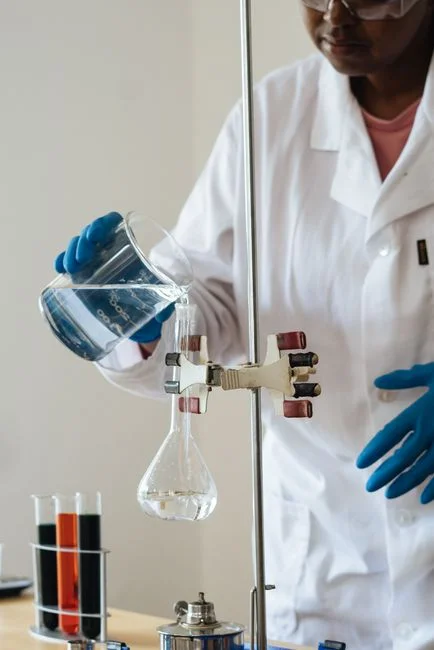
The existing ETP must be tested against verified loading, not the seller's process diagram. Characterize sanitary, process, production-cleaning, blood, paunch and rendering-floor streams separately. Verify oil and grease, suspended solids, biological oxygen demand, ammonia, peak hydraulic loading and every parameter listed in the governing authorization. The supplied research provides no Indian numerical limits for these parameters, so the site's consent and applicable local requirements remain controlling.
Compare permitted flow with the previous 12 months of actual flow and with peak-flow records. Then test whether JBS's expected production volume, product mix, recipe chemistry, cleaning frequency or ownership changes could alter the wastewater profile or the authorized operating envelope. A plant can satisfy historical limits while lacking treatment margin for a changed product mix or higher peak flow.
Raw wastewater testing should feed an asset assessment of equalization, biological capacity, aeration, membrane area, solids handling and control response. For protein-processing sites, the DAF design for rendering-plant wastewater can help frame the FOG and solids pretreatment question, while an MBR wastewater treatment system should be evaluated against actual loading, footprint, utilities and operating constraints.
- Separate and sample the major wastewater streams.
- Measure the parameters named in the consent and current local requirements.
- Reconcile peak and annual flow with permitted conditions.
- Test the ETP's equalization, biological and solids-handling response.
- Model the production changes proposed after acquisition.
HydropureWater states that MBR membranes run 5–8 years under normal operating conditions and identifies cassettes older than 7 years as a near-term replacement liability. Cassette age alone is not proof of failure, but it should trigger condition testing and a priced replacement scenario. Do not select a DAF or MBR configuration until influent characteristics, design flow, existing footprint, utilities, permit objectives and future production assumptions are established.
Audit the treatment plant, sludge path, and legacy liabilities
Distinguish ordinary maintenance from hidden environmental and asset-retirement exposure before accepting the ETP. Inspect DAF nozzles and skimmers, biological equipment, aeration, membranes, equalization, pumping, controls, utilities, drawings, maintenance records, EPC warranties and operator contracts. Condition should be verified by testing, not inferred from remaining-service-life statements.
HydropureWater reports typical DAF wear costs of $15K–$60K per DAF unit, recurring every 3–5 years depending on influent oil-and-grease loading. This is a commercial benchmark, not an Indian compliance limit. It should be checked against the actual DAF condition, operating history and expected load.
The sludge path requires its own audit. Inventory quantities and waste classifications, hauling frequency, destination records and transporter contracts. Confirm whether the existing plate-and-frame filter press can dewater the material and whether disposal routes remain available. HydropureWater estimates that legacy slaughterhouse sites may contain 200–2,000 tonnes of undocumented sludge and gives a 2026 hazardous-sludge disposal benchmark of $80–$450 per tonne. Verify both the inventory and disposal route at the target site; these are commercial estimates, not statutory requirements.
| Inspection area | Evidence to obtain | Possible transaction treatment |
|---|---|---|
| ETP mechanical and biological condition | Testing, drawings, maintenance logs, utility data, control narratives and EPC warranty status | Price adjustment, seller-funded repair, escrow or post-closing capital budget |
| Sludge and wastewater residues | Inventory, classification, hauler records, destination evidence and filter-press operating data | Removal cost, indemnity, escrow or retained seller liability |
| Lagoons and buried infrastructure | Site inspection, historical drawings, drainage maps, structural assessment and recognized environmental conditions | Phase II ESA, remediation reserve, seller retention or closing condition |
| Retirement obligations | ASC 410-20 Asset Retirement Obligation study covering treatment structures, lagoons, storage areas and other wastewater infrastructure | Book the liability at closing and reflect it in the purchase-price adjustment |
Inspect lagoons, blood lagoons, rendering-floor drainage paths, buried paunch infrastructure, unlined storage areas and abandoned structures. Commission a Phase II ESA when the Phase I identifies a recognized environmental condition. HydropureWater identifies an Asset Retirement Obligation study under ASC 410-20 as a non-negotiable diligence deliverable to be booked at closing. Further equipment implications can be tested against its industrial ETP and DAF selection guide.
Convert environmental findings into closing protections
Unresolved wastewater findings must be drafted into transaction protections rather than left as diligence commentary. Attach unresolved exceedances, administrative orders, consent decrees and compliance schedules to the purchase agreement, clearly allocating historical violations, future compliance costs and buyer control over remediation.
HydropureWater recommends environmental representations and warranties surviving at least 5 years for ETP-heavy targets, a specific environmental indemnity outside the general basket and cap, and a 10–15% escrow held for 24–36 months for high-risk ETP targets. These are negotiation recommendations, not Indian legal requirements. Indian counsel should confirm their enforceability in the purchase agreement.
HydropureWater also recommends reserving 2–8% of enterprise value for a protein-processing target with an on-site ETP, using the upper end where permit-history issues, FOG or ammonia non-compliance, or lagoons older than 10 years are documented. Treat this as a commercial negotiation benchmark, not a legal rule. The eventual reserve should reflect verified site conditions, remediation estimates and the allocation of responsibility.
| Finding | Closing protection | Question for deal counsel |
|---|---|---|
| Unresolved exceedance or notice of violation | Specific representation, warranty, indemnity, reserve or seller assumption | Who bears historical penalties, response costs and future monitoring exposure? |
| Consent transfer uncertainty | Approved transfer path, seller cooperation covenant, milestone and long-stop protection | Does closing occur only after the required approval pathway is confirmed? |
| Material ETP deficiency or sludge liability | Price adjustment, specific escrow, retained liability or seller-funded remediation | Is the funded amount tied to a defined scope rather than a generic estimate? |
| Recognized legacy condition | Phase II ESA, quantified remedy and closing-condition bring-down | Who controls remediation and who bears post-signing regulatory change? |
HydropureWater reports that undisclosed non-compliance may inflate reserves by $2M–$18M and trigger 18–36 month remediation timelines. These figures support diligence discipline, but they do not price the target. Use them as a commercial warning to price verified findings, not as a substitute for site-specific evidence. The comparative transaction framework in HydropureWater's acquisition wastewater requirements analysis illustrates why each exposure needs its own allocation.
Apply a closing-readiness decision framework
Use four outcomes, based on verified evidence rather than a generic acquisition checklist:
- Proceed: the applicable transfer or reapplication path, current authorization, baseline monitoring history and treatment capacity have been verified in writing.
- Condition: unresolved exceedances, regulator orders, permit-transfer uncertainty, material ETP deficiencies, sludge liabilities and legacy-site conditions are resolved or protected before closing.
- Renegotiate: verified findings exceed the operating and remediation assumptions used in the price. Reprice the capital reserve, escrow, seller retention or indemnity.
- Stop or defer: the site lacks a viable authorization path, historical violations cannot be bounded, treatment capacity cannot meet the permitted and proposed operating envelope, or legacy liabilities lack a defensible remedy.
Before the investment committee decision, run the 47-question ETP acquisition due-diligence framework across permit transferability, asset condition, sludge, contracts, compliance history and purchase-agreement allocation. Every answer should identify a document, responsible person, deadline or unresolved exposure. A blank answer is an open risk, not a passed control.
Frequently Asked Questions
How long does a wastewater consent transfer take when JBS acquires an Indian plant?
HydropureWater reports a typical 90–180 day pre-signing process for an India CPCB Consent-to-Operate transfer, including a successful State Pollution Control Board site inspection. Its acquisition guidance warns that a failed transfer can cause an 18–24 month reapplication cycle. The buyer should therefore require a regulator-confirmed transfer strategy and align exclusivity and the long-stop date with the approval path.
What wastewater budget should JBS reserve for an Indian plant acquisition?
HydropureWater's 2–8% of enterprise value range for a protein-processing target with an on-site ETP is a commercial negotiation benchmark, not an Indian legal requirement. The buyer should request site-specific estimates for equipment renewal, monitoring, sludge removal, disposal, legacy remediation, asset retirement and transfer support. HydropureWater's reported $2M–$18M undisclosed non-compliance range is a risk indicator, not a reserve estimate for this plant.
Should JBS purchase a new DAF and MBR system before completing due diligence?
No. Characterize the actual wastewater, obtain the current authorization, establish the compliance baseline and inspect the existing ETP first. A DAF system for FOG and solids pretreatment or an MBR upgrade should be selected only after verified influent data, design flow, permit objectives, utilities, footprint and future production assumptions are available.
How should JBS select an Indian wastewater equipment supplier?
Require the supplier to work from verified influent data, the target's current authorization and regulator-confirmed limits, design-flow evidence, utility and footprint requirements, installation scope, commissioning criteria and lifecycle costing. Also check local service capability, operator and maintenance support, spare-parts availability and contractual responsibility for performance guarantees. A process diagram or generic equipment capacity statement is not enough.
Which transfer risks should be closing conditions?
Closing conditions should address the approved approval pathway, required regulator inspection, unresolved exceedances, material ETP deficiencies, sludge liabilities and any required Phase II ESA bring-down. Where the permit path remains uncertain, closing should be conditioned on regulator confirmation or an equivalent risk allocation. Seller cooperation through transfer, a milestone schedule and a long-stop date should be contractual obligations, not informal commitments.