Start by Classifying the Hungarian Plant's Wastewater Route
Wastewater requirements for a Hungarian plant acquisition depend on the site's actual discharge route: direct discharge to water, indirect discharge through a municipal sewer, or off-site removal of wastewater and sludge. JBS should not assume that the seller's authorization transfers automatically. Before signing, it should obtain the current permit or sewer authorization, identify the competent authority, verify permit transfer or modification requirements, review monitoring and enforcement records, and sample wastewater across representative operating periods. The acquisition must also be tested against installed ETP capacity, sludge liabilities and legacy contamination. JBS's corporate benchmark is a site-specific treatment program aligned with discharge permit requirements and measured effluent that meets regulatory and internal standards; the Hungarian permit and sewer documents remain the controlling authority.
The first deliverable should be a process-flow diagram, not a general permit checklist. It should identify every wastewater source, segregation or collection point, treatment step and final destination. Sanitary sewage, production-cleaning flows, sanitizing wastewater and storm water may have different legal and engineering paths even when they ultimately reach the same outfall. The German transaction framework illustrates how the route determines the governing authority, contracts, treatment review and liability allocation, but Hungarian counsel must identify the applicable Hungarian requirements.
JBS states in its corporate water materials that each production and further-processing facility has a wastewater treatment program tailored to that facility's discharge permit requirements. That is a JBS corporate fact, not a Hungarian authorization or limit. An existing ETP, seller certificate or property handover does not establish that the acquired operation may lawfully continue discharging.
| Observed route | Primary documents to obtain | Diligence gate |
|---|---|---|
| Direct discharge to water | Hungarian industrial wastewater authorization and amendments | Can the acquired operation continue at the authorized flow, composition and points under a valid authorization path? |
| Indirect discharge through a municipal sewer | Connection or pretreatment authorization, sewer rules and discharge conditions | Will the receiving authority accept the acquired process and current wastewater characteristics? |
| Off-site removal | Waste classifications, hauler agreements, treatment destinations and transfer records | Are transport, treatment and residual-waste responsibilities complete and enforceable? |
Where process boundaries are unclear, the European plant-acquisition wastewater due-diligence framework provides a useful transaction sequence, but it must be populated with Hungarian documents and site evidence.
Verify the Authorization Path for Each Discharge Route
The buyer must identify an authorization path for each route before treating the seller's compliance record as transferable. Hungarian counsel should confirm the competent authority and whether the transaction changes the legal operator, permitted process, wastewater composition, capacity or responsible corporate person in a way requiring transfer, modification or a new application.
- Direct discharge: Request the current Hungarian industrial wastewater authorization, issuing authority, holder identity, authorized flow and parameters, discharge points, monitoring plan, reporting history, amendments, and expiry or renewal status.
- Municipal sewer: Obtain the sewer connection or pretreatment authorization, current discharge conditions and local limits, monitoring and sampling rules, sewer-use requirements, surcharge or cost-allocation terms, and the process for changing an authorization.
- Hauled waste: Identify the waste classification, licensed hauler, treatment destination, manifests or electronic records, and responsibility for residual sludge or liquid waste.
Do not infer Hungarian law from the related JBS acquisition wastewater requirements in another jurisdiction. Those materials provide structure, not Hungarian authority. For a municipal discharge, obtain the receiving authority's current documents directly because sewer conditions may be contractual and locally administered rather than captured in a national permit.
HydropureWater's 2026 German acquisition guidance states that a failed permit transfer can lead to an 18–24 month reapplication cycle. Treat that figure strictly as transaction-planning guidance; it is not a Hungarian statutory processing period. The enforceable response should instead be a written Hungarian legal position and an authority-facing closing plan.
| Route | Continuity evidence | Material change requiring resolution |
|---|---|---|
| Direct discharge | Valid authorization, amendments, discharge map and authority correspondence | New operator, process, flow, composition or discharge point |
| Municipal sewer | Connection or pretreatment approval, current conditions and receiving-authority confirmation | Production expansion, recipe chemistry, cleaning regime or sewer classification |
| Off-site removal | Waste classification, licensed hauler, destination approvals and complete transfer records | Classification change, rejected loads, residue or transport disruption |
Test Whether the Seller's Permit Covers the Acquired Operation

Authorization continuity depends on whether the permit's operative terms still match the acquired plant. Map permitted flow, pollutant parameters, monitoring frequency, reporting duties and discharge-point restrictions against current production and wastewater streams. Review ownership changes, production volume, recipe chemistry, cleaning practices and wastewater generation, because any of these can alter the authorization assumptions.
Collect at least 12 months of flow and self-monitoring records where available. Add laboratory reports, chain-of-custody records, sampling instructions, regulator correspondence, enforcement instruments and corrective commitments. Flag every recorded exceedance, unresolved self-monitoring discrepancy and promised corrective action for legal review; a current certificate does not replace the underlying history.
Make satisfactory authorization continuity a closing condition where continued operation depends on it. This is a transaction control rather than a legal conclusion. The wider due-diligence approach in HydropureWater's acquisition guidance likewise separates permit transferability, compliance history and treatment performance.
The technical review should compare what the seller was authorized to do with what JBS intends to do. A permit may remain usable after an acquisition, but only if Hungarian counsel and the authority confirm the applicable transfer or modification route. Until then, treat continued authorization as unresolved rather than assuming administrative continuity.
Reconcile Measured Wastewater with Hungarian Limits and Treatment Capacity
The Hungarian permit or sewer authorization must establish the applicable limits; generic industry values cannot do that. Compare those limits with measured influent and effluent, then test whether the existing treatment train has enough hydraulic and pollutant capacity for the acquired operating envelope. Collect representative samples across production, cleaning, sanitizing and peak periods, and link each result to flow records, production schedules and operating logs.
HydropureWater's 2026 protein-processing screening profile gives BOD of 1,500–4,000 mg/L, FOG of 200–800 mg/L, total nitrogen of 100–300 mg/L and ammonia of 50–150 mg/L. These are HydropureWater initial-screening values, not Hungarian discharge limits. They identify the data that must be verified; they do not establish a design load.
For food-processing streams, trace equalization, aeration, separation, solids handling and controls, including any bypass routes. Evaluate an industrial DAF wastewater treatment system when measured FOG and suspended oil justify front-end removal. Assess an MBR membrane bioreactor for industrial wastewater against actual loading, footprint, utilities, fouling risk, sludge handling and required effluent performance. The food-processing treatment design guide can structure that screening, but it does not replace site testing.
| Screening item | Evidence or value | Use in the Hungarian acquisition |
|---|---|---|
| Influent characterization | HydropureWater 2026 screening profile: BOD 1,500–4,000 mg/L; FOG 200–800 mg/L; total nitrogen 100–300 mg/L; ammonia 50–150 mg/L | Identify missing sampling and possible loading ranges; do not use as Hungarian limits |
| Governing limit | Hungarian permit or sewer authorization | Controls the compliance assessment |
| Basic ETP upgrade screening | HydropureWater 2026 benchmark: $280–$620 per m³/day treated | Initial budget screen pending site-specific design and quotation |
The upgrade-cost figure is a HydropureWater screening benchmark, not a quotation or Hungarian requirement. JBS should request a capacity basis, design assumptions and a site-specific quotation before committing capital.
Price the Asset Condition, Sludge and Legacy Environmental Exposure
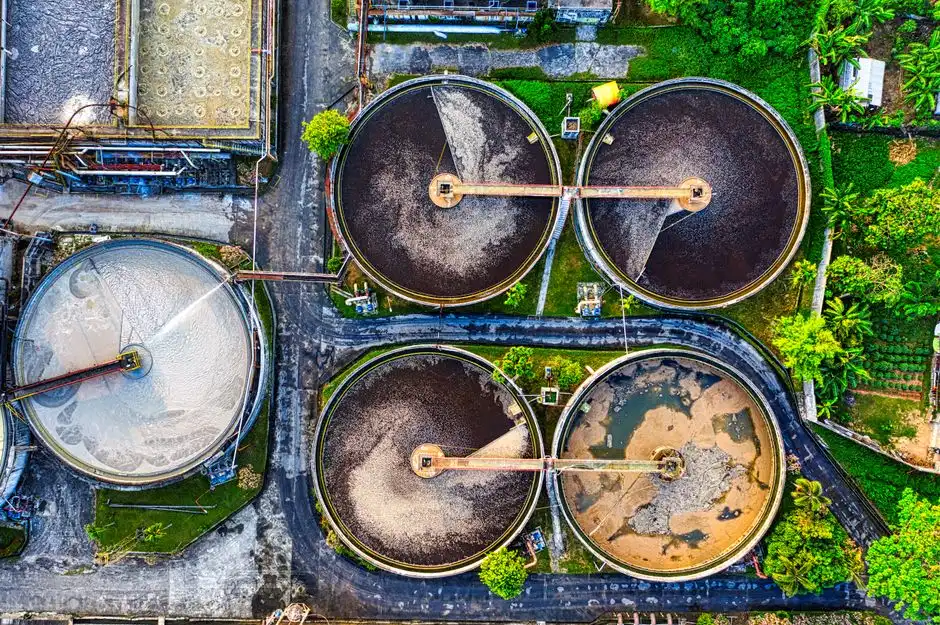
Wastewater findings become transaction liabilities only when they are measured, assigned and priced. Inspect biological equipment, aeration, tanks, piping, controls and containment. HydropureWater's 2026 service-life markers place MBR membrane runs at 5–8 years under normal operating conditions and PLC obsolescence windows at typically 7–10 years; these are screening markers, not condition reports for the Hungarian plant.
Quantify sludge inventory, classification, handling history and disposal exposure. Request hauler records, treatment records, manifests or electronic transfer records rather than accepting an undocumented volume estimate. Also review third-party O&M, laboratory, chemical, EPC and waste-hauler agreements for assignability, termination rights and retained liability.
Commission an environmental assessment appropriately scoped to the plant's history. Potential sources include lagoons, rendering-floor drainage, washdown paths, chemical and fuel storage, and former treatment areas. A generic Phase I assessment should not be represented as PFAS clearance; request PFAS testing separately where relevant.
HydropureWater reports in 2026 that undisclosed non-compliance can increase reserves by $2M–$18M and trigger remediation timelines of 18–36 months. These are HydropureWater transaction benchmarks, not Hungarian legal standards. Use them to frame sensitivity, not to set an automatic reserve.
| Exposure | Evidence required | Transaction treatment |
|---|---|---|
| ETP condition | Inspection, maintenance records, controls review, effluent data | Price repair or upgrade; require seller cooperation where necessary |
| Sludge and liquid waste | Measured inventory, classification, hauler and treatment records | Removal cost, working-capital adjustment or indemnity |
| Legacy contamination | Scoped assessment and targeted follow-up investigation | Remediation allocation, price adjustment or escrow |
The sludge and treatment-asset review can help structure the inspection, while the unresolved issue is the Hungarian site's measured condition and legal responsibility.
Build the Pre-Closing Decision and Contract Checklist
The acquisition should proceed only when the discharge route, authorization path, compliance history and preliminary exposure are understood. Give every permit, sewer, sampling, ETP, sludge and environmental item a named technical, legal and commercial owner, a completion date and an explicit consequence if unresolved.
- Classify every wastewater and waste destination.
- Confirm the authorization path with the competent authority and sewer operator.
- Review monitoring, enforcement and remediation history.
- Complete representative sampling and ETP capacity assessment.
- Quantify sludge and conduct appropriately scoped environmental work.
- Resolve material findings or allocate them contractually.
Condition closing on a clear authorization path, acceptable compliance history and resolution or contractual allocation of material findings. Review assignability and retention terms for sewer, O&M, laboratory, chemical, EPC and hauler contracts. The transaction checklist structure illustrates this organization, but Hungarian counsel must determine the final form of any condition precedent, indemnity, holdback or escrow.
| Decision | Required evidence | Closing response |
|---|---|---|
| Proceed | Clear route, viable authorization path, acceptable history and quantified exposure | Complete conditions and approve transition plan |
| Proceed with protection | Resolvable permit or environmental uncertainty with seller support | Price adjustment, targeted indemnity, holdback or escrow |
| Do not proceed | No credible authorization path or unallocable operational or legacy exposure | Renegotiate, defer closing or withdraw |
Budget a transition for operator retention, monitoring continuity, compliance-calendar handover and verification of sustained performance after closing. Contract language should address seller cooperation, remediation, permit-transfer assistance and cost allocation, with final structure determined by Hungarian counsel.
Frequently Asked Questions
Can JBS use the seller's Hungarian wastewater permit after closing?
Do not assume so. Obtain the current authorization and have Hungarian counsel and the competent authority confirm whether the acquisition requires a transfer, modification or new application. Continued operation should remain a closing issue until that path is documented.
What wastewater treatment equipment should be evaluated for a Hungarian food-processing plant?
Evaluate the existing train against measured loads and the applicable permit or sewer conditions. A DAF unit may be appropriate where FOG and suspended oil require pretreatment; an MBR should be evaluated where biological separation, compact installation and required effluent performance justify it. These are screening options, not predetermined selections.
How much should JBS reserve for an acquired plant's ETP upgrade?
HydropureWater's 2026 screening benchmark for basic ETP upgrades without a major process change is $280–$620 per m³/day treated. JBS should not use that range as a quotation. Request measured wastewater data, the capacity basis, a site-specific design and a supplier price before setting the reserve.
What evidence should JBS request from the seller before signing?
Request the current permit or sewer authorization, authority and correspondence, at least 12 months of flow and self-monitoring records where available, laboratory and chain-of-custody records, exceedances, enforcement instruments, ETP condition records, sludge documentation, environmental assessment records and relevant third-party contracts.
How long should JBS plan for authorization transfer or modification?
JBS should plan around the documented Hungarian authority process and the unresolved application work, not around a generic period. HydropureWater's 18–24 month reapplication figure is 2026 transaction guidance for another jurisdiction and is not a Hungarian statutory timeline. Make the closing schedule contingent on Hungarian counsel's written analysis and the authority's applicable requirements.