
Which Process Fits Transportation-Equipment Wastewater in Saint Peter?
For transportation-equipment wastewater in Saint Peter, MBR is generally the stronger candidate when low-solids effluent, a compact installation, or water-reuse potential is required; conventional activated sludge may be more economical when wastewater is readily treatable, land is available, and simple operation is the priority. The decision should follow a site-specific wastewater audit and permit review. MBR combines biological treatment with membrane separation, while conventional activated sludge relies on biological treatment followed by settling. HydropureWater states that its integrated MBR uses submerged PVDF filtration below 1 μm, occupies 60% less footprint than conventional systems, and covers 10 to 2,000 m³/day capacities.
That conditional conclusion matters because “transportation-equipment wastewater” can include several materially different streams: vehicle or trailer fabrication, metal finishing, coating, paint preparation, parts washing, equipment washing, and floor drainage. Each stream can carry a different mix of suspended solids, oils, cleaning chemicals, metals, and biodegradable organics. A plant should not select a treatment train from the process name alone.
The supplied research does not provide Saint Peter flow, pollutant concentrations, sewer limits, or discharge requirements. Those are mandatory inputs before final selection. The initial decision can nevertheless be organized around three questions:
- Is reuse or a low-solids discharge the objective? If so, MBR moves to the leading candidate position, subject to pretreatment and confirmatory testing.
- Is readily treatable wastewater available with adequate land? If so, conventional activated sludge may be the more practical choice because it separates solids by gravity rather than across membrane modules.
- Will washing, coating, or metal-finishing streams introduce variable contaminants? If so, characterize those streams before either process is sized.
For a defined equipment basis, HydropureWater’s integrated MBR wastewater treatment system combines activated-sludge biology with submerged PVDF membrane filtration. That is a relevant technical reference for the comparison, but its catalog claims are not proof of performance at an unidentified Saint Peter site.
Compare the Two Treatment Trains
Conventional activated sludge and MBR share biological treatment, but they separate solids by different mechanisms and therefore create different equipment and operating obligations.
The conventional activated sludge process treats wastewater biologically and then uses a secondary clarifier to settle biomass and other solids from the treated liquid. Final effluent quality depends on biological performance, clarifier design, hydraulic loading, and solids capture. The process has a relatively familiar separation stage, but it normally requires enough land for aeration, basins, settling, and sludge handling.
An industrial membrane bioreactor combines biological treatment with membrane separation. The academic study on membrane-bioreactor viability states that stricter wastewater-discharge requirements, sensitive sites, and reuse create demand for improved hygienic effluent quality. It describes membrane cutoff as a mechanism for reducing pathogen presence in treated water, although that does not establish suitability for every industrial reuse application.
HydropureWater specifies submerged PVDF membrane filtration below 1 μm for its integrated MBR. In contrast, conventional activated sludge relies on settling-based separation and a dedicated secondary clarifier. The MBR therefore avoids a separate clarifier but introduces membrane modules, aeration scouring, cleaning controls, integrity monitoring, and a greater sensitivity to upstream contaminants.
| Evaluation point | Conventional activated sludge | MBR |
|---|---|---|
| Solids separation | Secondary clarification by gravity settling | Submerged membrane filtration |
| Physical arrangement | Normally requires a separate clarifier | No separate clarifier in the integrated configuration |
| Effluent solids control | Dependent on biomass performance and clarifier capture | Improved solids retention and filtration; vendor specifies below 1 μm for its integrated system |
| Principal operating sensitivity | Biological performance, settling, aeration, and sludge handling | Those factors plus membrane fouling, scouring, cleaning, and module maintenance |
| Reuse potential | Depends on the required water quality and whether additional treatment is needed | Often attractive when a clean, low-solids feed is needed, subject to end-use testing |
| Space | Usually a larger physical installation | Vendor states 60% smaller footprint than conventional systems |
| Evidence boundary | Local performance depends on the actual stream and permit | Local performance depends on the actual stream, pretreatment, membrane design, and permit |
The research titles support application-specific evaluation rather than a universal ranking. They address pharmaceutical fate, winery reuse, and tannery process efficiency, not transportation-equipment wastewater in Saint Peter. None proves that MBR will outperform conventional activated sludge for a particular metalworking or vehicle-washing discharge.
Audit the Wastewater Before Choosing Equipment
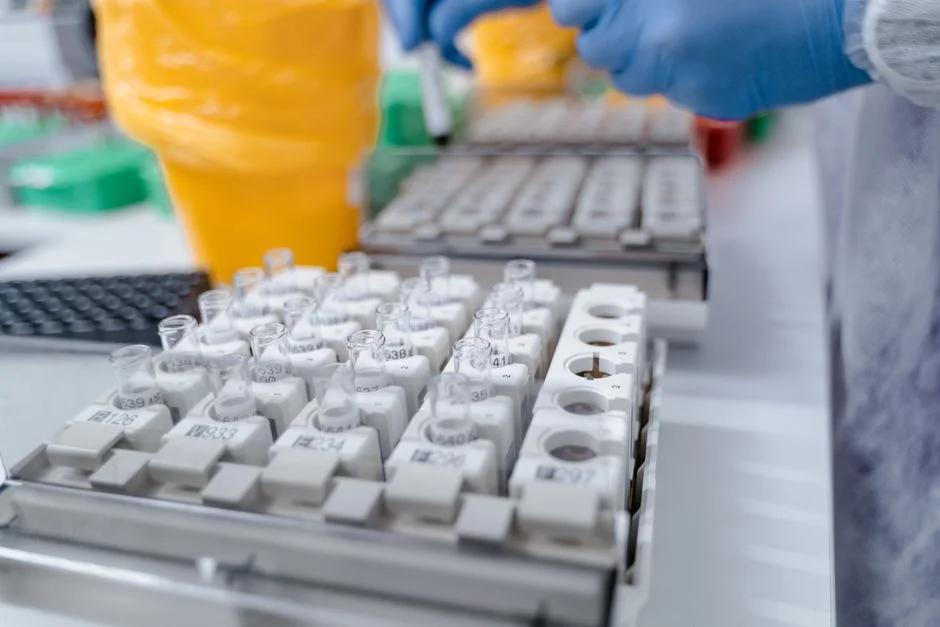
A defensible Saint Peter selection requires a measured wastewater profile, because no supplied source establishes the site’s flow, pollutant loads, sewer limits, or receiving requirements.
Begin with a sampling plan that separates production wastewater from sanitary flows and stormwater wherever practical. The sampling schedule should capture production shifts, washdown periods, storm events, peak daily flow, and minimum night flow. Composite samples alone may conceal short wash-cycle discharges; targeted event samples may therefore be necessary for identifying cleaning-related peaks.
The audit should characterize:
- Suspended solids and settleable solids
- Oil and grease
- pH
- Biological oxygen demand
- The identity and concentration of cleaning chemicals
- Metals or other persistent contaminants where metal finishing, coating, or paint stripping occurs
Stream identity is critical. Parts washing, equipment washing, floor drainage, paint preparation, metal finishing, and vehicle or trailer fabrication should not be combined into one average load without checking the underlying processes. The supplied research does not establish treatment performance for those specific streams. A bench test, pilot trial, or vendor trial is more defensible than extrapolation from pharmaceutical, winery, or tannery studies.
| Required input | Why it changes the selection |
|---|---|
| Peak and minimum flow, plus wastewater temperatures | Sets hydraulic and biological loading, equalization needs, and equipment configuration |
| Suspended solids, oil and grease, BOD, and pH | Determines biological loading, settling behavior, pretreatment, and fouling risk |
| Cleaning chemicals and process-specific contaminants | Identifies toxicity, membrane compatibility, and need for source control |
| Discharge point and current permit or sewer requirements | Defines the required effluent quality and whether clarification or filtration is necessary |
| Reuse destination and end-use specification | Determines the actual quality threshold; filtration alone does not establish reuse suitability |
Document whether the facility will discharge to a municipal system or another receiving route, and obtain the current Saint Peter requirements from the receiving authority. Then link hydraulic and contaminant data to equipment sizing. Without flow and load data, no defensible Saint Peter MBR capacity can be selected. Screening equipment such as a rotary mechanical bar screen may protect downstream biological and membrane components, but its selection also depends on the audit.
Pretreatment and Membrane-Fouling Controls
Upstream treatment can decide whether MBR is technically viable, because membranes retain solids that conventional systems may remove in a clarifier.
Use screening to remove rags, plastics, fibrous debris, and other suspended material that could obstruct biological treatment or membrane components. The required screen type and capacity must be based on the measured solids profile rather than equipment catalog limits.
Evaluate DAF when oil, grease, floatables, or colloidal material are present. HydropureWater identifies dissolved air flotation as pretreatment for industrial wastewater containing suspended solids, FOG, oil and grease, and colloidal matter. Its DAF pretreatment system should therefore be evaluated as a possible pretreatment element, not automatically included in the final train.
| Condition found in the audit | Potential pretreatment response | Decision still required |
|---|---|---|
| Fibrous material, plastics, or rags | Screening | Select the screen based on debris type and flow |
| Oil, grease, floatables, or colloidal solids | DAF evaluation | Confirm contaminant dominance and downstream target |
| Cleaning-chemical shock or incompatible materials | Source control, segregation, equalization, or chemical-specific treatment | Determine toxicity and membrane compatibility |
| Metals or persistent contaminants | Process-specific treatment or exclusion from the biological train | Establish discharge or reuse limits before selecting equipment |
MBR operation adds membrane scouring, cleaning, and module maintenance to the conventional aeration and sludge-handling requirements. A plant should establish whether its operators can perform routine cleaning, interpret pressure or flux trends, and manage replacement modules. If that capability is absent, the selection should include training, remote monitoring, service support, and an operating reserve; the remote monitoring for an industrial wastewater plant guide outlines a relevant control consideration.
HydropureWater’s DF-series flat-sheet MBR membrane modules provide a vendor equipment reference: 0.1 μm PVDF membranes, configurations from 80 to 225 m², output from 32 to 135 m³/day, and stated energy use 10–20 times below external cross-flow systems. That energy comparison is relative to external cross-flow systems; it is not evidence that an MBR uses less energy than every conventional activated-sludge installation.
Footprint, Reuse Readiness, and Operating Trade-Offs
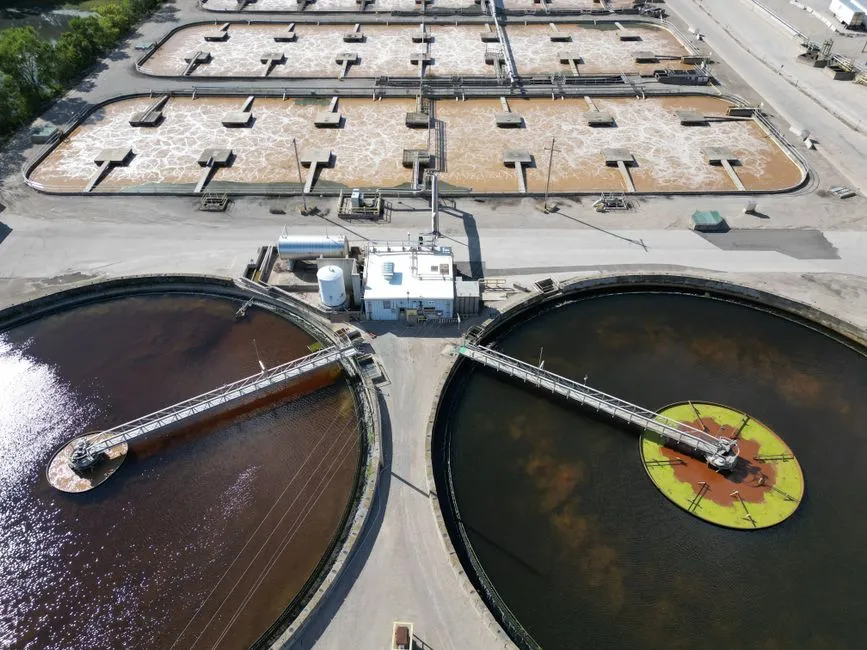
MBR can reduce the space devoted to solids separation, but footprint savings only improve the project case when the required pretreatment and operating clearances are included.
HydropureWater’s verified product catalog states that its integrated MBR occupies 60% less footprint than conventional systems and supports capacities from 10 to 2,000 m³/day. These are vendor-catalog claims, not independently verified Saint Peter predictions. The same catalog positions the system for municipal sewage, industrial process water, and reuse projects.
Membrane retention improves solids control and can provide a cleaner feed to downstream treatment. That makes MBR attractive when the next process needs low solids or when reuse has defined quality requirements. Conventional clarification may be sufficient when the objective is direct permitted discharge and the receiving authority does not require filtration-grade solids control.
| Project issue | MBR consideration | Conventional activated sludge consideration |
|---|---|---|
| Footprint | Vendor states 60% smaller footprint than conventional systems | Requires space for biological basins, secondary clarification, and sludge handling |
| Capacity basis | Integrated catalog range: 10–2,000 m³/day | Sizing must be established from site flow and load data |
| Reuse readiness | Low-solids filtration can support downstream treatment; end-use testing remains necessary | May require additional solids-removal or polishing steps |
| O&M focus | Aeration, sludge handling, membrane scouring, cleaning, monitoring, and replacement planning | Aeration, sludge handling, clarifier operation, and associated maintenance |
| Lifecycle cost | Must include membrane equipment, pretreatment, utilities, cleaning, replacements, labor, and sludge handling | Must include basins, aeration, clarification, utilities, sludge handling, labor, and footprint |
Filtration below 1 μm does not establish suitability for every reuse application. The required end use may need additional treatment, and the proposal should define the relevant water-quality specification. HydropureWater also offers an ultrafiltration water treatment system for polishing considerations, subject to a defined reuse objective.
Price the two options over the same planning horizon and scope. Include pretreatment, utilities, sludge disposal, cleaning, replacement membranes, operator labor, structural and civil work, and land or building requirements. The supplied research contains no defensible Saint Peter project price, so a bid comparison is more useful than a generic cost claim. The 2026 MBR wastewater cost per m³ guide can support cost-structure development, but site-specific quotations remain necessary.
A Weighted Selection Framework for Saint Peter
The preferred process should be the option with the highest weighted score after the site audit, rather than the option presumed superior before the audit.
Assign weights collaboratively to reuse potential, available footprint, effluent consistency, pretreatment needs, operator capability, lifecycle cost, and schedule. The weighting itself should reflect plant priorities. A facility that needs process-water reuse should not give that criterion the same weight as one considering direct sewer discharge.
- Score reuse potential. Increase the MBR score when low solids are valuable for a defined downstream use. Increase the conventional score when permitted discharge can be achieved with clarification.
- Score footprint and consistency. MBR benefits where land is constrained and solids control is important. Conventional activated sludge benefits where space is available and biological loading is stable and readily treatable.
- Score pretreatment and operability. Reduce the MBR score if the audit reveals variable oils, incompatible chemicals, excessive solids, or insufficient operator capability. Reduce the conventional score if clarification capacity cannot reliably meet the applicable requirements.
- Score lifecycle cost and schedule on a common scope. Include auxiliary treatment, utilities, sludge handling, membrane cleaning and replacement, labor, and civil works in both bids.
- Test uncertain streams. Use a documented pilot, bench test, or vendor trial rather than inferring treatability from general MBR research.
| Scoring factor | MBR scores more strongly when | Conventional activated sludge scores more strongly when |
|---|---|---|
| Reuse potential | Low-solids effluent supports a defined downstream use | The intended outcome is direct permitted discharge |
| Footprint | Available space is constrained | Adequate land is available |
| Pretreatment and operation | Feed quality is controlled and operators can maintain membranes | The wastewater is readily treatable and simpler separation is preferred |
| Lifecycle cost | Solids control and footprint value offset membrane-related costs | Capital simplicity and conventional O&M dominate the decision |
| Schedule | A compact, integrated package better meets the construction program | Conventional construction and procurement better match the schedule |
Require every bidder to state design flow, pretreatment assumptions, membrane type, footprint basis, O&M staffing, cleaning frequency, membrane-life assumptions, utilities, sludge handling, commissioning requirements, and exclusions. Make the final decision after confirming current Saint Peter discharge or reuse requirements with the receiving authority; generic national limits are not a substitute for the applicable permit or sewer rules.
Frequently Asked Questions
How much will MBR or conventional activated sludge cost for a Saint Peter facility?
No defensible project price is available from the supplied research because the site flow, wastewater loads, pretreatment needs, discharge route, footprint, utilities, and reuse target are not supplied. Request itemized bids covering process equipment, pretreatment, civil and structural work, utilities, sludge handling, operator labor, membrane cleaning and replacement, commissioning, and exclusions. Compare the bids over the same scope and planning horizon rather than relying on a generic per-m³ figure.
What capacity should an MBR system have for transportation-equipment wastewater?
HydropureWater’s integrated MBR catalog covers 10 to 2,000 m³/day, while its DF-series modules are listed at 32–135 m³/day. Those catalog ranges do not size a Saint Peter installation. Peak flow and contaminant load, together with the required effluent quality, must set the design. Obtain a representative flow profile and load data before selecting either the number of modules or the treatment-system capacity.
How should wastewater equipment suppliers be selected?
Use the wastewater equipment supplier evaluation guide as a procurement framework, then require Saint Peter-specific deliverables. Ask bidders to identify the design basis, membrane and biological design, pretreatment assumptions, O&M staffing, cleaning regime, replacement assumptions, utilities, controls, guarantees, and permit assumptions. Treat a documented trial for the actual industrial stream as stronger evidence than general product literature.
Does choosing MBR establish regulatory compliance in Saint Peter?
No. Technology selection does not establish compliance. The discharge point, receiving authority, current permit or sewer conditions, wastewater characteristics, and intended reuse specification must be confirmed before final selection. The 2026 MBR wastewater cost per m³ guide can inform cost planning, but the applicable local requirements should control the selected treatment objectives.