What wastewater streams does a Libreville data center need to treat?
A Libreville data center needs separate treatment paths for cooling-tower blowdown, sanitary sewage, generator and UPS coolant, glycol loops, floor drains, equipment-wash water, air-handling condensate, and treatment residues. Cooling-tower blowdown is normally the priority industrial stream because it carries concentrated dissolved solids, hardness, silica, iron, and cooling chemicals. Genesis Water Technologies reports that cooling systems account for roughly 80–90% of U.S. data-center water demand, but that is a U.S. benchmark—not a Libreville flow estimate. The practical approach is to segregate streams before combining them, then size the train from measured flow, chemistry, chemical inventory, and cooling-tower cycles of concentration.
Do not automatically mix stormwater or generator-yard wash water with cooling blowdown. Oil-bearing runoff requires a separate oil-water separation and drainage assessment. Generator and UPS coolant, glycol-loop waste, floor drains, and equipment-wash water also need their own containment, treatment, and disposal decisions. Air-handling condensate is usually a smaller stream, but it may contain corrosion inhibitors and should be characterized before reuse.
The minimum front-end information is a measured flow for every stream, source-water analysis, cooling chemical package, cooling-tower cycles of concentration, and expected operating variation. The data-center wastewater treatment guide for Johor Bahru provides a useful stream-separation framework, but its jurisdictional limits should not be transferred to Libreville.
| Stream | Main design issue | Required treatment or disposition |
|---|---|---|
| Cooling-tower blowdown | Concentrated salts, hardness, silica, treatment chemicals, heat and residual biocide | Characterize first; then filter, soften, dechlorinate, polish or reuse as applicable |
| RO reject and softener brine | Concentrated dissolved salts | Evaluate concentration or disposal; do not assume reuse as cooling makeup |
| Generator and UPS coolant; glycol loops | Product-specific contamination and variable composition | Segregated holding and authorized disposal |
| Floor drains and equipment wash | Suspended solids, oil, cleaners and treatment residues | Source segregation, solids or oil removal, then authorized disposal or reuse |
| Sanitary sewage | Organic loading and site headcount | Separate biological treatment or sewer route |
| Stormwater and generator-yard wash | Oil and solids | Oil-water separator and drainage assessment |
Build a measured water balance before selecting equipment
Equipment duty must come from a measured Libreville data center water balance, not from a theoretical blowdown rate alone. Install monitoring for makeup water, blowdown, evaporation and relevant water-quality parameters, including conductivity, pH and suspended solids. Genesis Water Technologies identifies these measurements as the baseline for separating true consumption from recoverable use.
The relationship used for preliminary cooling-water calculation is:
blowdown ratio = 1 / (CoC − 1)
At 4 cycles of concentration, the theoretical blowdown ratio is 25%; at 6 cycles, it is 20%. Genesis also reports that measured blowdown can exceed theoretical calculations by 15–30% because of unmeasured losses and emergency dumps. The operating plan therefore needs a measured variability allowance and an operational dump-control plan rather than a single nominal figure.
Keep the accounting terms separate. Evaporation is water permanently lost from the local watershed. Discharge is water that may potentially be treated and returned to use. The CRS summary cited by the supplied research reports that a 100 MW U.S. data center can consume water equivalent to about 2,600 U.S. households per day; this is an order-of-magnitude cross-check only, not a Libreville design value. The cooling-tower OEM and treatment supplier should confirm the final basis against local source chemistry, tower configuration and operating data. The cooling-blowdown treatment requirements for an Arifwala data center provides a related calculation framework, but the underlying measurements remain site-specific.
| Water-balance item | How to establish it | Procurement consequence |
|---|---|---|
| Makeup water | Meter withdrawal and confirm source chemistry | Sets intake, pretreatment and reuse comparison basis |
| Evaporation | Derive from the operating balance and reconcile with metering | Represents consumption, not recoverable discharge |
| Blowdown | Meter continuously and record emergency dumps | Sets treatment hydraulic duty |
| Required reuse flow | Define cooling makeup, washing or sanitary demand | Sets storage, pumping and polishing duty |
| Residual discharge | Subtract reuse from measured blowdown | Sets sewer or environmental-discharge pathway |
Choose a treatment sequence that protects the cooling loop and reuse water
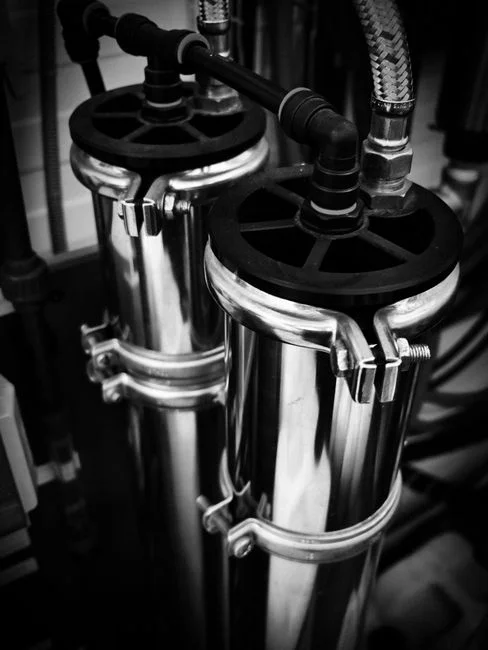
The smallest practical treatment sequence depends on the contaminants that determine cooling-loop stability and the quality required by the reuse destination. Begin with intake protection and source-water characterization. Hardness, silica, chloride and TDS influence feasible cycles of concentration, while suspended solids and organics determine the pretreatment needed ahead of membranes.
Multi-media filtration can reduce suspended solids and turbidity. Where finer colloid, bacteria and high-molecular-weight organic control is required before RO, the supplied guide describes UF at roughly 0.01–0.1 μm. A UF pretreatment for RO and reuse water should be evaluated against measured feed conditions rather than installed by default.
Use twin-tank softening when source chemistry otherwise constrains the cooling loop. The supplied Monrovia guide identifies source hardness above about 200 mg/L as CaCO3 as a threshold for considering side-stream softening or RO polishing. That is a screening reference, not a Libreville limit. If source chemistry, discharge constraints and water value justify blowdown-to-makeup recovery, evaluate an industrial RO system for cooling-blowdown recovery; the supplied product information supports recovery rates up to 95%, subject to actual feed and operating conditions.
Dechlorinate or neutralize oxidizing biocides before reuse or discharge. The supplied Monrovia guide identifies sulfur dioxide or activated-carbon polishing as possible routes, subject to process chemistry and regulator acceptance. DAF or lamella clarification is appropriate for oil-bearing wash water and settleable solids, but it is not the principal barrier to dissolved cooling chemicals.
Set the reuse target from the measured cooling and process requirement. The supplied guide cites cooling-tower makeup at 500–1,500 mg/L TDS and suspended solids of roughly 10–25 mg/L. Keep RO reject and softener brine as separate concentrated residue streams; neither should be sent back to cooling makeup without a documented mass balance and chemistry check.
| Decision condition | Process step | Procurement check |
|---|---|---|
| High suspended solids or turbidity | Intake screening, grit removal and multi-media filtration | Require feed-flow range, backwash controls and demonstrated filtrate quality |
| Finer particle or organic control required | UF | Require membrane pore range, flux assumptions and cleaning plan |
| Hardness or silica constrains cycles | Twin-tank side-stream softening or RO polishing | Provide chemistry, regeneration or recovery basis and brine route |
| Oxidizing biocide present | Sulfur dioxide or activated-carbon dechlorination | Confirm residual target and chemical compatibility |
| Oil or settleable solids in wash water | DAF or lamella clarification | Confirm oil load, solids removal and sludge handling |
| Cooling makeup recovery required | RO followed by polishing or dechlorination | Define recovery, permeate quality, reject management and storage |
Compare reuse, sewer discharge and environmental discharge
Reuse, sewer discharge and direct environmental discharge are different approval paths with different operating obligations. On-site reuse can reduce freshwater dependence and remove much of the thermal and residual-biocide discharge pathway, but it requires treatment, storage, pumping and controls sized to the measured recovery duty. Sewer discharge requires written confirmation of sewer capacity, industrial acceptance criteria, pretreatment requirements, connection fees and authorization. Direct environmental discharge should be treated as the most permit-intensive option because temperature, residual oxidant, TDS and other locally applicable conditions must be confirmed before the train is fixed.
The documented precedent of 70–90% blowdown recovery and a 35% municipal-water reduction at a hyperscale Texas facility processing 2.5 million gallons per month is useful as a precedent only; it is not a guaranteed Libreville outcome. Genesis also warns that hyperscale treatment technology can be uneconomic at smaller facilities because capital cost per unit treated and operating complexity are higher. A Libreville EPC should compare a modular recovery skid with the capital, energy, chemical, labor and residue burden of a larger RO, UF and chemistry train.
Do not select the pathway until the responsible Gabonese authority or utility confirms the industrial-discharge or reuse conditions in writing. The cooling-blowdown and wastewater treatment guide for Kaohsiung illustrates how the same three-pathway comparison can be structured, but its Taiwanese conditions cannot be imported into Gabon.
| Pathway | Primary benefit | Main obligation | Decision gate |
|---|---|---|---|
| On-site reuse | Reduces freshwater withdrawal and may reduce discharge volume | Treatment, storage, pumping, controls, residue handling and operator competence | Measured recovery duty and written reuse acceptance |
| Sewer discharge | Uses an existing conveyance and treatment route | Industrial pretreatment, connection charges, monitoring and authorization | Utility acceptance and capacity confirmation |
| Direct environmental discharge | May avoid sewer connection charges | Discharge permit, temperature control, residual-biocide control and parameter monitoring | Written authority conditions before design freeze |
Size and procure a resilient treatment train
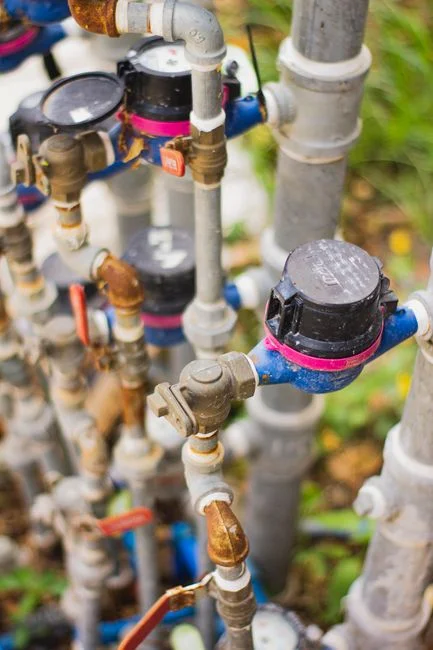
A comparable quotation should cover an integrated process train, not isolated components: source pretreatment, media filtration, UF where required, RO, softening, dechlorination, controls, storage and residue handling. Specify duty, recovery, permeate quality, reject management, redundancy, automatic backwash, maintenance access and utilities. No Libreville-specific recovery target should be fixed before the water balance and reuse decision are complete.
For initial vendor screening, the supplied product ranges are UF systems at 2,000–40,000 L/h, industrial softeners at 1–45 T/h and DAF systems at 4–300 m³/h. These ranges are screening references, not a basis for selecting equipment. The supplier must show how the proposed train controls microbiological growth, scale and corrosion without unnecessarily increasing dissolved solids, and how the system behaves during utility interruptions.
Require an OPEX breakdown covering energy, chemicals, labor, consumables, membrane or media replacement and residue disposal. No published Libreville-specific price or tariff was supplied, so request a site-specific quotation rather than importing a foreign unit rate. Permit acceptance, utility approval, source-water results, chemical compatibility, footprint, power quality and operator competence should be stated as long-lead procurement conditions.
| Vendor package | Required information | Acceptance evidence |
|---|---|---|
| Process and hydraulic design | Measured flows, chemistry, recovery target and operating variation | Mass balance, equipment sizing calculation and process flow diagram |
| Equipment and controls | Filtration, UF, RO, softening, dechlorination, storage and residue handling | Duty ranges, interlocks, backwash logic, redundancy and remote monitoring |
| Local execution | Footprint, utilities, power quality, access, chemicals and operator availability | Site layout, utility list, commissioning plan and training scope |
| Commercial | Capital and OPEX basis, exclusions, replacement cycle and residue disposal | Itemized quotation with stated assumptions and validity period |
| Compliance | Utility and environmental acceptance conditions | Permit references, sampling plan, diversion logic and compliance schedule |
Confirm local compliance and operating controls before commissioning
The applicable Gabonese environmental, industrial-discharge and municipal sewer requirements must be obtained during front-end engineering because the supplied research contains no numeric Libreville limits for pH, temperature, TDS, residual chlorine or trace metals. Do not substitute U.S. or Liberian limits. Request the complete cooling-water chemical package—including biocide, corrosion inhibitor, anti-scalant and dispersant products—because it determines both pretreatment needs and permit information.
Build the monitoring plan around the confirmed conditions. It may include flow, pH, conductivity or TDS, suspended solids, temperature and residual biocide. Provide secondary containment, drainage isolation, chemical-storage access, maintenance clearance and safe handling for sludge or brine. The civil design should also show how an upset stream is diverted to a compliant route.
Commissioning should verify hydraulic capacity, automatic controls, leak response, sampling procedures, diversion logic and operator competence. The industrial pretreatment and sewer-compliance guide shows why the treatment basis must be reconciled with the receiving authority before equipment is purchased.
Frequently Asked Questions
Does a Libreville data center need one treatment skid for all wastewater?
No. Cooling-tower blowdown, sanitary sewage, generator and UPS coolant, glycol loops, wash water and RO reject require different treatment and permitting paths. The priority industrial stream is blowdown, but it should not be mixed automatically with sanitary sewage, oily wash water or concentrated residues.
What measurements determine the size of a wastewater plant modular skid?
Start with measured makeup, blowdown, evaporation, cooling-tower cycles of concentration, stream chemistry and required reuse flow. Nameplate IT load is not enough. The theoretical blowdown relationship is 1/(CoC−1), but Genesis reports measured blowdown can exceed theoretical calculations by 15–30%, so operating variability and emergency dumps must enter the design basis.
What should a buyer request before comparing supplier prices?
Request one integrated scope for each supplier, supported by source-water chemistry, measured flows, cooling chemical inventory, target reuse flow, discharge route, utility constraints, site power quality, recovery basis, permeate quality, reject management, redundancy, controls and residue handling. Require itemized capital and operating costs for energy, chemicals, labor, consumables, replacement and disposal; no Libreville-specific price was supplied, so a quotation must state its local price and tariff assumptions.
Which supplier and compliance risks should be checked before skid award?
Check whether the supplier has experience delivering an integrated treatment train and can demonstrate automatic controls, maintenance access, operator training and utility-interruption response. Obtain written acceptance from the responsible Gabonese authority or sewer utility before freezing the process, because limits for temperature, residual biocide, TDS or other parameters can force changes to the treatment train. Treat utility approval, permit acceptance, source-water results, chemical compatibility and site footprint as long-lead conditions rather than post-award clarifications.