What Al Ain Data Centers Must Decide About Cooling Water
An Al Ain data center normally needs a treatment train sized after sampling its makeup water and quantifying cooling-tower blowdown by cycles of concentration, evaporation, makeup volume and discharge route. The likely hierarchy is side-stream filtration for solids control, followed by ultrafiltration for pretreatment, and reverse osmosis when dissolved-solids removal is required for cooling-tower reuse. Published reference data indicates four-cycle blowdown may carry 1,200–6,000 mg/L TDS, while RO can remove 95–99% of dissolved solids. For Al Ain, discharge permits and reuse conditions must be confirmed locally rather than assumed.
Cooling-tower blowdown is the concentrated residual left after water evaporates from a recirculating cooling system. Dissolved salts and treatment chemicals remain in the loop, so continuous removal is required to control scaling, corrosion and biological growth. Water Utility Report, updated 14 April 2026, identifies blowdown as a concentrated mixture of whatever entered with makeup water plus the chemicals added during cooling-system operation.
Al Ain’s hot-arid operating context makes the cooling architecture and wastewater consequences inseparable. However, the project cannot select a cooling system or treatment train from climate classification alone. A 2026 Open Engineering Inc. preprint comparing adiabatic and dry cooling for a 10 MW reference facility found that adiabatic cooling reduced heat-rejection electricity by a median of 30.5% and a maximum of 41% in the assessed feasible cases, but shifted the water burden from the grid to the site. The result depended strongly on location, tariff relationship and design conditions; it was not an Al Ain finding.
The design basis must therefore identify the proposed cooling architecture, makeup-water source, cycles of concentration, water balance, reuse target, discharge route and expansion plan. If those inputs are unresolved, equipment selection risks treating the wrong contaminant and producing an oversized or non-compliant train.
Characterize the Wastewater Before Choosing Equipment
Representative sampling, rather than a utility name or average water-use estimate, must establish the design inputs for an Al Ain cooling-blowdown train.
Request samples across the relevant operating condition: makeup water, circulating cooling-loop water and actual blowdown. Analyze TDS or conductivity, calcium, magnesium, silica, alkalinity, suspended solids, pH, residual biocides, corrosion inhibitors and any metals relevant to the intended discharge route. The same analytes become more important when blowdown is reused because the treatment system must control both incoming contaminants and accumulated cooling chemicals.
Genesis Water Tech reports that blowdown at four to eight cycles of concentration commonly contains 1,200–6,000 mg/L TDS and 10–50 mg/L suspended solids. These are published screening ranges, not guaranteed Al Ain results: source-water chemistry, evaporation and chemical dosing determine the actual values. Sampling must establish the local condition.
| Design input | Information required | Why it affects treatment |
|---|---|---|
| Water chemistry | Makeup, circulating-loop and blowdown analyses | Defines membrane loading, scaling risk and required pretreatment |
| Water balance | Makeup flow, circulation flow, evaporation and blowdown flow | Sets filtration, membrane and concentrate-management capacity |
| Cooling operation | Cycles of concentration, chemical program and operating hours | Determines concentrate composition and variation to be engineered |
| Water destination | Cooling makeup, blend, washdown or controlled discharge | Sets the required water quality and recovery objective |
| Future duty | Planned load, cooling changes and expansion | Defines whether modular capacity or additional trains are required |
Record evaporation rate, makeup-water flow, circulation flow, cycles of concentration, chemical dosing and expected blowdown hours. Evaluate normal and peak operation rather than one nominal condition. Clarify whether recovered water will return directly to the cooling tower, blend with fresh makeup, support equipment washdown or serve another non-potable process. Each destination has a different quality requirement: cooling reuse must remain compatible with the circulating-water chemistry, while washdown can sometimes accept a lower treatment objective if local reuse requirements permit it.
Compare UF, NF and RO for Al Ain Blowdown
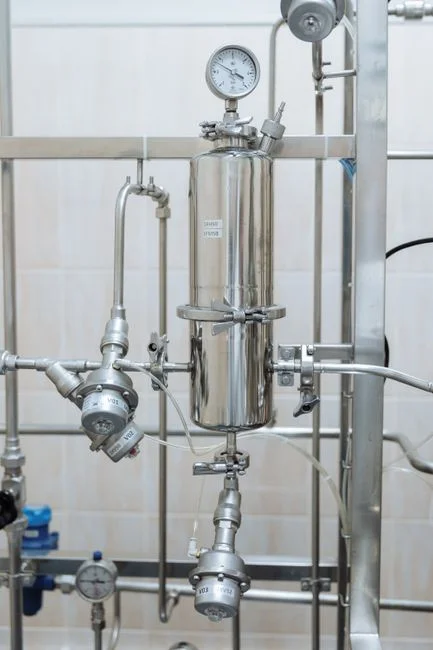
UF, NF and RO are not interchangeable: they remove different contaminant classes and should be matched to the water-quality objective before equipment is selected.
Ultrafiltration is primarily a solids and biological-barrier step. It can remove suspended solids, colloids and biological material before desalination, but it does not provide the dissolved-solids reduction associated with NF or RO. Genesis Water Tech describes UF pore sizes of 0.01–0.1 micron, operating pressure of 10–30 psi and recovery of 90–95%, with concentrate returned to the blowdown stream. An ultrafiltration system for blowdown pretreatment is therefore relevant where membrane protection or biological control is the objective, not as a substitute for desalination.
The specified UF option uses 0.03 micron PVDF membranes, accepts up to 300 ppm turbidity and incorporates automatic backwash and air scour. Those specifications make source-water acceptance and cleaning requirements important items for the supplier brief. The design must also establish what happens to UF concentrate and whether it is returned to the cooling loop, combined with another stream or sent to a controlled destination.
Nanofiltration occupies an intermediate position. Genesis Water Tech reports operation at 75–150 psi, recovery of 70–85% and permeate TDS at 30–50% of feed concentration. It selectively removes hardness and sulfate rather than providing the full dissolved-salts barrier of RO. It can be appropriate where partial softening meets the reuse or discharge objective and where the remaining chloride or other dissolved species is acceptable.
Reverse osmosis is the principal option when dissolved-solids removal is required. Genesis Water Tech reports 95–99% dissolved-solids removal, operating pressure of 150–400 psi, recovery of 50–85% and permeate typically at 10–50 mg/L TDS. An industrial RO system for cooling-water reuse should therefore be assessed against the required permeate quality, scaling chemistry and concentrate route—not simply against a headline recovery percentage.
| Technology | Primary treatment role | Published reference data | Main design issue |
|---|---|---|---|
| UF | Suspended-solids, colloid and biological pretreatment | Genesis Water Tech: 0.01–0.1 micron pores; 10–30 psi; 90–95% recovery | Concentrate handling and feed acceptance |
| NF | Partial desalination, particularly hardness and sulfate removal | Genesis Water Tech: 75–150 psi; 70–85% recovery; permeate at 30–50% of feed TDS | Whether residual dissolved species meet the reuse or discharge objective |
| RO | High dissolved-solids removal | Genesis Water Tech: 95–99% removal; 150–400 psi; 50–85% recovery; typically 10–50 mg/L permeate TDS | Scaling control, energy demand and concentrate destination |
Genesis Water Tech recommends filtering membrane feed below 10–15 microns and conditioning it against scaling using feed chemistry. Antiscalant, pH adjustment and other controls must therefore be specified around the selected membrane and actual water analysis.
Build the Treatment Train Around the Intended Water End Use
The defensible Al Ain treatment sequence begins with source assessment and ends with a confirmed destination for every liquid stream; equipment selection follows from that route.
- Characterize makeup water, cooling-loop water and blowdown.
- Install side-stream filtration where solids control supports cooling operation and downstream membrane protection.
- Add UF pretreatment where the selected UF, NF or RO process requires it.
- Apply NF or RO when the end-use quality requires partial or comprehensive desalination.
- Review disinfection and cooling-chemical compatibility before storage or reuse.
- Store recovered water and route it to controlled reuse, blending or discharge.
- Manage membrane concentrate through a separately permitted and hydraulically balanced route.
Genesis Water Tech reports recovery of 60–85% for cooling-tower makeup reuse treatment. That makes reuse the first recovery option to evaluate where the cooling chemistry, water balance and local conditions permit it. Equipment washdown or another non-potable use may offer a lower-treatment objective, but the buyer must obtain the applicable local reuse requirements rather than infer them from generic technology literature.
For controlled discharge, confirm TDS, biocide residues, metals, pH and flow with the receiving authority. Water Utility Report, updated 14 April 2026, notes that discharge quality depends on source water, treatment chemistry, cycles of concentration and the receiving system. Permit limits from another jurisdiction are not a substitute for an Al Ain approval pathway.
Where membrane concentrate is generated, define its permitted destination before selecting RO recovery. A controlled partial-concentration route may be evaluated before full zero liquid discharge, but it remains conditional on the receiving authority, available infrastructure and site utilities.
The cooling-water chemistry program must be coordinated with the recovery system. Accumulated biocides, corrosion inhibitors, scale inhibitors and dispersants can complicate reuse, membrane compatibility and discharge. Where pH adjustment or antiscalant dosing is needed, evaluate an automatic chemical dosing system as part of the complete train rather than as an accessory selected after the membranes.
Decide Whether Al Ain Needs Partial or Full ZLD
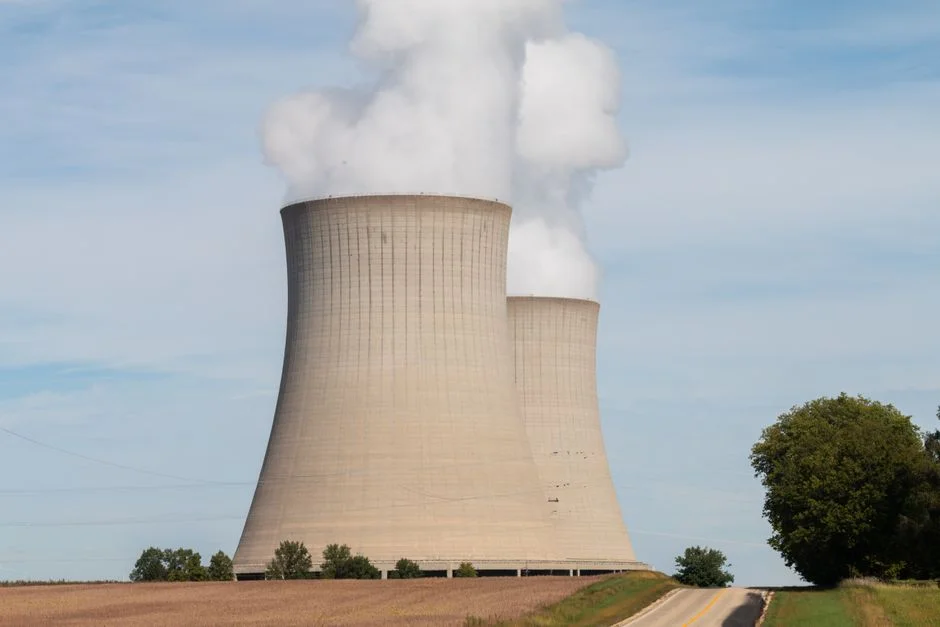
Partial or full ZLD should enter the comparison only after reuse, membrane recovery, concentrate handling and confirmed discharge constraints have been evaluated.
Genesis Water Tech reports that mechanical vapour compression can recover 95–98% of water from membrane concentrate, produce distillate below 10 mg/L TDS and leave residual brine containing 20–30% dissolved solids. Its published process option combines RO recovery of 50–75% with 95% recovery of the resulting concentrate, giving 85–95% overall system recovery. These figures describe the cited process arrangement; they do not establish performance for an Al Ain feed.
Full ZLD adds crystallization and is reported by Genesis Water Tech to achieve 95–99% overall recovery, with solid waste below 1% of the original blowdown volume. The same source states that full ZLD has the highest capital and operating cost of the compared routes. Selection therefore requires verified information about discharge restrictions, the value and cost of freshwater, available waste heat, land, approved brine-disposal options and the operator’s ability to sustain the process.
| Decision route | Recovery objective | Decision condition |
|---|---|---|
| Cooling-tower makeup reuse | Genesis Water Tech reports 60–85% recovery | Use when permeate quality and cooling chemistry permit reuse |
| Partial ZLD | Published MVC case achieves 85–95% overall recovery | Use when confirmed discharge constraints justify concentrating the residual stream |
| Full ZLD | Genesis Water Tech reports 95–99% recovery | Use when verified restrictions and site economics support evaporation and crystallization |
The published US equipment and operating-cost figures in Genesis Water Tech are screening references, not quotations for Al Ain. The project needs a site-specific economic model covering local water and discharge costs, electricity, chemicals, maintenance, waste handling, heat integration and the consequences of changing cooling-water demand. Until the receiving route is confirmed, neither partial nor full ZLD should be treated as the committed design.
Plan Monitoring, Controls and the Supplier Brief
A procurement package should define what must be measured, controlled, guaranteed and confirmed before a treatment train is accepted.
Specify monitoring for flow, conductivity or TDS, system pressure, differential pressure across filtration and membranes, permeate quality, concentrate quality and chemical dosage. The monitoring strategy should distinguish continuous measurements used for control from routine laboratory testing used to confirm chemistry and discharge compliance.
Require automatic backwash for UF, PLC-controlled operation for RO, and controlled chemical dosing where antiscalant or pH adjustment is required. Ask each supplier to state its feed-water limits, membrane compatibility, cleaning approach, antiscalant assumptions, alarm setpoints, shutdown logic and expected concentrate condition. These items are more useful than a generic recovery claim because they show how the system responds to real Al Ain chemistry.
Commercial and technical due diligence should also cover spare-element availability, local service capability, operator training, maintenance access and guarantees. Confirm that treatment parts, valves and media are available through a practical local support arrangement and that critical consumables have defined lead times.
The final recommendation should be issued as a design basis containing assumptions, alternatives, pilot-test needs and unresolved permit questions. Published cooling-blowdown ranges are screening references only. Final capacity, recovery and performance guarantees should follow Al Ain sampling, water-balance calculations and utility or permit confirmation. Further process context is available in the cooling tower blowdown treatment specifications and ZLD cost breakdown.
Frequently Asked Questions
What wastewater and cooling blowdown treatment does a data center in Al Ain City, United Arab Emirates need?
It needs a source-specific train selected after measuring makeup water, circulating-loop water and blowdown. The required sequence may include side-stream filtration, UF pretreatment, NF or RO desalination, controlled chemical dosing, storage and a confirmed reuse or discharge route. Al Ain permit and reuse conditions must be resolved locally.
How much does wastewater and cooling blowdown treatment cost for an Al Ain data center?
The supplied research contains technology-reference cost data but no Al Ain quotation. A comparable price requires blowdown flow, complete feed-water analysis, reuse target, discharge route, recovery requirement, available site utilities and operating hours. Request a capital estimate, operating-cost model and sensitivity analysis based on those inputs.
Should an Al Ain data center choose UF or RO for cooling-blowdown treatment?
UF addresses suspended solids, colloids and biological material and is commonly used as pretreatment; RO provides the stronger dissolved-salts barrier. Choose UF alone where those are the required treatment outcomes, and add NF or RO where hardness, sulfate or total dissolved-solids limits govern. Feed chemistry and the required permeate quality determine the answer.
What information is needed to size the treatment system and confirm discharge risk?
Provide makeup flow, cycles of concentration, blowdown flow, feed-water analysis, recovery target and operating hours. Before committing to reuse, partial ZLD or full ZLD, obtain written confirmation from the receiving authority or sewer operator about the permitted route, quality parameters, flow and concentrate handling. This check prevents technical sizing from creating a non-compliant design.