Determine which discharge requirements apply
Mining and metals plants near Woodbine that discharge process wastewater to a sewer generally need to satisfy pretreatment requirements imposed by the receiving publicly owned treatment works, as well as any separate NPDES requirements that apply to direct or point-source discharges. EPA explains that POTW local limits are site-specific numeric or narrative effluent limits, including BMPs, and are enforced at the end-of-pipe connection to the collection system. The practical response is to characterize the wastewater, obtain the controlling permit and limits, then design an adaptable treatment train for pH, suspended solids, and metals. Continuous monitoring, records, and contingency planning convert treatment performance into compliance evidence.
The first decision is not which treatment unit to buy. It is identifying where each stream goes and which agency controls the receiving point. A sewer connection is an indirect discharge governed through the POTW pretreatment program; a direct release to surface waters is a different authorization pathway. The US EPA states that the Clean Water Act requires point-source discharges from mining operations, including discharges from associated impoundments, to be authorized under an NPDES permit (US EPA, Industrial Wastewater, current page accessed 2026).
For a sewer discharge, request the industrial user permit, the POTW’s approved pretreatment requirements, applicable local limits, prohibited-discharge conditions, monitoring instructions, sampling point, reporting schedule, and compliance milestones. These documents establish the enforceable boundary for the project. A facility may also have a separate NPDES obligation if another portion of its wastewater reaches surface waters, groundwater, stormwater, or an impoundment. Assign each route separately rather than assuming one permit covers the site. See the mining wastewater sewer-limit compliance guide for a related workflow and the industrial pretreatment limits for mining and metals plants.
| Discharge route | Controlling framework | Documents to obtain |
|---|---|---|
| Process wastewater enters a POTW sewer | POTW pretreatment requirements and local limits | Industrial user permit, approved local limits, prohibited-discharge rules, monitoring and sampling conditions |
| Point-source discharge reaches surface waters | NPDES authorization | Applicable permit and discharge conditions |
| Stormwater or other authorized discharge | Applicable stormwater or sector authorization | Coverage determination, permit, monitoring requirements and discharge controls |
| Discharge from an associated impoundment | NPDES framework identified by EPA for mining operations | Site-specific permit coverage, limits, monitoring and reporting conditions |
Satisfying an NPDES permit does not automatically demonstrate compliance with POTW local limits. They protect different receiving points and operate through different enforcement pathways. A permit review should therefore produce a clear map of each discharge route, its applicable authority, and the evidence required for compliance.
Obtain the enforceable limits and sampling rules
40 CFR 403.3(j) defines pretreatment standards as pollutant discharge limits that apply to industrial users, so the controlling industrial user permit and locally approved limits form the compliance envelope for an indirect discharger. EPA states that POTW local limits can be numeric or narrative effluent limits, including best management practices, and are imposed at the end-of-pipe discharge from the industrial user, meaning the point of connection to the POTW collection system (US EPA, Pretreatment Standards and Requirements—Local Limits, current page accessed 2026).
Do not size treatment from a generic metal, pH, or suspended-solids value. Transcribe every enforceable condition from the approved permit or local-limit document into a compliance register. Include the pollutant, averaging period, maximum or average concentration requirement, mass-loading limit where applicable, monitoring frequency, sample type, analytical method, flow condition, reporting deadline, and designated sampling point. If the document is silent on an input required for design, record that gap and request written clarification.
| Compliance item | What the buyer must extract | Design consequence |
|---|---|---|
| Pollutant | Each regulated constituent and any BMP requirement | Defines analytes and required treatment functions |
| Compliance basis | Concentration, mass loading, or both; maximum and average provisions | Determines whether flow and concentration must both be controlled |
| Monitoring | Frequency, sample type, analytical method, and flow condition | Sets monitoring, laboratory, and control-system scope |
| Sampling location | End-of-pipe or other permit-designated point | Prevents treatment-unit data from being mistaken for discharge evidence |
| Reporting | Deadline, required form, record-retention and notification duties | Creates the compliance calendar and responsible parties |
Use 40 CFR Part 403.5 as the baseline prohibited-discharge review, then apply the site-specific conditions imposed by the POTW. EPA identifies 40 CFR Part 403.5(c) as the provision identifying POTWs that must develop local limits. Request the locally approved and enforceable version rather than relying on a national summary or assumed Woodbine limit. The framework for fabricated-metals facilities in a related pretreatment-limit review illustrates why the permit and approved local-limit document must be the controlling references.
Characterize the wastewater before choosing treatment
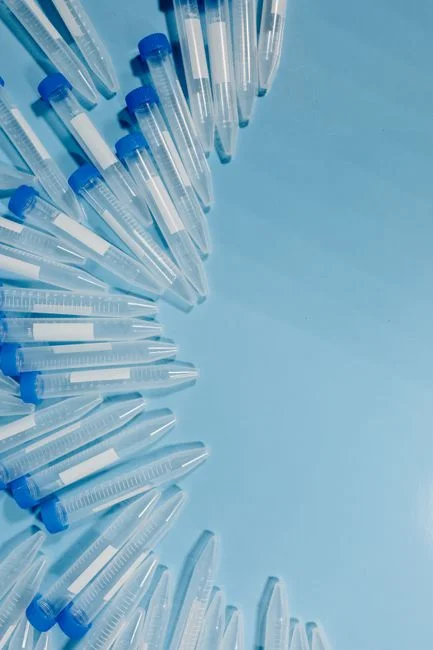
Mining wastewater characterization must separate hydraulic variability from pollutant variability because either can determine whether a treatment train remains compliant. Build a source-by-source inventory covering runoff, process water, washdown, floor drainage, cooling or wash water, sump discharges, and contaminated stormwater that could enter the sewer. Record whether each stream is continuous, intermittent, storm-dependent, or tied to a production phase.
Collect representative samples across production cycles rather than treating one clean-water result or one upset-day result as the design basis. Document flow, pH, suspended solids, metals, and oil and grease where relevant, together with the operating condition represented by each sample. The same analytes, methods, flow basis, and sampling conditions should then be used for untreated and final-effluent verification.
Mining and mineral-processing wastewater can contain suspended solids, metals and metalloids such as iron, arsenic, and manganese, organic compounds, acidity, and sometimes high salinity. Genesis Water Technologies describes those constituents in its mining-water treatment guidance, dated 2026. LiqTech likewise identifies suspended solids, organic compounds, and inorganic contaminants including heavy metals as membrane-treatment concerns for mining wastewater, dated 2026. Those sources support the characterization scope, not a Woodbine-specific concentration limit.
| Characterization question | Required evidence | Treatment implication |
|---|---|---|
| Does the sewer flow vary independently of pollutant concentration? | Continuous flow record with timestamps and operating states | Assess equalization and hydraulic loading |
| Which constituents drive permit or POTW interference risk? | Representative source-by-source analytical results | Select chemical, solids-separation, filtration, or membrane functions |
| Can dilution conceal an exceedance? | Concentration and flow data evaluated on the permit basis | Control both mass loading and concentration where required |
| Can a release affect POTW operation or sludge processing? | Prohibited-discharge review and chemical/route inventory | Establish segregation, monitoring, and contingency controls |
| Is the plant data sufficient for sizing? | Representative sampling plan tied to production conditions | Hold final sizing until missing evidence is resolved |
Use the data to identify whether an excursion could upset the POTW, damage collection or treatment equipment, interfere with sludge processing, or create a permit violation. Missing plant data is an engineering hold point, not permission to substitute generic mining-wastewater ranges. The DAF versus clarifier selection for mining wastewater guide provides a useful adjacent comparison, but equipment selection must follow the facility’s own characterization and enforceable limits.
Build a treatment train around the permit envelope
A defensible treatment train assigns one compliance function to each stage and then verifies the combined effluent at the permit-designated sampling point. Begin with source segregation and flow management. Equalization may be necessary when variable discharge can dilute concentrations, exceed mass-loading limits, or overwhelm downstream units. Confirm that need with production and flow data rather than assuming a larger tank is the solution.
Next, control pH within the range established by the permit, receiving POTW, and process testing. pH adjustment can support precipitation of dissolved metals, but the operating range and chemical dose must come from the actual wastewater. Apply coagulation and flocculation where suspended solids and small metal-containing particles require aggregation. Jar tests, followed by column or pilot testing, establish dose and operating conditions before full-scale implementation.
Select DAF or clarification according to solids characteristics and the hydraulic objective. DAF is relevant where suspended solids, oil and grease, or colloidal material must be removed; the DAF system for mining wastewater pretreatment is published for 4–300 m³/h. Add filtration when the permit or downstream POTW requires further suspended-solids control. For an integrated sequence combining coagulation, flocculation, sedimentation, filtration, and automatic backwash, the integrated mine-water treatment system is published for 10–200 m³/h, turbidity up to 3,000 mg/L, and treated turbidity below 3 mg/L.
Membrane polishing should be justified by the required effluent quality and residual solids or colloids. HydropureWater’s UF system is published at 2,000–40,000 L/h with 0.03 micron PVDF membranes, turbidity up to 300 ppm, automatic backwash, and air scour; its stated removal scope includes bacteria, colloids, and suspended solids without chemicals. These are published equipment specifications, not guarantees for an unidentified Woodbine wastewater.
| Treatment function | Decision basis | Evidence required before final sizing |
|---|---|---|
| Equalization and flow management | Flow variability, dilution risk, downstream hydraulic loading | Representative flow trace and operating scenario |
| pH adjustment | Acidity or alkalinity and permit requirement | Chemical demand and precipitation testing |
| Coagulation and flocculation | Suspended solids and particulate metals | Jar or pilot dose and solids-capture data |
| DAF or clarification | Solids characteristics and hydraulic objective | Solids loading, capture, and residual quality |
| Filtration or UF polishing | Residual suspended solids, colloids, or specified contaminants | Fouling behavior, cleaning demand, and treated-water results |
| Residuals handling | Chemical precipitation and separated solids | Sludge volume, dewatering need, and compliant disposal route |
Route residuals from chemical precipitation and solids separation into sludge dewatering and disposal planning. Treatment performance cannot be demonstrated if the resulting waste has no lawful, practical handling route. Preserve enough operating information to explain how each pollutant is removed and where the solids ultimately go.
Size for variability and verify performance
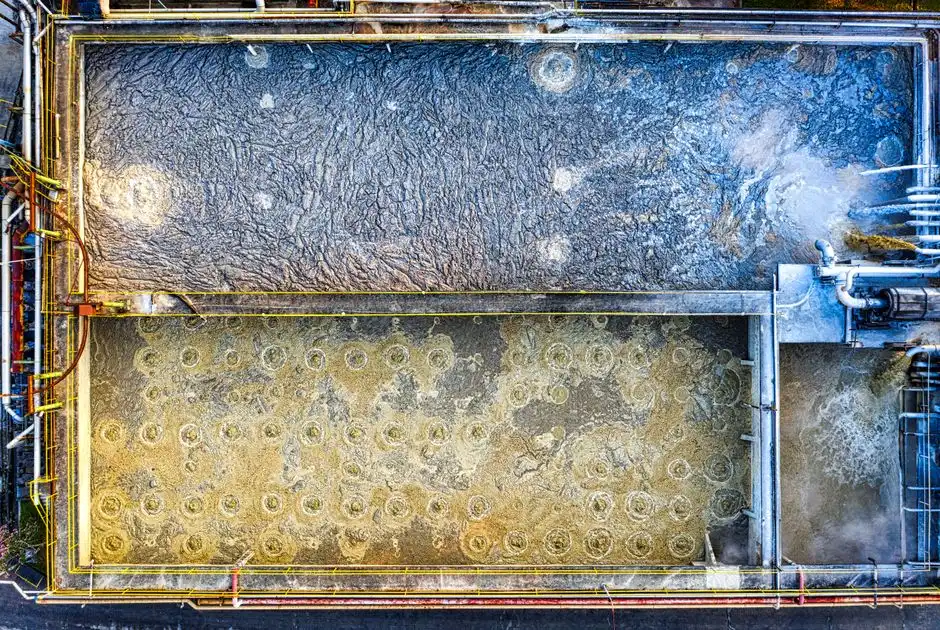
Sizing begins with the governing flow condition and treatment objective, followed by checks for upset, shutdown, and maintenance states. The JY series range of 10–200 m³/h, DAF range of 4–300 m³/h, and UF range of 2,000–40,000 L/h are published catalog envelopes, not automatic answers for a Woodbine plant. Project design must reflect measured flow, permit basis, redundancy, equalization, and the required degree of treatment assurance.
Verify the selected train with side-by-side influent and effluent sampling. Include pH, suspended solids, metals, and every permit-listed analyte, using the required methods and sampling conditions. Pilot-test chemical dose, pH range, solids capture, filtration or membrane behavior, and sludge generation. A pilot result should be tied to representative plant conditions; otherwise it does not support a defensible performance guarantee.
| Design check | Question to answer | Procurement or engineering deliverable |
|---|---|---|
| Hydraulic envelope | What flow and concentration govern sizing? | Documented design basis and operating scenarios |
| Redundancy | How is compliance maintained during maintenance or upset? | Equalization, standby capacity, or controlled shutdown strategy |
| Performance verification | Which analytes must be demonstrated at the sampling point? | Side-by-side sampling plan and acceptance criteria |
| Residuals | What solids and chemicals leave the treatment train? | Sludge balance, dewatering route, and disposal plan |
| Operations | Which settings, alarms, and actions control excursions? | Control narratives, training scope, and maintenance plan |
Before commissioning, define operating triggers, alarm setpoints, bypass controls, chemical-inventory limits, and the escalation response. Include membrane or media replacement, chemical consumption, sludge handling, energy use, operator attention, and maintenance access in lifecycle evaluation. The related DAF and clarifier comparison can support equipment evaluation, but project guarantees still require site-specific evidence.
Turn monitoring into compliance evidence
End-of-pipe sampling is the operational link between treatment performance and permit compliance because POTW local limits apply at the industrial user’s point of connection to the collection system (US EPA, Pretreatment Standards and Requirements—Local Limits, current page accessed 2026). Place permanent monitoring and sample collection at the permit-designated location, not only at an upstream clarifier or filter.
Calibrate pH instruments and verify flow measurement before the first compliance sample. At each operating state, record flow, concentration or mass-loading calculations, chemical dosage, operating mode, upstream conditions, and corrective actions. Trend concentration and mass loading separately because the enforceable endpoint may use either basis.
EPA’s local-limit development sequence provides a useful operating benchmark: determine pollutants of concern, collect and analyze data, calculate maximum allowable loadings, implement limits, and conduct annual reviews and periodic reevaluations (US EPA, Pretreatment Standards and Requirements—Local Limits, current page accessed 2026). The plant should not wait for a limit-development review to improve its own operating records; it needs auditable evidence that the installed treatment train controls discharge conditions.
| Evidence category | Record to retain | Compliance use |
|---|---|---|
| Sample identity | Date, time, location, flow, operating condition, sampler | Connects the result to the discharge event |
| Laboratory control | Method, chain of custody, analytical report, qualifiers | Supports defensible analyte results |
| Plant operation | Dose, pH, flow, equipment status, alarms, actions | Explains performance and corrective response |
| Instrument assurance | Calibration and verification records | Supports measurement reliability |
| Deviation response | Investigation, notification, bypass and spill records | Demonstrates handling of excursions |
| Periodic review | Trend reports and compliance calendar | Identifies drift before a reporting deadline |
Maintain chain-of-custody and analytical records, investigation reports, corrective-action logs, calibration proof, and bypass documentation. Establish a bypass and spill plan that prevents untreated discharge and records every deviation or exceedance. The broader workflows in a petroleum-plant pretreatment review and a transportation-equipment pretreatment review illustrate the same need for discharge-specific operating evidence.
Frequently Asked Questions
What are the applicable sewer limits for a mining plant near Woodbine?
The applicable limits are the ones in the receiving POTW’s approved local-limit requirements and the plant’s industrial user permit. The research supplies no Woodbine-specific numeric limit. Request the locally approved document, permit, prohibited-discharge conditions, monitoring instructions, and compliance schedule from the receiving POTW, then enter each condition into the project compliance register.
Which treatment system will meet the sewer limits?
No single device can be selected from a generic promise. First characterize the untreated wastewater and identify the permit envelope, then allocate functions among equalization, pH control, coagulation and flocculation, DAF or clarification, filtration or UF, and residual handling. Pilot testing must confirm the selected sequence against representative influent and the required permit analytes.
How much should treatment equipment cost, and what affects the budget?
No project quotation or Woodbine cost range is provided in the research. Request a budgetary and total-cost-of-ownership proposal based on design flow, wastewater characterization, required analytes, treatment objectives, site utilities, chemical consumption, solids handling, monitoring, redundancy, installation conditions, and maintenance scope. Do not compare prices until suppliers define the same design basis and performance guarantee.
How should a supplier be selected for capacity, delivery, and compliance risk?
Require a project-specific sizing basis, pilot or bench evidence, performance-guarantee conditions, end-of-pipe monitoring scope, redundancy strategy, chemical and sludge assumptions, and lifecycle support. Confirm manufacturing and delivery timing against the permit compliance schedule. Published catalog envelopes are screening references only; acceptance should depend on demonstrated performance at the stated wastewater and flow conditions. The mining wastewater sewer-limit compliance guide and DAF versus clarifier selection for mining wastewater provide related decision points.