What Changes When PepsiCo Acquires a Malaysia Plant?
When PepsiCo acquires a plant in Malaysia, wastewater becomes a licence-transfer and operating-risk issue, not an automatic corporate approval. Before closing, verify the Department of Environment’s discharge authorisation, any EQA 1974 licence or environmental approval, sewer-connection or pretreatment requirements, monitoring obligations and treatment capacity. The site must also be characterized for flow, BOD, TSS, pH and process-specific contaminants. PepsiCo’s beverage-crusher demonstration shows why variable, high-strength loads matter: in a seven-month trial, BOD removal exceeded 1,350 lb/day and TSS removal reached 140 lb/day, according to Aquacycl’s case study.
Ownership transfer does not erase historical exceedances, unassigned obligations or treatment deficiencies. The buyer must establish whether the seller’s authorisations cover the legal entity, site, wastewater stream, discharge route and monitoring points that will operate after closing.
Request the core decision record: DOE discharge authorisation; EQA 1974 licences or approvals; EIA documentation; sewer or trade-waste agreements; monitoring reports; laboratory results; exceedance notices; enforcement correspondence; and corrective-action plans. Review shared treatment, sewer-capacity and third-party service contracts for change-of-control or assignment restrictions. Regional context and document requirements are covered in the Malaysia wastewater acquisition due-diligence guide.
| Acquisition question | Evidence required | Decision consequence |
|---|---|---|
| Is discharge authorised for the acquired legal entity and actual wastewater stream? | DOE authorisation, transfer or reissuance correspondence, permit conditions | Condition closing on viable authorisation or a defined approval pathway |
| Can the treatment system handle the acquired load? | Flow, BOD, TSS, pH and process-specific monitoring data | Fund upgrades or retain a quantified remediation reserve |
| Are third-party arrangements secure? | Sewer agreement, service contracts, assignment and termination provisions | Obtain consent, replacement rights or an alternative discharge route |
| Does the site fit PepsiCo’s environmental strategy? | Water balance, reuse potential, energy use and residual-sludge handling | Separate mandatory compliance investment from discretionary recovery projects |
The strategic test is whether the plant can demonstrate compliance, accept its actual wastewater load and support PepsiCo’s water and climate objectives without transferring an unquantified liability. PepsiCo’s published targets are net water positive by 2030 and net-zero emissions across the entire value chain by 2040, according to Aquacycl’s case study. Those corporate targets are decision criteria—not Malaysian discharge limits.
Run a Red-Flag Screen Before Signing
A Malaysia plant acquisition due diligence process should be designed to identify permit and liability problems before they become post-closing capex. The first review is documentary: every approval must match the legal entity, site, stream, route, monitoring point and operating condition expected after the transaction.
- Authenticate approvals: obtain the DOE discharge authorisation, EQA 1974 approvals, EIA records and any consent connected with the discharge route.
- Test operating compliance: reconcile monitoring reports and laboratory data against permit conditions; trace exceedances, notices, corrective actions and unresolved enforcement correspondence.
- Check continuity: review sewer or trade-waste agreements, shared-treatment arrangements and service contracts for capacity, pricing, expiry, termination and assignment provisions.
- Challenge treatment adequacy: compare as-built hydraulic capacity and operating records with the plant’s actual production profile.
| Red flag | Question for the seller or authority | Pre-closing response |
|---|---|---|
| Permit entity mismatch | Does the authorisation cover the acquiring legal entity, or must it be transferred or reissued? | Obtain written confirmation and include approval as a closing condition |
| Undisclosed exceedance | Were notices issued, and were corrective actions complete? | Quantify remediation and require disclosure or an escrow/reserve |
| Third-party termination exposure | Does the sewer or service provider require consent? | Secure consent or price an alternative arrangement |
| Capacity mismatch | Do measured flows and loads exceed installed treatment performance? | Develop a concept, cost estimate and remediation schedule |
| Monitoring gap | Are sampling points, methods, laboratories and reporting records complete? | Re-establish the baseline before handover |
Do not use a Malaysian case study, trade-waste category or another operator’s site to infer a numerical effluent limit. The current site-specific DOE conditions and requirements must be confirmed with the issuing authority; sewer restrictions must be confirmed with the sewer operator.
Where findings support it, make closing conditional on permit viability, complete disclosure of historical non-compliance and an agreed treatment-remediation reserve. The Malaysia wastewater requirements overview supports the wider review, but it does not replace primary permit documents or regulator confirmation.
Characterize the Acquired Plant’s Wastewater
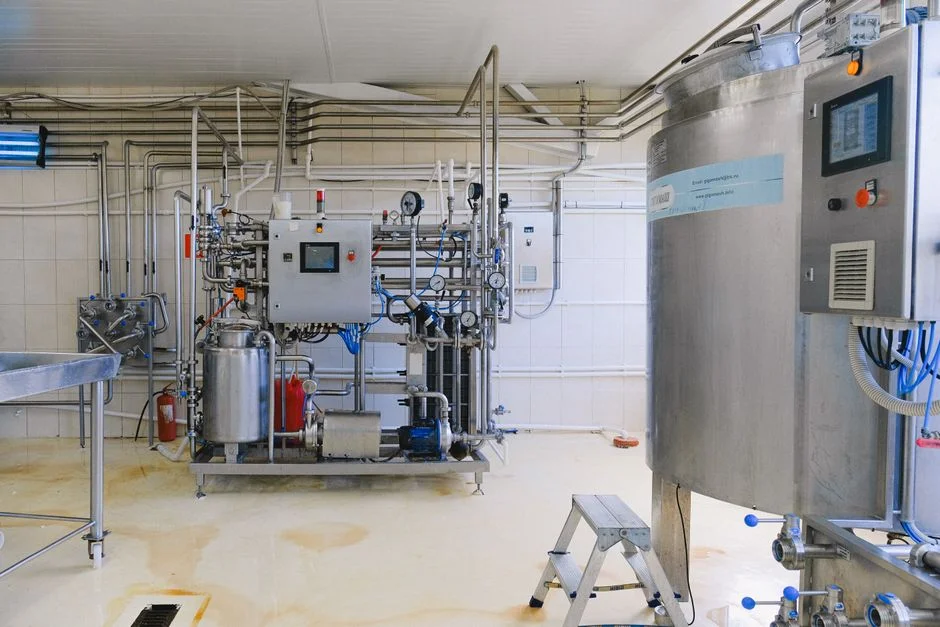
A compliance argument based only on average flow will usually miss the acquisition risk. Buy wastewater characterization data from representative operating periods, including current and peak flow, operating schedule, production variability and the sampling programme used for permit compliance.
BOD, TSS and pH form the core dataset, but beverage-process wastewater may also require screening for sugar residues, oils and greases, cleaning chemicals and other contaminants tied to the acquired production lines. Separate high-strength slugs from routine effluent. An aggregate flow can conceal a batch dump, rejected stream, holding-tank overflow or bypass that materially changes the treatment duty.
| Acquisition input | Minimum evidence to request | Why it matters |
|---|---|---|
| Hydrology | Current and peak flow, operating schedule and production variability | Checks hydraulic capacity, equalisation and downtime exposure |
| Organic load | Representative BOD data, including batch and dilute periods | Defines biological and equalisation requirements |
| Solids | TSS data and evidence of oil, grease or colloidal material | Identifies the required physical separation stages |
| Chemical condition | pH and stream-specific cleaning or process chemicals | Determines neutralisation, treatment compatibility and discharge controls |
| Route and continuity | Stream map, final-discharge point, tank and bypass inventory | Exposes unpermitted routes and shared-service dependencies |
PepsiCo’s Aquacycl demonstration supplies a variability benchmark, not a Malaysian design rule. Aquacycl’s case study reports incoming BOD as high as 149,500 mg/L—more than twice the expected concentration—during a seven-month demonstration. The agreed KPI was removal of 800 lb BOD per day when incoming BOD exceeded 60,000 mg/L, or 85% BOD removal when BOD was below 60,000 mg/L. The demonstrated removal exceeded those KPIs, reaching more than 1,350 lb/day for BOD and up to 140 lb/day for TSS.
Use that evidence to test whether a supplier has handled variable composition rather than merely demonstrated steady-state performance. The PepsiCo crusher-wastewater case study is useful for that engineering question; its KPI and concentrations do not define the acquired plant’s permit conditions.
Match the Treatment Train to the Discharge Route
Treatment selection starts with the destination, not the available equipment. For direct discharge, require the proposed train to demonstrate compliance with the plant’s current DOE conditions. For indirect sewer discharge, verify the sewer operator’s trade-waste or pretreatment limits, permitted discharge points, sampling regime and any requirement for a sewer-acceptance or discharge-approval document.
| Problem or objective | Functional screening | Procurement requirement |
|---|---|---|
| Protect downstream biological treatment | Mechanical screening, equalisation, oil-and-solids separation and biological treatment | Demonstrate performance across representative hydraulic and pollutant loads |
| Meet direct-discharge conditions | Solids separation, biological treatment, final clarification and disinfection as required | Use the current site permit as the acceptance basis |
| Obtain sewer acceptance | Equalisation and pretreatment appropriate to the sewer operator’s rules | Secure written acceptance for the proposed discharge route |
| Recover water for reuse | Upstream solids and dissolved-load control followed by membrane treatment | Define water quality, recovery, pretreatment and end-use requirements |
| Handle variable high-strength waste | Load buffering followed by a demonstrated biological or equivalent treatment train | Use representative performance testing with agreed acceptance criteria |
A membrane is not a substitute for gross solids, oil, grease or upstream biological control. For wastewater reuse and recovery, evaluate membrane treatment after the required removal stages. The treatment scope must therefore be defined by stream chemistry, required final quality and the authorised end use.
Equipment can be screened against the characterised duty. HydropureWater states that its DAF system for beverage-process wastewater covers 4–300 m³/h across 13 standard models and is relevant to suspended solids, oil and grease, and colloidal material. Its MBR system for industrial wastewater treatment covers 10–2,000 m³/day and provides filtration below 1 μm. Its industrial RO system for wastewater reuse offers recovery rates up to 95%. These are equipment scopes, not proof that any system will meet the acquired site’s permit or reuse specification.
For variable food-and-beverage wastewater, require a performance demonstration under representative operating conditions. Put inlet and outlet characteristics, hydraulic behaviour, removal performance, downtime, sludge yield and acceptance criteria into the purchase or service agreement. The PepsiCo external-innovation publication is relevant to this evidence-led demonstration approach.
Test Sustainability Claims Against Plant Performance
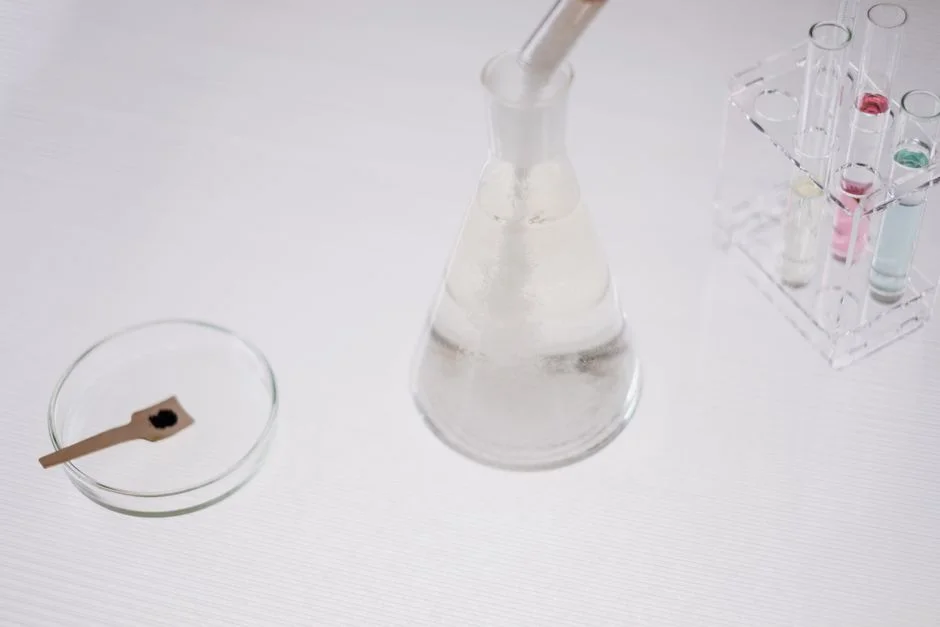
Legal compliance, resource recovery and carbon reduction require different evidence. An ETP can comply with its discharge conditions without delivering meaningful water recovery or verified carbon savings, while a reuse project can create commercial value without resolving a permit inconsistency.
Evaluate the plant water balance, internal reuse potential, residual discharge, sludge handling, energy demand and operating reliability alongside effluent performance. Include the consequences of production variability: a treatment train that performs only under stable average flow may not support the acquired plant’s real operating pattern.
Aquacycl’s commercial case study reports that the PepsiCo demonstration mitigated 100 tons of greenhouse-gas emissions per month through onsite treatment and reduced the receiving utility’s treatment burden. That figure describes the disclosed demonstration. It should not be transferred to a Malaysian plant without a site-specific mass balance and emissions assessment, and it does not establish a Malaysian legal or carbon limit.
Ask vendors for measured acceptance-test data, energy and chemical consumption, downtime records, sludge yield, maintenance requirements and monitoring integration. A modelled carbon saving is not enough for either an acquisition model or an implementation guarantee. The disclosed Aquacycl-PepsiCo results are a useful benchmark for the evidence requested, not a substitute for Malaysian plant data.
Convert Findings into a Handover Plan
Convert due diligence into a dated sequence with named owners. The acquisition should close only when permit viability, treatment adequacy and financial responsibility are defined; handover should begin only when the operating baseline is verified.
- Before signing: complete the permit and compliance review; identify historical non-compliance and transfer risk; characterize the wastewater; and develop a concept treatment estimate with an allowance for the unresolved inputs.
- Before closing: agree permit-transfer or reissuance actions; assign capital and operating expenditure; establish a remediation reserve where needed; and obtain written acceptance from the relevant authority or sewer operator where required.
- At handover: verify as-built treatment capacity; calibrate monitoring equipment; confirm laboratory and reporting duties; train operators; and establish the baseline sampling programme.
- After handover: compare actual flow and contaminant loads with the acquisition model; track permit compliance; review treatment reliability; and update the water and carbon plan with measured data.
| Stage | Deliverable | Owner |
|---|---|---|
| Pre-signing | Red-flag report, wastewater dataset, treatment concept and quantified risks | Environmental manager and acquisition lead |
| Pre-closing | Approval pathway, cost allocation, reserve, sewer acceptance where required | Legal, finance and plant engineering |
| Handover | As-built verification, calibration, baseline plan, operator training | Plant manager and technical operator |
| Post-handover | Compliance register, load reconciliation, performance review and recovery-plan update | Operations, EHS and sustainability teams |
Use a written responsibility matrix covering the legal entity, permit holder, technical operator, monitoring analyst, sludge handler, power supplier and equipment service provider. The Malaysia wastewater treatment guide provides a starting point for the local document review, while primary permits and written authority or sewer-operator confirmations must control the transaction decision.
Frequently Asked Questions
Can PepsiCo operate the Malaysian plant under the seller’s existing wastewater permit?
Not by assumption. The permit’s legal-entity provisions, transfer conditions and current site-specific conditions must be reviewed, and the issuing authority should confirm whether transfer, amendment or reissuance is required. Written confirmation should be a closing condition.
How should a buyer estimate wastewater-treatment capex for an acquired Malaysian plant?
Request a bottom-up estimate based on documented flow, BOD, TSS, pH and other contaminant data; the discharge route; permit conditions; sludge handling; energy demand; and reuse objectives. No supported research quotation was provided, so any budget should identify these inputs, design assumptions, exclusions and price validity rather than rely on a generic cost-per-day figure.
Should the buyer retain the existing ETP or replace it?
Compare hydraulic and pollutant capacity, physical condition, redundancy, demonstrated compliance, operating cost, energy use, available footprint and expansion needs. A vendor trial should be checked against representative plant conditions, and acceptance criteria should be contractual.
How can a vendor demonstrate that its system will handle variable beverage wastewater?
Require a representative performance test with measured inlet and outlet characteristics, hydraulic behaviour, removal performance, downtime, sludge yield and written acceptance criteria. Also verify how the vendor will respond when production changes or a high-strength slug exceeds the tested operating envelope.
Related Equipment
- mechanical bar screen for plant headworks — specifications, capacity range, and technical data
- filter press for treatment-plant sludge — specifications, capacity range, and technical data