
Separate the Wastewater Streams Before Selecting Equipment
A data center in Viana, Angola, should treat wastewater as separate streams: cooling-tower blowdown, sanitary wastewater and other process or generator-derived water should not be combined without characterization. Cooling blowdown generally needs suspended-solids removal, chemistry control and, where reuse is justified, membrane treatment; sanitary wastewater requires biological treatment and disinfection. The first design step is a measured data center water balance, not a generic package selection. Cooling-tower purge can represent about 25–30% of makeup at 4 CoC, while Decree 7/09 reference limits in the supplied Luanda material are COD < 250 mg/L, TSS < 60 mg/L and pH 6–9; Viana permit applicability and limits must be confirmed.
Create a source-by-stream register before drawing a treatment P&ID. The register should identify the origin, normal and peak flow, chemistry, destination, treatment objective and responsible operator for every stream. Include cooling-tower blowdown, humidification bleed-off, sanitary sewage, kitchen and staff wastewater, generator cooling or wash water, and separate process discharges.
Cooling-tower blowdown is usually the largest relatively low-COD stream and the logical first reuse candidate because it has already been conditioned as cooling water. Humidification bleed-off may have a similar treatment logic, but its composition and destination must be confirmed before blending. Sanitary and process wastewater should remain separate until COD, BOD, oil and grease, surfactants and variability have been measured. Biological treatment is not justified by the presence of a sanitary stream in the same piping system.
Use flow, conductivity, pH, suspended solids, COD, hardness, silica and residual biocide data to decide whether streams can be segregated, blended or require independent treatment. The supplied Luanda stream characterization is regional engineering context, not verified Viana influent. A Viana-specific sampling plan remains necessary. The regional cooling-blowdown treatment and reuse engineering guide provides useful context, but its site assumptions must not be transferred uncritically to Angola.
| Stream | Expected treatment logic | Design information required |
|---|---|---|
| Cooling-tower blowdown | Solids removal, chemistry control; membranes when reuse is justified | Flow, conductivity, pH, TSS, hardness, silica, biocide, temperature |
| Humidification bleed-off | Confirm compatibility before blending with blowdown | Flow, conductivity, suspended solids and chemical composition |
| Sanitary sewage | Biological treatment and disinfection | Flow, COD, BOD, nutrients, solids, surfactants and variability |
| Kitchen, staff and process wastewater | Separate characterization and pretreatment as required | Oil and grease, COD, BOD, surfactants, pH and discharge route |
| Generator cooling or wash water | Characterize separately; do not assume potable-equivalent quality | Flow, oil and grease, cooling chemicals, metals, temperature and episodic storage |
Build a Viana Water Balance from Measured Flows
The cooling-water cycles of concentration and measured operating losses determine the actual treatment flow, so the water balance must use peak and average conditions rather than a single nominal CoC.
The governing relationship is:
blowdown ratio = 1 ÷ (CoC − 1)
At 4 CoC, theoretical blowdown is 25% of makeup; at 6 CoC, it is 20%. Moving from 4 to 6 CoC therefore reduces calculated blowdown by five percentage points of makeup, or 20% relative to the 4-CoC blowdown—not 50% (Genesis Water Technologies, 2025). It also reduces makeup by the same five percentage points.
Baseline makeup, cooling-loop volume, evaporation, blowdown, conductivity, pH and TSS. Genesis Water Technologies (2025) reports that actual blowdown may exceed theory by 15–30% because of unmeasured losses and emergency dumps. That gap must be resolved through metering and operating records rather than added as an arbitrary equipment-sizing factor.
- Record total makeup by source and cooling system.
- Measure blowdown and evaporation separately at operating conditions.
- Calculate actual CoC from circulating and makeup conductivity.
- Compare measured blowdown with 1/(CoC − 1).
- Size treatment at the verified peak flow and highest credible fouling condition.
- Calculate freshwater displacement, recoverable volume, concentrate volume and residual freshwater demand as separate outputs.
For each reuse option, use the data-center wastewater treatment design guide as a calculation framework, not as a source of Viana flow data. If the site operates multiple cooling systems, calculate each system before aggregation; coincident peaks and emergency dumps may otherwise be hidden in an average.
| Water-balance output | Calculation basis | Procurement use |
|---|---|---|
| Theoretical blowdown | Makeup × 1/(CoC − 1) | Initial screening only |
| Measured blowdown | Totalized flow plus operating reconciliation | Treatment-train duty |
| Freshwater displacement | Reuse flow that demonstrably replaces freshwater | Operating and environmental benefit case |
| Recoverable volume | Feed volume less process losses, reject and unusable residues | RO/NF or MVC capacity screening |
| Concentrate volume | Rejected water leaving the selected treatment train | Discharge, handling or ZLD design |
| Residual freshwater demand | Total makeup less verified reusable supply | Storage and supply-security requirement |
Match Treatment to the Controlling Contaminants
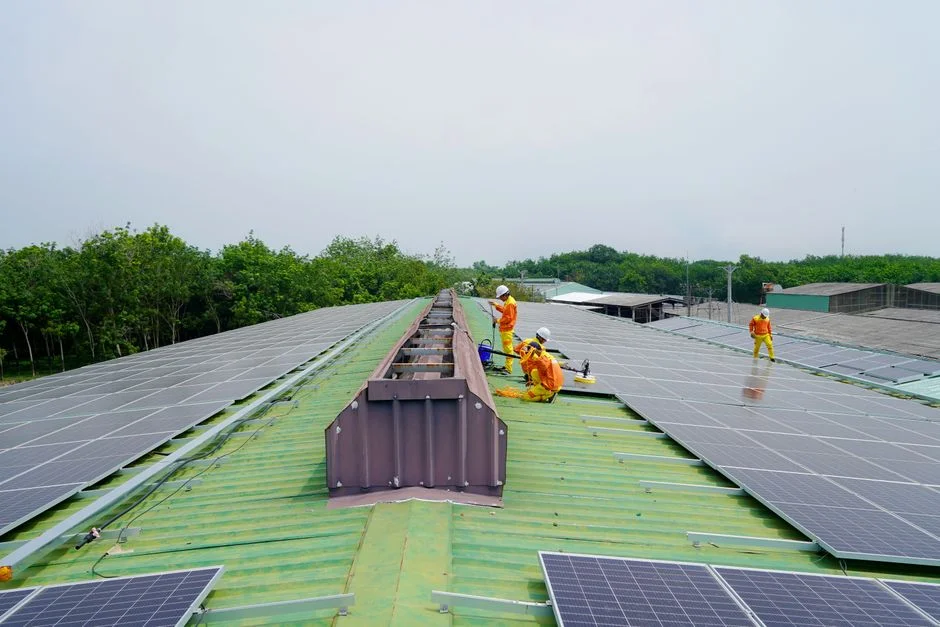
Unit-process selection should follow measured contaminant and fouling data; the presence of cooling blowdown or sanitary sewage in a flow diagram does not establish the required equipment.
For cooling blowdown, filtration or solids removal is needed where suspended solids or colloids would compromise downstream equipment. Hollow-fiber UF pretreatment for cooling blowdown reuse accepts feed turbidity up to 300 ppm and removes bacteria, colloids and suspended solids without chemicals, according to the supplied HydropureWater equipment information.
Use DAF where oil, grease, colloids or floating material make particulate capture important. The supplied HydropureWater specification covers a DAF system for industrial wastewater pretreatment from 4–300 m³/h. Confirm whether oil-bearing generator or wash-water runoff will enter the same train; if so, include oil control rather than treating all blowdown as a single clean water stream.
Use UF as RO pretreatment when reliable membrane protection is necessary. Select nanofiltration when hardness is the controlling contaminant and reverse osmosis when silica requires more effective removal. The choice must remain conditional on measured hardness, silica, scaling indices, recovery and concentrate-management options. A brackish-water reverse-osmosis train should not be specified before the cooling-water chemistry and blowdown composition are established.
Sanitary and process wastewater require biological treatment. The supplied HydropureWater information lists MBR systems from 10–2,000 m³/day and filtration below 1 micron. Confirm the required effluent specification, nutrient removal, disinfection and sludge handling before using the nominal capacity as a design basis.
Disclose reclaimed water before reuse. The supplied HydropureWater chlorine-dioxide generator information covers manual configurations from 50 g/h to automated industrial output of 20,000 g/h. Disinfection type and dose must be confirmed against the reuse application, residual needs, contact conditions and local chemical-handling requirements.
Angola Decree 7/09 values of COD < 250 mg/L, TSS < 60 mg/L and pH 6–9 are reference limits from the supplied 2026 Luanda material. They are not confirmed Viana acceptance criteria. Obtain the applicable Viana industrial discharge permit Angola, sewer agreement and receiving-water conditions before design freeze.
| Controlling condition | Potential unit process | Decision requirement |
|---|---|---|
| Elevated TSS or colloidal fouling | Filtration, DAF or UF | Measured solids, turbidity and particle-size data |
| Oil, grease or floating material | DAF or dedicated oil pretreatment | Oil and grease analysis and episodic discharge profile |
| Hardness limits reuse | Nanofiltration | Hardness, recovery and concentrate chemistry |
| Silica limits reuse | RO or another validated silica-removal train | Silica analysis, scaling assessment and recovery target |
| Biodegradable sanitary or process load | MBR or another biological process | COD, BOD, nutrients, variability and effluent target |
| Microbial control required for reuse | Chlorine dioxide or UV | Reuse point, residual requirement and contact conditions |
Compare Discharge, Partial Reuse and High Recovery
Compliant discharge should be compared with partial reuse and cooling-makeup reuse on the same basis: energy, chemicals, concentrate, reliability, permit exposure and displaced freshwater.
Define three options before pricing equipment:
- Compliant discharge: treat to the confirmed discharge standard and send the stream to the permitted receiver.
- Partial reuse: provide reclaimed water for washdown or another non-critical service, with the discharge route defined for the balance.
- Blowdown-to-cooling-makeup reuse: treat blowdown sufficiently to return it to the cooling system. Add RO-MVC or another ZLD train only where water stress and discharge restrictions justify the additional energy and operating burden.
For cooling-tower reuse, IDE Tech (2026) reports that conventional BWRO typically plateaus at 75–80% recovery because silica, calcium carbonate and calcium sulfate create scaling constraints. For higher recovery, the supplied 2026 Luanda reference describes BWRO followed by MVC at 95–99% overall recovery, with MVC energy of 15–25 kWh per 1,000 gallons of distillate.
Compare the options on CAPEX, energy, chemical consumption, membrane cleaning, concentrate handling, operator skill, freshwater displaced, permit exposure and recovery-system availability. Do not exclude ZLD because it eliminates liquid discharge: assess fuel availability, generator waste-heat quality, crystallizer residue handling and the consequences of thermal-system outage. The reverse-osmosis train specification should reflect the verified recovery target rather than a generic recovery claim.
Saltworks Technologies’ August 2025 case for a 200 MW data center reports up to 40% reduction in cooling-system water consumption from an effective treatment and recycling program. Treat that as an illustrative case result, not a guaranteed performance value for a Viana installation.
Include environmental effects in the appraisal. Open Engineering Inc’s 2026 life-cycle assessment found that the wastewater scenario had about twice the global-warming potential of the freshwater case, with treatment energy accounting for roughly 80% of the difference. The study also notes that UF+RO wastewater energy exceeded five times the freshwater scenario, offset partly by improved CoC and lower blowdown and chemical consumption.
| Decision criterion | Compliant discharge | Partial reuse | Cooling-makeup reuse | RO-MVC or ZLD |
|---|---|---|---|---|
| Freshwater displacement | Low | Limited | Material, subject to cooling acceptance | Maximum subject to thermal and energy constraints |
| Permit dependency | High for final discharge | Discharge still required for residual flow | Permitted discharge remains for concentrate and unusable water | Residue handling and environmental review remain critical |
| Main technical constraint | Effluent compliance | Use-specific water quality | Silica, hardness, scaling and membrane fouling | Thermal energy, crystallizer solids and availability |
| Operational burden | Lower treatment complexity | Moderate | Membrane and controls expertise | Highest process and utility integration burden |
| Evidence to request | Applicable Viana limits | End-use quality specification | Guaranteed recovery and concentrate quality | Availability and energy guarantees |
Plan Permitting, Implementation and Vendor Procurement
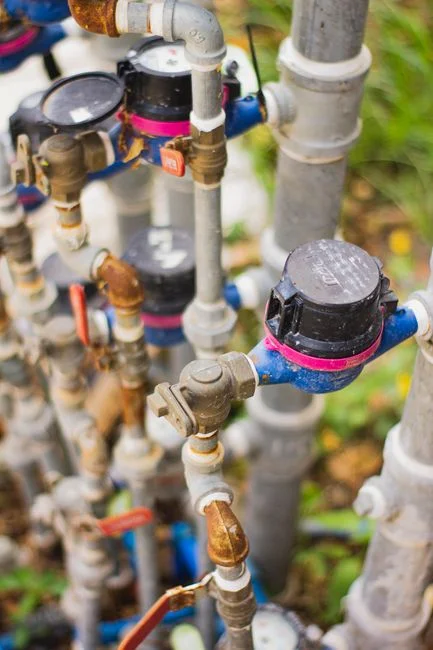
Permitting, baseline measurement and vendor scoping should start before mechanical design is frozen, because the accepted discharge route can change the entire treatment train.
Begin with a three-month baseline covering makeup, blowdown, evaporation, conductivity, pH and TSS. Use the results to correct theoretical assumptions. Repair leaks and optimize controls and the chemical program before installing reuse equipment. Increasing CoC alone can intensify scaling, biological growth and microbiologically influenced corrosion; the required side-stream filtration and chemical-control strategy must be specified with it.
The procurement package should request:
- A complete source-and-stream P&ID and reconciled mass balance.
- Process-control narrative, alarm philosophy and operating envelopes.
- Guaranteed feed, product and concentrate flows and treated-water quality.
- Electrical load, water demand, chemical consumption and storage requirements.
- Redundancy, bypass, clean-in-place provisions and membrane-cleaning strategy.
- Spare-membrane policy and local service capability.
- Commissioning, performance testing, training and lifecycle-cost schedule.
The supplied Luanda engineering reference reports an industrial-discharge permit review of 6–12 months. Viana’s authority, receiving route and lead time must be confirmed rather than assumed. The same reference indicates a 15–25% premium on imported skids, containerized freight through Luanda port and seven-day chemical storage. Obtain a Viana-specific logistics quotation covering shipment route, port handling, crane access, chemical storage, spares delivery and service response.
Require bidders to price the integrated treatment scope and membrane replacement strategy against the verified design basis. A standard package capacity is not evidence of fit.
| Phase | Primary output | Gate before the next phase |
|---|---|---|
| Baseline | Measured water balance and stream characterization | Verified flow, quality and operating variability |
| Optimization | Leak, control and chemical-program actions | Stable operating baseline |
| Permitting and procurement | Applicable permit, route, technical specification and bids | Confirmed recipient and binding commercial scope |
| Implementation | Installed treatment train, commissioning and performance test | Guaranteed flow and water-quality acceptance |
| High-recovery review | RO-MVC or ZLD business case | Verified need, energy source and residue route |
Frequently Asked Questions
How should a Viana data center size cooling blowdown and sanitary wastewater treatment?
Size each train from measured peak and average flows. Reconcile makeup, evaporation and blowdown; calculate actual CoC from conductivity; and establish the required quality for each discharge or reuse destination. Sanitary wastewater capacity must be based on its own COD, BOD, nutrient and flow profile, while the cooling train must be checked for solids, hardness, silica, biocide and scaling. Vendor package capacity is not a substitute for this site-specific calculation.
What determines the cost and expected return of cooling blowdown recovery?
The principal inputs are measured feed flow and quality, freshwater and discharge tariffs, electricity cost, chemical consumption, concentrate handling, membrane cleaning, operator labour and reliability. A responsible budget or payback cannot be provided without those inputs plus the selected recovery route. Ask bidders to separate CAPEX, utilities, consumables, maintenance, replacements and disposal, and to guarantee the displacement assumptions used in the business case.
How should a buyer select and qualify a treatment-system supplier?
Select against demonstrated compatibility with the site’s chemistry, not nominal capacity alone. Require a source-and-stream P&ID, reconciled mass balance, guaranteed product and concentrate quality, utilities demand, redundancy, bypass and cleaning provisions, commissioning tests, spare-parts strategy and local service capability. Request reference operating evidence for the proposed unit process and treatment train, then confirm that guarantees remain conditional only on clearly stated feed-water limits.
Are the Luanda discharge limits and permit schedule applicable in Viana?
Do not assume they are. The supplied 2026 Luanda material presents Decree 7/09 values—COD < 250 mg/L, TSS < 60 mg/L and pH 6–9—as regional reference information. Its reported 6–12-month permit-review period is also a Luanda reference, not a confirmed Viana schedule. Before freezing the design, obtain the applicable Viana discharge permit or sewer agreement, identify the receiving authority and route, and ask the responsible authority to confirm the governing limits and approval timeline. The coastal data-center wastewater treatment guide can support the question structure, but it is not a substitute for local regulatory confirmation.