

Which Rules Govern Sewer Discharge Near Sebring?
Mining and metals plants near Sebring meet sewer pretreatment limits by treating wastewater to the stricter applicable requirement before it enters the municipal collection system. EPA identifies three control layers: categorical pretreatment standards, the receiving POTW’s site-specific local limits, and permits or equivalent mechanisms issued to significant industrial users. Local limits are imposed at the industrial user’s end-of-pipe connection and may be numeric or narrative requirements, including best management practices. In practice, plants characterize and segregate wastewater, equalize variable flows, control pH and precipitate metals, remove solids, polish the effluent and manage the resulting sludge. The design must use current Sebring-area permits, ordinances, influent data and pollutant loads—not a generic treatment recipe.
Indirect sewer discharge and direct surface-water discharge are different regulatory pathways. A mine discharging directly to surface water follows the Clean Water Act NPDES permitting route; a mine discharging to a POTW collection system is controlled through Clean Water Act section 307(b) pretreatment requirements and the POTW’s local control mechanisms, according to EPA’s Pretreatment Standards and Requirements—Local Limits guidance. EPA states that local limits may be numeric or narrative effluent limits, including BMPs, and are imposed where the industrial user connects to the POTW collection system.
Categorical standards establish federal pollutant-discharge requirements for covered industrial categories. The supplied commercial mining pretreatment guide identifies 40 CFR Part 430 for ore mining and dressing and 40 CFR Part 433 for metal finishing; another technical source refers to Part 437 for ore mining and dressing. This difference must be resolved against the operation’s actual regulatory classification, written permit and current federal text rather than selected from a vendor summary.
| Control layer | What it governs | What the project team must obtain |
|---|---|---|
| Categorical pretreatment standards | Federal pollutant-discharge requirements for the applicable industrial category and subcategory | Current 40 CFR text, applicable subcategory, production basis and any state requirements |
| POTW local limits | Site-specific numeric or narrative limits, including BMPs, imposed at the industrial-user connection | Current sewer-use ordinance, adopted local limits, pollutant priorities and surcharge provisions |
| Industrial-user permit | Site-specific monitoring, reporting, sampling and operating conditions | Current SIU permit, approved pretreatment drawings, analytical protocol and slug-control requirements |
| Sludge and waste rules | Characterization, transport and disposal of treatment residuals | Waste classification work, hauler criteria and POTW-approved disposal route |
EPA’s Local Limits Development Guidance, published October 2015, states that a permit or regulation controls if it conflicts with the guidance. It also explains that indirect-discharger obligations arise through POTW industrial-user permits, equivalent control mechanisms or regulatory requirements. Before sizing a unit, the team should obtain the current Sebring-area sewer-use ordinance, significant industrial user permit, applicable categorical subcategory and approved pretreatment drawings. These documents—not generic national examples—define the design envelope.
Build the Compliance Basis from Wastewater Characterization
EPA’s Local Limits Development Guidance says indirect discharger obligations are determined by permits or equivalent control mechanisms issued to POTW industrial users and by regulatory requirements, so a defensible design starts with the controlling Sebring-area documents rather than a generic concentration limit. The commercial mining pretreatment guide, Mining Pretreatment for Sewer Discharge in the US: 2026, also describes mining wastewater as a superposition of streams with different pollutant fingerprints, making source characterization a prerequisite for treatment selection.
- Segregate the streams. Keep process water, pit or contact water, stormwater, washdown and metal-finishing rinsate separate until their flows, chemistries and discharge destinations are known. Combining them at the property line can obscure the source of a load and make slug control more difficult.
- Characterize each stream and the proposed blend. Obtain representative samples for pH, TSS, oil and grease, metals, toxicity characteristics and pollutants specifically identified by the POTW. Use a written sampling plan covering production conditions, batch discharges, storm events and clean-out operations.
- Calculate flow and mass load. Concentrations alone do not size a treatment train. EPA’s guidance calls for flow data alongside analytical results when developing maximum allowable headworks loadings and recommends collecting and analyzing data before calculating MAHLs and implementing local limits. For each stream, calculate both average mass loading and the worst-case composite relevant to the permit’s averaging basis.
- Trace every requirement to a source. EPA’s pollutant-selection logic includes national concerns, NPDES conditions, water-quality criteria, sludge-quality standards, resource protection, treatment-plant interference and protection of workers and the collection system.
The request to the POTW should include the current adopted local limits, pollutant list, sampling point, monitoring frequency, averaging basis, approved analytical methods, surcharge triggers, slug-control obligations, enforcement history and whether narrative BMPs modify numeric limits. The plant team should supply process descriptions, drainage maps, production schedules, chemical inventories, stormwater controls, historical monitoring data and proposed pretreatment drawings.
This information also determines whether the discharge qualifies as a significant industrial user permit matter and which pretreatment units are justified. EPA’s guidance emphasizes data collection before MAHL calculation; it does not authorize a buyer to infer a Sebring limit from a national example. A concentration should be treated as provisional until its flow, sampling method, averaging period and governing document are documented.
Match Each Treatment Stage to the Discharge Risk
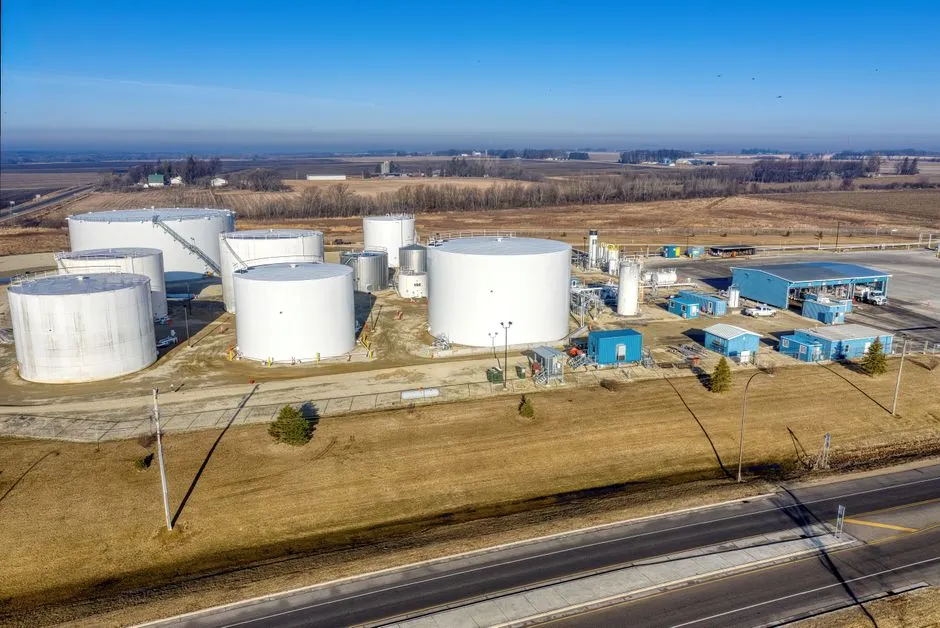
The commercial guide How Mining & Metals Plants Meet Pretreatment Limits Before Sewer Discharge states that mining and metals flows and loads vary with ore grade, mill throughput, storm events and batch operations, making equalization the first engineering decision rather than an afterthought. Source control and equalization should therefore precede equipment selection in the process sequence.
| Treatment stage | Primary design question | Relevant evidence and procurement consequence |
|---|---|---|
| Source control and equalization | Which streams and batch events can be isolated or buffered? | Size hydraulic and pollutant storage from characterized peak flow and mass load; confirm slug-control requirements with the POTW. |
| pH control and metals precipitation | Which metals require precipitation, and what residual chemistry is acceptable? | Use hydroxide chemistry as a candidate baseline and evaluate sulfide where stricter residual-metal removal is necessary; confirm by jar testing and permit review. |
| DAF or lamella clarification | Does the stream contain floatable material, oil or colloids, or mainly metal-hydroxide floc? | The commercial catalog gives DAF capacities of 4–300 m³/h across 13 models. It states that lamella clarification operates at 20–40 m/h surface loading and can reduce chemical consumption by up to 30%. |
| Multimedia filtration | Is a residual-solids barrier needed before the monitored discharge point? | The catalog identifies the multimedia filter as a barrier for suspended solids and colloids and as protection for downstream membranes. |
| UF polishing | Does the permit require very low suspended solids, or does reuse require membrane-grade feed? | The catalog gives 2,000–40,000 L/h capacity, 0.03-micron PVDF membranes, automatic backwash and air scour. Treat UF as optional, not universal. |
| Biological treatment or disinfection | Does the wastewater matrix or local permit require them? | Include either only after characterization and permit review establish the need. |
Chemical feed should be controlled rather than left to manual batch adjustment. The commercial catalog describes skid-mounted, PLC-controlled dosing with factory-tested integration; an automatic chemical dosing system can coordinate pH adjustment, coagulant and flocculant feed. The final control logic still depends on online measurements, chemical storage design and an operating envelope established through testing.
Hydroxide precipitation converts dissolved metals into insoluble hydroxide precipitates that can be removed as solids. Sulfide precipitation may be evaluated where hydroxide chemistry cannot reliably meet a stricter residual-metal requirement, but it introduces additional reagent, residual and off-gas management obligations. Jar testing should establish pH, dose, settling behavior and expected residual before either chemistry is accepted.
DAF is the stronger candidate when oil, grease, floatable material or colloidal solids are important targets. An industrial DAF system can remove floatable contaminants and provide a physical solids-separation step before polishing. A lamella clarifier becomes attractive where metal-bearing flocs dominate, throughput is high and footprint is constrained. The commercial comparison is useful in DAF versus clarifier for mining wastewater, but the final choice should follow the Sebring permit, wastewater analysis and headworks hydraulics—not generic flow thresholds.
After clarification, multimedia filtration can capture residual solids and protect downstream membranes. UF is justified where the permit or reuse objective requires finer solids separation. Biological treatment or disinfection should not be added simply because they appear in a general mining flowsheet; their need depends on biodegradability, pathogens, receiving-system conditions and the local permit.
Manage Metals Sludge as Part of the Permit
The commercial mining pretreatment guide states that precipitation is pH-sensitive and produces toxic-laden sludge that becomes a compliance liability, so sludge capture and disposition must be designed with the liquid treatment train. Poor clarification can recycle metals and colloids upstream, undermining downstream polishing and increasing both chemical use and sludge inventory.
A plate and frame filter press is one dewatering option for precipitated metals sludge. The HydropureWater catalog cited in the research offers filtration areas from 1–500 m² and manual, hydraulic or fully automatic PLC-controlled operation. Selection should reflect feed solids, conditioning chemistry, cycle requirements, cake handling and containment—not filtration area alone. The broader cost issue is covered in the company’s sludge dewatering cost and disposal analysis.
Filtrate should return to the appropriate upstream treatment stage only after its flow and pollutant load are included in the hydraulic and mass balance. Returning it without accounting for dissolved metals, chemicals or heat can destabilize equalization, precipitation or solids separation.
Before producing metal-bearing cake, obtain a written disposal pathway. The commercial guide notes that RCRA or CERCLA exposure can attach to sludge that fails TCLP, so chemical precipitation does not create permission to dispose of the residue in an ordinary landfill. Ask the POTW and waste hauler for current acceptance criteria, required characterization, packaging and transport conditions, and whether cake may enter a particular facility. Confirm those criteria against the actual generator status and current federal, state and local waste rules.
Turn the Design into an Auditable Compliance Plan
EPA’s Local Limits Development Guidance says local limits address specific POTW, sludge and receiving-water concerns, so each equipment decision should trace to a documented permit requirement and its averaging basis. A compliance matrix converts that hierarchy into operating, monitoring and evidence controls.
| Required control | Design or operating entry | Evidence retained |
|---|---|---|
| Numeric pollutant limit | Applicable daily maximum, monthly average, instantaneous limit or mass limit | Limit source, permit condition, laboratory reports and flow-weighted calculations where applicable |
| Narrative BMP or slug requirement | Equalization capacity, tankage, isolation, spill response and operating procedure | Inspection record, batch log, deviation report and corrective-action closeout |
| Industrial-user end-of-pipe sampling | Monitored sampling point and automatic composite sampler | Chain of custody, sample point record, analytical method and result |
| Continuous operating indicator | pH, flow and conductivity where appropriate | Trend, alarm history, operator response and calibration record |
| Treatment performance | Stage-specific mass-removal and solids-capture targets | Commissioning test, influent-effluent data, mass balance and deviation disposition |
Include pH, flow and conductivity as continuous operating indicators where appropriate, but reconcile them with the POTW’s required monitoring protocol. The industrial-user end-of-pipe sample is the compliance sample; treatment-unit data supports process control and performance verification but does not replace the required sample.
Write slug-control and spill-response procedures for batch dumps, storm inflows and upset conditions. Narrative BMPs can impose obligations beyond numeric limits, and a later passing sample does not erase a prohibited slug or POTW interference event.
Commission the train around mass-removal performance rather than equipment startup alone. Verify automatic controls, interlocks, alarms, data recording, chemical-feed interlocks and stage bypasses. The contingency plan must address chemical-delivery failure, clarifier upset, filter blockage, power loss and metals excursions, with authority to hold the discharge and notify the POTW.
Do not import unverified nationwide example limits into the Sebring permit basis. The commercial source How Mining & Metals Plants Meet Pretreatment Limits Before Sewer Discharge gives zinc examples of 0.3–1.0 mg/L and copper examples of 0.3–0.5 mg/L as monthly-average market context; those are not verified Sebring local rules. The compliance-plan framework used for industrial pretreatment can be adapted without copying another sector’s numeric limits.
Frequently Asked Questions
Should a Sebring mining plant choose DAF or a lamella clarifier?
Choose DAF when characterized wastewater contains oil, grease, floatable material or colloidal solids; favor lamella clarification when the primary load is metal-bearing floc and compact, high-throughput separation is the priority. Compare both against the governing categorical standard, POTW local limit and industrial-user permit, then confirm removal performance with representative wastewater. Equipment capacity cannot be selected from an unverified example limit.
How should pretreatment equipment be budgeted without a valid Sebring limit?
Request a scoped quotation tied to the current sewer-use ordinance, SIU permit, flow and mass-load study, chemical-consumption assumptions, sludge-dewatering needs and utility requirements. The commercial research provides no defensible project price for Sebring, so any numeric budget would lack scope. Include tankage, controls, sampling, containment, filtrate return, disposal acceptance and commissioning tests.
What should a buyer verify when selecting an equipment supplier?
Require evidence that the supplier has sized the train from the controlling permit and actual wastewater rather than catalog defaults. Check proposed treatment guarantees, control philosophy, materials of construction, chemical compatibility, automatic-feed integration, data recording, redundancy, service scope and acceptance testing. Also verify that sludge handling and filtrate return remain inside the same compliance chain.
What documents are needed before a pretreatment train is designed?
Obtain the current Sebring-area sewer-use ordinance, significant industrial user permit, applicable categorical subcategory, approved pretreatment drawings, sampling protocol, monitoring frequency, analytical-method requirements, surcharge and slug-control rules, and current POTW acceptance criteria for treatment residuals. Use EPA’s October 2015 Local Limits Development Guidance as a framework, while recognizing that the current permit or regulation controls if guidance conflicts.