
The Oklahoma Regulatory Frame Every OKC Petroleum Plant Must Clear
Petroleum plants around Oklahoma City need to pick the right permit path before they pick a treatment train, and the choice is set by where the water actually goes. The Oklahoma Department of Environmental Quality (DEQ) administers the Oklahoma Pollutant Discharge Elimination System (OPDES) program, and the Industrial Pretreatment Program (IPP) is a component of that broader OPDES framework (oklahoma.gov).
The IPP enforces the federal definition of "pretreatment" at 40 CFR Part 403, which is the treatment of industrial wastewater to remove harmful pollutants before the stream enters a publicly owned treatment works (POTW) sewer (oklahoma.gov). A refinery, terminal, lube-oil blender, or UST cleanup site that discharges to a sanitary sewer is regulated either by the DEQ IPP or by the local POTW under the same 40 CFR Part 403 standard; a discharge to a surface water needs an OPDES Authorization to Discharge from the DEQ Executive Director before any flow begins (oklahoma.gov, 2022-06).
UST cleanup sites that send treated water to surface waters are typically covered by General Permit OKG83, which requires an Authorization to Discharge and explicitly excludes several waterbody types: Outstanding Resource Waters, Appendix B Waters, High Quality Waters, sensitive public and private water supplies (OAC 785:45-5-25(c)), and receiving streams on Oklahoma's 303(d) list of impaired waterbodies for Organic Enrichment/DO, pH, or Oil and Grease where no TMDL has been performed or where the TMDL requires tighter limits (oklahoma.gov, 2022-06). Any facility whose outfall hits one of those excluded waters must instead apply for an individual OPDES permit under OAC 252:606 (oklahoma.gov, 2022-06). The practical split for an engineer filing paperwork today is therefore straightforward: sewer discharge runs through the local POTW or DEQ IPP, surface-water discharge runs through OPDES, and UST cleanup work usually goes through OKG83 unless the receiving stream is excluded.
DEQ is also pushing for EPA-delegated NPDES authority to permit oil and gas wastewater for broader reuse, which Shellie Chard, water quality division director, framed in 2026 as a roughly 10-year project (eenews.net). That context matters for capital planning, but the operating limits and IPP enforcement an OKC facility must meet now are unchanged.
Numeric Limits That Drive Equipment Selection Near OKC
The numbers an engineer has to hit depend on the discharge path, and OKG83 sets the clearest ceilings in the regulatory text. The permit adopts an antidegradation maximum temperature of 52 °C across all state waters, including privately owned cooling-water reservoirs, under OAC 785:46-11-1(c) (oklahoma.gov, 2022-06). It also restricts turbidity to a numeric limit of 50 NTU for surface waters designated as Warm Water Aquatic Community, under OAC 785:45-5-12(f)(7) (oklahoma.gov, 2022-06). For volatile organics, the EPA Model Permit assumption that the OKG83 fact sheet adopts is that influent benzene, which has rarely exceeded 1 mg/L, would be stripped to 5 μg/L at 99.5% removal efficiency, and that 5 μg/L figure also matches the EPA Method 625 minimum quantification level (oklahoma.gov, 2022-06).
For sewer discharges, the local POTW — not DEQ — sets the numeric oil and grease, BOD, TSS, pH, and metals limits once the IPP framework is in place, so a buyer must request those site-specific numbers from the receiving POTW before sizing equipment (oklahoma.gov). The produced-water context is also relevant: Oklahoma treatment operations see water that can carry up to about six times the salt content of seawater, plus heavy metals and residual hydrocarbons, which is why a single technology cannot meet all targets at once (eenews.net). The table below summarizes the OKG83 surface-water ceilings that an equipment train must respect.
| Parameter | OKG83 limit | Source rule |
|---|---|---|
| Temperature (max) | 52 °C | OAC 785:46-11-1(c) (oklahoma.gov, 2022-06) |
| Turbidity (Warm Water Aquatic Community) | 50 NTU | OAC 785:45-5-12(f)(7) (oklahoma.gov, 2022-06) |
| Benzene (design target) | 5 μg/L at 99.5% removal from ~1 mg/L influent | EPA Model Permit, adopted in OKG83 Fact Sheet (oklahoma.gov, 2022-06) |
| Sewer oil & grease, BOD, TSS, pH, metals | Set by local POTW under IPP | 40 CFR Part 403, DEQ IPP (oklahoma.gov) |
The Treatment Train an OKC Pretreatment System Actually Uses
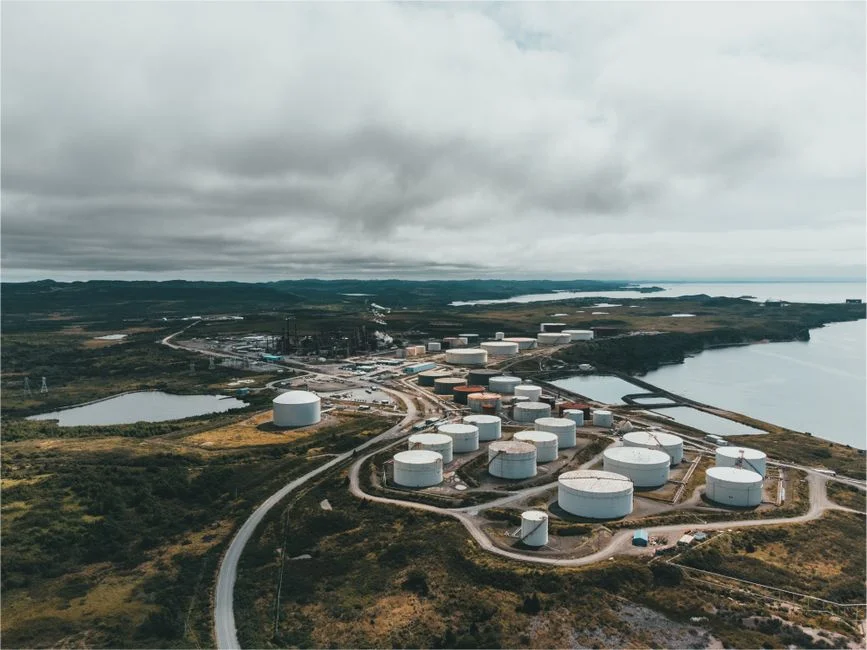
A refinery, terminal, or UST cleanup site in the OKC metro is rarely a single unit; it is a sequenced train, and each stage earns its slot by hitting a specific target on the permit checklist. The five-stage flow below is what an experienced engineer will map a new bid against, and it is consistent with the tank-train approach used at the roughly 30 produced-water treatment operations now operating in Oklahoma (eenews.net).
- Stage 1 — Gravity oil/water separation. An API or CPI (corrugated-plate interceptor) separator, sometimes a parallel-plate pack, lifts free and dispersed oil before any chemical step. This is the same physical separation block the existing Oklahoma tank-and-pond operations rely on, and it is where most of the free product is recovered (eenews.net).
- Stage 2 — Screening and equalization. A rotary mechanical bar screen protects downstream equipment from rags and debris, and an equalization basin with an automatic chemical dosing system holds pH and flow inside a controlled band so flocculation performs consistently. The supplied research does not specify dosing ranges, so the buyer must request a jar-test-derived dose curve from the supplier for the actual wastewater.
- Stage 3 — Dissolved air flotation (DAF). A dissolved air flotation system is the workhorse for the petroleum and metalworking industries, lifting emulsified oil and fine suspended solids with microbubbles and automatic skimming. This is the stage most often associated with oil and grease removal to sewer-quality levels.
- Stage 4 — Biological or advanced filtration polishing. An MBR membrane bioreactor, activated-sludge basin, or multi-media filtration polishes residual BOD, COD, and TSS down to whatever the POTW or surface-water limit requires. The specific choice depends on footprint, discharge mode, and whether the receiving stream is impaired.
- Stage 5 — Targeted polishing for benzene, MTBE, and salts. Air stripping or activated carbon handles residual volatiles, and brine management is required for high-salinity streams. Pennsylvania allowed produced water to be sent to sewage plants until about 2010, then scaled the practice back because of high salt — a useful precedent when sizing salt-handling steps today (eenews.net).
Fabric-lined settling ponds remain a common low-cost polishing step at many Oklahoma sites, but they do not substitute for engineered DAF or biological units when a numeric permit limit is in play (eenews.net). The table below maps each stage to the parameter it most directly controls.
| Stage | Primary equipment | Parameter it controls |
|---|---|---|
| 1 | API / CPI separator | Free and dispersed oil |
| 2 | Bar screen + equalization + dosing | Solids protection, pH stability |
| 3 | Dissolved air flotation | Emulsified oil, TSS |
| 4 | MBR / activated sludge / multi-media filter | BOD, COD, residual TSS |
| 5 | Air stripper / carbon / brine management | Benzene, MTBE, salinity |
How to Build a Compliance-Ready Monitoring and Reporting Plan
A working treatment train is not the same as a compliant one — the monitoring and reporting cadence is what closes the loop with DEQ and the local POTW. For any OKG83 surface-water discharge, monitoring results from the previous month must be summarized on an electronic Discharge Monitoring Report (eDMR) and submitted to DEQ's Water Quality Division, Wastewater Compliance Tracking Section, by the 15th day of the following month (oklahoma.gov, 2022-06). The permit also references EPA Method 625 minimum quantification levels for the volatile and semivolatile pollutants it lists, which the laboratory chosen for compliance sampling must hit (oklahoma.gov, 2022-06).
Chain-of-custody sampling at the authorized outfall is the standard the permit assumes, and the records package should include a map showing the outfall is not discharging to an excluded waterbody — covering Outstanding Resource Waters, Appendix B Waters, High Quality Waters, sensitive public and private water supplies (OAC 785:45-5-25(c)), and any 303(d) stream impaired for pH, oil and grease, or organic enrichment/DO without a TMDL (oklahoma.gov, 2022-06). For POTW discharges, the engineer adds self-monitoring for oil and grease, pH, total metals, and flow at the point just before the building sewer, and shares the results with the POTW during its annual IPP inspection cycle (oklahoma.gov). A pulse-jet baghouse dust collector can be relevant where air-side dust or aerosol control is part of the same permit package. If treated water is being reused in-house as a substitute for fresh water — for example, cooling-tower makeup — the volume offset should be documented to support any future beneficial-use permit under the state's still-developing NPDES authority (eenews.net). The table below condenses the cadence.
| Discharge path | Monitoring cadence | Reporting destination | Records to keep |
|---|---|---|---|
| Surface water under OKG83 | Monthly per permit Part I | eDMR to DEQ Wastewater Compliance Tracking Section by the 15th | Chain-of-custody, EPA Method 625 quantitation, outfall-to-waterbody map |
| Sewer under IPP | Per POTW schedule (often monthly) | POTW industrial-waste inspector | Oil & grease, pH, metals, flow at building-sewer connection |
| Beneficial reuse (in-house) | Continuous flow totalizer | Internal log supporting future DEQ submittal | Volume offset vs. fresh-water baseline |
Selecting Equipment and a Supplier in 2026
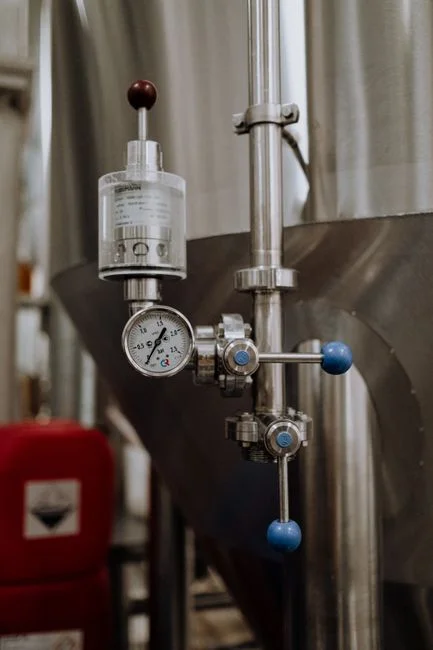
The engineering picture above only protects the facility in an audit if the supplier can defend every claim. Ask the vendor for guaranteed effluent numbers tied to the specific Oklahoma or POTW limits, not generic "meets regulatory standards" language. Request documented performance on produced water or refinery wastewater of similar salinity and hydrocarbon profile, because municipal sewage references do not transfer to a stream that can carry up to about six times the salt content of seawater (eenews.net). Confirm that any PLC or SCADA package integrates with the existing plant DCS, and ask for alarm setpoints that mirror the OKG83 50 NTU turbidity and 52 °C temperature caps so operators do not have to translate between two reference frames (oklahoma.gov, 2022-06). Verify the supplier can export data in a form compatible with DEQ eDMR submissions, and that the operations manual matches DEQ inspection expectations. Finally, lock the sparing philosophy and on-site service response in Oklahoma into the purchase order — downtime inside a permit-violation window is the most expensive failure mode for these plants. Equipment such as an MBR membrane bioreactor or a multi-media filtration unit should be specified against these audit-ready criteria, not against catalog cut-sheets alone.
Frequently Asked Questions
What permit do I need to discharge treated petroleum wastewater to a sewer near Oklahoma City?
An OPDES Authorization to Discharge if the treated stream goes to surface water, or coverage under the local POTW's industrial pretreatment program — enforced by DEQ's IPP under 40 CFR Part 403 — if the stream goes to a sanitary sewer (oklahoma.gov).
What is the capital cost range for a 50 m³/h DAF + filtration pretreatment skid in 2026?
Pricing is site-specific and the supplied research does not contain a benchmark figure. Request a budgetary quote and ask the supplier to itemize the DAF, dosing, and filtration skids separately so the engineer can compare like-for-like.
Can treated produced water from a fracking operation be sent to a municipal sewer in Oklahoma today?
Not under a standard OKG83 permit. Pennsylvania scaled back a similar practice around 2010 due to high salt (eenews.net), and Oklahoma is still pursuing EPA-delegated NPDES authority to allow broader reuse on a case-by-case basis (eenews.net).
What is the lead time for a dissolved air flotation unit sized for a 100 m³/h refinery side-stream?
The supplied research does not include a delivery figure. Ask each vendor for current shop-fabrication and on-site commissioning time and lock it into the purchase order before signing.
How do I prove to a DEQ inspector that my outfall is not discharging to an excluded waterbody?
Provide a current map of the outfall, the receiving stream name, and a 303(d) list check covering pH, oil and grease, and organic enrichment/DO impairments, as required by the OKG83 general permit (oklahoma.gov, 2022-06).