Which package plant fits a Maputo housing development?
For a Maputo housing development, the WSZ underground A/O package plant is the strongest general fit for roughly 50–500 homes when land is available, low staffing is essential and buried installation can avoid flood exposure. It combines anoxic/aerobic biological treatment, sedimentation and disinfection in one automated unit and handles 1–80 m³/h. Choose an MBR instead where the plot is constrained or reuse-quality effluent justifies a trained operator and higher maintenance. Sizing must reflect approximately 0.10–0.15 m³/person/day, local BOD of 250–450 mg/L at Infulene and 1.2–1.5× average flow for wet-season stormwater ingress. Final selection should follow site testing, hydraulic modelling and DNAAS permit requirements.
HydropureWater’s 2026 Mozambique residential wastewater treatment engineering guide identifies buried WSZ A/O package plants as the default for communities of approximately 50–500 homes. The underground WSZ A/O package sewage treatment plant combines anoxic/oxic biological contact oxidation, sedimentation and disinfection in an automated buried unit; the guide describes it as requiring no dedicated operator.
That recommendation is conditional, not a universal product selection. Confirm flow, wastewater characteristics, available plot, flood and cyclone exposure, discharge route, reuse objective, grid reliability and operator availability. An integrated MBR wastewater treatment system becomes more defensible on a constrained urban site or where reuse-quality effluent justifies the additional operating burden. If land is available, power is unreliable and no trained operator can be retained, the A/O package remains the simpler baseline. Neither option should be selected from development size alone.
Size the plant from verified Maputo inputs
A 500-home development has two relevant flow benchmarks, and conflating them would create an incorrect procurement basis. HydropureWater’s 2026 Mozambique guide calculates 75–113 m³/day for 500 homes averaging five occupants, while its separate cost example uses approximately 150 m³/day. Use the former for per-capita hydraulic screening and the latter as the stated planning assumption for the indicative cost range.
The same guide uses 0.10–0.15 m³/person/day, equivalent to 0.50–0.75 m³/home/day for five occupants. It also recommends checking peak flow at 1.2–1.5 times average daily flow to absorb stormwater ingress during the November–March wet season. A site catchment assessment must determine whether that factor represents dilution during a storm or additional hydraulic load; the plant must still pass the resulting hydraulic and process checks.
| Design input | Supported value or source | Procurement implication |
|---|---|---|
| Per-capita flow | 0.10–0.15 m³/person/day — HydropureWater, 2026 | For five occupants: 0.50–0.75 m³/home/day |
| 500 homes at five occupants | 75–113 m³/day — HydropureWater, 2026 | Per-capita screening flow |
| Cost-example flow | Approximately 150 m³/day — HydropureWater, 2026 | Planning assumption behind the quoted cost range, not a substitute for measured flow |
| Stormwater check | 1.2–1.5× average daily flow — HydropureWater, 2026 | Check equalization, pumps and treatment peak duty |
| Residential influent BOD | 250–450 mg/L at Infulene; broader Mozambique design band of 200–400 mg/L — HydropureWater, 2026 | Require representative sampling before fixing aeration and solids capacity |
| Ammonia indication | Tete NH4-N frequently above 50 mg/L and peaking above 55 mg/L — HydropureWater, 2026 | Retain anoxic and aerobic treatment functions in preliminary process design |
The containerized MBR sizing methodology reinforces the need to match peak hydraulic duty, process loading and service requirements, but Maputo influent data must govern the final calculation. The WSZ capacity envelope is 1–80 m³/h, while the MBR envelope is 10–2,000 m³/day, according to HydropureWater’s 2026 guide. Neither rating removes the need to demonstrate that peak flow, peak BOD and ammonia loads fit the proposed configuration.
Choose A/O or MBR for the site
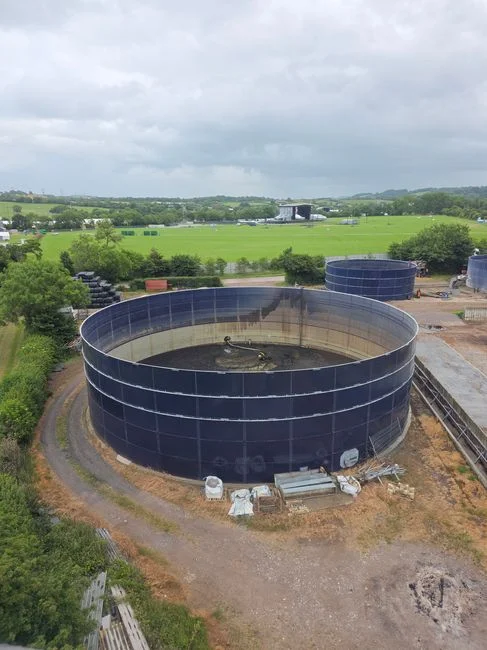
The A/O package is the operational-simplicity option, while the MBR is the compact-flow option whose additional mechanical and staffing demands must be priced. This distinction should drive the concept-design comparison, not a generic claim that one process is universally “better.”
HydropureWater’s 2026 guide describes the buried WSZ configuration as fully automated and not requiring a dedicated operator. That makes A/O appropriate where reliable power, maintenance access and simple remote supervision are available. The same guide reports that the integrated MBR uses filtration below 1 μm and reduces physical footprint by 40–60% relative to conventional activated sludge. It also requires monthly clean-in-place and at least one trained operator. An MBR should therefore be justified by a constrained plot or a defined reuse requirement, not selected solely because the project is urban.
| Selection factor | A/O WSZ package | Integrated MBR |
|---|---|---|
| Core configuration | Buried anoxic/oxic biological contact oxidation, sedimentation and disinfection | Membrane bioreactor with filtration below 1 μm |
| Principal advantage | Automated operation without a dedicated operator, according to HydropureWater’s 2026 guide | Smaller footprint and reuse-oriented effluent |
| Operational burden | Lower staffing demand; still requires routine inspection and maintenance | Monthly clean-in-place and at least one trained operator, according to HydropureWater’s 2026 guide |
| Effluent benchmark | Residential package plants designed for Mozambique’s 200–400 mg/L influent BOD band are described as producing 10–20 mg/L BOD without tertiary treatment — HydropureWater, 2026 | Less than 5 mg/L BOD expected where reuse is intended — HydropureWater, 2026 |
| Best fit | Land available; lower-complexity operation; buried installation accepted | Footprint constrained; reuse priority; trained operator and maintenance access available |
DNAAS’s 2024 revisions are described by HydropureWater’s 2026 guide as requiring 90–95% removal of BOD and TSS for sensitive rivers and coastal waters. Compare each bid against the actual receiving water and reuse specification rather than assuming one discharge target applies to every Maputo site. Also assess flood and cyclone overlays, maintenance access, sludge removal, grid reliability and land-tenure status.
Constructed wetlands are not the preferred urban package-plant answer in this comparison. HydropureWater’s 2026 guide positions them mainly for peri-urban and rural locations where land is available, power is unreliable and operator capacity is limited. A Maputo housing plot with defined ownership, drainage and access constraints requires a more controlled package concept.
Design for Maputo water, flood and maintenance risks
A credible installed proposal must model the sewer catchment and flood conditions, not merely demonstrate that the treatment package can accept the selected average flow. HydropureWater’s 2026 guide recommends EPA SWMM or equivalent for the DNAAS submission and includes storm and flood conditions in the required hydraulic assessment. Peak inflow, equalization, bypass prevention and discharge elevation must be resolved before equipment selection.
Protect the biological and membrane stages from solids. HydropureWater’s 2026 guide identifies rag, plastic and fibrous debris as common causes of pump or membrane downtime and specifies a 6 mm bar screen; its recommended solution is a GX rotary mechanical bar screen. Include DAF pretreatment only where the wastewater survey identifies relevant FOG, oil or grease. The guide cites roughly 35% organic-load reduction at Tete and additional chemical coagulant cost of $0.15–$0.30/m³, so a dissolved air flotation pretreatment system should be conditional on sampling and network findings.
Specify corrosion resistance for coastal exposure. HydropureWater’s 2026 guide recommends SS316 stainless steel or epoxy-coated carbon steel for headworks, MBR frames and wetted metal, and states that SS304 can pit within 3–5 years in saline soils. Confirm exposure conditions for the actual site rather than applying a generic coastal assumption.
Power resilience also belongs in the quotation. HydropureWater’s 2026 guide describes solar-powered aeration with battery-buffered blowers as standard practice and reports energy OPEX reductions of up to 25%. Require the supplier to size the generation, storage, controls and changeover arrangement against the actual power profile. Where flood or cyclone loading governs, specify a buried or anchored reactor vessel and appropriate elevation for above-grade pumps, screens and electrical equipment. Burial reduces some exposure but does not remove access, buoyancy, corrosion or maintenance requirements.
Build the budget around the complete package
The initial budget must distinguish equipment supply from a complete installed sanitation asset. HydropureWater’s 2026 guide gives a municipal CAPEX benchmark of $0.5M–$2M per 1,000 m³/day and reports $75,000–$300,000 for a 500-home community at approximately 150 m³/day, excluding land and the connecting sewer. This is an indicative screening range, not a Maputo quotation.
The guide also states that prefabricated WSZ and MBR plants cost roughly 30% less than equivalent in-situ concrete construction. That comparison should be tested against Maputo site formation, lifting requirements, flood protection and connection works because those items can materially change the delivered total.
| Budget component | Evidence or required pricing basis |
|---|---|
| Package plant CAPEX | Compare the municipal benchmark of $0.5M–$2M per 1,000 m³/day with the guide’s $75,000–$300,000 screening range for 500 homes at approximately 150 m³/day — HydropureWater, 2026 |
| OPEX structure | Approximately 40% energy, 20% labour and 40% chemicals and routine maintenance — HydropureWater, 2026 |
| MBR-specific OPEX | Price membrane cleaning, chemical use, spare membranes and trained operator availability |
| A/O-specific OPEX | Price aeration and power resilience; the guide reports solar-powered aeration can reduce energy OPEX by up to 25%, not a universal saving |
| Sludge handling | Price collection, conditioning, storage, transport and approved disposal. A plate-and-frame sludge filter press can reduce sludge volume by up to 70% and achieve 20–25% dry solids expected by DNAAS for land application, according to HydropureWater’s 2026 guide |
| Explicit exclusions | Land, connecting sewer, site formation, power supply, lifting equipment, commissioning, training, chemicals, sludge handling and long-term spares |
Require each bidder to state what its price includes and excludes. Also define performance guarantees, payment milestones, installation supervision, initial chemical stocks, commissioning samples and operator training. Comparing package prices without these boundaries creates false savings and later variation claims.
Plan permits, procurement and commissioning together
The supplied permitting and delivery windows should be built into the programme rather than treated as supplier lead times alone. HydropureWater’s 2026 guide describes a 6–12 month DNAAS process involving the EIA, public consultation, hydraulic model, sludge management plan and surcharge implementation plan.
Submit the hydraulic model, surcharge plan and flood or cyclone overlay with the EIA. HydropureWater’s 2026 guide reports that a 2025 Nampula proposal lost four months after flood modelling was omitted from the initial submission. Early DNAAS engagement also matters: the guide reports that the Tete project secured approval in eight months after engaging during conceptual design.
If the development seeks World Bank or ADB co-financing, include the AURA sanitation surcharge case. HydropureWater’s 2026 guide describes a 5–10% municipal water-bill allocation in Maputo, Tete and Quelimane and states that DNAAS requires a 20-year surcharge-based revenue projection for projects seeking that co-financing.
Delivery planning must start with fabrication. HydropureWater’s 2026 guide says imported package plants need a 90-day delivery window in the procurement contract and reports that fabrication, sea freight, customs clearance and inland transport consume 12–14 weeks. Permitting can proceed in parallel, but the critical path remains the combination of approval and shipping.
Request the following from every bidder:
- Process flow diagram, P&ID, hydraulic calculations and process calculations.
- Duty points, materials, utilities, control philosophy and backup-power requirements.
- Commissioning protocol, operator training, O&M manual and initial spares.
- Performance guarantees and measurable acceptance-test criteria.
- Delivery milestones, customs responsibilities, site access and installation scope.
Disinfection equipment must be matched to the selected process and permit conditions. A chlorine dioxide generator and a UV water sterilizer should be evaluated against the required residual, reuse criteria, power availability and operator competence rather than included by default.
Information to request before selecting a supplier
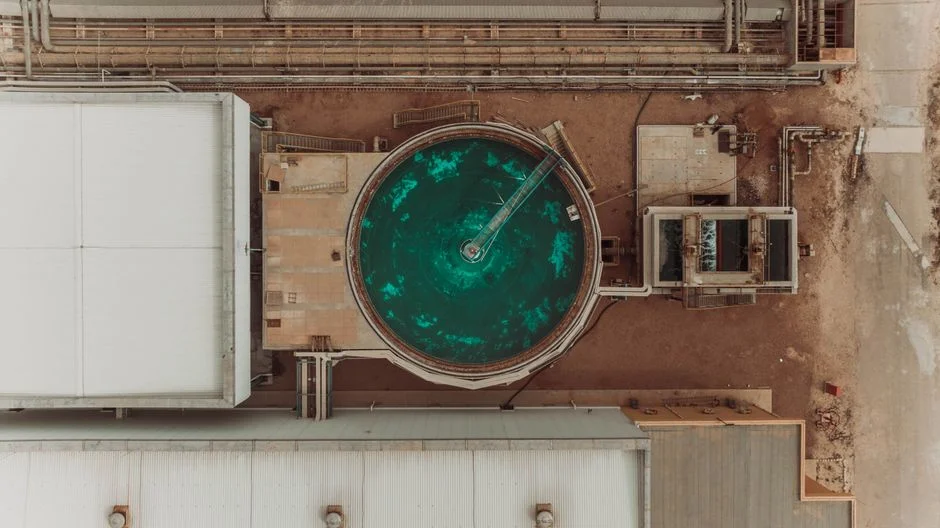
Supplier selection should begin with a signed-off development schedule and site evidence, not a product catalogue. The procurement brief should give every bidder the same verified inputs and require two traceable technical options.
| Information to obtain | Minimum decision content |
|---|---|
| Development schedule | Number of homes, occupancy assumptions, daily and peak flow, sewer catchment, infiltration and stormwater ingress |
| Wastewater sampling | At least four weeks of representative influent and effluent sampling where BOD, TSS, ammonia, FOG, nutrients or salinity affect design or compliance |
| Site information | Topographic survey, flood and cyclone overlay, footprint, access route, power and backup-power information, and proposed sludge-handling route |
| Bidder options | A/O and MBR submissions covering peak hydraulic duty, process duty, footprint, utilities, staffing, OPEX, CAPEX, delivery schedule and exclusions |
| Regulatory basis | DNAAS discharge or reuse requirement, receiving-water route, EIA scope and AURA surcharge approach |
| Final selection | Conditional on site testing, hydraulic modelling and site-specific DNAAS review—not on this article as approval or final design |
Do not omit the operating narrative. The buyer needs to know who will inspect the plant, remove sludge, respond to alarms, replenish chemicals and carry out membrane maintenance. If no trained operator is available, an MBR commitment should not be accepted without a credible training and support plan.
Frequently Asked Questions
How much does a packaged sewage treatment plant cost for 500 homes in Maputo?
HydropureWater’s 2026 Mozambique guide gives an indicative $75,000–$300,000 range for a 500-home community at approximately 150 m³/day, excluding land and the connecting sewer. It is a preliminary benchmark, not a quotation. Require each bidder to price the same installed scope, including site works, power, lifting equipment, commissioning, training, chemicals, sludge handling and spares, and to list all exclusions.
Should a Maputo housing development choose A/O or MBR?
Choose A/O where land is available, simple operation is essential and the plant can be buried without creating maintenance or flood risks. Choose MBR where the plot is constrained or reuse-quality effluent justifies monthly clean-in-place and at least one trained operator. Make that choice after sampling, hydraulic modelling and comparison of the complete lifecycle cost.
What flow should a 500-home development size for?
The per-capita method in HydropureWater’s 2026 guide gives 75–113 m³/day for 500 homes averaging five occupants, using 0.10–0.15 m³/person/day. The guide’s cost example instead uses approximately 150 m³/day. Keep those benchmarks distinct and require the final design to check 1.2–1.5 times average daily flow for stormwater ingress.
How long does it take to permit and deliver an imported package plant in Mozambique?
HydropureWater’s 2026 guide gives a 6–12 month DNAAS permitting window and a 12–14 week fabrication-to-site delivery sequence, including fabrication, sea freight, customs and inland transport. Write a 90-day delivery commitment into the procurement contract, but do not use it to replace the separate permitting programme.
What should a Maputo wastewater supplier guarantee?
Require stated peak hydraulic and process duty, the effluent basis, construction materials, utilities, O&M assumptions, commissioning, operator training, spares, delivery milestones and performance-test criteria. Include performance guarantees for the actual Maputo influent and discharge or reuse route, not a generic “domestic sewage” basis.