
Why a Containerized MBR STP Fits Quito Residential and Camp Projects
A containerized MBR sewage treatment plant ships inside a standard 20ft or 40ft ISO container, arrives pre-assembled, and needs only power and water connections to start treating sewage (wateracademia.com, 2026). That format matches the reality of Quito highland sites: dispersed residential communities, university dormitories, and work camps on steep terrain where pouring a concrete tank is the slowest part of any project.
Three structural advantages drive the fit. First, the package arrives with all headworks screening, biological treatment, and membrane filtration already mounted and piped, so the plant can be set on a compacted gravel pad with no civil works needed (wateracademia.com, 2026). Second, mobility matters on the Ecuadorian highlands: mining and construction camps relocate when the ore body or the work front moves, and a skid that can be lifted onto a lowboy and redeployed is easier to amortize than a poured structure. Third, the plug-and-play philosophy shortens commissioning to the time it takes a technician to land the container and run the power and influent lines.
The altitude is the trade-off. Quito sits at roughly 2,850 m, where the standard atmosphere is about 72% of sea-level pressure. Aeration blowers specified from sea-level BHP curves will under-deliver oxygen, and biological reaction rates slow with lower partial pressures and the cooler highland temperatures. The plant architecture is right; the component sizing must be derated. This caveat is addressed with the supplier in the quotation checklist.
Step 1: Convert Occupancy into a Design Flow in m³/day
A sizing engineer must first determine the average daily flow and the peak flow, as the equalization volume and hydraulic rating of the container are set by the peak, while the biological stage is set by the average. The unit of record is cubic metres per day; per the IDA Water Security Handbook 2019, 1 m³ equals 1,000 L, so any litre-based supplier figure converts directly.
Start by counting the population served. For a residential community, count the dwellings and the average household size. For a university dormitory, count the beds and add a fraction for daytime staff. For a work camp, count the beds on the largest shift and add kitchen, laundry, and clinic staff. Visitors — families on weekends, shift-change overlaps, training cohorts — should be added as a small percentage, because the peak flow follows the peak occupancy.
Apply a per-capita wastewater generation rate. Ask the supplier to confirm the rate used for Ecuadorian projects; the only numeric conversion supported is the unit itself (1 m³ = 1,000 L, IDA Water Security Handbook 2019). For small communities, a peaking factor of 2–3× the average is typical, but the supplier must confirm the figure it designs equalization volume against.
On top of the domestic flow, add any non-domestic load: kitchen prep, laundry, clinic, or workshop discharge. Each of these shifts the BOD and the F/M ratio, so it must appear in the brief, not just the flow. Document every assumption — population, per-capita rate, peaking factor, non-domestic load — in a single table so the design flow can be re-validated if the scope changes mid-project.
Step 2: Confirm the Unit Processes Inside the Container
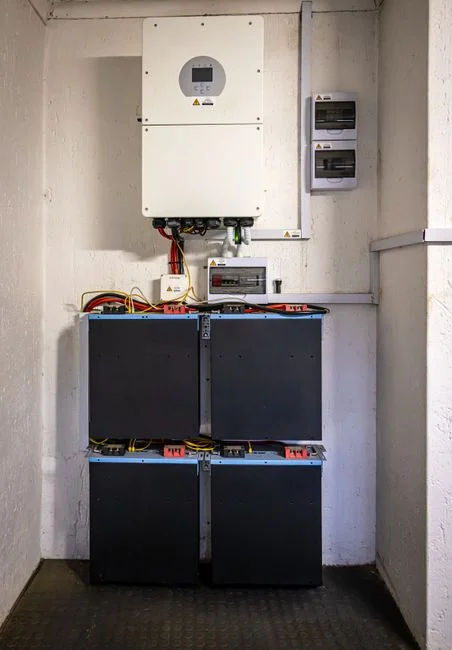
An engineer must confirm the specific unit processes included in each container, as two quotations at the same flow can cover different technologies. The standard containerized MBR for sanitary sewage includes headworks screening and pretreatment, a biological stage, membrane modules, and a control panel (wateracademia.com, 2026).
Equalization and coarse screening at the headworks absorb the peak flows common at camps and dormitories and protect the downstream membranes from rags and grit. The biological stage is typically an anoxic/aerobic activated-sludge configuration, with long sludge retention time that tolerates the variable organic loads seen in camp sewage (dynatecsystems.com). The membrane stage uses submerged PVDF modules with an absolute pore size below 1 μm, providing a barrier to bacteria and most viruses (dynatecsystems.com).
Two design choices in the membrane stage change how the plant grows. Out-of-basin configurations, where the membrane modules sit in a separate tank from the bioreactor, make it straightforward to retrofit the bioreactor geometry and to add modules or skids later (dynatecsystems.com). A built-in disinfection stage — chemical-free UV is common — and a PLC control panel complete the package; both should be confirmed in writing. The blower selection, in particular, must be sized for the Quito altitude, not the sea-level curve on a standard cut-sheet. A representative skid integrating these elements is described on the containerized MBR system product page, and the membrane modules themselves are detailed for the DF series flat sheet membrane modules.
MBR Design Parameters to Lock In With the Supplier
Process parameters drive footprint, container count, and operating cost, so they must be defined in writing by the supplier. The table below lists the parameters that a Quito project engineer should confirm before signing a purchase order. The numeric ranges shown reflect standard MBR practice; the supplier must confirm the exact setpoint for the design temperature and the Quito influent.
| Parameter | Typical MBR range | What to confirm for Quito |
|---|---|---|
| MLSS (mixed liquor suspended solids) | 8,000–12,000 mg/L | Setpoint at design temperature; viscosity affects flux at low temperatures |
| F/M ratio (food to microorganism) | 0.05–0.15 kg BOD/kg MLSS·day | Confirm basis at peak loading and at highland temperatures |
| HRT (hydraulic retention time) in bioreactor | 4–8 hours for domestic sewage | Confirm against the peak flow from Step 1 |
| Membrane flux | 10–25 L/m²·h | Confirm against module type and out-of-basin configuration |
| SRT (sludge retention time) | Long (often > 20 days) | Confirm nitrification at highland temperatures |
| Aeration blower sizing | Sea-level standard curves | Derated for ~2,850 m altitude; request the corrected curve |
The altitude row is often overlooked. Standard aeration cut-sheets assume sea-level air density, and a blower that delivers 100 m³/h of air at sea level delivers a smaller mass of oxygen at 2,850 m. The supplier has to provide the derated curve and the corresponding tank α-factor.
Step 3: Translate Design Flow into Container Count
Once the design flow is locked, the engineer must determine the number of 20ft or 40ft containers required. Each container has a rated hydraulic capacity set by the manufacturer, and the supplier must confirm that rating against the peak flow from Step 1.
Keep flow units consistent across the quotation: per the IDA Water Security Handbook 2019, 1 m³ equals 1,000 L, so any litre-based vendor figure converts directly. For flows at the upper end of a single container's rating, the safer move is to add an equalization container rather than over-size the membranes, because multiple containers can be connected for higher flows and the equalization tank absorbs the diurnal peaks common in camps (wateracademia.com, 2026).
On the site plan, reserve space for the screening/control container, the membrane container, and the sludge storage container if the package includes one. For an underground or semi-buried alternative where site footprint is severely constrained, the integrated underground sewage treatment format is an option to compare, though it removes the mobility advantage. Finally, confirm crane and truck access. A 40ft container loaded with water exceeds standard Ecuadorian road axle limits, so the unit is normally transported empty and filled on site; the delivery plan must reflect that.
Step 4: Match Effluent Quality to Ecuadorian Discharge Requirements
Containerized MBRs produce permeate with biochemical oxygen demand, total suspended solids, TKN, and ammonia below typical discharge limits, as the membrane acts as an absolute barrier to solids and most bacteria (dynatecsystems.com). The engineer must determine which set of limits applies to the receiving body in the Quito canton.
The applicable Ecuadorian framework is the TULSMA Libro VI Anexo 1, but specific numeric limits depend on whether the discharge goes to a sewer, a surface water body, or a reuse application. The supplier's local agent or the municipal authority should be asked to confirm the limits in writing before the quotation is signed, because the BOD, TSS, ammonia, and fecal coliform targets differ across the three paths. For a comparison of how the same workflow plays out at a different altitude and climate, the European MBR sizing reference walks through a low-altitude case.
For water-reuse applications such as irrigation or toilet flushing, the membrane permeate often meets the reuse standard without tertiary polishing, but local confirmation is required. Phosphorus removal to low limits is achievable with supplemental metal-salt dosing to the membrane stage, where the metal salts co-precipitate with the phosphorus and the membrane retains the floc (dynatecsystems.com). A routine sampling plan covering BOD, TSS, ammonia, and fecal coliforms should be written into the operating contract from day one, with chemical-free UV disinfection as the polishing stage if the project targets a reuse standard.
What to Send a Supplier for a Confirmed Quotation
A precise quotation request prevents the need to unwind supplier assumptions later. The following list covers the essential data points from the work done in Steps 1–4.
Send the design flow in m³/day (average and peak), the population served, and any non-domestic load (kitchen, laundry, clinic). Provide the influent characteristics — BOD, COD, TSS, ammonia, and temperature — from site-specific data rather than generic assumptions. State the site altitude (Quito is approximately 2,850 m) so the supplier can derate the blowers and biological kinetics. State the effluent target — discharge to sewer, to surface water, or to reuse — together with the local limit values confirmed by the municipal authority. Finally, state the containerization preference (20ft vs. 40ft), any site access constraints such as bridge axle limits or crane reach, and the required delivery date.
Frequently Asked Questions
What is the typical cost of a containerized MBR STP for a Quito camp or residential project?
The research data does not include specific pricing for a containerized MBR STP. The buyer should request an itemized quotation that separates the container cost, the membrane modules, the blower, the control panel, and optional sludge storage, plus freight from the manufacturing port to the Quito site and on-site commissioning. The altitude derating in Step 2 and the disinfection stage in Step 4 are often under-priced, so ask the supplier to call them out specifically.
How do I choose a reliable containerized MBR supplier for an Ecuadorian project?
Ask the supplier for at least two reference projects in Latin America at a similar altitude, contact details for the local agent, and a copy of the membrane manufacturer's warranty and operating manual in Spanish. The supplier should provide a derated blower curve for the Quito altitude and written confirmation that the unit meets the TULSMA Libro VI Anexo 1 limits for the project's canton. A side-by-side comparison with another supplier's quote is the fastest way to spot missing scope, and the containerized MBR sizing for tropical camps case study is a useful second reference point.
How long does delivery and commissioning take for a containerized MBR in the Ecuadorian highlands?
The buyer should request a written delivery date that includes manufacturing, sea freight, customs clearance at Guayaquil or Manta, inland transport to the Quito site, and on-site commissioning. The logistics in Step 3 — axle limits, crane access, and the altitude derating acceptance test — are usually the activities that extend the schedule, so the supplier should incorporate each into the project timeline.
What influent and effluent data should the operator log once the plant is running?
The plant should log influent flow (average and peak), influent BOD, COD, TSS, and ammonia, plus effluent BOD, TSS, ammonia, and fecal coliforms at a frequency set by the municipal authority. Membrane trans-membrane pressure, MLSS, dissolved oxygen, and blower running hours are the operating parameters that flag a cleaning or