
Why residential wastewater in Mozambique is a 2026 priority
Only 23% of urban Mozambicans had access to safely managed sanitation as of the WHO/UNICEF Joint Monitoring Programme 2023 report, and the gap is widening because urban population growth averages 3.5% per year (World Bank 2024 data). The 2024 cholera epidemic in Beira is the documented public-health consequence of that deficit, and it is the reason the National Directorate of Sanitation (DNAAS) is now actively funding residential-scale projects rather than only centralized municipal plants. Two flagship commissioning milestones confirm the political signal: the 2024 Infulene upgrade in Maputo and the 2024 commissioning of Tete's $9M fecal sludge treatment plant (ETLF), a 400,000 m³/day peak facility that achieved 95% BOD removal on domestic sewage.
Wastewater has also moved up the disease-surveillance agenda. Under the Global Fund's Project Stellar, APHL and Mozambique's National Institute of Health (INS) now run wastewater-based surveillance at four sample sites in Maputo, with sampling four times per week, and the program is being expanded to cholera, polio, Salmonella typhi, and influenza. That work, paired with the WHO wastewater reuse framework that increasingly governs decentralized discharge in tropical Africa (see the WHO wastewater reuse guidelines for the 2025 update), means a residential plant in Maputo, Beira, Nampula, or Tete is now both a sanitation asset and a public-health data node. The practical effect: residential proposals that meet DNAAS rules and reuse criteria are more likely to attract ADB or World Bank co-financing than a decade ago.
DNAAS effluent and design standards for residential plants
DNAAS's 2024 effluent revisions require 90–95% removal of BOD and TSS for discharge to sensitive river systems and coastal waters, and any plant using membrane bioreactor (MBR) technology is expected to deliver <5 mg/L BOD where reuse is intended. Cost recovery is anchored by the AURA sanitation surcharge, which mandates a 5–10% allocation of municipal water bills for sewage infrastructure; the mechanism is already active in Maputo, Tete, and Quelimane, and DNAAS now requires a 20-year revenue projection tied to AURA for any project seeking World Bank or ADB co-financing.
Permitting is a 6–12 month process that includes an Environmental Impact Assessment (EIA), public consultation, a hydraulic model (typically EPA SWMM or equivalent), a sludge management plan, and a surcharge implementation plan. A documented pitfall: the 2025 Nampula proposal lost 4 months to redesign because flood modelling was not included with the EIA submission. By contrast, the Tete ETLF secured approval in 8 months by engaging DNAAS during conceptual design. For residential proposals, the lesson is to file the hydraulic model, the surcharge plan, and the flood or cyclone overlay at the same time as the EIA; serial submissions are the most common cause of DNAAS back-and-forth.
Residential influent characteristics you must design for

Mozambican domestic sewage is more concentrated than the textbook global default, so sizing aeration, equalization, and sludge handling against European or South African norms will undersize the plant. At Maputo's Infulene facility, domestic influent BOD runs 200–400 mg/L because per-capita water use is low (typically 40–60 L/person/day). Tete's commissioning data shows NH4-N frequently above 50 mg/L, with peaks above 55 mg/L — the figure that forced the Tete design team to add a DAF unit mid-commissioning. For environmental-load estimation, the ASTM E2717-18R25 framework is the closest published standard, but the standard itself states that the parameters "reflect North American averages and would need to be modified if used elsewhere" (per Note 1 in the scope), so a Mozambican adjustment is mandatory, not optional.
Hydraulic design should assume 1.2–1.5× the average daily flow to absorb stormwater ingress, a routine occurrence in Mozambican combined sewers during the November–March wet season. A defensible per-household design flow is 0.10–0.15 m³/person/day, which gives roughly 3.0–4.5 m³/day for a 30-person cluster. For a community of 500 homes averaging 5 occupants, that is 75–113 m³/day — squarely in the package-plant range.
| Parameter | Design value for Mozambique | Source / basis |
|---|---|---|
| Influent BOD | 200–400 mg/L | Maputo Infulene operating data |
| Influent NH4-N | >50 mg/L (peaks >55 mg/L) | Tete ETLF commissioning, 2024 |
| Influent TSS | 250–450 mg/L (typical residential) | Hydropure Mozambique 2026 guide |
| Per-capita flow | 0.10–0.15 m³/person/day | Low per-capita water use adjustment |
| Hydraulic peaking factor | 1.2–1.5× ADF | Stormwater ingress in combined sewers |
| Temperature range | 22–32 °C (favourable for nitrification) | Coastal and inland Mozambique |
| Target BOD removal | 90–95% | DNAAS 2024 effluent revisions |
| Target MBR effluent BOD | <5 mg/L (reuse applications) | DNAAS / AURA reuse criteria |
Technology shortlist: WSZ package A/O, MBR, and decentralized wetland
Three technology families cover almost every Mozambican residential case. Buried WSZ A/O package plants in the 1–80 m³/h range are the default for 50–500-home communities and rural clusters: they run fully automatic, need no dedicated operator, sit below grade so they are out of the floodway, and the A/O (anoxic/oxic) configuration handles the >50 mg/L NH4-N loads observed at Tete. Containerized MBR systems with PVDF membranes (0.1–1 μm pore) are the right call for dense Maputo and Beira sites where footprint and reuse-quality effluent justify the higher CAPEX; the trade-off is monthly clean-in-place (CIP) and a need for at least one trained operator. The Hydropure Mozambique 2026 guide finds MBR cuts physical footprint by 40–60% versus conventional activated sludge, which is the deciding factor on inner-Maputo plots.
For peri-urban and rural Mozambique — where land is available, grid power is unreliable, and operator capacity is minimal — a septic tank plus horizontal-flow constructed wetland is the realistic default. It needs no continuous power, tolerates intermittent loading, and the wetland provides polishing plus pathogen reduction naturally. Where FOG from nearby food markets enters the sewer, the Tete ETLF experience shows that a DAF pre-treatment unit cuts the organic load to downstream biology by roughly 35% and is the cheapest insurance against fouling MBR membranes or overloading a wetland. DAF does add about $0.15–$0.30/m³ in chemical coagulant cost, which should be priced into the OPEX line.
| Criterion | WSZ buried A/O package | Containerized MBR | Septic + constructed wetland |
|---|---|---|---|
| Flow range (residential) | 1–80 m³/h (24–1,920 m³/day) | 5–500 m³/day per unit | 1–200 m³/day (modular) |
| Footprint | Small (buried, below grade) | 40–60% smaller than CAS | Large (0.5–1.0 m² per PE typical) |
| Effluent BOD | <20 mg/L (discharge) | <5 mg/L (reuse-ready) | <30 mg/L (irrigation, with UV) |
| Operator skill | None (automatic) | Skilled (monthly CIP) | Minimal (seasonal maintenance) |
| Grid power demand | Low (intermittent blowers) | High (continuous aeration + pumps) | Very low (gravity-fed) |
| Flood / cyclone resilience | High (buried, sealed) | Medium (elevated skid required) | High (above-grade cells) |
| Indicative CAPEX (per m³/day) | $400–$700 | $900–$1,500 | $150–$400 (land-dependent) |
| Best-fit community size | 50–500 homes | 100–2,000 homes (dense urban) | 10–200 homes (rural / peri-urban) |
Climate and site risks: floods, cyclones, salinity, power
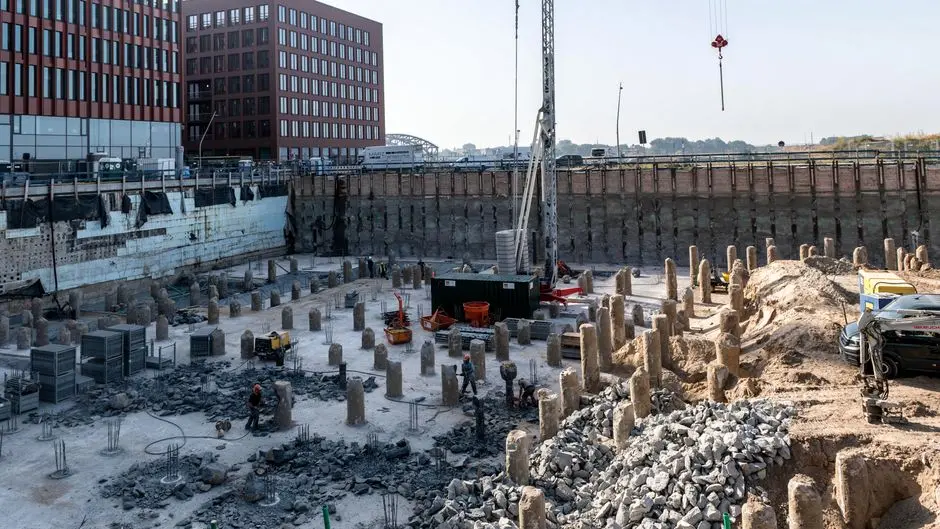
Site-specific risks will invalidate a generic design if they are not priced in at the concept stage. In Nampula, the 2025 flood event produced a 4-month EIA redesign; in Beira, cyclone-driven storm surge is the controlling load case for any headworks or tank above grade. The minimum response is elevated structural design for above-grade components, robust primary treatment (imhoff tank or fine screen plus grit removal), and a buried or anchored reactor vessel.
Coastal salinity drives the materials specification. For headworks, MBR frames, and any wetted metal in Beira and Quelimane, specify SS316 stainless steel or epoxy-coated carbon steel as a budget alternative; SS304 will pit within 3–5 years in saline soils. Grid reliability is poor outside Maputo, so solar-powered aeration with battery-buffered blowers is now standard practice and can cut energy OPEX by up to 25%. Finally, install a GX rotary bar screen at the headworks: Mozambican sewers carry significant rag and plastic debris, and a 6 mm bar screen protects downstream pumps and membranes from the most common cause of unplanned downtime.
CAPEX, OPEX and delivery schedule for a residential plant
The Mozambican municipal CAPEX benchmark is $0.5M–$2M per 1,000 m³/day of treatment capacity, with the Tete ETLF coming in at the mid-point of roughly $1.125M per 1,000 m³/day on a 400,000 m³/day peak facility. Translated to a residential community of 500 homes at ~0.30 m³/day per home (≈150 m³/day), the same band gives an indicative total of $75,000–$300,000 for a turnkey package plant, excluding land and connecting sewer. Prefabricated package plants run roughly 30% cheaper than equivalent in-situ concrete tank construction, which is significant for the AURA cost-recovery model because lower CAPEX tightens the 20-year revenue projection that DNAAS now requires.
OPEX for a Mozambican plant splits roughly 40% energy, 20% labour, and 40% chemicals and routine maintenance. Solar-powered aeration can reduce the energy line by as much as 25%, and for clusters above roughly 2,000 homes an anaerobic digester with biogas-to-energy can offset up to 30% of electricity use, on the same basis as the Maputo Infulene feasibility study. Sludge handling is the most underestimated line: a plate-and-frame filter press cuts sludge volume by up to 70% and achieves the 20–25% dry solids DNAAS expects for land application, while a paired automatic chemical dosing system controls polymer consumption and keeps downstream membranes from fouling. For imported package plants, build a 90-day delivery window into the procurement contract — fabrication, sea freight to Beira or Maputo, customs clearance, and overland transport to Tete or Nampula routinely consumes 12–14 weeks, and DNAAS permitting runs another 6–12 months in parallel, so the critical path is permitting plus shipping, not fabrication.
Frequently Asked Questions
What BOD limit does DNAAS set for residential wastewater in Mozambique?
DNAAS's 2024 effluent revisions require 90–95% removal of BOD and TSS for discharges to sensitive rivers and coastal waters; an MBR plant should deliver <5 mg/L BOD where reuse is intended. Most residential package plants designed to the Mozambique influent band of 200–400 mg/L BOD will discharge at 10–20 mg/L BOD without tertiary treatment.
How long does DNAAS permitting take for a residential sewage plant?
The DNAAS permitting window is 6–12 months for a complete EIA, EPA SWMM hydraulic model, sludge plan, and AURA surcharge revenue projection. The 2025 Nampula proposal lost 4 months to redesign because flood modelling was missing, while the Tete ETLF secured approval in 8 months by engaging DNAAS during conceptual design.
How much does a residential wastewater plant cost per home in Mozambique?
The municipal CAPEX benchmark is $0.5M–$2M per 1,000 m³/day, anchored by Tete ETLF at $1.125M per 1,000 m³/day. For a 500-home community at roughly 150 m³/day, that translates to $75,000–$300,000 turnkey, or about $150–$600 per home, before land and connecting sewer. Prefabricated WSZ or MBR package plants come in roughly 30% below equivalent in-situ concrete construction.
What is the AURA sanitation surcharge and how does it fund a residential plant?
The AURA framework mandates a 5–10% surcharge on municipal water bills in Maputo, Tete, and Quelimane, ring-fenced for sewage infrastructure. DNAAS now requires a 20-year revenue projection based on the surcharge for any project seeking World Bank or ADB co-financing, which is why the surcharge plan must be filed alongside the EIA rather than after commissioning.