Why Algerian Industries Need DAF Systems in 2025
Algerian industries require DAF (Dissolved Air Flotation) systems for effective wastewater treatment, achieving 90-97% removal of suspended solids, oils, and grease while reducing BOD/COD by 80-90%. A 75 m³/hour DAF system, like the one installed at Cevital’s Algerian facility, can meet Algerian discharge standards (e.g., <30 mg/L TSS, <10 mg/L FOG) at a CAPEX of $120,000-$200,000. This guide provides 2025 technical specs, cost benchmarks, compliance requirements, and a supplier checklist for Algerian buyers.
The industrial sector in Algeria is dominated by three primary sectors that generate high-strength wastewater: oil and gas (accounting for 45% of treatment demand), food processing (30%), and textiles (15%). These industries typically produce influent with Total Suspended Solids (TSS) ranging from 500 to 2,000 mg/L and Fats, Oils, and Grease (FOG) between 200 and 800 mg/L. Without specialized treatment, these pollutants exceed the legal limits established by the Algerian Ministry of Environment.
Regulatory pressure has intensified with the enforcement of Decree 06-141, which mandates strict limits for industrial discharge: TSS <30 mg/L, FOG <10 mg/L, BOD <30 mg/L, and COD <125 mg/L. Failure to comply with these standards under Law 03-10 can result in severe penalties, including fines up to 5,000,000 DZD ($37,000) and mandatory operational shutdowns. This regulatory environment makes high-efficiency separation technologies like DAF a technical necessity.
A notable case study involves the Cevital facility in Algeria, which faced significant challenges with high FOG levels from its food processing operations. By implementing a 75 m³/hour DAF system as a primary treatment stage followed by secondary biological treatment, the plant achieved a 95% TSS removal rate. This configuration ensured the facility remained fully compliant with national discharge standards while protecting downstream biological processes from oil-induced inhibition.
How DAF Systems Work: Technical Mechanisms and Algerian Use Cases
Dissolved Air Flotation operates on the principle of changing the buoyancy of suspended particles by attaching them to micro-bubbles. The efficiency of this process depends heavily on the air-to-solids ratio, which typically ranges from 0.02 to 0.06 for oil and gas wastewater.
The process begins with chemical conditioning. A PLC-controlled chemical dosing for DAF pre-treatment is used to inject coagulants and flocculants, neutralizing particle charges and forming stable flocs. Following this, a portion of the clarified effluent is pressurized and saturated with air in a pressure vessel. When this "recycle stream" is released into the flotation tank at atmospheric pressure, it generates micro-bubbles with a diameter of 30-50 μm. These bubbles attach to the flocs, lifting them to the surface to form a thick sludge blanket that is mechanically skimmed off.
In Algerian industrial applications, DAF systems are tailored to specific waste streams:
- Oil and Gas: Used primarily for emulsion breaking and removing free-phase hydrocarbons.
- Food Processing: Critical for removing vegetable oils and animal fats that would otherwise clog municipal sewers.
- Textiles: Effective for separating dyes and fibers when combined with specific polymer dosing.
Technical limitations must be managed carefully. DAF systems perform optimally within a pH range of 6-8 and temperatures below 40°C. For industries like textiles in Tlemcen or Oran, where wastewater temperatures can exceed 50°C, cooling or equalization tanks are required before the wastewater enters DAF systems for Algerian industrial wastewater.
| Industry Sector | Primary Pollutant | DAF Removal Efficiency | Technical Requirement |
|---|---|---|---|
| Oil & Gas | Hydrocarbons/Oily Sludge | 95-98% | Explosion-proof motors (ATEX) |
| Food & Beverage | Fats, Oils, Grease (FOG) | 90-96% | Stainless steel 304/316 construction |
| Textiles | Suspended Solids/Fibers | 92-95% | High-capacity sludge skimmers |
DAF System Sizing and Performance Parameters for Algerian Wastewater
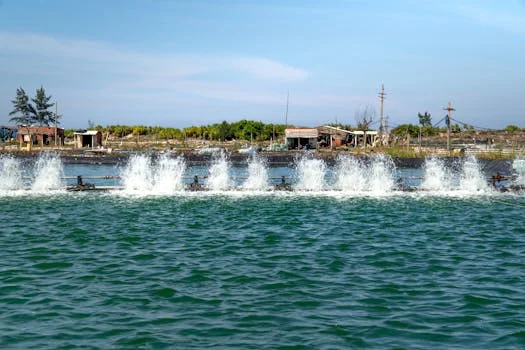
Sizing a DAF system for an Algerian site requires calculating the solids loading rate and hydraulic loading rate based on peak flow conditions. Engineers use the standard sizing formula: Q (m³/h) = (Influent TSS - Effluent TSS) × Removal Efficiency / (Solids Loading Rate × 1000).
Performance benchmarks for 2025 indicate that well-maintained DAF systems achieve TSS removal of 92-97% and FOG removal of 90-95%. Algeria's climate introduces variables that affect these benchmarks. In Saharan regions, ambient temperatures often reach 45°C, which reduces the solubility of air in water. This requires a 10-15% increase in the recycle flow rate or higher saturation pressures to maintain the necessary micro-bubble density compared to coastal installations.
| Parameter | Typical Influent (mg/L) | DAF Effluent (mg/L) | Removal Efficiency (%) |
|---|---|---|---|
| Total Suspended Solids (TSS) | 800 - 1,500 | 25 - 45 | 94% - 97% |
| Fats, Oils, Grease (FOG) | 300 - 600 | 5 - 15 | 95% - 98% |
| Chemical Oxygen Demand (COD) | 1,200 - 2,500 | 300 - 500 | 75% - 85% |
| BOD5 | 600 - 1,200 | 150 - 250 | 70% - 80% |
Pre-treatment is non-negotiable for Algerian industrial wastewater. Flow equalization is essential because many Algerian factories operate on batch cycles, leading to hydraulic spikes that can disrupt the flotation zone. pH adjustment is required to ensure that coagulants function effectively.
DAF vs Alternatives: 2025 Engineering Comparison for Algerian Buyers
When evaluating separation technologies, Algerian procurement managers often compare DAF systems against lamella clarifiers and Sedimentation Air Flotation (SAF). DAF systems offer a 20-30% smaller footprint than conventional clarifiers, which is a critical advantage for urban industrial zones in Algiers where land costs are high.
In terms of energy, DAF systems consume between 0.2 and 0.5 kWh/m³ of treated water. While this is higher than the 0.1-0.3 kWh/m³ required for SAF, the superior removal efficiency for FOG and light flocs justifies the investment for food and oil sectors. For a detailed comparison of DAF systems vs clarifiers and sedimentation, engineers must weigh the chemical consumption costs.
| Criteria | DAF System | Lamella Clarifier | Sedimentation Tank |
|---|---|---|---|
| FOG Removal | Excellent (>95%) | Poor (<40%) | Moderate (with baffles) |
| Footprint | Small / Compact | Medium | Large |
| Operational Cost | Moderate (Energy + Chem) | Low (Chem only) | Very Low |
| Sludge Consistency | High (2-4% solids) | Low (0.5-1% solids) | Low |
Cost Breakdown: DAF System Investment in Algeria (2025)
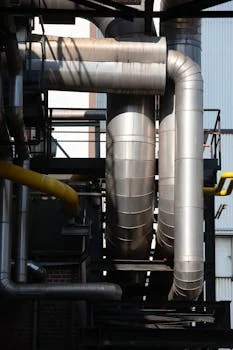
The total investment for a DAF system in Algeria consists of the Capital Expenditure (CAPEX) for the equipment and the Operational Expenditure (OPEX) for ongoing performance. CAPEX for systems ranging from 10 to 300 m³/hour typically falls between $80,000 and $250,000. A medium-sized 75 m³/hour system averages $150,000 for the equipment.
OPEX is driven by energy costs, chemical reagents, and maintenance. In Algeria, energy costs range from $0.05 to $0.15 per m³. Chemical costs are higher, ranging from $0.10 to $0.30 per m³. Maintenance should be budgeted at $5,000 to $15,000 annually.
| Cost Component | Estimated Range (per m³ or unit) | Notes for Algerian Market |
|---|---|---|
| CAPEX (100 m³/h system) | $140,000 - $190,000 | Includes PLC and saturation system |
| Energy Consumption | $0.05 - $0.12 / m³ | Based on Algerian industrial tariffs |
| Chemical Reagents | $0.15 - $0.25 / m³ | Coagulants + Flocculants |
| Import Duties | 17% - 30% | Varies by HS code and origin |
Return on Investment (ROI) for industrial DAF applications in Algeria is typically achieved within 3 to 5 years. This is driven by the avoidance of environmental fines and the potential for water reuse.
Algerian Compliance: Meeting Discharge Standards with DAF Systems
Compliance in Algeria is governed by a framework of environmental laws. Law 03-10 sets the foundation for environmental protection, while Law 05-12 specifically addresses industrial wastewater management. To operate legally, industrial facilities must obtain an environmental permit.
The technical target for any DAF installation must be the limits set by Decree 06-141. DAF systems are uniquely suited to meet the <10 mg/L FOG limit. Monitoring is equally important; the Algerian Ministry of Environment requires continuous monitoring of TSS and quarterly laboratory testing.
For facilities looking for comprehensive compliance solutions, Algerian package wastewater treatment solutions provide an integrated approach.
Supplier Checklist: How to Evaluate DAF System Vendors in Algeria
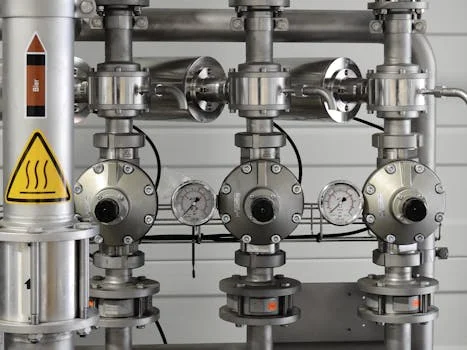
Selecting a supplier for a DAF system in Algeria requires a balance between technical sophistication and local support capability. When evaluating a vendor, procurement officers should use the following decision framework:
| Evaluation Criteria | Requirement for Approval |
Get a Free Quote — Tell Us About Your Project
Contact Us
|
|---|