Gallium nitride (GaN) wastewater requires specialized treatment to remove colloidal GaN particles, dissolved gallium ions, and trace arsenic from semiconductor fabrication. MBR systems achieve 95%+ TSS removal and COD <50 mg/L, meeting EPA discharge limits, but face fouling risks from GaN’s low solubility at pH 6–8. DAF systems remove 92–97% of suspended GaN but require pH adjustment to 4.5–5.5 for optimal flotation. CAPEX ranges from $2M (small-scale MBR) to $20M (ZLD-integrated RO), with OPEX dominated by membrane replacement ($0.50–$1.20/m³) and chemical dosing ($0.20–$0.40/m³).
Why Gallium Nitride Wastewater Differs from Standard Semiconductor Effluent
Gallium nitride (GaN) wastewater presents unique challenges due to its distinct chemical and physical properties, making generic semiconductor wastewater treatment approaches insufficient. Effluent from GaN fabrication processes, particularly etching, contains colloidal GaN particles ranging from 0.1–10 µm, dissolved gallium ions at concentrations of 1–50 mg/L, and trace arsenic typically between 5–50 µg/L (IJRESM PDF). A critical characteristic of GaN is its solubility profile: while it dissolves at highly acidic pH (<4) or highly alkaline pH (>9), it forms abrasive, stable colloids within the common industrial discharge pH range of 6–8 (IJRESM PDF). This colloidal formation significantly increases the risk of membrane fouling and pump wear in conventional systems designed for other semiconductor materials.
In contrast to silicon (Si) or silicon carbide (SiC) wastewater, GaN effluent exhibits a higher particle density, typically 1.2–1.5 g/cm³, compared to silicon's ~1.0 g/cm³, and a lower zeta potential of approximately -30 mV, versus -50 mV for SiC particles. This lower zeta potential reduces the repulsive forces between particles, which can hinder efficient flocculation and sedimentation, a common pre-treatment step in many third-generation semiconductor wastewater treatment systems. Therefore, effective GaN effluent treatment demands specialized chemical conditioning and filtration technologies to manage these challenging particle characteristics and prevent costly operational failures, unlike the more predictable behavior of SiC wastewater treatment systems.
| Parameter | GaN Wastewater | Si/SiC Wastewater |
|---|---|---|
| TSS (mg/L) | 50–500 | 20–200 |
| COD (mg/L) | 200–1,500 | 100–800 |
| pH Range | 3–11 (Colloidal at 6–8) | 5–10 |
| Arsenic Content (µg/L) | 10–100 | <5 (typically) |
| Particle Density (g/cm³) | 1.2–1.5 | ~1.0 (Si), ~1.0 (SiC) |
| Zeta Potential (mV) | -30 | -50 (SiC) |
Treatment Technology Comparison: MBR vs. DAF vs. RO for GaN Wastewater
Selecting the optimal wastewater treatment technology for GaN effluent hinges on balancing removal efficiency, capital expenditure (CAPEX), operational expenditure (OPEX), and footprint requirements. MBR systems for GaN wastewater, utilizing submerged PVDF membranes with a typical pore size of 0.1 µm, consistently achieve over 95% TSS removal and reduce COD to below 50 mg/L. However, the colloidal nature of GaN poses significant fouling risks, often necessitating chemical enhanced backwash or cleaning-in-place (CIP) every 7–14 days, and demanding energy consumption in the range of 0.8–1.2 kWh/m³ for aeration and pumping.
DAF systems for GaN particle removal employ micro-bubble flotation, typically generating bubbles 40–60 µm in size, to achieve 92–97% TSS removal. Optimal performance for GaN requires precise pH adjustment to 4.5–5.5, which facilitates flocculation and adherence of GaN colloids to the micro-bubbles. DAF systems generally have a lower CAPEX, ranging from $1.5M–$5M, but incur higher chemical costs, typically $0.30–$0.50/m³ for coagulants and flocculants.
Reverse Osmosis (RO) systems are essential for achieving high levels of purification and zero liquid discharge (ZLD) compatibility, detailing high-pressure operations (40–60 bar) using spiral-wound membranes to achieve over 98% ion rejection. While RO is highly effective for dissolved solids and trace contaminant removal, including final arsenic polishing, it faces significant scaling risks from gallium hydroxide precipitation if upstream pre-treatment is inadequate. Pre-treatment often includes MBR or DAF followed by ultrafiltration to minimize membrane fouling and extend RO membrane life.
| Feature | MBR (Membrane Bioreactor) | DAF (Dissolved Air Flotation) | RO (Reverse Osmosis) |
|---|---|---|---|
| TSS Removal | >95% | 92–97% | >99% (post-pre-treatment) |
| COD Removal | <50 mg/L effluent | Up to 60% (particulate COD) | >98% (dissolved COD) |
| Arsenic Rejection | Limited (particulate only) | Limited (particulate only) | >98% (dissolved arsenic) |
| CAPEX (Indicative) | $2M–$5M | $1.5M–$5M | $5M–$20M (integrated) |
| OPEX (Indicative) | $1.50–$2.50/m³ | $1.00–$2.00/m³ | $2.50–$4.00/m³ |
| Footprint | Moderate | Moderate | Large (especially with ZLD) |
| Key Challenge | Membrane fouling from GaN colloids | Precise pH control & chemical costs | Scaling from gallium hydroxide |
Engineering Specs for GaN Wastewater Treatment Systems (2025)
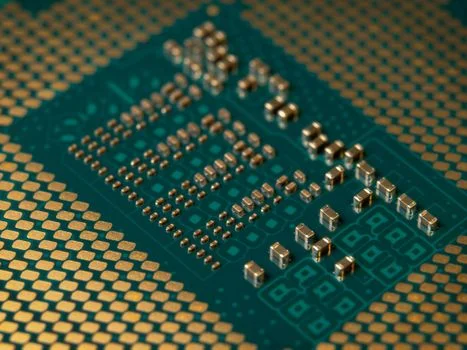
Effective GaN wastewater treatment systems in 2025 must be designed to accommodate highly variable influent characteristics while consistently meeting stringent effluent targets. Typical influent specifications for GaN fabrication wastewater include Total Suspended Solids (TSS) ranging from 50–500 mg/L, Chemical Oxygen Demand (COD) from 200–1,500 mg/L, a pH range spanning 3–11, and arsenic concentrations of 10–100 µg/L, reflecting current EPA 2024 benchmarks for semiconductor processing. To ensure compliance, effluent targets are set at TSS <30 mg/L, COD <50 mg/L, and arsenic <10 µg/L, adhering to EPA limits, with a final discharge pH maintained between 6–9 to prevent environmental impact (IJRESM PDF).
Membrane specifications are critical for robust performance in GaN applications. For MBR systems, PVDF (Polyvinylidene Fluoride) membranes with a 0.1 µm pore size are standard, offering strong chemical resistance and high flux. For subsequent arsenic removal and advanced purification, Nanofiltration (NF) or Reverse Osmosis (RO) membranes with pore sizes of 0.001–0.01 µm are employed. Typical operating flux rates are 15–25 LMH (Liters per square meter per hour) for MBR and 10–20 LMH for RO, designed to balance efficiency and fouling propensity. Chemical dosing for GaN wastewater pH adjustment and particle destabilization is precisely managed. This includes coagulants like Polyaluminum Chloride (PAC) dosed at 20–50 mg/L for DAF systems, antiscalants at 1–5 mg/L for RO to mitigate gallium hydroxide precipitation, and pH adjusters (sulfuric acid/sodium hydroxide) to maintain optimal operating conditions and prevent GaN colloidal formation.
CAPEX and OPEX Breakdown for GaN Wastewater Treatment (2025–2027)
Understanding the full lifecycle costs of GaN wastewater treatment systems requires a detailed breakdown of both capital expenditures (CAPEX) and operational expenditures (OPEX). For small-scale GaN facilities processing 100–500 m³/day, a standalone MBR system typically commands a CAPEX of $2M–$5M. Mid-scale operations, handling 500–2,000 m³/day, requiring a DAF + RO integrated system, can expect CAPEX to range from $5M–$10M. Large-scale plants exceeding 2,000 m³/day, aiming for Zero Liquid Discharge (ZLD) with advanced RO and brine management, face a CAPEX of $10M–$20M.
Operational expenditures are primarily driven by four key components. Membrane replacement, particularly for MBR and RO, is a significant factor, costing $0.50–$1.20/m³. Energy consumption, largely for pumps, blowers, and high-pressure RO systems, contributes $0.30–$0.80/m³. Chemical dosing for pH adjustment, coagulation, and antiscaling adds $0.20–$0.40/m³. Finally, labor for monitoring, maintenance, and cleaning typically accounts for $0.10–$0.30/m³. Return on Investment (ROI) for these systems is driven by substantial benefits, including water reuse rates of 30–50% (reducing freshwater intake), potential gallium recovery representing 5–15% of influent gallium, and significant savings from avoided compliance penalties, which can range from $50K–$500K per year.
| System Scale (m³/day) | Typical CAPEX (USD) | Estimated OPEX (USD/m³) | Indicative Payback Period (Years) |
|---|---|---|---|
| 100 (MBR) | $2M–$3.5M | $1.50–$2.50 | 5–7 |
| 500 (MBR + DAF) | $3.5M–$5M | $1.20–$2.00 | 4–6 |
| 500 (DAF + RO) | $5M–$7.5M | $2.00–$3.00 | 6–8 |
| 2,000 (DAF + RO + ZLD) | $10M–$20M | $2.50–$4.00 | 7–10 |
Compliance and Discharge Limits for GaN Wastewater
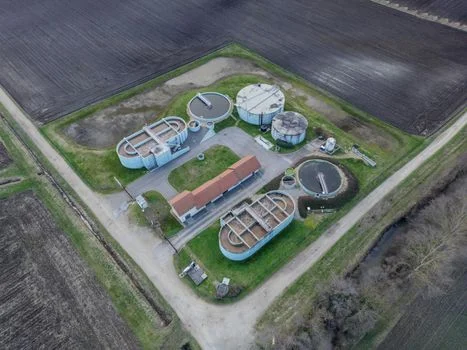
Adhering to strict regulatory compliance and discharge limits is paramount for GaN fabrication plants to avoid significant penalties and environmental liabilities. In the United States, the EPA sets specific limits for semiconductor manufacturing under 40 CFR Part 469, mandating arsenic concentrations below 10 µg/L, Total Suspended Solids (TSS) less than 30 mg/L, and a discharge pH maintained between 6–9. These federal standards are often supplemented by stricter state or local regulations.
Across the European Union, similar stringent limits apply. The Drinking Water Directive 98/83/EC sets an arsenic limit of <10 µg/L, while the Urban Waste Water Treatment Directive 91/271/EEC typically requires TSS below 25 mg/L for discharges. In China, national standards like GB 31573-2015 for electronic industry wastewater specifically regulate gallium, setting a discharge limit of <0.5 mg/L, which is crucial for facilities operating within the region. For plants pursuing Zero Liquid Discharge (ZLD), the objective is to achieve over 95% water recovery, minimizing environmental impact. The remaining concentrated brine requires specialized disposal methods, such as evaporation ponds or advanced crystallizers, to solidify waste and prevent hazardous liquid discharge.
How to Select a Gallium Nitride Wastewater Treatment Supplier: A 5-Step Framework
Selecting the right gallium nitride wastewater treatment supplier is a critical decision that can prevent costly operational issues and ensure long-term compliance. The first step involves demanding comprehensive pilot testing, requiring on-site trials with your actual GaN effluent to validate the supplier's claimed TSS, COD, and arsenic removal efficiencies. This crucial phase, typically lasting 3–6 months, provides real-world data and minimizes technological risk.
Step two focuses on technology matching: use the detailed comparison table from earlier in this article to select between MBR, DAF, or RO, or a combination, based on your plant’s specific flow rate, budget constraints, and desired effluent quality. Step three requires rigorous compliance validation; verify that the supplier’s proposed systems demonstrably meet all applicable EPA, EU, or China discharge limits, backed by verifiable third-party laboratory reports. The fourth step emphasizes CAPEX/OPEX transparency: demand itemized quotes that clearly break down all capital costs, provide a detailed membrane replacement schedule, and project energy and chemical consumption costs to avoid hidden expenses. Finally, step five addresses after-sales support, ensuring the supplier offers 24/7 remote monitoring capabilities, maintains a robust spare parts inventory, and provides comprehensive training for your operators to guarantee smooth, continuous operation.
Frequently Asked Questions

What is the typical CAPEX for a GaN wastewater treatment system?
Capital expenditure (CAPEX) for GaN wastewater treatment systems varies significantly by scale and technology. A small-scale MBR system (100–500 m³/day) typically costs $2M–$5M, while a large ZLD-integrated RO system (2,000+ m³/day) can range from $10M–$20M.
How do MBR, DAF, and RO systems compare for GaN wastewater?
MBR systems offer high TSS and COD removal but risk fouling from GaN colloids. DAF systems are effective for particle removal, especially at controlled pH, with lower CAPEX but higher chemical costs. RO systems provide superior dissolved contaminant and arsenic removal, crucial for ZLD, but require extensive pre-treatment to prevent scaling.
What are the primary compliance challenges for GaN wastewater?
Key compliance challenges for GaN wastewater include meeting stringent limits for arsenic (<10 µg/L per EPA/EU), TSS (<30 mg/L), and gallium (<0.5 mg/L in China). Maintaining a stable discharge pH (6–9) is also critical to prevent environmental impact and GaN re-precipitation.
How can membrane fouling be prevented in GaN MBR systems?
Preventing membrane fouling in GaN MBR systems involves optimizing chemical pre-treatment to destabilize GaN colloids, implementing regular chemical enhanced backwash (CEB) or cleaning-in-place (CIP) cycles every 7–14 days, and ensuring proper aeration to scour membrane surfaces and minimize cake layer formation.