Gallium nitride (GaN) wastewater from semiconductor fabs contains high concentrations of gallium hydroxide, nitride particulates, and trace arsenic—requiring specialized treatment to meet EPA’s 10 µg/L arsenic limit and local discharge standards. Zero-fouling MBR systems achieve 99% arsenic removal and 95% water recovery, with CAPEX ranging from $2M–$50M depending on fab capacity (50–500 m³/h) and effluent targets. Below, we detail 2027 engineering specs, hybrid treatment designs, and cost benchmarks for GaN wastewater compliance.
Why Gallium Nitride Wastewater Requires Specialized Treatment
Gallium nitride (GaN) wastewater presents distinct treatment challenges compared to other semiconductor effluents due to its unique chemical composition and varying pH profiles. During GaN semiconductor manufacturing, processes such as Metalorganic Chemical Vapor Deposition (MOCVD), wet etching, and Chemical Mechanical Planarization (CMP) generate wastewater streams rich in gallium hydroxide, fine nitride particulates, and trace metals like arsenic. While gallium arsenide (GaAs) wastewater can contain arsenic concentrations upwards of 100 mg/L (VSEP, 2024), GaN process streams typically exhibit arsenic levels ranging from 1–50 mg/L, alongside significant gallium concentrations.
The distinction between GaN, GaAs, and silicon carbide (SiC) wastewater is critical for effective treatment design. GaN wastewater typically has a broader pH range (3–11) compared to the more acidic GaAs streams (pH 2–5). Suspended solids (TSS) in GaN effluent are also higher, often between 200–1,000 mg/L, whereas GaAs or SiC wastewater usually falls within 50–200 mg/L. the primary metal contaminant in GaN wastewater is gallium, often present as insoluble gallium hydroxide, alongside trace arsenic, which contrasts with GaAs's primary focus on arsenic and SiC's emphasis on silicon fines and heavy metals. For more comprehensive engineering specs for third-generation semiconductor wastewater treatment, including SiC, refer to our articles on third-generation semiconductor wastewater treatment and SiC wastewater treatment specs and cost benchmarks.
Meeting regulatory challenges requires specialized solutions. The U.S. EPA mandates an arsenic discharge limit of 10 µg/L for drinking water and often applies similar stringent limits to industrial wastewater. The EU Industrial Emissions Directive 2010/75/EU sets Best Available Techniques (BAT) for semiconductor manufacturing, while local standards, such as China’s GB 8978-1996, specify limits for gallium (<1 mg/L) in industrial effluent. A notable case involved a 2023 GaN fab in Taiwan that initially installed a GaAs-optimized treatment system. This system, designed for lower TSS and a narrower pH range, consistently failed to meet local discharge limits for gallium and arsenic due to inadequate removal of gallium hydroxide particulates and insufficient arsenic polishing. The fab subsequently underwent a $1.2M retrofit, implementing a GaN-specific hybrid MBR system. This upgrade reduced influent arsenic from 25 mg/L to <5 µg/L and gallium from 150 mg/L to <0.5 mg/L, achieving full compliance and enabling water reuse.
| Parameter | GaN Wastewater (Typical) | GaAs Wastewater (Typical) | SiC Wastewater (Typical) |
|---|---|---|---|
| pH Range | 3–11 | 2–5 | 6–9 |
| TSS (mg/L) | 200–1,000 | 50–200 | 100–500 |
| Main Metal Contaminant | Gallium, Arsenic | Arsenic, Gallium | Silicon fines, Heavy Metals |
| Arsenic Concentration (mg/L) | 1–50 | 50–100+ | <1 |
| Gallium Concentration (mg/L) | 50–300 | 10–50 | <1 |
| Primary Challenge | Gallium hydroxide precipitation, nitride particulates, arsenic removal | High soluble arsenic, pH neutralization | Silicon fines, fluoride, heavy metals |
Engineering Specs for GaN Wastewater Treatment: Influent, Effluent, and Process Parameters
Designing an effective gallium nitride effluent treatment system requires precise understanding of influent characteristics and stringent effluent targets. Typical influent specifications for GaN wastewater from semiconductor fabs include a pH range of 3–11, total suspended solids (TSS) between 200–1,000 mg/L, and chemical oxygen demand (COD) from 500–3,000 mg/L. Critical metal contaminants are gallium, present at 50–300 mg/L, and arsenic, ranging from 1–50 mg/L (HydropureWater field data, 2025). These highly variable parameters necessitate robust and adaptable treatment processes.
The primary effluent targets for compliant discharge or reuse are stringent: arsenic must be reduced to below 10 µg/L (per EPA guidelines), gallium to less than 1 mg/L, TSS to less than 30 mg/L, and COD to less than 100 mg/L. Achieving these levels often requires a multi-stage hybrid DAF-MBR-RO system. The initial pretreatment stage typically involves a Dissolved Air Flotation (DAF) system to efficiently remove the high suspended solids and gallium hydroxide precipitates. A DAF system for GaN wastewater pretreatment can achieve 90–95% TSS removal, with capacities ranging from 4–300 m³/h, significantly reducing the load on subsequent treatment stages.
Following pretreatment, biological treatment via a Membrane Bioreactor (MBR) system is crucial for COD reduction and further particulate removal. An integrated MBR system for GaN wastewater arsenic removal, such as the DF series, utilizes robust PVDF membranes with a 0.1 µm pore size, operating at a typical flux of 10–20 L/m²/h. These systems are critical for handling the complex organic load and achieving high-quality effluent suitable for polishing. For final polishing and to meet ultra-low arsenic limits, an industrial RO system for GaN wastewater polishing is employed. These RO systems typically achieve 99% arsenic rejection and 75–85% water recovery, ensuring compliance with EPA limits and enabling significant water reuse.
Sludge generated from GaN wastewater treatment is characterized by 3–5% solids content and a high gallium concentration, often 10–20% by weight. This sludge requires efficient dewatering, typically achieved with a plate-and-frame filter press for GaN sludge dewatering, which can handle filtration areas from 1–500 m². Proper management of this metal-rich sludge is essential, as its gallium content often classifies it as hazardous waste, requiring disposal through licensed vendors.
| Parameter | Influent Specs (Typical GaN Wastewater) | Effluent Targets (for Compliance/Reuse) |
|---|---|---|
| pH | 3–11 | 6–9 |
| Total Suspended Solids (TSS) | 200–1,000 mg/L | <30 mg/L |
| Chemical Oxygen Demand (COD) | 500–3,000 mg/L | <100 mg/L |
| Gallium (Ga) | 50–300 mg/L | <1 mg/L |
| Arsenic (As) | 1–50 mg/L | <10 µg/L |
| Water Recovery Rate | N/A | >90% (with hybrid system) |
Treatment Technologies Compared: MBR vs. DAF vs. RO for GaN Wastewater
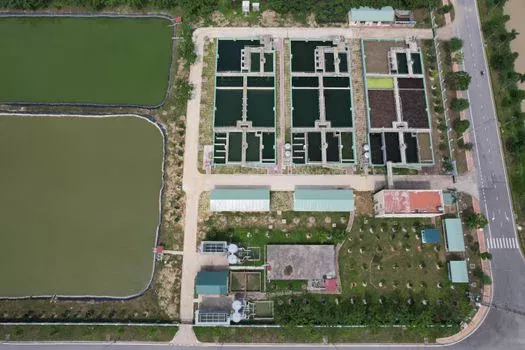
Selecting the optimal treatment technology for GaN wastewater involves balancing efficiency, footprint, capital expenditure (CAPEX), and operational expenditure (OPEX) while ensuring compliance. Each technology—Membrane Bioreactor (MBR), Dissolved Air Flotation (DAF), and Reverse Osmosis (RO)—offers distinct advantages and limitations when addressing the complex composition of gallium nitride effluent. A comprehensive comparison reveals their suitability for various stages of treatment.
MBR systems are highly effective for biological treatment and advanced particulate removal, offering up to 95% water recovery and achieving 99% arsenic removal when combined with appropriate pre-treatment and post-treatment. These systems boast a significantly smaller footprint, up to 60% less than conventional activated sludge systems with clarifiers (HydropureWater DF series specs, 2025). However, MBRs face a higher fouling risk, with typical transmembrane pressure increases of 0.1–0.5 bar/month, necessitating regular cleaning. Membrane replacement is also a recurring OPEX, usually every 3–5 years, at a cost of $50–$100/m².
DAF systems excel as a primary pretreatment step, offering 90–95% TSS removal, making them ideal for separating gallium hydroxide precipitates and nitride particulates. The DAF system demonstrates low OPEX, typically ranging from $0.10–$0.30/m³, due to its efficient solid-liquid separation. However, DAF alone provides limited arsenic removal (typically <50%) and requires downstream polishing, such as chemical precipitation or membrane filtration, to meet stringent discharge limits.
RO systems are critical for achieving ultra-pure effluent and meeting the most stringent compliance benchmarks, including the EPA’s 10 µg/L arsenic limit. Industrial RO systems for GaN wastewater achieve impressive 99% arsenic rejection and 75–85% water recovery, making them suitable for water reuse applications. The primary drawbacks of RO include high energy consumption, typically 2–4 kWh/m³ of treated water, and a significant scaling risk from dissolved salts, which necessitates precise antiscalant dosing and regular membrane cleaning.
For robust and compliant gallium nitride effluent treatment, a hybrid system combining DAF for pretreatment, MBR for biological treatment and advanced filtration, and RO for final polishing is often the recommended approach. This integrated strategy ensures 99% arsenic removal and overall water recovery rates exceeding 90%, effectively addressing GaN’s unique contaminants and achieving zero-risk compliance.
| Parameter | MBR (Membrane Bioreactor) | DAF (Dissolved Air Flotation) | RO (Reverse Osmosis) |
|---|---|---|---|
| Primary Function | Biological treatment, solids separation, advanced filtration | Pretreatment, TSS/oil/grease removal | Demineralization, contaminant polishing |
| TSS Removal Efficiency | >99% (post-biological) | 90–95% | >99% (for dissolved solids) |
| Gallium Removal | 80–90% (particulate) | 70–85% (particulate) | >99% (dissolved) |
| Arsenic Removal | 85–99% (particulate/adsorbed) | <50% | >99% (dissolved) |
| Water Recovery | 90–95% | N/A (separation only) | 75–85% |
| Footprint | Compact (60% smaller than conventional) | Moderate | Moderate |
| CAPEX (Relative) | High | Low-Moderate | High |
| OPEX (Relative) | Moderate-High (energy, membrane replacement) | Low (energy, chemicals) | High (energy, antiscalants) |
| Fouling Risk | Moderate-High (0.1–0.5 bar/month) | Low | High (scaling) |
| Chemical Use | Low-Moderate (cleaning) | Moderate (coagulants, flocculants) | High (antiscalants, cleaning) |
CAPEX and OPEX Breakdown for GaN Wastewater Treatment Systems
Understanding the capital expenditure (CAPEX) and operational expenditure (OPEX) is crucial for semiconductor fab engineers and procurement teams evaluating gallium nitride wastewater treatment company solutions. The total CAPEX for a GaN wastewater treatment system can range from $2M for a basic compliance system handling 50 m³/h to over $50M for a large-scale 500 m³/h Zero Liquid Discharge (ZLD) facility. These costs are highly dependent on the required effluent quality and the specific technologies deployed.
A breakdown of CAPEX by system component for various capacities reveals significant cost drivers. A DAF system, essential for initial solids removal, typically costs between $200K–$1.5M. The core biological treatment, an integrated MBR system for GaN wastewater arsenic removal (DF series, processing 10–2,000 m³/day), represents a substantial investment of $1M–$10M. For final polishing and high-purity water, an industrial RO system for GaN wastewater polishing can range from $500K–$5M. Sludge dewatering equipment, such as a plate-and-frame filter press, adds another $100K–$1M to the initial investment. Ancillary equipment, civil works, and installation can account for an additional 20–30% of the total CAPEX.
Operational expenditure (OPEX) for GaN wastewater treatment systems typically ranges from $0.50–$2.00/m³ of treated water. Energy consumption, primarily for MBR aeration and RO high-pressure pumps, is a major component, costing $0.20–$0.80/m³. Chemical costs, including coagulants for DAF, nutrient dosing for MBR, and antiscalants for RO, typically fall between $0.10–$0.50/m³. Membrane replacement for MBR and RO systems, a critical part of maintaining performance, accounts for $0.10–$0.30/m³. Labor for monitoring, maintenance, and operational adjustments adds $0.05–$0.20/m³.
Cost-saving strategies are vital for optimizing long-term ROI. Implementing hybrid DAF-MBR systems can reduce overall OPEX by up to 30% compared to standalone MBRs, by effectively removing bulk solids upstream and minimizing membrane fouling. advanced zero-fouling designs for MBR membranes can extend membrane life to 5+ years, significantly deferring replacement costs. When selecting a gallium nitride wastewater treatment company, key vendor selection criteria include proven compliance with EPA and EU standards, a track record of successful case studies in semiconductor wastewater, 24/7 service support, and modular scalability to accommodate future fab expansions.
| Component/Cost Type | 50 m³/h System (Basic Compliance) | 200 m³/h System (Advanced Compliance) | 500 m³/h System (ZLD-Ready) |
|---|---|---|---|
| DAF System (CAPEX) | $200K–$400K | $500K–$900K | $1.0M–$1.5M |
| MBR System (CAPEX) | $1.0M–$2.5M | $3.0M–$6.0M | $7.0M–$10.0M |
| RO System (CAPEX) | $500K–$1.0M | $1.5M–$3.0M | $3.5M–$5.0M |
| Sludge Dewatering (CAPEX) | $100K–$250K | $300K–$600K | $700K–$1.0M |
| Total Estimated CAPEX | $2M–$4M | $5.5M–$10.5M | $12.2M–$17.5M |
| Energy (OPEX $/m³) | $0.50–$0.80 | $0.40–$0.70 | $0.20–$0.50 |
| Chemicals (OPEX $/m³) | $0.30–$0.50 | $0.20–$0.40 | $0.10–$0.30 |
| Membrane Replacement (OPEX $/m³) | $0.20–$0.30 | $0.15–$0.25 | $0.10–$0.20 |
| Labor (OPEX $/m³) | $0.10–$0.20 | $0.08–$0.15 | $0.05–$0.10 |
| Total Estimated OPEX $/m³ | $1.10–$1.80 | $0.83–$1.50 | $0.45–$1.10 |
Compliance Checklist for GaN Wastewater Treatment

Ensuring continuous regulatory compliance for gallium nitride wastewater treatment is paramount for semiconductor fabs, requiring a proactive and systematic approach. The primary regulatory drivers include the U.S. EPA’s 10 µg/L arsenic limit, the EU Industrial Emissions Directive 2010/75/EU setting BAT for industrial discharges, and national standards such as China’s GB 8978-1996, which specifies a gallium limit of <1 mg/L in industrial effluent. Adherence to these, alongside local discharge permits, forms the backbone of environmental stewardship.
A comprehensive compliance checklist for GaN wastewater treatment includes several critical steps:
- Influent Characterization: Conduct quarterly (or more frequent) testing for gallium, arsenic, TSS, COD, and pH. This establishes a baseline and monitors variability, which is crucial given arsenic concentrations can fluctuate from 1–50 mg/L and pH can swing from 3–11.
- Treatment Validation: Before full-scale deployment, pilot test the integrated DAF + MBR + RO system to validate its ability to achieve >99% arsenic removal and >95% water recovery under representative fab operating conditions.
- Effluent Monitoring: Implement continuous online sensors for critical parameters like arsenic, TSS, and pH. Regular laboratory analysis, compliant with EPA Method 200.8 for metals, must corroborate online data to ensure discharge limits are consistently met.
- Sludge Management: Accurately classify dewatered sludge as hazardous or non-hazardous. Given that gallium content exceeding 1% typically triggers hazardous waste regulations, engage licensed vendors for proper disposal or, where feasible, gallium recovery.
- Documentation: Maintain meticulous records for a minimum of five years, including all influent and effluent data, maintenance logs for all equipment (especially membranes), chemical usage, calibration certificates for monitoring equipment, and regulatory permits.
Common compliance pitfalls include underestimating the variability of arsenic concentrations in GaN process streams, leading to treatment upsets. Another significant challenge is failing to account for gallium hydroxide scaling within MBR membranes, which can rapidly reduce flux and compromise treatment efficiency. Additionally, ignoring seasonal or operational pH swings (3–11) can destabilize chemical precipitation and biological processes, leading to non-compliant discharges. Proactive monitoring and adaptive treatment strategies are essential for sustained compliance.
Frequently Asked Questions
What makes GaN wastewater different from GaAs or SiC wastewater?
GaN wastewater uniquely features high concentrations of gallium hydroxide and nitride particulates, alongside trace arsenic, within a broad pH range (3–11). Unlike GaAs wastewater, which is primarily characterized by very high soluble arsenic and lower pH (2–5), or SiC wastewater, which focuses on silicon fines and fluoride, GaN demands specific strategies for gallium precipitation and particulate removal, in addition to robust arsenic treatment.
What is "zero-fouling" in MBR systems for GaN wastewater?
Zero-fouling in MBR systems refers to advanced membrane designs and operational strategies that significantly mitigate membrane pore clogging by particulates and organic matter. For GaN wastewater, this involves specialized membrane materials (e.g., modified PVDF), optimized aeration, and intermittent permeate extraction, which reduce the transmembrane pressure increase to near zero over extended periods, prolonging membrane life and reducing cleaning frequency.
Can treated GaN wastewater be reused in semiconductor fabs?
Yes, treated GaN wastewater can achieve high-purity levels suitable for reuse within semiconductor fabs. A hybrid DAF-MBR-RO system can achieve over 90% water recovery, with effluent quality often meeting or exceeding ultrapure water (UPW) standards for non-critical applications like cooling towers, scrubbers, or even specific rinsing steps, significantly reducing freshwater demand and operational costs.
How long does it take to deploy a GaN wastewater treatment system?
The typical deployment timeline for a complete GaN wastewater treatment system, from initial design to commissioning, ranges from 12 to 24 months. This includes detailed engineering, equipment fabrication (6-12 months), site preparation, installation (3-6 months), and crucial commissioning and performance validation phases (2-4 months) to ensure full compliance and stable operation.
Related Equipment
The following HydropureWater products are engineered for the wastewater challenges discussed above:
- DAF system for GaN wastewater pretreatment — view specifications, capacity range, and technical data
- Integrated MBR system for GaN wastewater arsenic removal — view specifications, capacity range, and technical data
- Industrial RO system for GaN wastewater polishing — view specifications, capacity range, and technical data
- Plate-and-frame filter press for GaN sludge dewatering — view specifications, capacity range, and technical data
Need a customized solution? Request a free quote with your specific flow rate and pollutant parameters.