Third-Generation Semiconductor Wastewater Treatment: 2027 Engineering Specs, Zero-Fouling MBR Design & $5M–$50M CAPEX Breakdown
Third-generation semiconductor fabs (GaN, SiC) generate wastewater with fluoride concentrations up to 500 mg/L, gallium up to 100 mg/L, and ammonia >200 mg/L—far exceeding EPA discharge limits of ≤4 mg/L fluoride and ≤1.9 mg/L ammonia. Proven treatment systems combine membrane bioreactors (MBR) with ion exchange or chemical precipitation to achieve zero liquid discharge (ZLD) while recovering gallium worth $150–$300/kg. CAPEX ranges from $5M for a 50 m³/h MBR system to $50M for a full-scale ZLD plant with metal recovery, with OPEX of $0.80–$2.50/m³ treated.
Why Third-Generation Semiconductor Wastewater Is Harder to Treat Than Silicon
Third-generation semiconductors like Gallium Nitride (GaN) and Silicon Carbide (SiC) utilize hydrofluoric acid, gallium chloride, and high-purity ammonia in etching and cleaning cycles, resulting in effluent concentrations 5–10 times higher than legacy silicon fabs. While silicon fabs typically manage fluoride at 50–100 mg/L, GaN/SiC facilities frequently produce fluoride levels of 200–500 mg/L and ammonia concentrations of 150–300 mg/L. These elevated levels create a chemical environment where legacy treatment systems—designed for simple calcium fluoride precipitation—consistently fail to meet tightening regulatory standards.
Gallium presents a unique chemical challenge because it forms stable, soluble complexes with fluoride ions, resisting conventional precipitation methods. gallium exhibits amphoteric behavior, meaning its solubility is highly dependent on pH. Between pH 3 and 12, gallium solubility curves vary significantly; at a neutral pH, gallium may remain in solution as a complexed ion, whereas silicon fab systems are optimized for simple metal hydroxides. In biological stages, ammonia concentrations exceeding 50 mg/L act as a potent inhibitor to nitrification processes, requiring specialized PVDF flat-sheet MBR modules for semiconductor wastewater that can handle high nitrogen loads through enhanced aeration and precise pH/temperature control.
Legacy silicon fab treatment systems, often relying on basic chemical precipitation and sedimentation, typically achieve only 60–80% fluoride removal. This is insufficient for GaN/SiC fabs where residual gallium-fluoride complexes remain in the effluent. For example, while a standard copper ion exchange system at a legacy fab might recover $35,000 per year in metals, a dedicated gallium recovery system in a GaN fab can recover $150,000–$300,000 per year, assuming a $150–$300/kg market price and a 90% recovery rate. The economic incentive for specialized treatment is as much about resource recovery as it is about compliance.
| Contaminant | Legacy Silicon Fab (mg/L) | Third-Gen (GaN/SiC) Fab (mg/L) | Treatment Difficulty Factor |
|---|---|---|---|
| Fluoride (F-) | 50–100 | 200–500 | High (Complexation with Ga) |
| Gallium (Ga) | <1 | 50–100 | Extreme (Amphoteric/Solubility) |
| Ammonia (NH3-N) | 10–30 | 150–300 | High (Bio-inhibition) |
| TDS | 500–2,000 | 1,000–10,000 | Moderate (Membrane Scaling) |
Influent Specifications and Discharge Limits for Third-Gen Semiconductor Wastewater
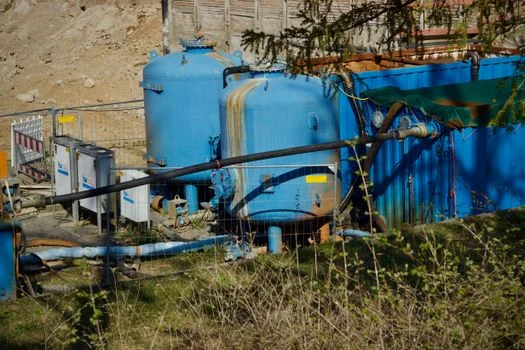
Typical influent specifications for GaN/SiC fabs involve extreme pH swings (2–12) and high Total Dissolved Solids (TDS) ranging from 1,000 to 10,000 mg/L. Engineering a system for these parameters requires robust PLC-controlled chemical dosing for fluoride and gallium precipitation to stabilize the influent before it reaches sensitive membrane or ion exchange units. Pilot tests consistently show that Total Suspended Solids (TSS) in these streams range from 50 to 200 mg/L, often containing abrasive SiC fines that can cause premature membrane wear if not properly pre-treated.
Compliance is governed by EPA discharge limits under 40 CFR Part 469, which mandates fluoride levels ≤4 mg/L and ammonia ≤1.9 mg/L. However, state-level variations often impose stricter requirements; for instance, California facilities may face even lower limits to protect groundwater basins. Internationally, the EU Urban Waste Water Directive (91/271/EEC) sets a ceiling of 125 mg/L for COD and 35 mg/L for TSS, but member states like Germany frequently enforce fluoride limits as low as 2 mg/L for industrial point sources.
To mitigate these regulatory risks, many new fabs are moving toward Zero Liquid Discharge (ZLD). While ZLD systems eliminate the risks associated with discharge permits, they require the integration of mechanical vapor recompression (MVR) evaporators or crystallizers. This technology shift increases CAPEX by approximately 30–50% compared to traditional discharge-oriented systems but provides a "future-proof" solution against evolving environmental laws.
| Parameter | Typical Influent (GaN/SiC) | EPA Discharge Limit | ZLD Target Effluent |
|---|---|---|---|
| Fluoride | 200–500 mg/L | ≤4.0 mg/L | <0.5 mg/L (Internal Reuse) |
| Gallium | 50–100 mg/L | Not explicitly capped* | <0.1 mg/L |
| Ammonia-N | 150–300 mg/L | ≤1.9 mg/L | <1.0 mg/L |
| COD | 200–600 mg/L | ≤50 mg/L | <10 mg/L |
| TSS | 50–200 mg/L | ≤30 mg/L | <1 mg/L |
*Note: Gallium is often regulated under "Total Toxic Organics" or local heavy metal limits.
Treatment Technology Comparison: MBR vs. Ion Exchange vs. Chemical Precipitation for GaN/SiC Wastewater
Membrane Bioreactor (MBR) systems, particularly those utilizing advanced flat-sheet membranes, are highly effective at removing TSS and organic COD to levels below 10 mg/L and 50 mg/L, respectively. However, in GaN wastewater applications, MBRs are susceptible to fouling from colloidal silica and residual gallium complexes. Field data indicates that MBR flux rates drop significantly—by roughly 30%—when treating GaN effluent compared to silicon effluent. Specifically, flux rates for GaN wastewater typically range from 15–25 LMH (liters per square meter per hour), whereas silicon fabs can achieve 25–35 LMH. This necessitates a 20% increase in membrane surface area to maintain throughput.
Ion exchange (IX) using specialized chelating resins is the gold standard for gallium recovery. These resins can capture 90–95% of dissolved gallium, which can then be sold for $150–$300/kg. The challenge with IX is the requirement for stringent pH adjustment and pre-filtration; if fluoride is not removed first, it can interfere with gallium adsorption. Chemical precipitation using lime (calcium hydroxide) or calcium chloride remains the primary method for bulk fluoride removal. While it can reduce fluoride to 10–20 mg/L, it produces significant volumes of sludge with 20–30% moisture content, incurring disposal costs of $200–$500/ton.
The most resilient architecture for a modern fab is a hybrid system. This involves high-density chemical precipitation for bulk fluoride removal, followed by ion exchange for gallium recovery, and finally an MBR for organic and nitrogen removal. For facilities aiming for high-purity water recycling, RO systems for water reuse in semiconductor fabs are integrated after the MBR to strip remaining TDS. While hybrid systems carry a higher CAPEX ($30M–$50M), they offer the lowest risk profile for compliance and the highest potential for ROI through metal recovery.
| Technology | Primary Strength | Weakness for GaN/SiC | Typical Flux/Rate |
|---|---|---|---|
| MBR (Flat Sheet) | COD/TSS Removal | Silica Fouling Risk | 15–25 LMH |
| Ion Exchange | 95% Ga Recovery | High Resin Cost | 10–20 BV/h |
| Chemical Precipitation | Bulk Fluoride Removal | High Sludge Volume | 2–5 m/h (Rise Rate) |
| Reverse Osmosis | 99% TDS Removal | High Energy/Brine | 12–18 LMH |
CAPEX and OPEX Breakdown for Third-Gen Semiconductor Wastewater Treatment Systems
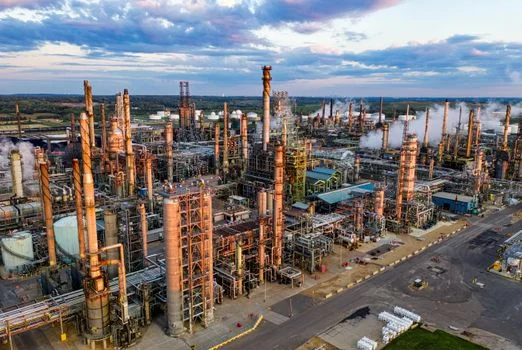
Capital expenditure for third-generation semiconductor wastewater treatment is highly sensitive to flow rate and the required level of treatment. A baseline 50 m³/h MBR system for basic compliance typically starts at $5M. In contrast, a full-scale 500 m³/h ZLD plant equipped with gallium recovery and high-purity water recycling can reach $50M. These figures are derived from scaling large-scale $417M industrial projects down to the specific throughput requirements of GaN/SiC fabrication lines.
Operating expenses (OPEX) generally range from $0.80 to $2.50 per cubic meter of treated water. Chemicals, including lime, coagulants, and resin regenerants, account for approximately 40% of this cost. Energy consumption, primarily for MBR aeration and RO high-pressure pumps, represents 30%. The remaining 30% is split between membrane/resin replacement (20%) and labor/maintenance (10%). Gallium recovery provides a significant offset; at current market rates, recovering gallium can reduce total OPEX by 10–20%, providing a payback period for the recovery module of 3–7 years.
Before committing to full-scale CAPEX, pilot testing is essential to confirm chemical dosing ratios and membrane flux stability. Bench-scale tests typically cost $50,000–$150,000, while full-scale on-site pilots range from $200,000–$500,000. These pilots usually run for 3–6 months to capture the variability in fab production cycles and ensure the final design can handle peak contaminant loads without fouling.
| System Component | CAPEX Range (USD) | OPEX Contribution | Key Cost Driver |
|---|---|---|---|
| MBR Module (50–500 m³/h) | $2M – $12M | 30% (Energy) | Aeration/Membrane Life |
| Ga Recovery (Ion Exchange) | $1M – $5M | 15% (Chemicals) | Resin Regeneration |
| ZLD (Evaporators/Cryst.) | $10M – $25M | 35% (Energy) | Steam/Electricity Price |
| Chemical Dosing/Pre-treat | $1M – $4M | 40% (Consumables) | Fluoride Concentration |
How to Select the Right System for Your Third-Gen Semiconductor Fab
Selecting a treatment system requires a clear prioritization of three factors: water reuse goals, metal recovery potential, and regulatory compliance. If the primary goal is 70–90% water recovery for cooling towers or scrubbers, an MBR+RO configuration is the standard. However, if the fab processes high volumes of GaN, an ion exchange stage must be prioritized early in the process flow to maximize the ROI of gallium recovery. For facilities in regions with strict discharge permits, a ZLD system—while more expensive—eliminates the risk of permit violations and the associated discharge fees, which can range from $0.50–$2.00/m³ in industrial zones.
Fab size and influent variability also dictate technology choice. Smaller fabs (<100 m³/h) often benefit from a compact MBR + ion exchange setup. Larger facilities (>500 m³/h) typically require a hybrid approach involving heavy chemical precipitation to manage the sheer mass of fluoride before secondary polishing. If influent TDS exceeds 5,000 mg/L, RO pretreatment is mandatory to prevent scaling in downstream recovery units. For a deep dive into the technical requirements of these systems, engineers should consult detailed engineering specs for microelectronics wastewater treatment equipment.
A recent case study of a 200 m³/h GaN fab in Taiwan illustrates the benefit of this decision framework. The facility selected a hybrid MBR + ion exchange system with a $12M CAPEX. By focusing on gallium recovery, they achieved $120,000/year in metal sales and an 85% water reuse rate. This resulted in a calculated ROI of 5.5 years, significantly outperforming a standard "discharge-only" system that would have offered no resource recovery and higher long-term environmental liability. For more on ZLD benchmarks, see our guide on ZLD design and CAPEX benchmarks for wafer fab wastewater.
Frequently Asked Questions
What are the biggest challenges in treating GaN/SiC wastewater?
The primary challenges are the formation of stable fluoride-gallium complexes that resist standard precipitation and high ammonia levels (>150 mg/L) that inhibit the biological activity needed for nitrogen removal. Specialized pH control and pilot-tested chemical dosing are required to break these complexes.
How much does a third-gen semiconductor wastewater treatment system cost?
CAPEX ranges from $5M for a 50 m³/h MBR-based system to $50M for a 500 m³/h ZLD plant with gallium recovery. OPEX typically falls between $0.80 and $2.50 per cubic meter treated, depending on chemical consumption and energy costs.
Can gallium be recovered from semiconductor wastewater?
Yes, using specialized chelating ion exchange resins, fabs can recover 90–95% of dissolved gallium. With market prices between $150 and $300/kg, this recovery can offset 10–20% of the system's total operating costs.
What are the discharge limits for third-gen semiconductor wastewater?
Under EPA 40 CFR Part 469, the limits are typically ≤4 mg/L for fluoride and ≤1.9 mg/L for ammonia. However, local regulations in regions like California or Germany often enforce stricter limits, sometimes as low as 2 mg/L for fluoride.
How long does it take to design and build a treatment system?
The typical timeline is 12–24 months. This includes 3–6 months for pilot testing and characterization, 6–12 months for detailed engineering and permitting, and 3–6 months for construction and commissioning.