Why Wafer Fab Wastewater Treatment Plants Fail: The Hidden Cost of Fouling and Downtime
A wafer fab wastewater treatment plant must handle 50–500 mg/L COD, 10–100 mg/L fluoride, and 100–1,000 mg/L TSS while achieving <5 mg/L effluent COD and <1 mg/L fluoride for ZLD compliance. Modular systems, such as 600 GPM hydrofluoric acid plants, reduce CAPEX by 30% vs. centralized designs but require anti-fouling pretreatment like membrane scouring or chemical cleaning to prevent downtime in high-throughput fabs (40,000 wafers/month = 4.8M gallons/day water use).
Unplanned downtime in a high-volume semiconductor facility is a catastrophic financial event. For a 40,000-wafer-per-month fab, a three-day shutdown of the wastewater treatment plant due to catastrophic membrane fouling can result in over $1.2M in lost production revenue, calculated on a baseline of 4.8M gallons of daily water use and a $100 average revenue per wafer. When the WWTP reaches capacity or fails to meet discharge limits, the front-end production line must stop; there is no secondary bypass for untreated hazardous effluent.
According to EPA 2024 industrial data, 60% of fab WWTP failures are attributed to fouling, with 80% of those failures occurring within Reverse Osmosis (RO) or Membrane Bioreactor (MBR) stages. Fouling is rarely a single-source issue in the semiconductor context. It typically stems from three primary drivers: silica scaling derived from Chemical Mechanical Planarization (CMP) processes, organic fouling from complex photoresist residues and solvent streams, and fluoride precipitation where calcium-based treatment chemicals react prematurely within RO membrane spacers.
Engineers are shifting toward "zero-fouling" design philosophies to mitigate these risks. This strategy moves beyond simple filtration, incorporating proactive membrane scouring, automated chemical cleaning protocols, and aggressive anti-scaling pretreatment. By addressing the chemistry of the influent before it reaches sensitive membrane surfaces, fabs can maintain 98%+ uptime and avoid the high-cost cycle of premature membrane replacement and emergency cleaning interventions.
Wafer Fab Wastewater Treatment Plant Engineering Specs: Influent, Effluent, and Process Parameters
Engineering a wafer fab wastewater treatment plant requires precise alignment between the highly variable influent streams from the fab floor and the stringent effluent requirements of Zero-Liquid Discharge (ZLD) or local environmental mandates. The following benchmarks represent current 2027-horizon engineering standards based on SEMI S23-0718 and EPA industrial guidelines.
| Parameter | Influent Range (Typical Fab) | Effluent Target (ZLD/Recycle) | Compliance Standard |
|---|---|---|---|
| Chemical Oxygen Demand (COD) | 50 – 500 mg/L | < 5 mg/L | EPA 2024 / Local Limits |
| Total Suspended Solids (TSS) | 100 – 1,000 mg/L | < 1 mg/L | SEMI S23-0718 |
| Fluoride (F-) | 10 – 100 mg/L | < 1 mg/L | GB 31573-2015 / SEMI |
| Silica (SiO2) | 20 – 150 mg/L | < 0.1 mg/L | Internal UPW Feed Spec |
| Heavy Metals (Cu, Ni, Sn) | 1 – 10 mg/L | < 0.05 mg/L | EPA Pretreatment Stds |
| pH | 2.0 – 11.0 (Variable) | 6.5 – 8.5 | Municipal Code |
Achieving 92–97% COD reduction is critical for protecting downstream high-purity loops. Organic compounds from lithography and etching stages, if not fully oxidized or removed, will coat RO membranes, leading to irreversible flux decline. Many fabs utilize RO systems for tertiary treatment in wafer fab ZLD designs, which operate at pore sizes ranging from 0.0001 to 0.001 μm.
Fluoride removal remains the highest-priority chemical challenge. Standard precipitation using calcium chloride (CaCl2) often leaves residual fluoride levels around 10–15 mg/L, which is insufficient for ZLD. Modern designs require secondary polishing via ion exchange or specialized high-rejection membranes to reach the <1 mg/L threshold. TSS removal must hit 95–99% efficiency in the pretreatment stage to prevent the "sandpaper effect" where abrasive CMP particles physically degrade membrane surfaces. Effective pH adjustment, typically maintained between 6.5 and 8.5, is essential for the optimal performance of coagulation and flocculation chemicals, as highlighted in recent Veolia industrial case studies.
Zero-Liquid Discharge (ZLD) Design for Wafer Fabs: Process Flow and Anti-Fouling Strategies

ZLD design for a wafer fab wastewater treatment plant is a multi-stage architecture designed to squeeze every gallon of reusable water out of the waste stream while concentrating solids into a manageable cake. The process flow typically follows a four-tier structure:
- Pretreatment: Heavy solids and oils are removed using DAF systems for wafer fab wastewater pretreatment, combined with chemical dosing for pH stabilization and initial fluoride precipitation.
- Primary Treatment: Biological or chemical oxidation (AOP) targets organic loads. Many modern fabs are integrating MBR systems for zero-fouling wafer fab wastewater treatment to achieve high-quality permeate in a compact footprint.
- Secondary Treatment: High-pressure Reverse Osmosis (RO) and ion exchange (IX) remove dissolved ions and remaining trace metals.
- Tertiary Treatment: Brine concentrators and crystallizers evaporate the remaining liquid, leaving only solid salts for disposal.
The "Zero-Fouling" component of this design relies on three specific engineering strategies. First, membrane scouring uses 0.1 μm PVDF MBR membranes equipped with continuous aeration. The rising air bubbles create a cross-flow shear force that physically prevents solids from settling on the membrane surface. Second, automated chemical cleaning (CIP) protocols are programmed to trigger based on trans-membrane pressure (TMP) spikes. These utilize citric acid for mineral/silica scaling and sodium hydroxide (NaOH) for organic biofilm removal. Third, anti-scaling pretreatment involves water softening and the injection of high-performance antiscalants to keep silica and fluoride in a dissolved state until they reach the evaporation stage.
A significant trend in ZLD is the shift from centralized to modular designs. While centralized systems offer economies of scale for mega-fabs, modular systems—such as the 3x scaled-up BrineRefine plants deployed by Saltworks—allow for rapid deployment and site-specific pretreatment. A modular approach can reduce initial CAPEX by 30% because the units are pre-assembled and tested off-site, minimizing the "stick-built" construction risks common in large-scale fab expansions.
Modular vs. Centralized Wafer Fab WWTPs: CAPEX, OPEX, and ROI Comparison
Selecting the right architecture for a wafer fab wastewater treatment plant requires a rigorous analysis of long-term operational costs against the initial capital injection. For greenfield projects or rapid "tool-up" expansions, modular systems are becoming the industry standard due to their flexibility. As fabs consider their options, they must weigh the benefits of lower upfront costs against the potential for higher operating expenses over time.
| System Type | CAPEX Range | OPEX (per 1k Gal) | Water Recovery | Deployment Time | Fouling Risk |
|---|---|---|---|---|---|
| Modular (Skid-Mounted) | $5M – $20M | $0.50 – $1.20 | 85% – 95% | 4 – 8 Months | Moderate (requires monitoring) |
| Centralized (Custom-Built) | $20M – $50M | $0.30 – $0.80 | 90% – 98% | 18 – 24 Months | Low (higher redundancy) |
CAPEX benchmarks for modular systems typically sit between $5M and $20M, depending on the GPM capacity and the complexity of the influent chemistry. Centralized systems for large-scale fabs can easily exceed $50M. However, centralized systems often provide lower OPEX ($0.30–$0.80 per 1,000 gallons) due to more efficient chemical bulk-buying and lower energy consumption per unit of water treated.
When calculating ROI, modular systems often show a faster payback period of 3 to 5 years, compared to 5 to 7 years for centralized plants. This is driven by the 30% lower upfront cost and the ability to scale capacity in "blocks" as the fab’s production ramps up. For a fab using 4.8M gallons per day, even a small improvement in water recovery rates can save hundreds of thousands of dollars annually in municipal water procurement costs (calculated at $0.01/gallon). For more detailed cost breakdowns, engineers should consult cost benchmarks for semiconductor wastewater treatment to align their budgets with 2026-2027 market rates.
How to Select a Fab-Ready Wastewater Treatment System: A 5-Step Decision Framework
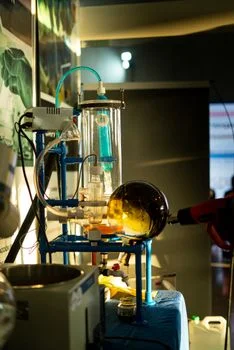
Procuring a wastewater system for a semiconductor environment is a high-stakes decision. The following framework ensures that both engineering requirements and procurement constraints are met without compromising fab uptime.
- Step 1: Define Influent/Effluent Specs: Use the parameter table provided above to map your fab’s specific chemical footprint. Account for peak loads during CMP tool cleaning cycles.
- Step 2: Determine ZLD Necessity: Evaluate local discharge regulations and water scarcity risks. If municipal water costs are rising, a full ZLD system may provide a better ROI than a simple discharge-compliant plant.
- Step 3: Evaluate Modular vs. Centralized: If your fab is a greenfield site with a tight production deadline, modular is likely the better choice. For established mega-fabs with stable, long-term influent streams, a centralized plant offers better OPEX.
- Step 4: Audit Anti-Fouling Strategies: Do not accept a generic industrial design. Ensure the vendor provides specific membrane scouring, automated CIP, and pretreatment steps tailored to silica and fluoride.
- Step 5: Compare Vendors on "Fab-Ready" Metrics: Evaluate suppliers based on their deployment speed, compliance track record with SEMI standards, and willingness to provide OPEX guarantees.
When issuing an RFP, include a checklist that requests case studies for similar wafer throughput (e.g., 40k+ wafers/month) and asks for specific remote monitoring capabilities. A truly "fab-ready" system should integrate seamlessly with the facility's SCADA or Digital Twin environment for real-time performance tracking. For a deeper dive into vendor evaluation, see our guide on how to evaluate wafer fab wastewater treatment suppliers.
Frequently Asked Questions
Q: What