Why IC Wastewater is Harder to Treat Than PCB or Petrochemical Effluent
Integrated circuit (IC) wastewater treatment systems must handle fluoride (<10 mg/L), copper (<1 mg/L), TMAH (<100 mg/L), and photoresist residues (<50 mg/L COD) to meet EPA and local discharge limits. A hybrid MBR + RO + ZLD system achieves 95–99% water recovery, reducing freshwater demand by 60–80% in semiconductor fabs. CAPEX ranges from $2M for small fabs (50 m³/h) to $20M for mega-fabs (500 m³/h), with OPEX at $0.80–$1.50/m³ treated.
The primary challenge in semiconductor wastewater management lies in the extreme chemical diversity of the influent. Unlike Printed Circuit Board (PCB) facilities, which primarily deal with heavy metal plating rinses and acidic etchants, or petrochemical plants that manage high-load hydrocarbons, IC fabs produce a cocktail of highly toxic organic bases and inorganic salts. Specifically, IC fabs generate fluoride at concentrations of 50–500 mg/L, copper at 10–100 mg/L, and Tetramethylammonium Hydroxide (TMAH) at 50–300 mg/L. photoresist residues contribute a Chemical Oxygen Demand (COD) of 1,000–5,000 mg/L, which is significantly more complex to degrade than the aliphatic hydrocarbons found in oil and gas effluent (HydropureWater field data, 2025).
Fluoride removal in IC fabs requires a two-stage chemical precipitation process because the solubility of Calcium Fluoride (CaF₂) is limited. To reach discharge limits of <10 mg/L, engineers must maintain a pH of 7–9 and use calcium chloride (CaCl₂) dosing rates of 1.5 to 2.0 times the stoichiometric requirement. Failure to manage this leads to CaF₂ sludge carryover, which rapidly clogs downstream membranes. TMAH presents a different hurdle; it is a strong organic base that is acutely toxic to the nitrifying bacteria in standard biological systems. Effective removal requires pre-treatment via ion exchange for TMAH removal in IC wastewater or advanced chemical oxidation before the water enters a Membrane Bioreactor (MBR).
Photoresist residues contain long-chain polymers and solvents like PGMEA (Propylene glycol methyl ether acetate). These substances are not only resistant to biodegradation but also act as potent membrane foulants. Treating these requires advanced oxidation processes (AOP), such as UV/H₂O₂, to break down the polymer chains into smaller, biodegradable organic acids. Without this specific pre-treatment, the flux of an RO system can drop by 40% within the first 500 hours of operation.
| Contaminant Type | IC Semiconductor Effluent | PCB Facility Effluent | Petrochemical Effluent |
|---|---|---|---|
| Fluoride (F-) | 50–500 mg/L | <20 mg/L | Trace |
| TMAH | 50–300 mg/L | Negligible | None |
| COD (Photoresist) | 1,000–5,000 mg/L | 500–1,500 mg/L | 2,000–10,000 mg/L (Oily) |
| Copper (Cu2+) | 10–100 mg/L | 50–200 mg/L | Trace |
Contaminant Limits and Discharge Standards for Semiconductor Fabs
Global regulatory bodies have established stringent compliance benchmarks specifically for the electronics industry to prevent the bioaccumulation of fluoride and toxic organic bases. In the United States, EPA 40 CFR Part 469 (Subpart A) mandates that semiconductor manufacturers limit fluoride to 10 mg/L for any one day and copper to 1.0 mg/L. Total Suspended Solids (TSS) are generally capped at 20 mg/L to protect municipal treatment works or local water bodies from sludge deposits.
Asian manufacturing hubs, where IC production is concentrated, often enforce even stricter standards due to water scarcity and high population density. The Taiwan EPA, for instance, limits fluoride to 10 mg/L but has introduced specific monitoring for TMAH, often requiring levels below 100 mg/L for discharge into industrial parks, with heavy daily fines for non-compliance. In China, the GB 31573-2015 standard for the electronic industry requires COD levels below 50 mg/L and ammonia nitrogen below 10 mg/L, posing a significant challenge for fabs using high volumes of ammonium hydroxide and TMAH in cleaning processes.
Engineers must also account for local "Internal Limits" which are often set 20% lower than legal requirements to provide a safety buffer for system fluctuations. For example, fabs in Singapore often target a fluoride discharge of 5 mg/L to ensure continuous compliance with the Public Utilities Board (PUB) regulations. Auditing these regulations requires a seasonal analysis of influent, as "mega-fabs" can see contaminant spikes during tool cleaning cycles that overwhelm undersized treatment systems.
| Regulator / Standard | Fluoride (mg/L) | Copper (mg/L) | TMAH (mg/L) | COD (mg/L) |
|---|---|---|---|---|
| EPA 40 CFR Part 469 | 10.0 | 1.0 | N/A | N/A |
| Taiwan EPA (IC Parks) | 10.0 | 1.0 | 100.0 | 80.0 |
| China GB 31573-2015 | 8.0–10.0 | 0.5 | N/A | 50.0 |
| Singapore PUB Limits | 5.0 | 1.0 | 60.0 | 100.0 |
Step-by-Step Treatment Process for IC Wastewater: From Influent to ZLD
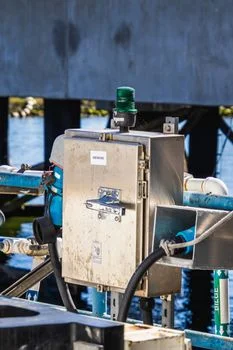
The engineering of an IC wastewater system follows a modular "treatment train" designed to remove contaminants in order of their impact on downstream membrane integrity. The process begins with chemical pre-treatment, where CaCl₂ and polyaluminum chloride (PAC) are dosed into reaction tanks to precipitate fluoride. This stage typically involves a high-rate clarifier or a DAF system for TSS removal in IC wastewater, which achieves 92–97% efficiency in removing the resulting CaF₂ pin-floc and suspended solids.
Following solids removal, the wastewater enters the secondary biological stage. For modern IC fabs, a Membrane Bioreactor (MBR) is the industry standard. Utilizing PVDF membranes with a 0.1 μm pore size, the MBR maintains a high Mixed Liquor Suspended Solids (MLSS) concentration of 8,000–12,000 mg/L. This high biomass density is essential for the slow-growing nitrifying bacteria required to break down residual TMAH and organic solvents. The Hydraulic Retention Time (HRT) for semiconductor MBRs is typically longer than municipal systems, ranging from 12 to 24 hours, to ensure complete COD oxidation.
Tertiary treatment involves a multi-stage RO system for fluoride and TMAH removal. The RO membranes act as the final barrier, rejecting 99% of dissolved salts and residual organic ions. In a high-recovery design, the RO system operates at 75–85% recovery. The resulting permeate is often pure enough to be recycled back to the fab's cooling towers or scrubbers, significantly reducing freshwater intake.
The final stage is Zero-Liquid Discharge (ZLD). The RO concentrate, which contains high levels of TDS (Total Dissolved Solids), is sent to a brine concentrator followed by a crystallizer. This thermal process evaporates the remaining water, leaving behind a dry salt cake (mostly calcium and sodium salts) for landfill disposal. Advanced ZLD designs incorporate Mechanical Vapor Recompression (MVR) to recycle the latent heat of the steam, reducing the energy cost of evaporation by up to 40% (HydropureWater technical specs, 2026).
CAPEX and OPEX Benchmarks: How Much Does an IC Wastewater System Cost?
Budgeting for an integrated circuit wastewater treatment system requires a clear distinction between the initial capital investment and the long-term operational costs associated with chemical consumption and membrane maintenance. CAPEX is primarily driven by flow rate and the degree of water reuse required. A small-scale fab processing 50 m³/h typically requires a CAPEX of $2M to $5M. Mid-sized facilities (200 m³/h) scale to $5M–$15M, while "mega-fabs" processing 500 m³/h or more can see costs exceeding $20M, especially when ZLD modules are integrated to meet water conservation mandates.
OPEX for these systems is higher than standard industrial wastewater due to the high chemical demand for fluoride precipitation and the energy requirements of high-pressure RO and thermal evaporation. On average, treating IC wastewater costs between $0.80 and $1.50 per cubic meter. Chemicals, including CaCl₂, PAC, and pH adjusters, account for $0.20–$0.40/m³. Energy consumption, dominated by MBR aeration and RO pumps, ranges from $0.30–$0.60/m³. For a comprehensive breakdown, engineers should consult detailed ZLD cost benchmarks for semiconductor fabs to account for regional electricity and chemical price variances.
Maintenance costs are centered on membrane replacement. RO membranes in semiconductor applications typically last 3 to 5 years, with replacement costs ranging from $50,000 for small systems to over $200,000 for large-scale arrays. ZLD units add a significant operational burden, with evaporation costs alone reaching $0.50–$1.00 per cubic meter of concentrate treated. However, the ROI is often realized through the reduction in freshwater procurement costs and the avoidance of discharge penalties.
| System Scale | Flow Rate (m³/h) | Estimated CAPEX | Estimated OPEX ($/m³) |
|---|---|---|---|
| Small Fab | 50 | $2M – $5M | $1.20 – $1.50 |
| Mid-Size Fab | 200 | $5M – $15M | $0.90 – $1.30 |
| Mega-Fab | 500+ | $15M – $20M+ | $0.80 – $1.10 |
MBR vs. Conventional Activated Sludge for IC Wastewater: Which is Better?
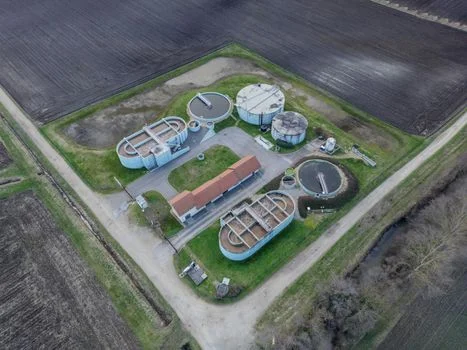
When selecting the core biological treatment technology, engineers must weigh the benefits of a MBR system for semiconductor wastewater against Conventional Activated Sludge (CAS). The MBR's primary advantage is its footprint; by replacing large secondary clarifiers with membrane modules, the total system footprint is reduced by approximately 60%. This is critical for fabs located in high-density industrial parks where land is at a premium.
From a performance perspective, MBRs offer superior effluent quality. The physical membrane barrier ensures that TSS remains below 5 mg/L, providing an ideal feed for downstream RO systems. In contrast, CAS systems are prone to "sludge bulking" when exposed to the fluctuating organic loads of IC wastewater, leading to TSS carryover that can foul RO membranes within days. the higher MLSS concentration in MBRs allows for more effective degradation of TMAH, which is often poorly handled by the lower biomass levels in CAS tanks.
However, CAS remains a viable option for fabs with lower discharge requirements and ample space. The CAPEX for a CAS system is typically 30–50% lower than an MBR, and the operational complexity is reduced as there are no membranes to clean or replace. The trade-off is a significantly lower water reuse potential and higher risk of non-compliance during process upsets. For IC manufacturing, where reliability is paramount, the industry has shifted almost entirely toward MBR-based designs.
| Feature | MBR System | Conventional Activated Sludge (CAS) |
|---|---|---|
| Effluent TSS | <1 mg/L | 10–20 mg/L |
| MLSS Concentration | 8,000–12,000 mg/L | 2,000–4,000 mg/L |
| Footprint | Compact (40% of CAS) | Large (Requires Clarifiers) |
| TMAH Removal | High (98%+) | Moderate (70–85%) |
| CAPEX | Higher ($$$) | Lower ($$) |
How to Select an IC Wastewater Treatment System: A Decision Framework
Selecting the right treatment system requires a systematic evaluation of the fab's specific effluent profile and long-term sustainability goals. The first step is a comprehensive audit of influent contaminants. Engineers should collect 24-hour composite samples during peak production cycles to identify the maximum concentrations of fluoride, TMAH, and COD. This data determines the sizing of chemical dosing systems and the required biomass volume in the MBR.
The second step is matching the treatment train to the specific "pain points" of the fab. If fluoride compliance is the primary issue, the focus should be on multi-stage precipitation and high-efficiency DAF systems. If the goal is 90%+ water reuse, the design must prioritize high-recovery RO and ZLD integration. Step three involves evaluating footprint constraints; if the facility is expanding within an existing building, MBR is often the only feasible biological option due to its compact nature.
Step four requires a 10-year Total Cost of Ownership (TCO) analysis. While a CAS system may have a lower initial CAPEX, the higher freshwater costs and potential fines for discharge violations often make the MBR + RO approach more cost-effective over the system's lifespan. Finally, before full-scale implementation, procurement teams should request pilot testing. A 3-6 month pilot run using actual fab wastewater is the only way to accurately predict membrane fouling rates and chemical consumption.
Critical Vendor Questions:
- What is the guaranteed fluoride removal rate at our peak influent concentration?
- How does the system design mitigate membrane fouling from photoresist polymers?
- What is the specific energy consumption (kWh/m³) for the ZLD evaporation stage?
- Can the biological system handle a 50% spike in TMAH concentration without biomass die-off?
- What are the lead times and costs for membrane replacements over a 5-year cycle?
Frequently Asked Questions
How do you remove fluoride from semiconductor wastewater?
Fluoride removal is typically achieved through chemical precipitation using Calcium Chloride (CaCl₂). This forms Calcium Fluoride (CaF₂) solids, which are then removed via sedimentation or DAF. To reach limits below 10 mg/L, a second stage using Alum or specialized ion exchange resins is often required.
What is the best way to treat TMAH in IC fabs?
TMAH is best treated through a combination of biological degradation in an MBR and tertiary RO filtration. Because TMAH is toxic to microbes at high concentrations, it must be diluted or pre-treated with chemical oxidation (like Fenton’s reagent) if influent levels exceed 500 mg/L.
What are the costs of a ZLD system for semiconductor manufacturing?
ZLD systems for IC fabs typically add 30–50% to the total CAPEX. OPEX for ZLD is high, ranging from $0.50 to $1.00 per cubic meter of concentrate, primarily due to the steam or electricity required for thermal evaporation and crystallization.
Can photoresist residues be removed by MBR?
Yes, but they are difficult to degrade. MBRs require a high sludge age (SRT) and often an advanced oxidation pre-treatment step (UV/H₂O₂) to break the complex polymers into simpler organic compounds that the bacteria can consume.
What is the typical water recovery rate for an IC wastewater system?
A standard RO-based system achieves 70–80% recovery. With the addition of a ZLD loop and brine recovery, fabs can reach 95–99% water recovery, essentially closing the loop on industrial water use.