Electroplating wastewater ion exchange system design hinges on chelating resin selection, 10-15 BV/h service flow, and lead-lag vessel layout. Done right, nickel drops below 0.1 mg/L and 99.9% of copper and nickel is recovered as 10-50 g/L eluate.
Why Ion Exchange Outperforms Chemical Precipitation for Electroplating Wastewater
Electroplating ion exchange consistently drives nickel below 0.1 mg/L in a single polishing pass, while chemical precipitation typically leaves nickel at 0.5-2.0 mg/L in the clarified stream. Chelating resins capture 99.9% of influent copper and nickel across pH 2.0-10.0. Regeneration eluate runs 10-50 g/L metal, concentrated enough to return to a plating bath or sell as a high-purity salt.
Hydroxide precipitation explains the gap. The chemistry hits a solubility floor around pH 8-9, where copper, nickel and zinc stop forming insoluble hydroxides, and complexing agents in plating baths push that floor even higher. Chelating resins sidestep the floor by adsorbing dissolved metal ions directly, the same selectivity Wikipedia's ion exchange overview attributes to chelating resins pulling heavy metals out of hardness-rich solutions.
Sludge economics drive the second-order case. A 50 m³/h plant in Guangdong cut OPEX from $3.20/m³ (precipitation plus hazardous sludge haulage) to $1.80/m³ after switching to ion exchange with metal recovery, based on HydropureWater field data from 2025. Precipitation also locks the operator into a narrow pH window (8.0-9.5 for Cu(OH)₂), while chelating resins keep working across pH 2.0-10.0 when rinse chemistry drifts mid-shift. For plants already running a clarifier, pairing chemical precipitation as a pretreatment step for ion exchange extends resin life and holds discharge under the tightest regional nickel ceilings.
| Parameter | Chemical Precipitation | Ion Exchange System |
|---|---|---|
| Removal Efficiency (Cu/Ni) | 80–90% | 99.9% |
| Effluent Concentration (Ni) | 0.5–2.0 mg/L | <0.1 mg/L |
| Sludge Volume | High (Coagulant addition) | Low (Concentrated eluate) |
| Metal Recovery Potential | Low (Contaminated sludge) | High (10–50 g/L purity) |
| Operating pH Range | Narrow (8.0–9.5) | Broad (2.0–10.0) |
Resin Selection Guide: Chelating vs. Strong Acid Cation for Cu, Ni, Cr, and Zn
When to Specify a Chelating Resin for Nickel Removal
Chelating resins with iminodiacetic acid functional groups (Purolite S930, Lewatit TP 207) outperform strong acid cation (SAC) resins on selectivity when calcium and magnesium sit above 200 mg/L as CaCO₃. The iminodiacetate group holds divalent heavy metals in stable complexes even at pH 4.0-6.0, the window where SAC resins lose capacity to hydrogen ion competition. For nickel rinse water with 500 mg/L hardness, most plants we size for run chelating because the breakthrough curve stays flat until 80-90% of capacity is consumed.
SAC resins (Amberlite IR120) cost 20-30% less up front and suit single-metal, softened streams, but they exchange any cation, so sodium and calcium consume capacity ahead of nickel. Chelating resins last 3-5 years versus 2-4 years for SAC, mostly because the macroporous matrix tolerates the osmotic swing of regeneration at 10-15 BV/h. Casting shops comparing resin trains can also review a HydropureWater ion exchange system layout for shared vessel and regenerant practice.
Hexavalent Chromium Ion Exchange Resin Selection
Hexavalent chromium takes a different path from cation metals. Either reduce Cr⁶⁺ to Cr³⁺ and run a cation column, or load a strong base anion (SBA) resin in the chromate form to recover chromic acid directly. The SBA route suits decorative platers who want recovered chromate back in the bath; the reduction route is simpler but gives up the chromium value stream.
| Resin Type | Target Metals | Optimal pH | Selectivity | Lifespan |
|---|---|---|---|---|
| Chelating (Iminodiacetic) | Cu, Ni, Zn, Pb | 4.0–6.0 | Very High | 3–5 Years |
| Strong Acid Cation (SAC) | Ni, Cr³⁺, Zn | 6.0–8.0 | Low (Non-selective) | 2–4 Years |
| Weak Acid Cation (WAC) | Cu, Ni (High conc.) | 5.0–7.0 | Moderate | 3–4 Years |
| Strong Base Anion (SBA) | Cr⁶⁺, Cyanide complexes | 6.0–9.0 | High | 2–3 Years |
Electroplating Wastewater Ion Exchange System Design: 2026 Specs for Flow, Resin Volume and Regeneration
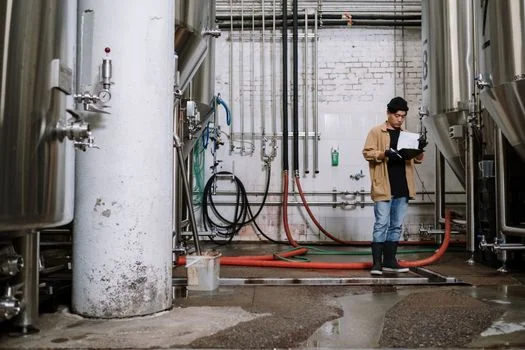
Hydraulic loading for heavy-metal ion exchange runs 10-15 BV/h in service and 5-8 BV/h in polishing mode; pushing past 20 BV/h creates channeling through the bed and immediate compliance failure. Resin volume follows V = (Q × t) / BV, where Q is feed flow in m³/h and t is contact time (0.5-1.0 h). A 20 m³/h line at 12 BV/h needs roughly 1.5-2.0 m³ of wet resin, which most plants we commission order in two vessels for lead-lag operation.
Regeneration uses 4-6% H₂SO₄ or HCl for cation resin at 50-150 g acid per liter of resin, followed by 2 BV slow rinse and 3-5 BV fast rinse with deionized water. Anion columns regenerate on 4% NaOH. Set the breakthrough trip at 5-10% of influent concentration: a 50 mg/L nickel feed should trigger regeneration when effluent hits 2.5 mg/L, which keeps a safety buffer under 0.1 mg/L special nickel limits used in China and many EU permits. Automated pH and chemical dosing for ion exchange systems holds regenerant strength inside ±0.5%, which prevents the osmotic shock that cracks beads after the third or fourth cycle.
Regeneration efficiency is the hidden cost driver. Resins survive many cycles but carry finite capacity, which is why the 400-600 cycle service target matters more than any calendar date.
- Service Flow Rate: 10–15 BV/h (Standard); 5–8 BV/h (Polishing).
- Backwash Rate: 5–10 m/h for 10–15 minutes to remove suspended solids.
- Regenerant Dosage: 50–150 g of acid/alkali per liter of resin depending on metal load.
- Rinse Volume: 2 BV (Slow rinse) + 3–5 BV (Fast rinse).
- Monitoring: Real-time conductivity and periodic AAS (Atomic Absorption Spectroscopy) for metal breakthrough.
Ion Exchange vs Chemical Precipitation Cost: CAPEX, OPEX and ROI
Ion exchange CAPEX sits at $150-400 per m³ of daily treatment capacity, well below the $300-600/m³ range for reverse osmosis on the same feed. A 50 m³/h IX skid lands near $120,000 in equipment cost, while a comparable RO train climbs past $250,000 once you add high-pressure pumps, membrane housings, and antiscalant dosing. OPEX runs $0.80-2.50/m³ for IX, versus $1.50-4.00/m³ for RO and $2.00-5.00/m³ for precipitation once hazardous sludge disposal is priced in.
Most plants recover the IX investment in 2-4 years through copper recovery (at $8,000-9,000/ton in 2025) and a 50-70% drop in raw water purchases from closed-loop rinse reuse. Reuse economics scale with polish depth: IX effluent alone returns 50-70% of treated flow to non-critical rinses, and a polishing RO stage after IX pushes reuse to about 90%. The cap is TDS buildup, since IX exchanges metals for hydrogen or sodium but removes no other dissolved salts; conductivity below 10 µS/cm needs a full cation-plus-anion demineralization train.
| Metric | Ion Exchange (IX) | Reverse Osmosis (RO) | Chemical Precipitation |
|---|---|---|---|
| CAPEX ($/m³) | $150–$400 | $300–$600 | $80–$150 |
| OPEX ($/m³) | $0.80–$2.50 | $1.50–$4.00 | $2.00–$5.00* |
| ROI (Years) | 2–4 Years | 4–6 Years | N/A (Cost center) |
| Water Recovery | 50–70% | 70–90% | 0–10% |
*Includes high costs for hazardous sludge disposal and chemical reagents.
For plants planning phased upgrades, sourcing Water Treatment Parts, Valves & Filter Media from the same vendor as the IX skid shortens lead time on replacement cartridges and keeps the spares list lean.
Compliance Checklist: Meeting EPA, EU, and Chinese Discharge Limits for Electroplating Wastewater
China's GB 21900-2008 Table 2 sets total nickel at 0.5 mg/L and total copper at 0.5 mg/L for new plants. Hexavalent chromium sits at 0.2 mg/L, and special emission limits tighten nickel to 0.1 mg/L and copper to 0.3 mg/L. Earlier summaries often cited a 1.0 mg/L EPA daily maximum; 40 CFR Part 413.14 sets copper at 4.5 mg/L and nickel at 4.1 mg/L as the daily maximum for plants discharging 38,000 L/day or more, values confirmed against the Cornell LII CFR mirror in September 2026. EU Directive 2010/75/EU frames BAT-based permits rather than a single fixed concentration table, with BREF references prepared by the European IPPC Bureau; many EU-facing plants still design to nickel near 0.1 mg/L.
The EU framework is also on the move. Ion exchange remains the polishing step that holds nickel at 0.1 mg/L once the clarifier has done bulk removal; everything else needs RO backup or higher reagent dosing.
To stay inside those limits continuously, fold the following items into the plant SOP:
- Influent Pretreatment: Ensure Total Suspended Solids (TSS) are <5 mg/L and oil/grease is <1 mg/L to prevent resin blinding.
- Redundancy: Utilize a "Lead-Lag" (Duty/Standby) configuration. When the lead column breaks through, the lag column ensures the effluent remains compliant while the lead column regenerates.
- Monitoring: Install online metal analyzers (AAS or ICP-OES) at the effluent point to trigger automated shut-off valves if limits are exceeded.
- Standard Thresholds:
- EPA (US), 40 CFR 413.14 (≥38,000 L/day): Cu 4.5 mg/L, Ni 4.1 mg/L (Daily Max).
- EU design targets under Directive 2010/75/EU permits: Cu <0.5 mg/L, Ni <0.1 mg/L, Cr <0.2 mg/L.
- China (GB 21900-2008): Table 2 new plants Cu 0.5 mg/L, Ni 0.5 mg/L, Cr(VI) 0.2 mg/L; special limits Cu 0.3 mg/L, Ni 0.1 mg/L.
For chrome lines specifically, the same ion exchange architecture covers hexavalent chromium when paired with a reduction step, as detailed in the Hexavalent Chromium Ion Exchange: Specs, Recovery & Compliance guide.
Troubleshooting Ion Exchange Systems: Resin Fouling, Breakthrough, and pH Drift
Organic brighteners and trace oils are the usual suspects when resin capacity drops 40-50% inside two service cycles. The brighteners coat beads and stretch the breakthrough curve into a long tail; suspended solids above 50 mg/L turn the bed into a cake filter, spike the differential pressure, and crush beads. DAF pretreatment for ion exchange systems pulls emulsified oil and TSS down to the levels the checklist above calls for, which is the single most effective fix for premature fouling we see in field audits.
Early breakthrough at less than 80% of calculated capacity almost always traces back to channeling or under-strength regenerant. If the acid dose during regeneration falls below 50 g/L, metals stay loaded on the resin and leak into the next service cycle. pH drift is the second killer: feed below pH 2.0 lets hydrogen outcompete metals for exchange sites, and feed above pH 9.0 precipitates metals inside the bed and physically damages the beads. Hold chelating-resin feed at pH 4.0-6.0 using automated pH and chemical dosing for ion exchange systems, and the bed should run 400-600 cycles before any capacity loss shows up. High chlorine residuals, pH swings outside 4-6, and organic brightener carryover shorten resin life the fastest.
Diagnostic Step: If capacity drops by >20% over three cycles, perform a "Resin Core Sample" test. If beads appear dark or slimy, organic fouling is likely. If beads are fractured, check for osmotic shock or excessive backwash pressure.
Who This Is For, and Next Step
Engineers at electroplating shops running 10-100 m³/h of rinse water with copper, nickel, zinc or hexavalent chromium will see the strongest payback from ion exchange, especially where discharge limits tighten toward 0.1 mg/L nickel. Plants that need full TDS reduction for closed-loop rinse reuse should plan an RO polish step after IX. Operations focused only on bulk volume reduction at minimal capex will do better staying with chemical precipitation and accepting the sludge disposal cost.
Send your influent analysis and target discharge limits to request a sized ion exchange proposal; a typical quote package includes vessel count, resin volume, regenerant consumption, and a 5-year OPEX projection. Every serious electroplating wastewater ion exchange system design package should also state its breakthrough trip points and expected cycle count up front.
Frequently Asked Questions
What is the GB 21900-2008 nickel discharge limit?
GB 21900-2008 Table 2 sets total nickel at 0.5 mg/L for new electroplating plants in China, alongside total copper at 0.5 mg/L and hexavalent chromium at 0.2 mg/L. Special emission limits for sensitive regions tighten nickel to 0.1 mg/L and copper to 0.3 mg/L. Ion exchange polishing is the standard route to hold the 0.1 mg/L special limit continuously.
How do you budget ion exchange capex opex m3 per hour for a 50 m3/h line?
Budget $150-400 per m³ of daily capacity in CAPEX, which puts a 50 m³/h IX skid near $120,000 in equipment cost. OPEX runs $0.80-2.50 per m³ treated, dominated by regenerant acid and caustic. Copper recovery at $8,000-9,000/ton (2025) and 50-70% rinse reuse typically pull payback inside 2-4 years. Comparable RO trains climb past $250,000 before installation.
How do I choose between chelating and SAC resins?
Chelating resins are required for mixed-metal streams or for hitting ultra-low limits (Ni <0.1 mg/L) when hardness is high, because they bind heavy metals preferentially over calcium and magnesium. SAC resins suit simple, softened rinse waters where CAPEX dominates the decision. Chelating resins cost more per liter but regenerate more efficiently with acid and tolerate a wider pH window.
| Feature | Chelating Resin | SAC Resin |
|---|---|---|
| Selectivity | High (Heavy Metals) | Low (All Cations) |
| Resistance to Hardness | Excellent | Poor |
| Regeneration Efficiency | High (Acid efficient) | Moderate |
| Cost | Higher | Lower |
Can ion exchange handle hexavalent chromium?
Yes. Cr⁶⁺ loads onto a strong base anion resin in the chromate or dichromate form, which allows direct recovery of chromic acid. The alternative is reducing Cr⁶⁺ to Cr³⁺ with a reducing agent and polishing on a cation column, which is simpler but loses the chromium as a precipitate. Most decorative platers pick direct anion exchange because the recovered chromate can be sent back to the bath.
What pretreatment does an ion exchange skid need?
The resin bed should see TSS below 5 mg/L, oil and grease below 1 mg/L, and free chlorine below 0.1 mg/L. A DAF unit ahead of the IX vessels handles oil and floatable solids; a multimedia filter catches the rest. Without these guards, resin life falls by 40-50% and differential pressure rises fast enough to crack the upper distributor.