Rinse wastewater treatment by ion exchange removes dissolved ionic contaminants from plating, etching, and semiconductor rinse streams by exchanging them for H⁺ or OH⁻ on resin beads. Typical systems cut total dissolved solids (TDS) and target heavy metals by 92–97% at service rates of 5–20 bed volumes per hour (BV/h). Strong acid cation resins such as DuPont AmberLite™ IR-120 often reduce chemical oxygen demand (COD) into the 50–500 mg/L range under those rates, then need regeneration with 4–10% HCl or NaOH every 10–50 service cycles. Capital cost commonly spans ¥80,000 for small batch units to ¥1,200,000 for continuous skids, while chemical-driven OPEX is about ¥15–¥40 per m³ treated. Meeting EPA 40 CFR Part 433 or EU Directive 2008/105/EC usually still needs pH correction and controlled handling of regeneration brine.
How does rinse wastewater treatment by ion exchange work?
Ion exchange swaps dissolved rinse contaminants for resin counter-ions in a reversible reaction. Dual-bed or mixed-bed trains typically remove 92–97% of TDS and metals such as Cu²⁺ at 5–20 BV/h. Exhausted resin is regenerated with 4–10% acid or caustic, then rinsed. Industrial CapEx commonly spans ¥80,000–¥1,200,000 by flow and automation level.
In cation service, a hydrogen-form resin (R-H⁺) exchanges for metal cations: 2R-H⁺ + Cu²⁺ → R₂-Cu²⁺ + 2H⁺. Strong acid cation (SAC) resins in H⁺ form target Cu²⁺, Ni²⁺, Zn²⁺, Ca²⁺, and Mg²⁺. Weak acid cation (WAC) resins suit bicarbonate hardness and alkalinity. Strong base anion (SBA) resins in OH⁻ form remove SO₄²⁻, Cl⁻, NO₃⁻, and silica. Weak base anion (WBA) resins adsorb strong acids and many organics. Mixed beds combine cation and anion beads for final polishing when conductivity targets sit in the low µS/cm range.
A rinse ion exchange train usually runs four stages in a dual-bed layout (cation then anion, or mixed bed for polishing):
- Pre-filtration: Multimedia or cartridge filtration removes solids larger than 5–20 µm before resin contact, limiting fouling.
- Ion exchange: Pre-filtered water passes the cation bed at 5–20 BV/h, then the anion bed.
- Regeneration: At breakthrough, cation resin is regenerated with 4–10% HCl and anion resin with 4–10% NaOH.
- Rinse: Deionized water displaces residual regenerant and returns the bed to service.
Bed volume (BV) is the resin inventory in the vessel. Industrial gel and macroporous resins commonly provide about 1–2 eq/L of exchange capacity under rinse duty. Linear velocity and vessel diameter are set together so empty-bed contact time stays inside the cation and anion windows. Lead-lag pairs keep one vessel online while the second regenerates, which matters when rinse lines cannot stop for a 1–2 hour regenerant cycle.
Service run length equals resin capacity in equivalents divided by ionic load in eq/m³ at the design peak. When rinse TDS sits near 200–500 mg/L as ions, a 2,000–4,000 L resin inventory at 20 m³/h often supports 1–2 regenerations per day if pre-treatment keeps oil and TSS low. Raise resin volume or add a third vessel before you push regenerant concentration past the resin maker’s published curve.
Resin Selection Guide: Matching Resin Type to Rinse Water Contaminants
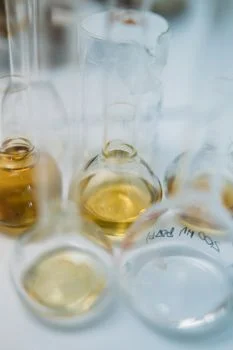
Resin choice follows the ionic species, concentration, and effluent target. Electroplating rinses are usually cation-heavy. Semiconductor rinses often need near-complete ion removal for ultrapure recycle. Wrong resin selection shows up as early breakthrough, high regenerant use, or metals that never leave the complexed fraction.
| Resin Type | Target Ions | Removal Efficiency | pH Range | Regeneration Chemical | Typical Application |
|---|---|---|---|---|---|
| Strong Acid Cation (SAC) e.g., AmberLite™ IR-120 | Cu²⁺, Ni²⁺, Zn²⁺, Ca²⁺, Mg²⁺, Fe³⁺ | 95–99% | 1–14 | 4–10% HCl or H₂SO₄ | Heavy metal removal, water softening, demineralization |
| Weak Acid Cation (WAC) | Ca²⁺, Mg²⁺ (with alkalinity), Na⁺ (low pH) | 90–98% | 5–14 | 2–4% HCl or H₂SO₄ | Alkalinity reduction, high-hardness water softening |
| Strong Base Anion (SBA) e.g., AmberLite™ IRA-402 | SO₄²⁻, Cl⁻, NO₃⁻, SiO₂⁻, F⁻ | 95–99% | 0–14 | 4–10% NaOH | Demineralization, nitrate removal, silica removal |
| Weak Base Anion (WBA) | Cl⁻, SO₄²⁻, NO₃⁻ (strong acids) | 85–95% | 0–7 | 2–4% NaOH or Na₂CO₃ | Acid adsorption, organic removal |
| Chelating Resin e.g., Purolite S930 | Selective heavy metals (e.g., Cu²⁺, Ni²⁺, Hg²⁺) | >99% | 2–10 | 5–10% HCl or H₂SO₄ | Semiconductor rinse water, precious metal recovery |
Oils, organics, and suspended solids can coat beads and cut effective capacity by 30–50%. DAF pre-treatment for ion exchange resin protection removes emulsified oil before the beds. multi-media filtration for ion exchange pre-treatment controls turbidity and iron that otherwise foul SAC resin.
Typical cation bed depths are 0.6–1.2 m; anion beds are often 0.8–1.5 m. Deeper beds raise contact time and pressure drop, so pump head must be checked at the design BV/h. Chelating resins such as Purolite S930 bind selected metals and can exceed 99% removal for copper or nickel recovery from rinse or drag-out where SAC selectivity is weak.
Can ion exchange remove hardness and heavy metals?
Ion exchange removes both hardness ions and many heavy metals when the correct resin and contact time are used. SAC resins exchange Ca²⁺ and Mg²⁺ along with Cu²⁺, Ni²⁺, and Zn²⁺ at 95–99% under 5–20 BV/h service. For hardness-dominated makeup or rinse recycle, an upstream Industrial Water Softener System (KJ-WT Series) can unload the demineralizer and extend run length between regenerations.
Engineering Specs for Rinse Wastewater Ion Exchange Systems
Ion exchange skid sizing for rinse service follows design flow, resin volume, and empty-bed contact time. Small batch units often treat 1–50 m³/h. Continuous industrial skids commonly cover 10–200 m³/h with parallel or lead-lag vessels so one bed regenerates while another stays online. Spec sheets should state resin volume in liters, vessel diameter, bed depth, and expected regenerations per day at the design peak load.
| Flow Rate (m³/h) | Resin Volume (L) | Bed Diameter (m) | Bed Depth (m) | Pressure Drop (kPa) | Regeneration Frequency (cycles/day) |
|---|---|---|---|---|---|
| 5 | 500–1,000 | 0.6–0.8 | 0.8–1.2 | 35–70 | 0.5–1 |
| 20 | 2,000–4,000 | 1.0–1.2 | 1.0–1.5 | 50–100 | 1–2 |
| 50 | 5,000–10,000 | 1.5–1.8 | 1.2–1.8 | 60–120 | 2–4 |
| 100 | 10,000–20,000 | 2.0–2.5 | 1.5–2.0 | 70–140 | 3–5 |
Cation contact time is typically 2–10 minutes; anion service often needs 5–15 minutes for the same target ions. Shorter contact shrinks the skid footprint but can miss COD and weakly held anions. Polystyrene resins such as AmberLite™ grades are usually rated for about 5–60°C. Sustained temperatures near 80°C can permanently damage the polymer matrix and cut capacity.
Backwash expands the bed 50–100% for 10–15 minutes to remove fines and reclassify the particles. Backwash frequency tracks influent turbidity and the strength of upstream filtration. If differential pressure climbs between regenerations, check for channeling, resin fines, or missing pre-filtration stages before adding chemical cleans. Instrument the bed with inlet and outlet pressure gauges so operators can trend fouling instead of guessing from pump amps alone.
Vessel materials are commonly FRP or rubber-lined steel for acid and caustic duty, with PVC or lined piping on regenerant lines. Specify elastomers that tolerate 4–10% HCl and NaOH at the local ambient temperature. Include sample valves on each vessel outlet so operators can catch breakthrough without waiting for a composite discharge sample.
Cost Model: CapEx, OPEX, and ROI for Ion Exchange Systems
Project cost for rinse ion exchange is set by capacity, batch versus continuous layout, automation, and materials of construction. A ~1 m³/h batch package may start near ¥80,000. A 10 m³/h continuous train often lands in ¥300,000–¥600,000. Large continuous skids toward 200 m³/h can reach ¥1,200,000 or higher when duplex vessels and PLC controls are included.
OPEX is dominated by regenerant chemicals, pump power, and labor. Acid and caustic use commonly accounts for ¥15–¥40 per m³ treated. Resin replacement every 3–7 years, driven by fouling and thermal stress, is the next recurring capital-like cost. Labor for sampling, titration of regenerant strength, and brine handling should sit in the same model as power.
| Flow Rate (m³/h) | CapEx (¥) | OPEX (¥/m³) | Resin Replacement (¥/year) | Chemical Costs (¥/m³) | Maintenance (¥/year) |
|---|---|---|---|---|---|
| 1 | 80,000–200,000 | 25–40 | 5,000–15,000 | 15–25 | 8,000–12,000 |
| 10 | 300,000–600,000 | 20–35 | 20,000–50,000 | 12–20 | 25,000–40,000 |
| 50 | 800,000–1,500,000 | 18–30 | 70,000–150,000 | 10–18 | 60,000–100,000 |
Reverse osmosis (RO) usually carries higher CapEx and pump energy but can show lower chemical OPEX on high-TDS feeds. Chemical precipitation often costs less to install yet produces more sludge for copper-bearing rinses that need bulk metal knockout before polishing. Pair precipitation for load cut with ion exchange polishing when sludge disposal is already budgeted on site.
ROI usually comes from lower hazardous waste fees (often ¥50–¥150 per m³ of concentrated regenerant waste), 30–50% water reuse where effluent purity allows, and avoided discharge penalties. Earlier guidance cited EPA fines up to $37,500 per day; according to 40 CFR Part 19, the Clean Water Act judicial maximum under 33 U.S.C. 1319(d) is $68,445 per day for penalties assessed on or after January 8, 2025.
Hidden costs include spent resin disposal when metals classify the bed as hazardous waste, production downtime during regeneration without a standby vessel, and CapEx/OPEX for mandatory pre-treatment. Quote comparisons should hold regenerant strength, waste classification, and redundancy constant across bids so unit prices stay comparable.
Compliance Checklist: Meeting EPA, EU, and Local Discharge Limits
EPA 40 CFR Part 433 sets technology-based metal finishing limits that ion exchange trains are sized to meet, often with neutralization afterward. According to 40 CFR 433.14 (BAT), daily maximums include copper 3.38 mg/L, nickel 3.98 mg/L, chromium (T) 2.77 mg/L, lead 0.69 mg/L, and zinc 2.61 mg/L; pH must stay within 6.0–9.0 under the companion BPT table. Copper removal with SAC resin commonly exceeds 95% when contact time and regenerant strength are correct.
EU Directive 2008/105/EC sets environmental quality standards for priority substances, including annual average chromium 0.005 mg/L and lead 0.007 mg/L in the receiving-water context cited in plant studies. Hexavalent chromium (Cr(VI)) usually needs chemical reduction to Cr(III) before cation exchange or a dedicated polishing step. Local permits may be tighter than Part 433, so design to the stricter number on the discharge authorization.
Cation effluent is acidic and anion effluent is alkaline, so neutralization is mandatory before discharge. automated pH adjustment for ion exchange compliance doses NaOH or H₂SO₄ to hold the 6.0–9.0 window. Spent regenerant carrying concentrated metals is often managed as EPA F006 hazardous waste from electroplating operations.
| Contaminant | EPA Limit (mg/L, 40 CFR 433) | EU Limit (mg/L, 2008/105/EC) | Ion Exchange Removal Efficiency (%) | Notes |
|---|---|---|---|---|
| Copper | 3.38 (Daily Max) | — | >95% | SAC resins highly effective. |
| Nickel | 3.98 (Daily Max) | — | >95% | SAC resins highly effective. |
| Chromium (Total) | 2.77 (Daily Max) | 0.005 (Annual Avg) | >90% (Cr³⁺) | Cr(VI) requires reduction to Cr(III) first. |
| Lead | 0.69 (Daily Max) | 0.007 (Annual Avg) | >98% | SAC resins effective. |
| Zinc | 2.61 (Daily Max) | — | >95% | SAC resins highly effective. |
| pH | 6.0–9.0 | 6.0–9.0 | N/A (requires adjustment) | Post-treatment neutralization is mandatory. |
How does ion exchange compare with EDI for rinse reuse?
Ion exchange and electrodeionization (EDI) both polish low-TDS rinse water, but they suit different feed windows. Mixed-bed ion exchange handles higher ionic peaks and regenerates offline with acid and caustic. RO followed by EDI is common on stable, already softened feeds when continuous ultrapure water is needed without chemical regenerant. For biopharmaceutical or electronics rinse recycle, many plants use RO plus mixed-bed polishing when EDI feed conductivity is too high or silica spikes are frequent.
Troubleshooting Common Ion Exchange Problems in Rinse Wastewater
Hardness leakage above about 17.1 mg/L as CaCO₃ usually means the cation resin is exhausted or influent TDS exceeds roughly 1,000 mg/L. Immediate correction is a full regeneration with about 10% HCl or H₂SO₄. Persistent hardness load calls for dedicated softening upstream of the demineralizer rather than endless short cycles that burn acid without restoring capacity.
Resin fouling from oil, organics, or Fe³⁺ can cut capacity by 30–50% and raise bed pressure drop. Organic fouling often responds to a 10% NaOH clean; iron fouling often responds to 5% HCl. Prevention with DAF and multimedia filtration is cheaper than repeated resin salvage and early replacement at the 3–7 year mark.
Poor removal below about 90% COD or metal reduction often traces to contact time under 2 minutes, excessive flow, or the wrong resin. Raising bed depth, lowering BV/h, or switching to a chelating resin such as Purolite S930 for complexed metals usually restores performance. Confirm sample points are after final rinse and before any blend with untreated bypass water.
Incomplete regeneration follows weak regenerant below 4% HCl or NaOH, short contact under about 30 minutes, or regenerant rates outside roughly 5–10 BV/h. Operators should verify titrated strength and match the manufacturer’s regenerant curve each campaign, not only after a permit exceedance. Log regenerant volume per BV so shifts can spot under-dosing early.
Who this is for and selection checklist
This page is for plant engineers and EPC buyers sizing rinse recycle or metal finishing pretreatment with ion exchange. Look elsewhere if the dominant load is free oil, high COD organics without ionic metals, or brine that already exceeds RO reject economics. Before you freeze CapEx, confirm the following decision items:
- Influent metals, hardness, TDS, oil, and TSS with units and peak/average values
- Target effluent limits (40 CFR 433 daily max vs local permit)
- Service flow (m³/h) and whether lead-lag redundancy is required
- Regenerant storage, neutralization, and F006 waste handling path
- Pre-treatment for oil and solids ahead of the resin
- Resin type (SAC/SBA vs chelating) matched to complexed metals
- 3–7 year resin replacement and ¥15–¥40/m³ chemical OPEX in the ROI model
If you share flow, metals panel, and discharge limits, you can Request a free quote for a sized ion exchange skid and pre-treatment train.
Frequently Asked Questions
What is the typical lifespan of ion exchange resin in rinse wastewater applications?
Ion exchange resin in rinse wastewater duty typically lasts 3 to 7 years. Life shortens when oil, organics, iron, or high temperature foul or degrade the beads. Effective pre-filtration, correct regenerant strength, and backwash that achieves 50–100% bed expansion for 10–15 minutes all extend service life. Replace resin when capacity loss or pressure drop persists after cleaning.
Can ion exchange systems handle fluctuating influent contaminant concentrations?
Ion exchange systems can absorb moderate concentration swings if resin volume and regeneration schedule include peak load. Designs are usually based on average ion load with spare BV for spikes. Highly variable plating rinses may need larger vessels, equalization tanks, or more frequent regenerations to keep effluent metals inside permit limits.
What are the primary safety considerations when operating ion exchange systems?
Primary safety risks are corrosive regenerants (HCl, H₂SO₄, NaOH), pressurized vessels, and electrical drives on pumps and valves. Plants need PPE, spill containment, eyewash stations, and ventilated chemical rooms. Lockout procedures during backwash and regenerant transfer reduce exposure. Train operators on titration of regenerant strength and emergency neutralization.
How does ion exchange compare to reverse osmosis for water reuse in electroplating?
Ion exchange is stronger for selective metal removal to low µg/L or mg/L targets with relatively low pump energy. RO fits high-TDS rinse or drag-out better and rejects a broad ion spectrum, but it creates concentrated brine and usually higher CapEx and energy use. Many plating lines combine RO for bulk TDS cut with ion exchange polishing for rinse recycle quality.