Why pH Is the Gatekeeper Parameter in Industrial Wastewater
A Midwest metal-finishing plant was cited under EPA NPDES in early 2025 for discharging pH 5.2 effluent over a 72-hour period after a limestone contactor channel failed unnoticed. The facility's biological treatment train collapsed within six hours of the first pH excursion: nitrification efficiency dropped from 78% to 12% because Nitrosomonas activity falls off sharply below pH 7.0. The plant's discharge permit specified pH 6.0–9.0 s.u. — a one-unit miss on the acid side triggered a Notice of Violation, mandatory corrective action, and a six-figure consent decree. That single incident illustrates why pH correction is a permit-protection investment, not a treatment-line cost center.
For the engineer tasked with designing or upgrading pH control, the most important point is that pH is the upstream gatekeeper for almost every downstream unit process. pH is a logarithmic scale: each unit represents a 10× change in H⁺ activity, so a stream at pH 2.0 carries 100,000× more H⁺ than one at pH 7.0. Industrial streams routinely arrive at pH 1–3 from acid pickling, mining leachates, and anodizing rinses, or at pH 10–13 from caustic cleaning, textile mercerizing, and CIP operations. Three regulatory bands define the discharge envelope: EPA Clean Water Act sets pH 6.0–9.0 s.u. (40 CFR 133), EU Directive 91/271/EEC sets 6.5–9.5, and WHO guidelines set 6.5–8.5 for potable reuse. A plant must hit all three upstream windows before any biological, membrane, or metals-removal step is asked to perform.
The cascade failure mechanism is well documented. Activated sludge and MBR systems lose 60–80% nitrification efficiency outside pH 7.0–8.0 (per Metcalf & Eddy, 2014, still the standard reference). Reverse-osmosis membrane systems scale 3–5× faster when feed pH deviates from the manufacturer's recovery setpoint because CaCO₃ saturation index shifts. Heavy-metal precipitation — the most common pH-driven unit process — requires a tight pH 8.5–10.5 window to hit sub-mg/L effluent for zinc, nickel, and copper; a 0.5-unit miss can double the residual dissolved metal. The downstream cost of poor pH control is always larger than the reagent cost of getting it right upstream.
The Five Core pH Removal Technologies Compared
Five technology families cover roughly 95% of industrial pH correction duty. Each has a defensible niche; the engineering task is matching influent pH, flow rate, and downstream TDS constraints to the right family before committing CAPEX. The matrix below lets a process engineer shortlist in under five minutes.
| Criterion | In-line acid/caustic dosing | Limestone/calcite contactor | Lime slurry neutralization | CO₂ stripping | Weak-acid cation exchange |
|---|---|---|---|---|---|
| Applicable influent pH | 1–14 (any) | 1–6.5 | 1–14 | 10–13 (alkaline only) | 3–6 |
| Target effluent accuracy | ±0.1 s.u. (PLC PID) | ±0.5 s.u. (floor ~5.5–6.0) | ±0.3 s.u. | ±0.4 s.u. | ±0.2 s.u. |
| TDS added per pH unit | 30–60 mg/L (Na⁺/SO₄²⁻ or Cl⁻) | 30–50 mg/L (Ca²⁺/HCO₃⁻) | 30–80 mg/L (Ca²⁺/OH⁻) | 0 mg/L (gas only) | 0 mg/L (no chemical) |
| Sludge/byproduct | Low (metal hydroxides only) | Moderate (gypsum, Fe(OH)₃) | High (Ca(OH)₂ sludge, 1–4% w/w) | None | Regenerant brine (5–8% NaCl) |
| Typical flow range | 1–500 m³/h | 10–300 m³/h | 20–1,000 m³/h | 20–400 m³/h | 1–10 m³/h |
| CAPEX band (50–200 m³/h) | $25k–$90k | $120k–$350k | $200k–$600k | $180k–$450k | $40k–$110k |
| OPEX band (per m³) | $0.08–$0.25 | $0.04–$0.10 | $0.06–$0.18 + sludge | $0.12–$0.28 | $0.15–$0.35 |
In-line acid/caustic dosing with PLC control is the workhorse: ±0.1 pH accuracy is achievable with 98% H₂SO₄ or 30–35% HCl on the acid side and 50% NaOH on the caustic side, with 5–15 second probe response time in clean water per typical industrial instrumentation specs.
Limestone contactors operate at 0.5–1.5 m³/h per m² hydraulic loading and hit a pH floor of ~5.5–6.0 because CaCO₃ saturates. They are the workhorse for acid mine drainage and metal-finishing rinse water where reagent cost dominates.
Lime slurry systems feed 25–50% Ca(OH)₂ slurry at 0.3–0.6 kg Ca(OH)₂ per pH unit per m³. The 30–80 mg/L TDS penalty per pH unit corrected is the data point that drives the TDS trade-off — it is the price of using a high-alkalinity reagent, and downstream filter press for chemical sludge dewatering is almost always required.
CO₂ stripping consumes 0.8–1.2 kg CO₂ per pH unit per m³. It is effective only on alkaline streams (pH 10–13) and produces no sludge, but requires a sealed contact tower, CO₂ storage, and compression — which is why OPEX is the highest of the five.
Weak-acid cation exchange targets low-flow (<10 m³/h) streams needing pH 3–6 raised to 6.5–7.5 without chemical handling. Resin life is 3–5 years and the regenerant is dilute NaCl or H₂SO₄; the niche is plant-floor rinse loops, not main-plant neutralization.
In-Line Chemical Dosing: The Workhorse Default
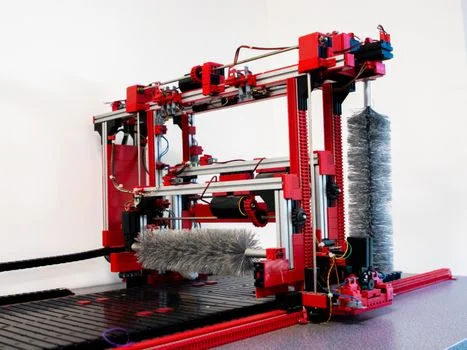
In-line acid or caustic dosing is the right answer for roughly 70% of industrial pH-correction applications, and the engineering basis is well established. The architecture is three components: (1) a pH probe in the equalization basin or upstream of the mixing tank, (2) a PLC running a PID loop that modulates metering-pump speed or stroke length, and (3) a static mixer or baffled reaction tank providing 30–60 seconds of residence time for reagent to disperse before the downstream probe takes its verification reading.
Dosing-pump selection is chemical-specific. Diaphragm metering pumps rated for the reagent are the default: Hastelloy C-276 heads and PTFE diaphragms for 30–35% HCl, PVC or PP liquid ends for 98% H₂SO₄, and 316 stainless for 50% NaOH. A turndown ratio of 100:1 is the practical minimum for tight pH control because influent alkalinity or acidity can vary 50–100× across a shift, and the pump must hold setpoint at low trim without pulsing.
Probe maintenance is the failure mode most often missed at design stage. Expect 30–60 second response time in high-TDS streams, weekly calibration with pH 4.0, 7.0, and 10.0 buffer solutions, and a 6–12 month replacement cycle in clean service. Plants that skip the redundant probe — one in service, one in calibration — pay for the omission the first time a probe drifts during a 3 a.m. shift. For facilities that want a factory-tested installation rather than a field-assembled panel, a pre-engineered PLC-controlled automatic chemical dosing skid shortens commissioning from weeks to days and arrives with the PID loop, probe, and pump on a common frame.
When Each Technology Wins: A Selection Decision Tree
The matrix above is a reference; the decision tree below is the working tool. Map your influent pH and flow rate into the tree, then check the TDS constraint at the end.
- Influent pH ≤ 3, flow > 50 m³/h: Limestone contactor as primary neutralization stage, with in-line NaOH polishing on the back end. Direct NaOH at this flow and influent acidity is reagent-wasteful; limestone's $0.04–$0.10/m³ OPEX wins on volume.
- Influent pH ≤ 3, flow < 50 m³/h: In-line NaOH dosing with PLC control. Lowest CAPEX, smallest footprint, no media to replace. Add a static mixer and 45-second residence tank.
- Influent pH 3–6, discharge limit pH 6.5–8.5: In-line NaOH dosing; limestone is not needed because the alkalinity demand is small.
- Influent pH 10–13, discharge to cooling-tower reuse or other TDS-sensitive endpoint: CO₂ stripping, not acid dosing. Stripping adds zero TDS and zero SO₄²⁻ or Cl⁻ to the stream; acid dosing adds 30–60 mg/L per pH unit, which will scale downstream heat exchangers.
- Influent pH 10–13, standard discharge to sewer: In-line H₂SO₄ dosing. H₂SO₄ is the cheapest mineral acid per unit of neutralization capacity, and HCl's chloride load is harder on stainless downstream piping.
- Low-flow (< 10 m³/h) acidic rinse water needing polish to < 7.0, chemical handling constrained: Weak-acid cation exchange. The OPEX is highest per m³, but the operating envelope — no acid totes on the plant floor — is the deciding factor for many facilities.
One cross-cutting check: if the discharge limit is set under the EU 6.5–9.5 band rather than the EPA 6.0–9.0 band, tighten the in-line dosing setpoint to 7.0–8.0 to give the PID loop headroom on both sides and avoid band-edge excursions during flow transients.
2026 CAPEX and OPEX Benchmarks for pH Correction Systems
The numbers below are 2026 pricing for carbon-steel or FRP construction on a 50–200 m³/h basis; stainless or higher alloys add 25–60% to CAPEX. Use these as a defensible ballpark for an internal budget request before you go to vendor RFQ.
| Technology | CAPEX (50–200 m³/h) | OPEX (per m³ treated) | OPEX driver |
|---|---|---|---|
| In-line dosing skid | $25,000–$90,000 | $0.08–$0.25 | Acid/caustic reagent + probe consumables |
| Limestone contactor | $120,000–$350,000 | $0.04–$0.10 | Limestone media replacement (2–4 yr cycle) |
| CO₂ stripping tower | $180,000–$450,000 | $0.12–$0.28 | CO₂ supply + compression |
| Lime slurry system | $200,000–$600,000 | $0.06–$0.18 + sludge | Lime reagent + sludge handling $40–$120/dry ton |
| Weak-acid cation exchange | $40,000–$110,000 | $0.15–$0.35 | Resin regenerant + 3–5 yr resin replacement |
For lime-slurry systems, the sludge line item is what often decides the technology choice. A plant producing 2 dry tons/day of Ca(OH)₂ sludge at $80/dry ton handling cost is paying $58,300/yr just to dispose of neutralization byproducts; a filter press for chemical sludge dewatering cuts that hauling cost by reducing cake volume 70–80%, and a DAF system for metal-hydroxide sludge separation thickens ahead of the press to lower the capex sizing. If your influent carries metals, a useful cross-reference is the zinc removal technology comparison — pH correction is the first stage, and the metals-removal train stacks downstream.
Frequently Asked Questions
What pH range must industrial wastewater hit for EPA NPDES discharge? The EPA Clean Water Act sets pH 6.0–9.0 s.u. as the daily-maximum band for nearly all industrial NPDES permits (40 CFR 133). Exceedance triggers a Notice of Violation and state-level enforcement; chronic excursions are a consent-degrade risk.
How much NaOH does it take to raise pH from 2 to 7? Stoichiometrically, roughly 5.0 kg of 50% NaOH per 1,000 L of strong-acid wastewater — but actual dose runs 1.3–1.6× stoichiometric in real streams because of buffering from dissolved metals and CO₂. Always bench-titrate before sizing the metering pump.
What TDS penalty does in-line chemical dosing add? 30–60 mg/L per pH unit corrected for NaOH/H₂SO₄ dosing, 30–50 mg/L for limestone contactors, and 30–80 mg/L for lime slurry. If your discharge limit is set under WHO 6.5–8.5 for potable reuse, a 5-unit correction at 50 mg/L/unit adds 250 mg/L TDS — enough to push you over a 500 mg/L reuse ceiling.
When is CO₂ stripping a better choice than acid dosing? When the discharge is to a TDS-sensitive endpoint (cooling-tower makeup, boiler feed, or potable reuse) and the influent is alkaline (pH 10–13). Stripping adds zero TDS and zero SO₄²⁻/Cl⁻ load, at the cost of higher CAPEX and OPEX.
Can pH correction be skipped if the plant does source reduction first? Often, yes. Segregating acid and caustic streams at the source so they neutralize in-pipe can eliminate the bulk pH correction step; the wastewater then needs only trim control. Source reduction is the right first move for any plant that has not yet segregated its CIP, rinse, and process streams. If you want a deeper treatment-train context for downstream biological control, the MLSS analyzer selection guide and the activated carbon filter OPEX guide cover the unit operations that follow pH correction in a typical train.