Why Wafer Fab Wastewater Treatment Fails: The Hidden Costs of Discharge Violations and Water Waste
Wafer fab wastewater treatment systems must achieve <10 mg/L fluoride, <50 mg/L COD, and <10 mg/L silica to meet SEMI S2 and EPA discharge standards. Advanced oxidation processes (AOP) remove 92–97% of COD at influent levels of 50–500 mg/L, while electrodialysis reversal (EDR) systems like those used in 150 m³/hour Singapore installations handle high silica/fluoride streams with 90%+ recovery rates. CAPEX ranges from $5M for modular AOP units to $50M for full ZLD plants, with OPEX dominated by chemical costs (e.g., $0.80–$1.20/m³ for AOP).
Fluoride and silica exceedances trigger EPA fines up to $50K/day and SEMI S2 audit failures, which can halt production entirely under the SEMI S2-0718 standard. For many facilities, the primary driver for upgrading treatment systems is no longer just compliance, but the physical constraint of water scarcity. A 2026 case study of a major fab expansion in Singapore demonstrated that by reclaiming local scrubber wastewater through a 150 m³/hour EDR system, the facility achieved 30% water cost savings while bypassing municipal supply limitations. Without high-recovery systems, fab expansion is often mathematically impossible due to local utility caps.
Common failure modes in semiconductor wastewater plants stem from the extreme variability of the influent. High Chemical Oxygen Demand (COD) exceeding 500 mg/L, often from photoresist and organic solvents, rapidly fouls standard Reverse Osmosis (RO) membranes. Data from 2026 industrial benchmarks indicates that unexpected COD spikes can increase OPEX by 20–40% due to premature membrane replacement and increased cleaning cycles. silica levels between 100 and 1,000 mg/L from Chemical Mechanical Planarization (CMP) processes form nearly irreversible scale on heat exchangers and membranes if not addressed via specific removal technologies.
Technical instability also arises from the hydrofluoric acid (HF) used in wafer cleaning. HF variability results in a pH range of 1–3, which destabilizes conventional precipitation processes. If the pH is not strictly controlled, calcium fluoride precipitation becomes inefficient, leading to discharge violations. Additionally, AOP systems often see a sharp drop in efficiency at pH levels above 4, requiring precise, automated acidification to maintain the hydroxyl radical production necessary for organic destruction.
Wafer Fab Wastewater Composition: What’s in Your Effluent and Why It Matters
Understanding the precise chemical makeup of semiconductor effluent is the first step in designing a zero-fouling system. Wafer fabrication generates distinct waste streams: concentrated hydrofluoric acid (HF) waste, CMP slurry waste, and dilute organic waste. Each requires a specific intervention to prevent downstream equipment failure.
Fluoride concentrations typically range from 50 to 500 mg/L, originating primarily from wafer cleaning and etching. Per EPA 40 CFR Part 469, this must be reduced to below 10 mg/L for legal discharge. Silica, a byproduct of CMP processes, presents a different challenge; it exists in both colloidal and dissolved forms at concentrations of 100–1,000 mg/L. Dissolved silica is particularly dangerous for water recovery systems as it precipitates as a hard scale when concentrated by membranes. Total Organic Carbon (TOC) levels of 10–200 mg/L from organic acids and solvents must be reduced to <3 mg/L if the water is to be reclaimed for ultrapure water (UPW) makeup.
| Contaminant | Typical Influent Range | Source Process | Discharge/Reuse Target |
|---|---|---|---|
| Fluoride (F-) | 50–500 mg/L | HF Cleaning/Etching | <10 mg/L (EPA/SEMI) |
| Silica (SiO2) | 100–1,000 mg/L | CMP Slurry | <10 mg/L (for RO feed) |
| COD | 50–500 mg/L | Photoresist/Solvents | <50 mg/L |
| TOC | 10–200 mg/L | Organic Acids/IPA | <3 mg/L (Reclaim) |
| pH | 1.0–3.0 | Acid Cleaning | 6.0–9.0 |
The high variability of HF waste (pH 1–3) is a primary cause of precipitation instability. Conventional lime softening often fails to react quickly enough to these swings, leading to "carryover" of fluoride into the final effluent. Modern systems must utilize high-frequency sensing and automated dosing to stabilize the reaction environment before the water reaches the primary separation stage.
Treatment Technologies Compared: AOP, EDR, MBR, and ZLD for Wafer Fabs
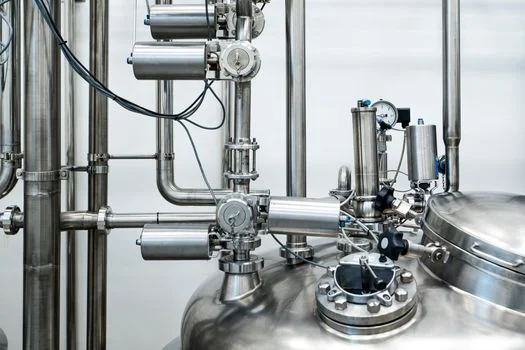
Selecting the right technology depends on whether the goal is simple compliance or aggressive water reuse. Advanced Oxidation Processes (AOP) are the gold standard for COD removal, achieving 92–97% efficiency. By using UV light in combination with hydrogen peroxide (H₂O₂) or ozone, AOP breaks down complex organic chains that are resistant to biological treatment. However, AOP is chemically intensive and requires post-neutralization of the pH 2–3 reaction environment.
Electrodialysis Reversal (EDR) has emerged as a superior solution for high-silica and high-fluoride streams. Unlike RO, EDR uses electrochemical forces to move ions through membranes, making it significantly more resistant to silica scaling and organic fouling. EDR systems can achieve 90%+ recovery rates, though they struggle if COD levels exceed 300 mg/L, which can lead to membrane polarization. For organic-heavy streams, MBR systems for semiconductor wastewater treatment offer a footprint 60% smaller than traditional clarifiers, reducing TOC to <3 mg/L, though they require pre-treatment to remove silica that would otherwise foul the biological membranes.
For fabs in water-stressed regions, Zero-Liquid Discharge (ZLD) is becoming the standard despite its high cost. ZLD integrates RO systems for ZLD and water reuse in wafer fabs with thermal evaporators and crystallizers to achieve 95%+ recovery. While the CAPEX for ZLD can reach $50M, it provides total insulation from water supply risks and regulatory discharge changes.
| Technology | Primary Strength | Removal Efficiency | CAPEX (100 m³/hr) | OPEX (per m³) |
|---|---|---|---|---|
| AOP (UV/H₂O₂) | COD/TOC Destruction | 92–97% COD | $8M–$15M | $0.80–$1.20 |
| EDR | Silica/Fluoride Recovery | 90%+ Recovery | $10M–$20M | $0.50–$0.90 |
| MBR | Organic Stability | <3 mg/L TOC | $5M–$12M | $0.40–$0.70 |
| ZLD | Total Water Recovery | 95%+ Recovery | $30M–$50M | $1.50–$2.00 |
Hybrid systems are increasingly common. For example, a fab might use AOP to knock down COD followed by EDR to recover water from the silica-rich CMP stream. This modularity allows for detailed engineering specs for wafer fab wastewater treatment equipment to be tailored to the specific production mix of the fab.
Engineering Specs for Wafer Fab Wastewater Treatment Systems
Engineering a robust system requires strict adherence to influent and effluent parameters. A typical hybrid AOP + EDR system begins with pH adjustment to a range of 2.0–3.0 to optimize the Fenton-like reactions or UV-oxidation. Chemical dosing for AOP usually requires H₂O₂ concentrations of 100–300 mg/L and a UV dose of 500–1,000 mJ/cm² to ensure complete radical saturation.
For the water recovery stage, EDR system specifications must account for a current density of 50–100 A/m². This electrical drive ensures that even at high recovery rates (85–90%), the ions are moved quickly enough to prevent localized concentration polarization and scaling. Membrane life in these environments is typically 5–7 years, provided that pre-filtration removes particles larger than 10 microns. The final effluent targets must align with SEMI S2 and EPA 40 CFR Part 469, ensuring fluoride remains <10 mg/L and TOC <3 mg/L for any water returned to the UPW plant.
| Parameter | Unit | AOP Specification | EDR Specification |
|---|---|---|---|
| Target pH | s.u. | 2.5 ± 0.5 | 6.5 – 8.5 |
| UV Transmittance | % | >75% (at 254nm) | N/A |
| Chemical Dose (H₂O₂) | mg/L | 150 – 250 | N/A |
| Current Density | A/m² | N/A | 65 – 85 |
| Recovery Rate | % | N/A | 85% – 92% |
| Automation Level | - | Full PLC/SCADA | Full PLC/SCADA |
The process flow for a modern fab system generally follows this sequence: 1. Equalization and pH adjustment; 2. AOP for organic destruction; 3. Neutralization and coagulation; 4. Clarification or MBR; 5. EDR or RO for desalination and water recovery. Each step must be monitored with redundant sensors to prevent out-of-spec water from reaching the reclamation tanks.
Cost Breakdown: CAPEX, OPEX, and ROI for Wafer Fab Wastewater Treatment
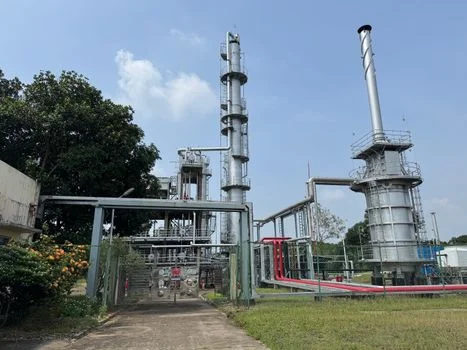
Procurement teams must evaluate wastewater systems based on Total Cost of Ownership (TCO) rather than just the initial sticker price. CAPEX for a standard 100 m³/hour AOP system typically ranges from $8M to $15M. However, ZLD systems, while significantly more expensive at $30M–$50M, eliminate the ongoing costs of municipal discharge fees and raw water purchases. These cost benchmarks for ZLD systems in semiconductor wastewater treatment show that the investment is most justifiable in regions where water costs exceed $2.50/m³.
OPEX is primarily driven by chemical consumption and energy. For AOP, chemicals (H₂O₂, acids, and bases) account for $0.30–$0.80/m³. For EDR and RO, energy usage is the main variable, typically ranging from $0.10–$0.30/m³, while membrane replacement costs add another $0.20–$0.50/m³ depending on the fouling rate. ROI for these systems is usually achieved within 3–5 years, driven by a 20–30% reduction in total water intake and the complete avoidance of regulatory fines.
| Cost Component | AOP System | EDR System | ZLD System |
|---|---|---|---|
| CAPEX (Est.) | $12,000,000 | $18,000,000 | $45,000,000 |
| Chemical OPEX | $0.65/m³ | $0.20/m³ | $0.45/m³ |
| Energy OPEX | $0.15/m³ | $0.25/m³ | $1.10/m³ |
| Maintenance/Labor | $0.10/m³ | $0.15/m³ | $0.30/m³ |
| Total OPEX | $0.90/m³ | $0.60/m³ | $1.85/m³ |
In water-scarce regions like Arizona or Singapore, the ROI for ZLD is accelerated by the high cost of industrial water and the legal requirement to maintain "water neutrality" for new fab expansions. In these scenarios, the system pays for itself not just through savings, but by enabling the production of chips that would otherwise be legally prohibited due to water consumption limits.
Selecting a Fab-Ready System: Footprint, Automation, and Compliance Checklist
When evaluating a wafer fab wastewater treatment company, the system's physical footprint and automation level are often as critical as the treatment chemistry. MBR systems are highly favored for brownfield fab upgrades because they require 60% less space than traditional clarifiers. Conversely, EDR systems require roughly 20–30% more floor space than AOP units due to the stack configurations and electrode requirements.
Automation is another major CAPEX driver. Implementing PLC-controlled chemical dosing for AOP systems can add $1M–$3M to the initial cost but reduces operator labor by 50% and virtually eliminates the risk of human error in pH control. Compliance with SEMI S2/S8 standards is non-negotiable; this requires fail-safe pH control, redundant sensors for every critical parameter, and seismic bracing for all chemical storage tanks.
Decision Framework for System Selection:
- High COD (>300 mg/L): Prioritize AOP for primary treatment to protect downstream membranes.
- High Silica (>100 mg/L): Utilize EDR for water recovery to avoid the rapid scaling associated with RO.
- Limited Floor Space: Implement MBR for organic removal and modular AOP units.
- Water Scarcity/Strict Discharge: Invest in ZLD to achieve 95%+ recovery and eliminate effluent discharge.
- Safety Compliance: Ensure all systems meet SEMI S2-0718 standards with redundant fail-safes and automated shutdown protocols.
Frequently Asked Questions
What’s the best technology for fluoride removal in wafer fabs? AOP or EDR?
AOP is primarily used for organic (COD) destruction but can be paired with precipitation for fluoride removal to <10 mg/L. EDR is superior for reclaiming water from fluoride-rich streams, achieving 90%+ recovery while handling high silica levels that would foul other systems.
How much does a wafer fab wastewater treatment system cost?
CAPEX varies based on capacity and technology, ranging from $5M for modular MBR units to $50M for full Zero-Liquid Discharge (ZLD) plants. OPEX typically falls between $0.50 and $2.00 per cubic meter treated.
What are the SEMI S2 requirements for wastewater treatment?
The SEMI S2-0718 standard requires systems to have fail-safe pH control, redundant sensors for hazardous chemicals, and effluent monitoring to ensure fluoride remains below 10 mg/L for environmental safety.
Can MBR systems handle high-silica wastewater?
Yes, but silica will eventually foul the membranes. It is highly recommended to use pre-treatment, such as EDR or chemical precipitation, to reduce silica levels before the wastewater enters the MBR unit.
What’s the ROI for a ZLD system in a wafer fab?
The ROI is typically 5–7 years. While the OPEX is high ($1.50–$2.00/m³), the system provides significant value through 95%+ water recovery, total avoidance of discharge fines, and the ability to expand production in water-restricted zones.