Why IC Wastewater Treatment Demands Specialized Equipment
Integrated circuit wastewater treatment equipment must handle fluoride at 50–500 mg/L and copper at 10–100 mg/L, levels that collapse standard activated-sludge biology above about 10 mg/L fluoride IC50. Multi-stage trains combine chemical precipitation, membrane separation, and thermal evaporation to meet site permits. A 300 mm fab at 200 gpm produces a profile generic industrial packages were never designed to treat.
Photoresist stripping solvents push COD to 500–2,000 mg/L. Reaching a common municipal COD target near 100 mg/L usually needs a Membrane Bioreactor (MBR) for those long-chain organics. Without IC-specific equipment, fabs risk non-compliance fines, permit revocation, and downtime from abrasive CMP slurry fouling. Most plants we size for these flows run at the lower end of the fluoride range in steady state but spike during tool cleaning cycles.
Many industry briefs cite Taiwan EPA fluoride <2 mg/L and U.S. EPA indirect fluoride <5 mg/L.Under 40 CFR Part 469 Subpart A, semiconductor BAT fluoride is 32.0 mg/L daily maximum and 17.4 mg/L as a 30-day average for direct dischargers; categorical pretreatment covers total toxic organics (TTO) at 1.37 mg/L only. EU IED copper targets near 0.1 mg/L remain permit-specific and must be confirmed locally.
| Parameter | Typical IC Influent | Taiwan EPA Limit | EU IED Standard | U.S. EPA (Indirect) |
|---|---|---|---|---|
| Fluoride (mg/L) | 50–500 | <2.0 | <15.0 | <5.0 |
| Copper (mg/L) | 10–100 | <1.0 | <0.1 | <0.5 |
| COD (mg/L) | 200–2,000 | <100 | <125 | <100 |
| TSS (mg/L) | 100–500 | <30 | <35 | <50 |
IC Wastewater Composition: Key Contaminants and Their Sources
Front-end-of-line (FEOL) and back-end-of-line (BEOL) tools each leave a distinct fingerprint on the waste stream. Hydrofluoric acid (HF) used in wet etching and cleaning pushes fluoride to peak values of 500 mg/L in the acid waste stream. Copper arrives from dual-damascene electroplating and CMP steps as dissolved ions plus fine metallic particulates. According to detailed engineering specs for semiconductor wastewater systems, identifying these sources is critical for stream segregation, which prevents dilution of toxic metals and optimizes treatment efficiency.
Organic load (COD) comes from photoresist strippers such as TMAH and NMP, both recalcitrant and dependent on accurate chemical dosing for fluoride precipitation in IC wastewater followed by biological oxidation. CMP steps add Total Suspended Solids (TSS) as 10–100 nm fumed silica or alumina, which needs coagulation and flocculation before any membrane step. Antimony and arsenic show up at 0.1–5.0 mg/L from ion implantation and doping.
| Contaminant | Typical Range (mg/L) | Primary Process Source | Regulatory Benchmark |
|---|---|---|---|
| Fluoride | 300–500 | HF Etching / Wet Bench Cleaning | Taiwan EPA (<2 mg/L) |
| Copper | 50–100 | Electroplating / CMP Slurry | EU IED (<0.1 mg/L) |
| COD (Organics) | 500–2,000 | Photoresist Stripping / Solvents | U.S. EPA (<100 mg/L) |
| TSS | 100–300 | CMP Abrasives (Silica/Alumina) | Global Standard (<30 mg/L) |
| Antimony/Arsenic | 0.1–5.0 | Ion Implantation / Doping | Varies (<0.05 mg/L) |
Treatment Technologies for IC Wastewater: Performance, Costs, and Trade-offs
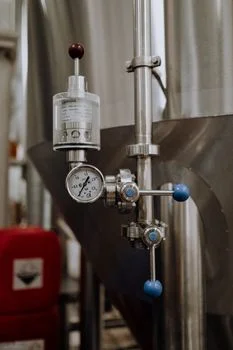
Picking the right IC wastewater treatment train is a CAPEX-versus-OPEX exercise, because ultra-tight limits force multi-stage membrane or thermal polishing. Calcium chloride or lime precipitation remains the workhorse for primary fluoride removal; it strips roughly 95% of fluoride as CaF2 but stalls at the CaF2 solubility floor and rarely meets <2 mg/L on its own. That is why RO systems for fluoride and copper polishing in IC wastewater are commonly added downstream to catch the residual ionic load.
For organics, MBR systems for IC wastewater COD/TSS removal deliver a small footprint and up to 99% TSS removal with 95% COD reduction, but they do not touch dissolved fluoride or heavy metals, so pretreatment and polishing must handle those. Where ZLD is mandatory, brine concentrators and crystallizers recover 99.9% of the water, but a full system runs $20M–$50M for a large fab and consumes 10–15 kWh/m³ (HydropureWater field data, 2025).
| Technology | Removal Efficiency | CAPEX ($/gpm) | OPEX ($/1k gal) | Key Limitation |
|---|---|---|---|---|
| Chemical Precipitation | F: 95% | Cu: 99% | $1,000–$2,000 | $1.50–$3.00 | High sludge volume |
| MBR (Biological) | COD: 95% | TSS: 99% | $1,500–$3,000 | $0.80–$1.50 | No fluoride removal |
| Reverse Osmosis (RO) | F: 98% | Cu: 95% | $2,500–$5,000 | $2.00–$4.00 | Membrane fouling |
| ZLD (Evaporation) | H2O Recovery: 99.9% | $10k–$25k | $15.00–$25.00 | High energy use |
Designing an IC Wastewater Treatment System: Step-by-Step Process Flow
Engineering an IC wastewater system starts with rigorous influent characterization, usually 24-hour composite sampling to capture the intermittent discharge pattern of batch tools. Fabs run 24/7, so redundancy is the single most important design parameter; engineers typically apply an "N+1" rule for critical pumps and dual trains for membrane units to keep treatment off the critical path of wafer production.
- Influent Characterization and Equalization: Measure fluoride, copper, COD, and pH. Equalization tanks should provide 2–4 hours of retention to dampen pH swings and concentration spikes from tool cleaning cycles.
- Pretreatment and TSS Removal: Deploy DAF systems for TSS removal in IC wastewater pretreatment. DAF units at 2–4 gpm/sq ft handle the fine silica particles from CMP slurry effectively.
- Primary Chemical Treatment: Run a two-stage precipitation train. Stage one uses calcium salts at pH 8.0–9.0 for fluoride. Stage two uses sulfide precipitation or chelating agents to drive copper below 0.1 mg/L.
- Secondary Biological Treatment: For fabs with high solvent loads, an MBR or Internal Circulation (IC) reactor operates at HRT 6–12 hours, enough to break down nitrogenous compounds like TMAH.
- Tertiary Polishing and Water Recovery: High-pressure RO membranes polish fluoride and dissolved solids. In ZLD configurations, RO concentrate feeds a Mechanical Vapor Recompression (MVR) evaporator for full liquid-to-solid separation.
Emergency storage sized for at least 24 hours of fab output is standard practice; it buffers off-spec wastewater during upsets and protects against environmental non-compliance or shutdown events.
CAPEX and OPEX Benchmarks for IC Wastewater Treatment Systems
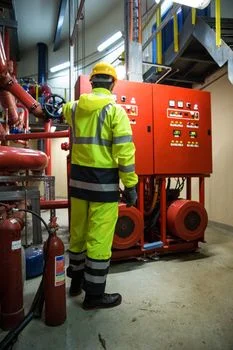
Budgeting for integrated circuit wastewater treatment equipment means tracking both the upfront capital and the long-term chemical and energy OPEX. A 50 gpm fab running a chemical precipitation plus RO hybrid typically lands at $5M–$12M CAPEX. A 200 gpm full ZLD system can exceed $40M once titanium-grade evaporators and crystallizers are included. According to cost benchmarks for chip fab wastewater equipment, engineering and permitting absorb 20–25% of the total project cost, especially in tightly controlled U.S. and EU jurisdictions.
OPEX is dominated by sludge disposal and reagent consumption. Lime or calcium chloride for fluoride precipitation is cheap at $150–$250/ton, but the resulting hazardous sludge costs $200–$500/ton to transport and landfill. Fabs targeting high reuse rates usually recover ZLD CAPEX in 5–10 years by cutting sewer surcharges ($0.50–$2.00/1,000 gal) and reducing ultrapure water (UPW) makeup at $3–$5/m³.
| System Configuration | Flow Rate (gpm) | CAPEX ($M) | OPEX ($/1k gal) | Payback (Years) |
|---|---|---|---|---|
| Chemical + MBR | 10–50 | $2.0–$6.0 | $1.20–$2.50 | 3–5 |
| Chemical + RO | 50–200 | $8.0–$20.0 | $2.50–$5.00 | 5–7 |
| Full ZLD System | 200+ | $25.0–$50.0 | $15.00–$30.00 | 7–10 |
How to Select the Right IC Wastewater Treatment System for Your Fab
Selection starts with the local compliance picture. In water-scarce regions or jurisdictions with a Zero Discharge mandate, ZLD is the only viable option despite the higher CAPEX. For fabs discharging to municipal sewers, a hybrid MBR plus RO train usually offers the best balance of compliance and cost. Engineers should also evaluate the RO design for metal removal in electroplating and IC wastewater to make sure the membranes use anti-fouling spacers and tailored antiscalants for the high-mineral waste stream.
Future-proofing matters as much as today's specs. Process-node upgrades shift wastewater chemistry, for example from aluminum to copper interconnects, and a modular layout lets owners add RO trains or chemical dosing skids without re-engineering the whole plant. For smaller satellite facilities or pilot lines, a compact Underground Package Sewage Treatment Plant (WSZ Series) can handle segregated low-strength streams before they reach the central treatment train. Vendor selection should prioritize documented semiconductor experience; 24/7 technical support and rapid spare-parts delivery are non-negotiable for continuous IC manufacturing.
Send your influent profile and target discharge limits to request a process sizing and CAPEX estimate.
Frequently Asked Questions
What is the typical fluoride limit for IC wastewater discharge?
Taiwan Ministry of Environment Table 1 for wafer and semiconductor manufacturing sets fluorides at 15 mg/L. Earlier industry briefs often cited <2 mg/L; that figure is tighter than the current national table and may reflect local park rules. 40 CFR Part 469 Subpart A sets BAT fluoride at 32.0 mg/L daily maximum and 17.4 mg/L as a 30-day average for direct dischargers. Operators must always check the local permit because site-specific limits can be tighter than the headline standard.
How much does an IC wastewater treatment system cost for a 100 gpm fab?
A standard chemical precipitation plus RO polishing system typically costs $8M–$15M. A Zero Liquid Discharge (ZLD) configuration for the same flow increases CAPEX to $25M–$40M depending on the organic load and the evaporator metallurgy required. Engineering and permitting add another 20–25% on top of equipment cost.
Can MBR systems remove fluoride from IC wastewater?
No. MBR systems are designed for COD and TSS removal through biological oxidation and membrane filtration. Fluoride removal still requires calcium-based chemical precipitation or high-rejection RO membranes. Pairing an MBR with a precipitation stage upstream is the standard configuration.
What is the payback period for a ZLD system in a semiconductor fab?
Payback typically falls between 5 and 10 years for fabs above 200 gpm. Savings come from eliminating sewer surcharges of $0.50–$2.00/1,000 gal and reducing UPW makeup, plus avoiding environmental compliance penalties. Smaller fabs should weigh the higher $/m³ OPEX carefully before committing.
What are the key compliance standards for IC wastewater treatment?
Taiwan Ministry of Environment Table 1 sets wafer and semiconductor fluorides at 15 mg/L, copper at 1.5 mg/L, and COD at 100 mg/L. 40 CFR Part 469 Subpart A sets semiconductor BAT fluoride at 32.0/17.4 mg/L for direct discharge and TTO at 1.37 mg/L for pretreatment. EU IED copper limits near 0.1 mg/L are permit-specific. Local municipal permits can impose stricter metal limits, so the discharge letter always governs final design.