How to identify the right packaged plant for a KL housing development
For a Kuala Lumpur housing development, a buried WSZ-type A/O package is often the practical choice where land, odour, visual impact and automated operation dominate, but it should not be selected from flow alone. Confirm the permit category: DOE Standard A requires BOD₅ ≤20 mg/L, COD ≤50 mg/L, TSS ≤50 mg/L, NH₃-N ≤5 mg/L, TN ≤20 mg/L and TP ≤5 mg/L [S3]. A standard WSZ A/O unit achieves 85–92% BOD removal but rarely meets Standard A TN ≤20 mg/L without an upgraded anoxic zone [S3]. MBR offers higher treatment quality and a smaller footprint where reuse or tight land constraints justify its approximately 20% CAPEX premium over SBR [S3].
Begin with the developer’s wastewater flow schedule, not an estimated population alone. Request daily sewage generation, average dry-weather flow, peak wet-weather flow, infiltration and inflow assumptions. Establish whether the development discharges to a sewer, a receiving drain or an approved on-site reuse point, then obtain the prevailing DOE approval conditions before selecting equipment. The supplied Kuala Lumpur buyer’s guide identifies monsoon peaking of 2.5–3.0× average dry-weather flow and equalization provisions of 4–8 hours of average flow as screening requirements [S3].
Compare an underground package with an above-ground or containerized MBR only after resolving access, odour, noise, landscaping, flood level, power and maintenance constraints. The appropriate unit is the smallest process train that demonstrably meets the legal outlet quality, hydraulic duty and reuse objective at the site. The Kuala Lumpur wastewater treatment plant buyer’s guide provides the regulatory and site basis for that comparison.
| Selection input | Information to obtain before tender | Decision consequence |
|---|---|---|
| Hydraulic duty | Average dry-weather flow, peak wet-weather flow, daily generation, infiltration and inflow | Sets biological capacity, equalization volume and pumping requirements |
| Outlet route | Public sewer, receiving drain or approved on-site reuse point | Determines the applicable permit and effluent specification |
| Reuse objective | Flushing, landscaping or another approved non-potable use | May require advanced treatment or polishing |
| Site constraints | Footprint, burial depth, flood level, groundwater, access, power and noise limits | Determines whether buried A/O, SBR or MBR is practical |
WSZ A/O, SBR or MBR: compare the treatment options
WSZ underground A/O combines anoxic and aerobic biological contact oxidation, sedimentation and disinfection in one buried package. The supplied product information lists capacities from 1–80 m³/h with fully automatic operation [S3]. The Kuala Lumpur buyer’s guide reports BOD removal of 85–92%, making this a compact option where footprint, aesthetics and installed cost matter more than high-grade polish [S3].
A standard WSZ A/O package should not be described automatically as Standard A compliant. The same source states that it rarely meets the Standard A limit for TN without an upgraded anoxic zone [S3]. In a housing-development tender, require the supplier to demonstrate compliance parameter by parameter rather than relying on a general BOD-removal claim.
SBR combines biological reaction, clarification and decant in one tank. The supplied buyer’s guide reports 90–95% BOD removal and describes the process as tolerant of hydraulic and organic shock loading, but its footprint is larger than MBR and its discharge is intermittent [S3]. That intermittent outlet may complicate downstream reuse or require a dedicated storage arrangement.
MBR provides 95–99% BOD removal, near-zero TSS and reuse potential. The buyer’s guide states a footprint approximately 60% smaller than conventional systems of equal capacity and estimates about 20% more CAPEX than SBR [S3]. An integrated MBR wastewater treatment system therefore becomes defensible where land is constrained or reuse quality is required, provided the capital and operating consequences are accepted.
| Criterion | WSZ underground A/O | SBR | MBR |
|---|---|---|---|
| Treatment approach | Anoxic and aerobic biological treatment, sedimentation and disinfection in a buried package | Combined biological reaction, clarification and decant in one tank | Biological treatment with membrane separation |
| BOD removal | 85–92% [S3] | 90–95% [S3] | 95–99% [S3] |
| Key spatial characteristic | Buried, compact installation with low visual impact | Larger footprint than MBR [S3] | Approximately 60% smaller than conventional systems of equal capacity [S3] |
| Outlet characteristic | Standard B is the stated fit; Standard A requires parameter-level verification and may require an upgraded anoxic zone [S3] | Intermittent discharge | Near-zero TSS and reuse potential [S3] |
| Capital implication | Compactness and installed cost are principal advantages | Alternative where shock tolerance and simpler combined-tank operation matter | Approximately 20% higher CAPEX than SBR [S3] |
| Packaged capacity evidence | 1–80 m³/h [S3] | Available as a packaged option from 1–200 KLD in the supplied product source [S5] | Available as a packaged option from 1–200 KLD in the supplied product source [S5] |
For a wider technology screen, the supplied packaged-STP source lists MBBR, MBR and SBR from 1 to 200 KLD, with 50–200 KLD packages identified for housing societies and larger decentralized facilities [S5]. MBBR remains an option to evaluate, but it must be tested against the same permit, footprint and reuse requirements rather than treated as automatically equivalent to A/O.
Match the package to the outlet and reuse requirement
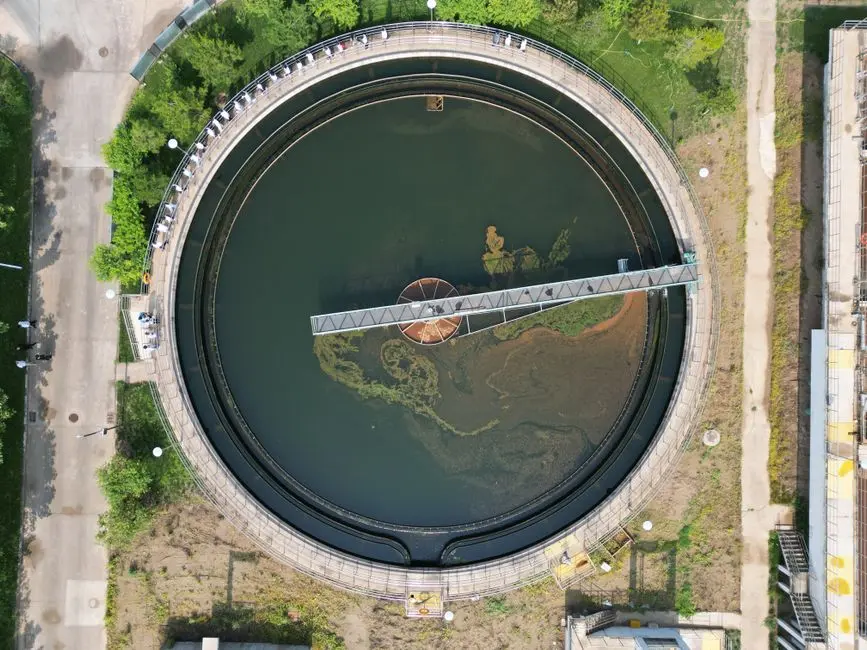
DOE Malaysia Standard A is the more demanding basis to design against: BOD₅ ≤20 mg/L, COD ≤50 mg/L, TSS ≤50 mg/L, NH₃-N ≤5 mg/L, TN ≤20 mg/L and TP ≤5 mg/L under the Environmental Quality (Industrial Effluents) Regulations 2009 [S3]. Standard B is the lower-tier alternative identified in the supplied source, with BOD₅ of 50 mg/L and TSS of 100 mg/L, but most Klang Valley industrial catchments are mapped to Standard A [S3]. The applicable housing-development approval must therefore be confirmed rather than assumed from a generic label.
Translate each outlet parameter into a process function. The supplied Kuala Lumpur guide assigns BOD₅ and COD reduction to biological stages, TSS control to clarification or membrane separation, nitrification to NH₃-N, denitrification to TN, and chemical precipitation to TP [S3]. This prevents a common tender error: accepting a package for its BOD performance while leaving nitrogen, phosphorus or disinfection unresolved.
For irrigation, landscape flushing or another approved non-potable reuse, establish a project-specific water-quality and approval basis. The supplied packaged-STP source identifies flushing, gardening and landscaping as potential uses depending on final quality and local norms [S5]. Ordinary package outlet quality should not be treated as sufficient without that approval basis.
| Required parameter | Process function stated in the supplied buyer’s guide [S3] | Tender evidence to request |
|---|---|---|
| BOD₅ and COD | Biological treatment stages | Guaranteed effluent concentrations and commissioning results |
| TSS | Clarifier or membrane barrier | Solids-separation method and guaranteed TSS |
| NH₃-N | Nitrification with adequate aerobic SRT | Biological design basis and guaranteed NH₃-N |
| TN | Denitrification zone | Zone configuration and guaranteed TN, including an upgraded anoxic arrangement where needed |
| TP | Chemical precipitation | Dosing system, chemical basis and guaranteed TP |
| Disinfection and reuse | Disinfection, with polishing where required | Approved reuse basis, disinfection method and all applicable guaranteed values |
Include disinfection in the complete scope. A chlorine dioxide generation package or UV sterilisation package may be evaluated where the approved reuse or discharge basis requires it. Require guaranteed effluent values for every applicable parameter, not only BOD₅ removal or percentage removal.
Design for monsoon flow, site constraints and reliable operation
Monsoon design must cover both hydraulic surge and construction resilience. The supplied Kuala Lumpur buyer’s guide identifies monsoon surges of 2.5–3.0× average dry-weather flow and equalization basins sized at 4–8 hours of average flow [S3]. Require the selected wet-weather factor to be stated in the design basis, with hydraulic equalization and pumping checked against it.
Specify corrosion-resistant materials or cladding suitable for tropical conditions. The same source records ambient temperatures of 27–32 °C and relative humidity of 80–95% year-round [S3]. Require buoyancy control, high-water-table anchoring and flood-resilient electrical rooms, and carry the recommended 15% contingency for monsoon-related civil works [S3].
Request the complete process scope: screening, equalization, biological treatment, clarification or membrane separation, filtration and disinfection. This is also the functional scope identified by the supplied packaged-STP source [S5]. For domestic housing sewage, evaluate screening and pretreatment for rags, plastics and monsoon debris; the Kuala Lumpur guide identifies the GX rotary mechanical bar screen as a typical headworks option [S3].
The layout must also support maintenance. Provide access for membrane cleaning, media inspection, sludge removal, blower maintenance and spare-parts supply. Include the GX rotary mechanical bar screen in the headworks scope where required, and identify how sludge dewatering and filter-press equipment will be removed, maintained and replaced.
Budget for installation, operating cost and compliance risk
Use the supplied Kuala Lumpur market bands as preliminary screening only. Industrial plants in the 100–500 m³/day range were placed at RM 1.5M–RM 6M CAPEX and RM 0.45–RM 1.20 per m³ OPEX [S3]. For a 500–2,000 m³/day mid-scale plant, the supplied ranges are RM 6M–RM 18M CAPEX and RM 0.60–RM 1.80 per m³ OPEX [S3]. These figures do not replace a site-specific quotation.
MBR adds about 20% to CAPEX relative to SBR but can reduce OPEX by 10–15% through higher MLSS, lower sludge yield and smaller tankage. The supplied buyer’s guide gives a 2–4-year payback for space-constrained Klang Valley sites [S3]. That trade-off is relevant when available footprint or reuse value justifies membrane equipment.
Aeration energy, identified as 50–60% of OPEX, and sludge hauling, identified as another 15–20%, are priority areas for guarantee testing and lifecycle-cost review [S3]. Separate packaged-equipment price from screens, equalization, pumping, power, civil works, installation, commissioning, sludge handling, disposal, training, spares and monitoring. Include the supplied 15% monsoon civil-works contingency instead of allowing it to disappear inside an incomplete bid comparison [S3].
| Cost item | Evidence or tender action |
|---|---|
| Package supply | Separate quoted price for the selected process train and auxiliaries |
| Balance of plant | Price screening, equalization, pumping, power, filtration, disinfection and chemical dosing separately |
| Civil and monsoon works | Show the separate 15% contingency for buoyancy control, anchoring and flood-resilient electrical rooms [S3] |
| Operating cost | Provide energy, chemicals, sludge handling, disposal, labour and membrane or media replacement assumptions |
| Performance risk | Price guaranteed outlet values, testing, training, spares and support as bid items |
Where the process includes chemical phosphorus removal, assess the automatic chemical dosing system as a required auxiliary rather than a minor accessory.
Turn the selection into a supplier-ready tender specification
The tender should convert the selection logic into comparable bids. Issue the verified average and peak flows, design-population method, inflow and infiltration allowance, outlet standard, reuse target, available footprint, burial depth, flood level and power data. These inputs determine whether an underground WSZ A/O sewage treatment package is adequate or whether the additional performance and capital requirements of MBR are justified.
Require each bid to state the process train, duty basis, equalization volume, biological design parameters, solids-separation method, disinfection, sludge handling and complete auxiliary equipment. Suppliers should identify every exclusion because an incomplete scope can distort both CAPEX and lifecycle cost.
Request guaranteed effluent values for all applicable DOE parameters, factory and site acceptance testing procedures, commissioning samples, operator training, maintenance schedules and spare-parts pricing. The commissioning plan should demonstrate compliance during both dry-weather operation and the selected monsoon flow condition.
Request supporting credentials: ISO 9001, ISO 14001 and CE/SS marks are identified as minimum manufacturer certifications in the supplied buyer’s guide, while DOSH approval is required for pressure-rated vessels [S3]. Require Malaysian and Kuala Lumpur reference projects and verifiable operating data as commercial evidence, as recommended in the same source [S3].
Clarify ownership of permits, civil interfaces, power connections, sludge disposal, routine maintenance and long-term membrane or media replacement. Use the packaged sewage treatment plant selection framework for housing developments to maintain consistent bidder responses, but replace project-specific assumptions with verified KL flow, permit and site data.
Frequently Asked Questions
What packaged sewage treatment capacity does a Kuala Lumpur housing development need?
Establish capacity from verified sewage flow and peak conditions, not population alone. Request average dry-weather flow, peak wet-weather flow, daily generation, infiltration and inflow assumptions. The supplied Kuala Lumpur buyer’s guide identifies monsoon peaking of 2.5–3.0× average dry-weather flow, which should be included in hydraulic and equalization checks [S3].
Is an underground WSZ A/O plant suitable for a housing development?
It can be suitable where compact installation, low visual impact, odour control and automatic operation are priorities. However, its guaranteed effluent must be checked against every applicable DOE Standard A or B parameter. The supplied buyer’s guide says the standard WSZ A/O package rarely meets Standard A TN ≤20 mg/L without an upgraded anoxic zone [S3].
When is MBR more suitable than A/O or SBR?
MBR is stronger where advanced effluent quality, reuse potential or a smaller footprint justifies higher capital cost. The supplied buyer’s guide reports 95–99% BOD removal, near-zero TSS and an approximately 20% CAPEX premium over SBR [S3].
How much should a packaged sewage treatment plant cost in Kuala Lumpur?
Use the supplied 100–500 m³/day range of RM 1.5M–RM 6M CAPEX and RM 0.45–RM 1.20 per m³ OPEX only as preliminary screening [S3]. For an actual quotation, require the verified flow schedule, permit category, process selection, civil scope, site conditions, reuse target, power arrangement, commissioning requirements and sludge-handling route.
What should a buyer verify before selecting a wastewater supplier?
Verify process suitability, guaranteed outlet values, monsoon and corrosion provisions, certifications, local references, commissioning evidence, O&M support and tender-scope completeness. As a separate procurement check, ask each bidder to price the same civil interfaces, auxiliaries, testing, training, spares and long-term replacement obligations so that differences reflect design rather than missing scope [S3].