Why Kuala Lumpur Industrial Sites Need a Compliance-First WWTP in 2026
Choosing a wastewater treatment plant manufacturer in Kuala Lumpur in 2026 is not a generic procurement exercise — it is a regulatory survival decision. DOE Malaysia enforces Standard A discharge limits under the Environmental Quality (Industrial Effluents) Regulations 2009: BOD₅ ≤20 mg/L, COD ≤50 mg/L, TSS ≤50 mg/L, NH₃-N ≤5 mg/L, TN ≤20 mg/L, and TP ≤5 mg/L. Standard B sites (typically downstream of treatment, lower-tier catchments) relax BOD to 50 mg/L and TSS to 100 mg/L, but most Klang Valley industrial estates discharging into Sungai Klang, Sungai Damansara, or Sungai Langat catchments are mapped to Standard A. During the 2024–2025 DOE enforcement cycle, the Selangor and KL state offices issued more than 30 Section 31A notices for non-compliant effluent, with several palm oil mills and a semiconductor back-end facility in Shah Alam receiving stop-work orders pending retrofit (DOE Malaysia enforcement summary, 2025).
The influent mix drives technology choice. Klang Valley sites span palm oil mill effluent (POME) with COD 25,000–60,000 mg/L and high temperature (60–80 °C), E&E and semiconductor fab washwater with fluoride and trace solvents, food and beverage lines with FOG spikes, and textile/finishing flows carrying reactive dyes. Each stream needs a different upstream pretreatment train, and a manufacturer that only ships one biological reactor will not pass DOE review. Layer on tropical conditions — ambient 27–32 °C and 80–95% relative humidity year-round — and biological activity is faster than temperate designs assume, but so is corrosion on carbon-steel tanks if not rubber-lined or FRP-clad. Monsoon surges (Nov–Mar) routinely push peak wet-weather flow to 2.5–3.0× average dry weather flow, so hydraulic equalization is not optional.
How to Read DOE Malaysia Effluent Standards and Match Them to Technology
Translate the regulation into a unit-operation map before talking to suppliers. Each Standard A parameter maps to a specific process step, and the manufacturer you shortlist must be able to supply the full chain, not just one tank. BOD₅ and COD reduction is delivered by biological stages (A/O, SBR, or MBR); TSS is closed by a clarifier or membrane barrier; NH₃-N requires a nitrification stage with sufficient aerobic SRT (typically 10–20 days at 30 °C); TN ≤20 mg/L forces a denitrification zone; and TP ≤5 mg/L almost always requires a chemical precipitation stage, which is why an automatic chemical dosing system is standard auxiliary equipment on virtually every KL industrial plant tender. MSIG 4th Edition (Malaysian Sewerage Industry Guidelines) underpins hydraulic design — peaking factors of 2.5–3.0× ADWF are normal, which is why equalization basins sized for 4–8 hours of average flow are built into every compliant design.
For 2026, expect tighter reuse-aligned limits on plants discharging upstream of water intake points (Sungai Selangor, Sungai Langat). The DOE reuse push aligns with the national Water Reuse Policy targets and the upcoming Extended Producer Responsibility (EPR) framework, which will push more industrial sites toward on-site recovery for cooling-tower make-up, boiler feed, or landscape irrigation. That changes the design target: instead of just meeting Standard A, the spec increasingly needs to hit reuse-grade ammonia (<1 mg/L) and turbidity (<2 NTU), which is where MBR plus UV or chlorine dioxide polishing pulls ahead of SBR.
| Standard A Parameter | Limit | Unit Operation | Design Note |
|---|---|---|---|
| BOD₅ | ≤20 mg/L | Biological (A/O, SBR, MBR) | F/M ratio 0.05–0.15 kg BOD/kg MLSS·d |
| COD | ≤50 mg/L | Biological + polishing | BOD:COD ratio in POME often 0.4–0.5 |
| TSS | ≤50 mg/L | Clarifier or membrane | MBR delivers near-zero TSS |
| NH₃-N | ≤5 mg/L | Nitrification (aerobic) | SRT 10–20 d at 28–32 °C |
| TN | ≤20 mg/L | Nitrification + denitrification | Internal recycle 200–400% of Q |
| TP | ≤5 mg/L | Chemical precipitation (PAC/alum) | Dose 50–150 mg/L as Al |
MBR vs SBR vs Packaged A/O: Choosing the Right Process for KL
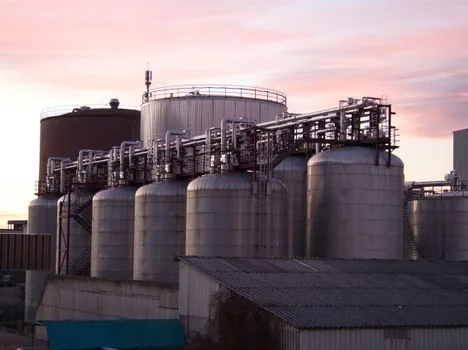
Three process trains dominate KL tenders, and each fits a different site profile. An MBR membrane bioreactor system pairs submerged PVDF 0.1–0.2 μm membranes with a biological tank, delivers effluent COD ≤50 mg/L and TSS near zero, and runs at MLSS 8,000–12,000 mg/L — roughly double SBR. The footprint is typically 60% smaller than a conventional activated-sludge plant of equal capacity, which makes MBR the default on space-constrained Klang Valley sites, water-reuse projects, and E&E back-end fabs where polishing-grade water is a process input. Expect a CAPEX premium of about 20% over SBR at the same flow, partly offset by lower sludge yield (0.2–0.3 kg MLSS/kg COD vs 0.4–0.5 for SBR) and a smaller tankage footprint. Payback in space-constrained KL sites is typically 2–4 years.
SBR (sequencing batch reactor) consolidates biological reaction, clarification, and decant into a single tank, eliminating the separate secondary clarifier. It runs at MLSS 4,000–6,000 mg/L and tolerates the shock hydraulic and organic loads typical of palm oil and food and beverage effluent — which is why it remains the workhorse of Malaysian municipal and industrial tenders, including Indah Water Konsortium projects. SBR hits 90–95% BOD removal and is forgiving on operator skill. The downside is footprint (larger than MBR) and discharge is intermittent rather than continuous, which complicates downstream reuse.
A WSZ packaged A/O sewage treatment plant is skid-mounted or buried, ships in capacities from 1–80 m³/h, and runs fully automatic with low operator intervention. BOD removal lands at 85–92%, which is acceptable for Standard B catchments, hospitals, residential estates, and small commercial sites where footprint, aesthetics, and installed cost matter more than polish quality. A buried installation also reduces noise and visual impact — relevant in mixed-use KL townships.
| Criterion | MBR | SBR | Packaged A/O (WSZ) |
|---|---|---|---|
| BOD removal | 95–99% | 90–95% | 85–92% |
| Effluent TSS | ≤2 mg/L | ≤20 mg/L | ≤30 mg/L |
| Footprint (relative) | 0.4× | 1.0× | 0.7× (skidded) |
| MLSS range (mg/L) | 8,000–12,000 | 4,000–6,000 | 3,000–5,000 |
| CAPEX premium vs SBR | +20% | Baseline | −15% to −25% |
| OPEX vs SBR | −10% to −15% | Baseline | −20% (no membranes) |
| Monsoon peak tolerance | Moderate (membrane flux) | High | Moderate |
| Operator skill needed | Higher (membrane CIP) | Moderate | Low |
| Best fit in KL | E&E, reuse, tight sites | Palm oil, F&B, mid-scale industrial | Townships, hospitals, small commercial |
Pretreatment, Sludge, and Reuse: The Equipment Stack a KL WWTP Manufacturer Should Supply
A real manufacturer supplies the full chain, not a single tank. Headworks start with a rotary mechanical bar screen (GX series) — typically 3–6 mm aperture — to strip rags, plastics, and monsoon debris that would otherwise jam downstream pumps. For high-FOG and high-suspended-solids streams typical of food processing and palm oil mills, a DAF system for FOG and suspended solids (4–300 m³/h) removes 80–95% of floatable oils and suspended solids before biological treatment, protecting the aeration basin and reducing downstream load.
Sludge handling is where many KL plants underperform. A plate and frame filter press for sludge dewatering with 1–500 m² filtration area is the Malaysian norm, dewatering to ≥22% dry solids for offsite disposal at KUB-Berjaya Enviro or SWM Enviro facilities. Anything below 18% DS is uneconomical to haul and draws landfill leachate penalties. Finally, disinfection is increasingly specified in 2026 Selangor tenders — a chlorine dioxide generator or ozone skid polishes effluent to reuse-grade for cooling-tower make-up, boiler feed, or landscape irrigation, aligning with the national push toward closed-loop industrial water.
CAPEX and OPEX Benchmarks for Wastewater Treatment Plants in KL (2026)
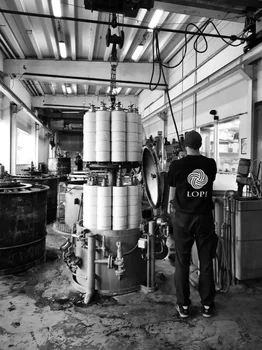
Budget bands in MYR for KL-area projects, drawn from 2024–2025 tender data and HydropureWater field data on comparable Selangor installations, are roughly: industrial WWTPs in the 100–500 m³/day range run RM 1.5M–RM 6M CAPEX, with OPEX RM 0.45–RM 1.20 per m³ treated. Mid-scale 500–2,000 m³/day plants run RM 6M–RM 18M CAPEX and RM 0.60–RM 1.80 per m³ OPEX, where energy for aeration typically absorbs 50–60% of OPEX and sludge hauling another 15–20%. MBR adds ~20% to CAPEX versus SBR but cuts OPEX 10–15% via higher MLSS, lower sludge yield, and smaller tankage — payback 2–4 years in space-constrained Klang Valley sites. Always budget +15% contingency for monsoon-related civil works: tank buoyancy control, high-water-table anchoring, and flood-resilient electrical rooms are routine in KL's clay-layer sites.
| Plant Size (m³/day) | Process | CAPEX Range (RM) | OPEX (RM/m³) | Main OPEX Driver |
|---|---|---|---|---|
| 100–500 | Packaged A/O | 1.5M–3.5M | 0.45–0.80 | Sludge hauling, power |
| 100–500 | SBR | 2.5M–5.0M | 0.60–1.00 | Aeration energy |
| 100–500 | MBR | 3.0M–6.0M | 0.55–1.20 | Membrane CIP, aeration |
| 500–2,000 | SBR | 6.0M–14M | 0.60–1.50 | Aeration, sludge |
| 500–2,000 | MBR | 8.0M–18M | 0.70–1.80 | Membrane replacement, power |
7-Point Checklist for Qualifying a Wastewater Treatment Plant Manufacturer in Kuala Lumpur
Use this checklist to convert a shortlist of brochures into a defensible procurement decision.
- Certifications: ISO 9001 (quality), ISO 14001 (environmental), and CE / SS / DOSH marks on the equipment line. These are non-negotiable for DOE submission packets in 2026.
- Local reference projects: ask for commissioning certificates and DOE-approved lab analysis from at least two operating KL/Selangor sites with similar influent characteristics. A 12-month operating track record is stronger than a fresh commissioning.
- Factory audit access: request a pre-order visit to the manufacturing facility. Verify CNC plate-rolling, welding procedure specifications, and membrane test benches in person rather than from a catalog.
- Engineering depth: in-house process, mechanical, electrical, and automation teams. Avoid pure trading companies that subcontract fabrication, because finger-pointing between vendors is the single most common cause of post-handover disputes in MY.
- Service footprint: confirm 24-hour dispatch to Shah Alam, Petaling Jaya, and Klang; ask for spare-parts inventory in Malaysia or Singapore, and a named local service engineer — not a regional account manager.
- Warranty and performance guarantee: minimum 12 months mechanical, 24 months on membrane modules, and liquidated damages tied to non-compliance with DOE Standard A. A vendor that refuses a performance bond is overpromising.
- Documentation pack: PFD, P&ID, GA drawings, electrical schematics, O&M manual in Bahasa Malaysia and English, and PLC program backup — required for DOE submission and for your operations team to maintain the plant after warranty.
Frequently Asked Questions
What is the DOE Malaysia Standard A effluent limit for BOD₅?
Standard A sets BOD₅ at ≤20 mg/L, COD ≤50 mg/L, TSS ≤50 mg/L, NH₃-N ≤5 mg/L, TN ≤20 mg/L, and TP ≤5 mg/L under the Environmental Quality (Industrial Effluents) Regulations 2009. Standard B relaxes BOD to 50 mg/L and TSS to 100 mg/L, but most Klang Valley industrial catchments are mapped to Standard A.
What is the typical CAPEX for a 500 m³/day WWTP in Kuala Lumpur?
A 500 m³/day industrial plant in the Klang Valley typically runs RM 3.0M–RM 6.0M CAPEX depending on process choice — packaged A/O at the low end, MBR at the high end — plus 15% monsoon civil-works contingency.
MBR vs SBR — which is better for a Klang Valley industrial site?
MBR delivers higher removal (BOD 95–99% vs 90–95%), smaller footprint (about 60% of SBR), and reuse-grade effluent, with about 20% higher CAPEX. SBR is more robust to monsoon shock loads and is the workhorse for palm oil and F&B effluent. Match the process to the discharge requirement, not the catalog.
Which certifications should a WWTP manufacturer in Malaysia hold?
Minimum ISO 9001, ISO 14001, and CE/SS marks on the equipment line. For Malaysia, SS (Singapore Standard) is widely accepted by DOE; DOSH approval is required for any pressure-rated vessel. Reference projects in Selangor or KL are the strongest commercial signal.
How much does operation cost per cubic metre in Malaysia?
Industrial WWTPs in the 100–500 m³/day range run RM 0.45–RM 1.20 per m³ OPEX; 500–2,000 m³/day plants run RM 0.60–RM 1.80 per m³. Aeration energy is typically 50–60% of OPEX, sludge hauling 15–20%.
Is a packaged sewage treatment plant acceptable for DOE Standard A?
Packaged A/O systems (WSZ type, 1–80 m³/h) typically hit 85–92% BOD removal, which clears Standard B comfortably and Standard A on BOD, but rarely meet Standard A TN ≤20 mg/L without an upgraded anoxic zone. Confirm the specific design effluent against all six Standard A parameters before specifying.