Why the Wastewater Treatment Plant Supplier Decision in the Philippines Is High-Stakes
Choosing a wastewater treatment plant supplier in the Philippines in 2026 means verifying DENR DAO 2016-08 compliance, Philippine reference plants, and 10-year lifecycle cost — not picking the lowest quote.
DENR DAO 2016-08 enforcement tightened measurably between 2024 and 2026, with EMB-Region IV-A and the NCR issuing a rising share of Notices of Violation to food, electronics, and metal-finishing facilities per the EMB-Philippines annual compliance reports. Downstream consequences are no longer abstract: Laguna Lake and the Palawan reef ecosystems sit directly below the country's largest industrial zones, which means a single non-compliant discharge event can trigger a public-health investigation, a brand-reputation crisis, and a multi-year operating pause. A non-compliant plant retrofit in the Philippines typically adds 40–70% to original CAPEX because the existing civil works, blowers, and tankage usually cannot be reused once the effluent envelope is re-specified.
The receiving-water stakes are documented, not rhetorical. On the Pasig River side, "about 30–35 percent of the river pollution is generated from industries located close to the river", some of them without treatment capable of removing heavy metals. A supplier who treats DAO 2016-08 as paperwork has not read this record.
The procurement decision has therefore shifted from "lowest quote wins" to "lowest 10-year total cost of compliance" — purchase price, membrane replacement, sludge hauling, energy, and the avoided cost of an NOV. For small commercial buyers entering the market, an underground WSZ package sewage plant sized to actual flow is the pragmatic entry point; for anything above 50 m³/day, the framework below applies in full.
Philippine Effluent Standards Every Supplier Must Meet (DENR DAO 2016-08)
DENR DAO 2016-08 sets Class C inland water discharge limits at BOD ≤30 mg/L, TSS ≤50 mg/L, COD ≤100 mg/L, oil & grease ≤5 mg/L, pH 6.0–9.0, and fecal coliform ≤200 MPN/100 mL. For coastal and marine discharge under Class SC, the BOD and TSS ceilings remain the same, but heavy-metal caps tighten: lead ≤0.2 mg/L and chromium hexavalent ≤0.05 mg/L — directly relevant to metal-finishing shops in Meycauayan and electronics assemblers in Cavite and Laguna. Some PEZA-registered ecozones additionally enforce DAO 2003-30 ceilings, which are stricter still, so any export-oriented buyer should confirm the governing clause before sizing equipment.
DENR Self-Monitoring Reports are filed quarterly, and failure to submit triggers an NOV within 60 days under DAO 2016-08. Treat the limits below as a rejection checklist: any supplier who cannot name the specific DAO clause their design targets is unqualified for Philippine work.
| Parameter | Class C (Inland) | Class SC (Coastal/Marine) | DAO 2003-30 (PEZA ecozone, indicative) |
|---|---|---|---|
| BOD₅ | ≤30 mg/L | ≤30 mg/L | ≤20 mg/L |
| TSS | ≤50 mg/L | ≤50 mg/L | ≤30 mg/L |
| COD | ≤100 mg/L | ≤100 mg/L | ≤60 mg/L |
| Oil & Grease | ≤5 mg/L | ≤5 mg/L | ≤3 mg/L |
| pH | 6.0–9.0 | 6.0–9.0 | 6.5–8.5 |
| Fecal Coliform | ≤200 MPN/100 mL | ≤200 MPN/100 mL | ≤100 MPN/100 mL |
| Lead (Pb) | — | ≤0.2 mg/L | ≤0.1 mg/L |
| Chromium (Cr⁶⁺) | — | ≤0.05 mg/L | ≤0.02 mg/L |
How Do You Verify a DENR DAO 2016-08 Compliant WWTP Supplier?
You verify a DENR DAO 2016-08 compliant WWTP supplier on paper trails, not brochures. Ask for the design effluent summary sheet naming each DAO 2016-08 parameter and its target value, a completed Self-Monitoring Report template the supplier has filed for a Philippine client, and a third-party effluent test report against the same limits. A bidder who answers with a generic international spec sheet — no DAO clause cited, no SMR experience — is quoting equipment, not compliance, and will leave the NOV risk with you.
Four Treatment Technologies Competing for Philippine Industrial Projects
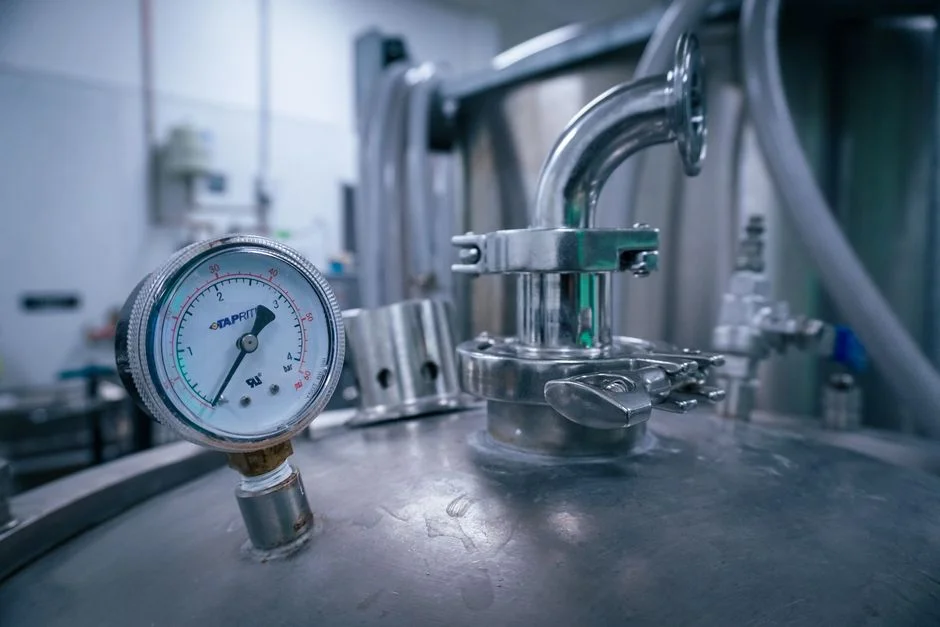
Technology choice is driven by influent character, footprint, and flow variability — not by equipment prestige. The four trains below cover roughly 90% of Philippine industrial and commercial bids.
MBR (Membrane Bioreactor). Delivers BOD <5 mg/L and TSS <1 mg/L, handles 10–2,000 m³/day in a small footprint, and is the default for space-constrained Metro Manila sites. OPEX runs higher than SBR because membrane aeration and periodic chemical cleaning (typically 0.5–1.0% sodium hypochlorite per CIP cycle) are mandatory. A factory-built MBR membrane bioreactor package plant is the most defensible choice when reuse-quality effluent is required.
SBR (Sequencing Batch Reactor). Strong fit for variable flows from slaughterhouses, dairy, and food processors; no separate clarifier is needed. CAPEX typically lands 15–25% below MBR at the same flow, but the equalization-plus-reactor footprint is larger. Detailed cost curves are available in the SBR cost guide for meat processing.
MBBR (Moving Bed Biofilm Reactor). Best for high-COD industrial streams from textile, chemical, and rendering plants; tolerant of load shocks; requires roughly 60% less aeration tank volume than conventional activated sludge at the same loading rate.
DAF-augmented biological train. A DAF pre-treatment system removes FOG, TSS, and colloidal matter before the biological step — essential where influent TSS routinely exceeds 500 mg/L, as in edible-oil, dairy, and metalworking plants. The Ilugin 100 MLD plant delivered for Manila Water in Pasig City uses SBR technology at municipal scale — per EPC contractor WABAG, a Sequencing Batch Reactor system with a design capacity of 100,000 m³/day, expandable to 150,000 m³/day, serving more than 600,000 residents — confirming that technology choice is dictated by flow and influent, not by brand.
| Technology | Typical Flow Range | Effluent BOD / TSS | Footprint | CAPEX vs MBR | Best-fit Philippine Sectors |
|---|---|---|---|---|---|
| MBR | 10–2,000 m³/day | <5 / <1 mg/L | Small | Baseline | Electronics, hotels, hospitals, PEZA reuse |
| SBR | 50–2,000 m³/day | ≤20 / ≤30 mg/L | Medium-Large | −15% to −25% | Slaughterhouse, food, dairy |
| MBBR | 100–5,000 m³/day | ≤30 / ≤50 mg/L | Medium | −5% to −15% | Textile, chemical, rendering |
| MBBR + DAF | 200–5,000 m³/day | ≤30 / ≤50 mg/L | Medium | +5% to +20% | Edible oil, metalworking, food with high FOG |
CAPEX and OPEX Benchmarks by Plant Size (2026 Philippines Data)
Use the ranges below as a budget anchor before RFQs are issued. Philippine projects typically add 18–30% on top of factory EXW pricing to cover sea freight, customs duty (HS 8421.21), on-site erection, and typhoon-rated structural upgrades — this is the delta no overseas-only quotation will quote you upfront.
For small commercial flows, containerized/package MBR systems in the 5–50 m³/day band run CAPEX $280–$700/m³ and OPEX $0.18–$0.32/m³. Modular SBR package plants in the 50–500 m³/day band land at $180–$520/m³ CAPEX and $0.12–$0.28/m³ OPEX. Industrial MBBR plus DAF trains in the 500–5,000 m³/day band — covering DAF polymer, biological aeration, and sludge handling — run $450–$1,200/m³ CAPEX and $0.25–$0.55/m³ OPEX. Stick-built municipal concrete plants above 5,000 m³/day (the Ilugin 100 MLD class) run $1,500–$3,000/m³ CAPEX with 24–36 month build cycles. Where water reuse is required, an industrial reverse osmosis polishing step brings treated effluent below DAO 2016-08 limits for closed-loop recycling. Sludge handling is frequently the second-largest OPEX line — a properly sized plate and frame filter press for sludge dewatering typically cuts hauling volume by 75–80%.
MBR package plant price Philippines 2026: what should buyers budget?
The MBR package plant price in the Philippines for 2026 runs $280–$700/m³ CAPEX in the 5–50 m³/day band, plus an 18–30% landed-cost adder for sea freight, customs duty under HS 8421.21, and typhoon-rated erection. A 30 m³/day hotel or electronics plant budgets straight off that unit-rate math, before the adder. OPEX lands at $0.18–$0.32/m³, dominated by membrane aeration and CIP chemicals. Buyers whose search started from generic pricing rather than process can cross-check the efluent decontamination system price philippines guide for the local cost ranges.
| Plant Class | Flow Band | CAPEX (USD/m³) | OPEX (USD/m³) | Build Time | Philippine Cost Adder |
|---|---|---|---|---|---|
| Containerized MBR | 5–50 m³/day | 280–700 | 0.18–0.32 | 8–14 weeks | +18% to +30% |
| Modular SBR | 50–500 m³/day | 180–520 | 0.12–0.28 | 12–20 weeks | +18% to +25% |
| Industrial MBBR + DAF | 500–5,000 m³/day | 450–1,200 | 0.25–0.55 | 20–36 weeks | +20% to +30% |
| Municipal stick-built | >5,000 m³/day | 1,500–3,000 | 0.18–0.40 | 24–36 months | +15% to +25% |
The Philippine WWTP Supplier Selection Scorecard: 8 Criteria
Apply the weighted scorecard below to every incoming RFQ response. A supplier scoring below 60 of 100 is a trading agent or a one-off integrator with no Philippine footprint — disqualify early.
| # | Criterion | Weight | Verification Method |
|---|---|---|---|
| 1 | In-house design + manufacturing (CNC, laser, factory audit) | 15% | On-site or video factory audit, equipment list |
| 2 | Philippine or ASEAN reference projects with verifiable client contacts | 15% | Site visit, client reference call |
| 3 | DENR SMR support + 12-month warranty with effluent parameters in writing | 15% | Warranty clause, SMR template |
| 4 | Containerized or skid-mounted delivery to Manila ICT or Cebu ICT | 10% | Shipping drawing, packing list |
| 5 | Local installation partner or in-house commissioning crew (4–8 weeks on-site) | 10% | Resumes, mobilization plan |
| 6 | Spare parts stocked in-country (membranes, blowers, dosing pumps) | 10% | Inventory list, lead-time commitment |
| 7 | ISO 9001, CE, third-party effluent test reports (not self-declared) | 10% | Certificate copies, lab reports |
| 8 | After-sales O&M capability (multi-year contract model) | 15% | O&M proposal, client references |
Criterion 2 references should be checked against named end users — for example, the SM malls and Beacon Towers contracts cited by Pro-Envirotek are the kind of verifiable Philippine track record a serious bidder will produce. A rotary mechanical bar screen on the inlet works is also a useful proxy: if the supplier specifies a reputable brand, they understand headworks engineering at a real level.
How to Shortlist and Run a Technical RFQ in the Philippines
- Build a 1-page influent/effluent data sheet. Capture COD, BOD, TSS, FOG, pH, peak flow, and target effluent class (C or SC) before any supplier is contacted — this is your control document.
- Issue RFQ to 3–5 suppliers. Include the DENR compliance clause, flow envelope, footprint constraint, and a 12-month warranty with effluent parameters in writing.
- Require a 10-year lifecycle cost comparison. Cover membrane replacement, chemicals, sludge hauling, and energy — not just purchase price. The OPEX data in the table above is your sanity check.
- Site-visit at least one Philippine or ASEAN reference plant per shortlisted bidder. Verbal references and glossy PDFs are not evidence.
- Negotiate an acceptance protocol. Third-party lab sampling for 7 consecutive days, paid by the supplier if the plant fails any DAO 2016-08 parameter.
- Confirm PEZA / BOI registration if the buyer is export-oriented — this unlocks tax incentives on imported WWTP equipment under the current investment priorities plan.
For a side-by-side ASEAN perspective on supplier selection, see the WWTP supplier comparison in Malaysia; for influent-specific process design, the slaughterhouse wastewater treatment process guide and the filter press OPEX optimization guide are direct complements to this framework.
Next step: assemble the influent/effluent data sheet, shortlist three to five bidders against the scorecard, and put the 10-year lifecycle math in front of your finance team. Request a Philippines-specific WWTP quotation with DENR 2016-08 parameter targets and a 10-year cost model included.
Frequently Asked Questions
What CAPEX should a Philippine factory budget for a 200 m³/day packaged WWTP in 2026?
A modular SBR or MBR in the 50–500 m³/day band runs CAPEX $180–$700/m³ ex-factory, with an 18–30% Philippine adder for sea freight, customs (HS 8421.21), and typhoon-rated erection, landing at roughly $45,000–$170,000 installed for 200 m³/day. The next step is to request a 10-year lifecycle quote from at least three short-listed bidders.
Which DENR clause governs discharge for a metal-finishing plant in Cavite?
Class SC coastal limits under DENR DAO 2016-08 apply, with BOD ≤30 mg/L, TSS ≤50 mg/L, lead ≤0.2 mg/L, and Cr⁶⁺ ≤0.05 mg/L. PEZA-registered ecozones overlay DAO 2003-30 ceilings that are roughly 50% stricter, so confirm the governing clause with EMB Region IV-A before sizing equipment.
MBR or SBR — which is right for a 150 m³/day food-processing effluent in Laguna?
MBR is the right call when footprint is constrained or when the effluent will be reused; SBR is the right call when flow is highly variable and the site can absorb 20–30% more tankage. For a 150 m³/day slaughterhouse, SBR typically saves 15–25% CAPEX versus MBR, and the Ilugin SBR reference at municipal scale shows the technology scales with flow.
How long does containerized WWTP delivery to Cebu or Manila take in 2026?
Sea freight from East Asia to Manila International Container Port runs 10–18 days plus 5–10 days for customs clearance and on-site erection, totalling roughly 4–6 weeks for containerized plants. Cebu ICT adds 3–5 days of inter-island trans-shipment, so Cebu buyers should plan for 5–8 weeks end-to-end.