industrial wastewater treatment cost philippines 2026
The industrial wastewater treatment cost Philippines 2026 picture is set by flow, load, and process train. A small DAF at 4–20 m³/h costs ₱1.5M to ₱5M before civil works of 30% to 50%. WCS fees of ₱5–₱20 per kg apply on the net load.
Design work on industrial wastewater in the philippines starts from the receiving-water class, not a catalog. Typical Class C screens in plant files are 50 mg/L BOD, 75 mg/L TSS, and 10 mg/L oil and grease, under DENR DAO 2016-08 for 57 plant types. Non-compliance notes in those files still show ₱100,000 per day, while WCS fees run ₱5–₱20 per kg of pollutant discharged.
An industrial wastewater disposal system in philippines plants is the train plus the permitted outfall. Hauling does not replace the discharge permit. Batch cleaning creates industrial wastewater in the philippines due to sudden FOG and BOD spikes. A primary clarifier alone will not hold a Class C line through those spikes.
The picture for industrial wastewater in the philippines today is a class limit plus a charge on the load that leaves the pipe. Buyers who search efluent decontamination system price philippines want a DAF, an MBR, or a package plant price, not a vacuum-truck rate. Most plants we size for still under-budget the civil works.
A Laguna Technopark plant with only a primary clarifier saw BOD peak at 120 mg/L, more than double the Class C inland limit. The Laguna Lake Development Authority issued a formal notice of violation. Per the EMB Annual Report 2024, DENR issued 1,247 industrial violation notices in 2023, and 68% tied to wastewater. For high-volume sites, those penalties stack with Wastewater Charge System fees.
The WCS acts as a pollution tax on BOD, TSS, or oil and grease released to receiving waters. A 100 m³/day textile plant at 500 mg/L BOD pays about ₱10,000 per month in WCS fees alone. The Clean Water Act (RA 9275) also allows daily fines, and authorities have ordered 6-month production halts in extreme cases. A sugar mill in Negros Occidental cut monthly WCS fees by 42% after replacing an aging lagoon with a high-efficiency DAF system for Philippine food processing plants.
wastewater discharge permit process philippines denr
A wastewater discharge permit is the DENR legal authorization to discharge into a named water body. Section 14 of Republic Act No. 9275 requires owners and operators of regulated facilities to secure a permit to discharge, and the permit must state the quantity and quality of effluent that the facilities are allowed to discharge, plus compliance schedules and monitoring requirements (RA 9275, 2004). The statute itself fixes no single validity period, so read the expiry and renewal terms off the permit document.
Factories that need the philippines wastewater treatment regulatory baseline should start with DAO 2016-08 effluent tables, not generic “clean water” language. Food and beverage plants focus on BOD and fats, oils, and grease. Textile and chemical plants face tighter Color, COD, sulfide, or metal limits. Plants comparing regional scopes can also review Industrial Wastewater Treatment in Luzon, Philippines: 2026 Engineerin for Luzon-specific permit practice.
The permit path usually takes 4 to 12 months. Teams meet EMB first, then file an Environmental Compliance Certificate package. WWTP engineering plans must carry a Professional Sanitary Engineer or Chemical Engineer signature.
After DENR inspects the site and equipment, the Wastewater Discharge Permit is issued. Operators then file quarterly Self-Monitoring Reports for BOD, COD, TSS, and pH, plus annual third-party audits under DENR Memorandum Circular 2023-08.
| Industry Category | BOD (mg/L) | TSS (mg/L) | Oil & Grease (mg/L) | Key Secondary Parameter |
|---|---|---|---|---|
| Food Processing | ≤ 50 | ≤ 75 | ≤ 10 | pH: 6.0–9.0 |
| Textiles & Dyeing | ≤ 50 | ≤ 70 | ≤ 5 | Color: ≤ 200 Pt-Co |
| Pulp & Paper | ≤ 50 | ≤ 100 | ≤ 5 | AOX: ≤ 1 mg/L |
| Electronics Mfg. | ≤ 30 | ≤ 50 | ≤ 5 | Copper: ≤ 0.5 mg/L |
DAO 2016-08 general effluent standards apply to every point source, regardless of industry category, unless an industry-specific standard is provided. DENR Administrative Order No. 2021-19 updates selected parameters only, covering ammonia, boron, copper, fecal coliform, phosphate, and sulfate, and it does not revise BOD. Use the industry table above as the screen, then confirm the class limit and any industry-specific value on the permit itself.
Where influent BOD is very high, DAO 2016-08 carries a strong-wastewater provision that can raise the BOD ceiling inside defined influent bands, but only against a documented influent record. Treat any relief as a permit negotiation backed by lab data, never as a design assumption.
Readers asking +is there a mandated per capita per day ang estimated wastewater generation in the philipines will not find a single national industrial per-capita number in DAO 2016-08. Industrial design loads come from process audits and plant classification, not municipal per-capita defaults. Visayas plants can cross-check local case framing in the Industrial Wastewater Treatment in Visayas Philippines: 2026 Engineeri guide.
wcs fees calculation for industrial plants philippines
Wastewater charges under Section 13 of Republic Act No. 9275 are computed on net waste load. Net waste load is the difference between the initial waste load of the abstracted water and the waste load of the final effluent discharge, and no net waste load shall be lower than the initial waste load (RA 9275, 2004). Facilities already meeting standards pay only a minimal reasonable amount. A 100 m³/day textile plant at 500 mg/L BOD pays about ₱10,000 per month when the rate used is inside ₱5–₱20 per kg.
Earlier guidance in this guide used daily fines of ₱10,000 to ₱100,000. Section 28 of Republic Act No. 9275 sets a base fine of not less than ₱10,000 nor more than ₱200,000 for every day of violation, and the Act raises that schedule by 10% every two years (RA 9275, 2004). Willful failure to clean up carries ₱50,000 to ₱100,000 per day plus imprisonment. Those statutory bands are what a notice of violation is priced from, before any WCS arrears.
Treatment Technologies: Performance, Costs, and Use Cases
Philippine industrial treatment technology follows influent quality and the reuse target. Dissolved Air Flotation is common for slaughterhouses and food plants with high FOG and TSS. DAF units reach 90–95% TSS removal and up to 90% FOG removal. Where floor space is tight, MBR systems for textile and pharmaceutical wastewater in the Philippines deliver a compact footprint, 99% pathogen reduction, and 95% COD removal for non-potable reuse.
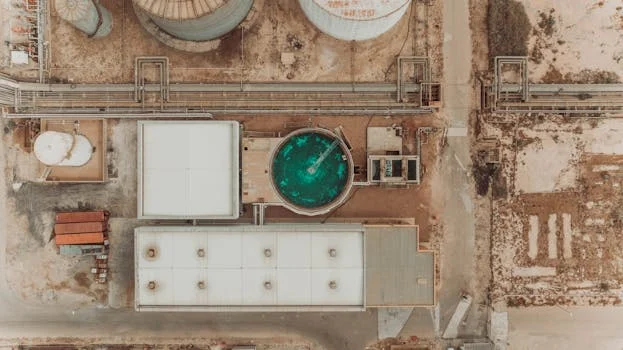
Chemical plants and tanneries with refractory COD need Advanced Oxidation using ozone or UV. In water-scarce or high-risk zones, Zero Liquid Discharge recycles the full water stream through reverse osmosis and evaporators, removing discharge fees at the highest CAPEX. Stable effluent also depends on PLC-controlled chemical dosing for DENR-compliant wastewater treatment that holds coagulant and flocculant dose within design bands. Most plants we size for tanneries still stop at advanced oxidation, because ZLD at ₱5.00 to ₱12.00 per m³ only pays when water is the scarce input.
| Technology | Best For... | Removal Efficiency | CAPEX (Est.) | OPEX (per m³) |
|---|---|---|---|---|
| DAF | High FOG, TSS | 95% TSS / 90% FOG | ± ₱1.5M - ₱15M | ₱0.80 - ₱2.50 |
| MBR | High BOD, COD | 99% Pathogens / 95% COD | ± ₱5M - ₱40M | ₱1.50 - ₱4.00 |
| Advanced Oxidation | Toxic Organics | 90% Refractory COD | ± ₱3M - ₱25M | ₱2.00 - ₱6.00 |
| ZLD | Water Scarcity | Full recovery | ± ₱20M - ₱100M | ₱5.00 - ₱12.00 |
Cost Breakdown for Philippine Wastewater Plants (2025 Data)
Read the industrial wastewater treatment cost Philippines 2026 as equipment plus civil works, not as the skid price alone.
Budget models separate CAPEX from long-term OPEX. 2025 supplier surveys place a small DAF (4–20 m³/h) at ₱1.5M to ₱5M. Civil works for foundations, piping, and tanks usually add 30% to 50% on top of equipment cost. Land in prime industrial zones can run ₱500 to ₱2,000 per square meter.
For agri-processors asking how much a wastewater treatment facility for poultry farm in the philippines, those civil and land adders often dominate the first invoice.
OPEX is driven by energy and chemicals. ZLD carries the highest energy load from evaporation, while DAF stays leaner. Managers comparing membrane economics can review MBR system costs and ROI for high-COD wastewater as a parallel cost structure. A 100 m³/day food plant paying high WCS fees can save about ₱3.6M per year with an ₱8M DAF, a 2.2-year payback on the stated numbers.
Most plants we size for high-FOG food waste run at the lower end of the DAF OPEX band, ₱0.80 per m³, not at ₱2.50 per m³.
| Cost Component | Estimated Price / Rate (2025) | Notes |
|---|---|---|
| Energy Consumption | ₱0.50 – ₱3.00 / m³ | Varies by pump and blower efficiency |
| Chemical Reagents | ₱0.30 – ₱1.50 / m³ | Coagulants, flocculants, and pH adjusters |
| Maintenance & Labor | ₱0.30 – ₱1.30 / m³ | Membrane cleaning and operator salaries |
| Consultant & Permit Fees | ₱200,000 – ₱1,000,000 | Includes PCO training and engineer signatures |
Which STP Equipment Suppliers Serve Philippine Industrial Plants?
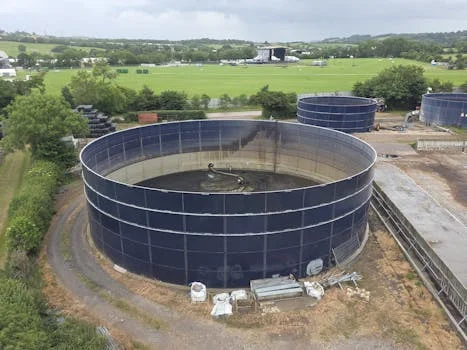
Supplier selection should follow audited influent data, DENR limits, and footprint constraints, not catalog photos. Compact sites often shortlist package biological trains such as the Underground Package Sewage Treatment Plant (WSZ Series) when daily flow and BOD load fit the unit range. Pair that train with DAF, MBR, or dosing only after a lab-backed mass balance. Advanced systems already used in Philippine plants include DAF at about 95% TSS removal and MBR at 99% pathogen reduction.
dao 2016-08 compliance checklist for philippine factories
An inspector reads the factory file against DAO 2016-08, not a poster on the tank. Most plants we audit miss a quarterly report before they miss a pump. Use the ten steps below before a notice of violation arrives.
- Conduct a wastewater audit: Test influent and effluent for BOD, COD, TSS, pH, and heavy metals using DENR-accredited labs.
- Apply for a Wastewater Discharge Permit (WDP): Submit your ECC and detailed treatment system designs to the EMB. Expect a 4–12 month window for approval.
- Install continuous monitoring: For plants exceeding 50 m³/day, automated meters for pH, flow rate, and turbidity are required.
- Train and certify staff: Ensure your Pollution Control Officer (PCO) and operators are certified by TESDA or equivalent per DENR Memorandum Circular 2023-05.
- Implement a Spill Response Plan: Maintain on-site containment booms and absorbent materials as mandated by DAO 2016-08.
- Submit Quarterly SMRs: Use the online DENR-prescribed forms. Missing a deadline can result in a ₱5,000 per day late fee.
- Schedule annual third-party audits: These must be conducted by DENR-accredited auditors, with reports submitted within the DENR Memorandum Circular 2023-08 cycle.
- Keep engineer-signed WWTP drawings current: Update Professional Sanitary or Chemical Engineer stamps when equipment or hydraulic load changes.
- Hold dosing and process units inside design bands: Record coagulant, flocculant, and pH setpoints against effluent results each shift.
- Compare WCS fees with treatment OPEX: Use monthly pollutant-kg charges to decide when DAF, MBR, or ZLD upgrades pay back.
Who This Is For / Who Should Look Elsewhere / Next Step
This guide is for Philippine factory managers, PCOs, and plant engineers who must meet DAO 2016-08 limits while controlling WCS fees and CAPEX. Municipal utilities seeking only domestic STP design, or buyers needing non-Philippine permit codes, should use country-specific guides instead. If your lab data and flow sheet are ready, request a design review against DENR limits before the purchase order.
Frequently Asked Questions
How much does a small industrial DAF cost in the Philippines?
A small DAF rated 4–20 m³/h costs ₱1.5M to ₱5M for the equipment in the 2025 supplier range. Civil works for foundations, piping, and tanks add 30% to 50% on top of equipment cost. Land in prime industrial zones can run ₱500 to ₱2,000 per square meter. Most plants we size for high-FOG food waste sit at the lower equipment end when dissolved COD is not the driver.
What BOD limit applies on a Class C discharge?
Class C screens in Philippine plant files are 50 mg/L BOD under DAO 2016-08, and DENR Administrative Order 2021-19 did not revise BOD. The industry table screens food and textile plants at 50 mg/L and electronics at 30 mg/L. Confirm the class limit and any industry-specific value on the permit before design freeze. Strong-wastewater relief is a permit negotiation backed by lab data, not a design assumption.
What is the daily fine for an effluent breach?
Section 28 of Republic Act No. 9275 sets a base fine of not less than ₱10,000 nor more than ₱200,000 for every day of violation. The Act raises that schedule by 10% every two years. Willful failure to clean up carries ₱50,000 to ₱100,000 per day plus imprisonment of two to four years. Earlier guidance in this guide quoted ₱10,000 to ₱100,000 per day, which is looser than the statute.
What must a wastewater discharge permit state in the Philippines?
Section 14 of Republic Act No. 9275 requires a permit to discharge for regulated effluents, and the permit must state the quantity and quality of effluent allowed, plus a compliance schedule and monitoring requirements. The statute fixes no single validity period, so read expiry and renewal off the permit document. Applications go through EMB with engineer-signed WWTP plans, then quarterly Self-Monitoring Reports follow issuance.