Why Colombian Factories and Municipalities Are Switching to MBR Systems in 2025
Colombia’s 2025 MBR wastewater treatment systems deliver near-reuse-quality effluent (<10 mg/L BOD, <5 mg/L TSS) while complying with Resolution 0631 discharge limits. With biomass concentrations of 6,000–12,000 mg/L, MBR systems reduce footprint by 60% compared to conventional activated sludge, making them ideal for space-constrained municipal and industrial projects. Costs range from COP 2.5B–15B (USD 600K–3.6M) for 100–1,000 m³/day systems, with payback periods of 3–7 years depending on energy and membrane replacement costs.
The primary driver for this shift is the stringent enforcement of Resolution 0631 (2015), which dictates maximum permissible limits for discharges into surface water and public sewer systems. For sensitive geographical zones like the Bogotá River basin or the Aburrá Valley in Medellín, the limits are aggressive: BOD must be below 30 mg/L and TSS below 50 mg/L, with specific nitrogen limits of <10 mg/L for certain industrial sectors. Many legacy systems in the textile, food processing, and chemical sectors are currently failing to meet these standards, leading to significant legal and financial exposure.
A notable case occurred in 2023 when a Medellín-based textile plant was fined COP 1.2 billion for consistently exceeding TSS limits. The plant's traditional clarifier system could not handle the fluctuations in dye-heavy influent. By upgrading to a Membrane Bioreactor (MBR) system, such facilities can reduce TSS to <5 mg/L, effectively eliminating the risk of fines and opening the door for internal water reuse. in high-density industrial corridors like Fontibón in Bogotá or Itagüí in Medellín, land prices make expanding conventional plants prohibitively expensive. MBR systems provide a modular, high-capacity solution within the existing footprint of older, less efficient systems.
How MBR Systems Work: Technical Mechanisms and Process Parameters
The MBR process represents a fusion of biological treatment and physical barrier separation. Unlike conventional systems that rely on gravity-based secondary clarifiers, MBR utilizes submerged membrane modules to separate treated water from the biomass. This allows the biological reactor to operate at much higher Mixed Liquor Suspended Solids (MLSS) concentrations, typically between 6,000 and 12,000 mg/L (per SigmaDAF field data), compared to the 2,000–4,000 mg/L found in conventional activated sludge (CAS) plants.
For Colombian industrial influent—which often presents COD levels of 500–2,000 mg/L and BOD levels of 200–800 mg/L—the MBR process provides a robust defense against organic shocks. The HydropureWater’s integrated MBR system for Colombian projects utilizes PVDF or CPVC flat-sheet membranes with a pore size ranging from 0.04 to 0.4 μm. This microscopic pore size ensures that 99.9% of bacteria and suspended solids are removed, resulting in an effluent that is essentially free of turbidity.
| Parameter | Typical Colombian Influent (Industrial/Municipal) | MBR Effluent Performance (2025) |
|---|---|---|
| Chemical Oxygen Demand (COD) | 500 – 2,500 mg/L | < 30 mg/L |
| Biochemical Oxygen Demand (BOD₅) | 200 – 800 mg/L | < 5 mg/L |
| Total Suspended Solids (TSS) | 200 – 1,200 mg/L | < 2 mg/L |
| Total Nitrogen (TN) | 30 – 60 mg/L | < 10 mg/L |
| Turbidity | 100 – 300 NTU | < 0.2 NTU |
Energy consumption remains a critical engineering consideration in Colombia, where industrial electricity rates range from COP 600 to 800/kWh. Advanced MBR systems now incorporate "LowResist" aeration patterns, reducing the energy requirement to 0.2–0.6 kWh/m³ for the filtration process. This efficiency is achieved by optimizing the air-to-water ratio used for membrane scouring, which prevents biofouling without excessive blower power.
MBR vs MBBR vs Conventional Activated Sludge: 2025 Colombia Comparison
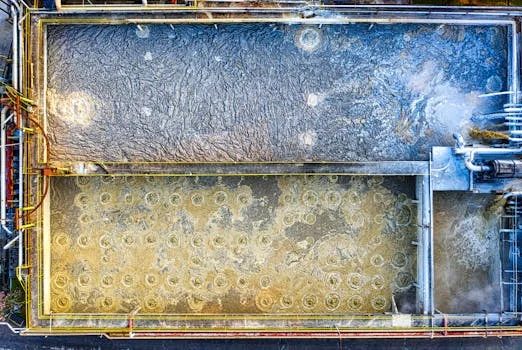
Choosing between MBR, Moving Bed Biofilm Reactor (MBBR), and Conventional Activated Sludge (CAS) requires a balance of CAPEX, OPEX, and compliance certainty. In the Colombian market, where water scarcity in the Andean region is increasing, the ability to reuse water often tips the scales in favor of MBR.
| Parameter | MBR (Membrane Bioreactor) | MBBR (Moving Bed Biofilm) | CAS (Conventional) |
|---|---|---|---|
| Effluent Quality (BOD/TSS) | Excellent (<5/<2 mg/L) | Good (20/25 mg/L) | Fair (30/40 mg/L) |
| Footprint Requirement | Very Low (100%) | Medium (160%) | High (250%) |
| Energy Use (kWh/m³) | 0.6 – 1.2 | 0.4 – 0.8 | 0.3 – 0.6 |
| CAPEX (500 m³/day) | COP 5B – 7B | COP 3.5B – 5B | COP 2.5B – 4B |
| OPEX (Annual) | High (Membrane cost) | Medium | Low/Medium |
| Res. 0631 Compliance | Guaranteed | Likely (requires tertiary) | Variable |
| Water Reuse Potential | High (Direct) | Moderate | Low |
| Sludge Production | Low | Medium | High |
| Maintenance Complexity | High (Technical) | Low | Medium |
| Scalability | Modular/High | Moderate | Low |
While CAS has the lowest initial CAPEX, it often fails to meet the stricter 2025 interpretations of Resolution 0631 for sensitive watersheds. MBBR is an excellent middle ground for organic load reduction, but it still requires a secondary clarifier or DAF for solids separation, which increases the footprint. For a 500 m³/day system, an MBR requires approximately 120 m², whereas a CAS system would require over 300 m² to achieve inferior results. When considering sludge dewatering options for MBR systems, the lower sludge yield of MBRs often allows for smaller, more efficient filter presses, further reducing total project costs.
Colombia’s Regulatory Compliance: Meeting Resolution 0631 and Decree 1076 with MBR
Regulatory adherence in Colombia is managed through a tiered system of national decrees and local authority oversight (such as CAR in Cundinamarca or Corantioquia). Resolution 0631 of 2015 remains the benchmark. For industrial sectors like dairy or coffee processing, the regulation demands significant reductions in Fats, Oils, and Grease (FOG) and Nitrogen. MBR systems are particularly effective here because the long sludge age (SRT) allows for the growth of nitrifying bacteria that are often washed out of conventional systems.
Decree 1076 of 2015, the "Single Regulatory Decree of the Environment and Sustainable Development Sector," outlines the permitting process for wastewater treatment plants (PTAR). Any system treating more than 100 m³/day typically requires an Environmental License (Licencia Ambiental). This process involves an Environmental Impact Assessment (EIA) and approval from the National Authority of Environmental Licenses (ANLA). Because MBR systems are enclosed and have a smaller footprint, they often face fewer hurdles regarding odor complaints and land-use conflicts during the public consultation phase of the EIA.
the NTC 5424 standard provides the framework for water reuse in Colombia. MBR effluent quality frequently exceeds these standards for irrigation and industrial cooling towers. A food processing plant in Bogotá recently reported that by installing an MBR, they were able to reuse 80% of their process water, saving approximately 12,000 m³ of freshwater annually and significantly reducing their "tasa retributiva" (discharge tax) paid to the local authority. Similar high standards are observed in hospital wastewater treatment standards in Medellín, where MBRs are used to eliminate pathogens and pharmaceutical residues before discharge.
MBR System Costs in Colombia: CAPEX, OPEX, and ROI Calculator for 2025

Budgeting for an MBR system in Colombia requires an understanding of both the initial import/construction costs and the long-term operational expenses influenced by local energy and labor rates. For a standard 500 m³/day industrial MBR system in 2025, the cost breakdown is as follows:
| Component | Cost (COP) | Cost (USD Approx.) |
|---|---|---|
| Equipment (Membranes, Pumps, PLC) | COP 3,500,000,000 | $840,000 |
| Civil Works (Tanks, Foundations) | COP 1,000,000,000 | $240,000 |
| Installation & Commissioning | COP 500,000,000 | $120,000 |
| Total CAPEX | COP 5,000,000,000 | $1,200,000 |
Operational expenses (OPEX) are dominated by energy and membrane replacement. Annual energy costs for a 500 m³/day system, assuming 0.8 kWh/m³ at COP 800/kWh, total roughly COP 1.2 billion. Membrane replacement, which occurs every 5 to 8 years depending on maintenance, should be amortized at approximately COP 400 million per year. While these costs are higher than CAS, the ROI is found in the avoidance of fines (which can exceed COP 500 million per incident) and the savings from water reuse. In many Colombian industrial projects, the payback period is 4.5 years when compared to the cost of purchasing municipal water and paying discharge taxes.
Financing these projects has become more accessible through Colombian government initiatives. The Fondo de Adaptación and green credit lines from Bancóldex offer reduced interest rates for projects that demonstrate significant water savings or environmental protection. Additionally, under Colombian tax law, companies can deduct up to 25% of the value of their environmental investments from their income tax, significantly improving the initial ROI. For more local data on project scaling, see the wastewater treatment plant cost breakdown for 2025.
Choosing an MBR Supplier for Colombian Projects: 2025 Decision Framework
Selecting a supplier for the Colombian market requires more than just comparing technical specs; it requires a partner who understands local logistics and regulatory nuances. Engineers should utilize the following checklist during the procurement phase:
- Compliance Documentation: Does the supplier provide certified performance data that specifically meets Resolution 0631 limits? Request case studies from high-altitude or tropical climate installations.
- Membrane Technology: Evaluate the use of DF series PVDF flat sheet membrane modules for MBR systems. PVDF is generally preferred over CPVC in Colombia due to its superior chemical resistance and longer lifespan (8–10 years vs 5–7 years).
- Local Technical Support: Ensure the supplier has a local engineering partner in Bogotá, Medellín, or Cali for emergency maintenance and spare parts inventory.
- Automation: Given the variability of industrial influent in Colombia, automated chemical dosing for MBR membrane cleaning is essential to prevent irreversible fouling and extend membrane life.
- Energy Recovery: Ask about variable frequency drives (VFDs) and dissolved oxygen (DO) sensors that optimize aeration based on real-time demand.
Leading suppliers in the region include global firms like Alfa Laval and SigmaDAF, alongside specialized manufacturers like HydropureWater, who often partner with local firms like Aguas y Aguas de Pereira to provide turnkey solutions. Transparency in quoting is vital—ensure the quote includes the "Total Cost of Ownership" (TCO) over 10 years, including at least one full membrane replacement cycle.
Frequently Asked Questions
Q: What is the lifespan of MBR membranes in Colombian conditions?
A: In Colombia’s tropical and high-altitude climates, PVDF membranes typically last 8–10 years, while CPVC modules last 5–7 years. The lifespan is heavily dependent on the effectiveness of the pre-treatment (e.g., fine screening <2mm) and the regularity of Clean-In-Place (CIP) cycles. Quarterly chemical cleaning is recommended for industrial applications.
Q: Can MBR systems handle high-strength industrial wastewater in Colombia?
A: Yes. MBRs are excellent for COD levels up to 2,000 mg/L. However, for textile or slaughterhouse waste where COD may exceed 4,000 mg/L, we recommend an anaerobic pre-treatment stage or a Dissolved Air Flotation (DAF) unit to reduce the organic load before it reaches the MBR membranes.
Q: How does MBR compare to constructed wetlands for Colombian municipal projects?
A: Constructed wetlands are a low-cost, low-energy solution ideal for rural Colombian villages with ample land. However, for urban or industrial projects, MBR is superior because it achieves much higher effluent quality (BOD <10 mg/L vs 30+ mg/L for wetlands) and requires 90% less land area. For broader regional context, see MBR systems in Latin America: Dominican Republic case study.
Q: What are the primary maintenance requirements for an MBR plant?
A: Maintenance is structured into weekly, monthly, and annual tasks. Weekly tasks include checking the Trans-Membrane Pressure (TMP) and verifying the automated dosing system levels. Monthly tasks involve calibrating sensors and checking blower filters. Annually, a full integrity test of the membranes and a biological health audit of the sludge should be performed by a qualified engineer.
Q: Are there tax incentives for installing MBR systems in Colombia?
A: Yes, under the National Development Plan, companies can apply for a VAT (IVA) exemption on imported environmental equipment and a 25% income tax deduction on the total investment cost, provided the project is certified by the regional environmental authority.