Wastewater Treatment Plant Cost in Concepción 2025: Engineering Breakdown with Local Data, Compliance & ROI Calculator
In Concepción, wastewater treatment plant costs range from $1.2M for a 100 m³/day industrial DAF system to $45M+ for a 50,000 m³/day municipal MBR plant, based on 2025 engineering benchmarks. Local factors—such as Chile’s DS 90/2000 compliance (requiring tertiary treatment for industrial effluents) and Concepción’s high labor/material costs (15–20% above Santiago)—can increase capital expenditures by 25–40%. Use this guide to model costs by flow rate, contaminant load, and technology, with a built-in ROI calculator for Concepción’s water tariffs and industrial growth projections.
Why Concepción’s Wastewater Treatment Costs Are Unique in 2025
Chile’s DS 90/2000 and DS 609/2018 regulations impose stricter limits on BOD, TSS, and nitrogen for industrial and municipal effluents, increasing capital costs by 30–50% compared to Latin American averages. In the Biobío Region, these regulations are enforced with high scrutiny due to the proximity of industrial zones to sensitive coastal and river ecosystems. For instance, achieving the 10 mg/L Total Nitrogen limit required for certain discharge zones in the Biobío river basin necessitates advanced denitrification stages that are often optional in other regions.
Concepción’s economic geography also dictates a premium on infrastructure. Labor and material costs in the region are consistently 15–20% higher than in Santiago. This is driven by supply chain constraints for specialized materials like high-strength concrete and structural steel, as well as a competitive market for specialized labor capable of installing complex MBR systems for Concepción’s space-constrained industrial zones. the World Resources Institute (2023) identifies the Biobío Region with a water stress index of 0.78, a factor that is rapidly shifting the industrial mindset from simple "treatment for discharge" to "treatment for reuse," adding roughly 20–30% to initial project costs for tertiary filtration and RO polishing.
A 2024 case study of a food processing plant in Talcahuano illustrates these pressures. The facility invested $3.2M for a 500 m³/day integrated system featuring DAF systems for Concepción’s food processing and industrial effluents followed by an MBR. This configuration was specifically designed to meet DS 90/2000 standards while preparing the facility for future water recovery, a necessity given the rising freshwater costs in the San Vicente industrial area.
| Cost Driver | Impact on CapEx (%) | Local Context (Concepción/Biobío) |
|---|---|---|
| Regulatory Compliance (DS 90/2000) | +30% to +50% | Requires tertiary treatment for BOD/Nitrogen removal. |
| Regional Labor & Materials | +15% to +20% | Higher costs vs. Santiago due to logistics and specialized demand. |
| Water Scarcity/Reuse Prep | +20% to +30% | High water stress (0.78 index) necessitates RO-ready designs. |
| Seismic Engineering | +5% to +10% | Strict Chilean seismic codes for concrete and tank structures. |
Wastewater Treatment Plant Cost Breakdown by Scale and Technology
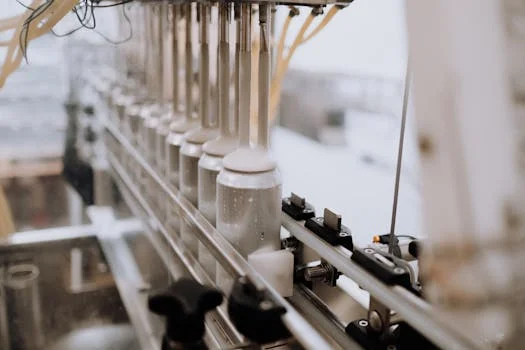
Capital expenditure for wastewater treatment in the Biobío Region varies from $1,200 to $6,000 per m³/day depending on the technology's ability to meet tertiary standards required for ocean or river discharge. Technology selection is the primary pivot for cost; while Conventional Activated Sludge (CAS) remains the baseline for large-scale municipal projects, its large footprint and lower effluent quality often make it less viable for the dense industrial corridors of Talcahuano or Coronel. In these areas, MBR systems provide a higher ROI despite a 40% higher initial CapEx by eliminating the need for secondary clarifiers and sand filters.
For industrial applications, particularly in the pulp, paper, and food sectors, pretreatment is a non-negotiable cost. High Total Suspended Solids (TSS > 500 mg/L) or high Fats, Oils, and Grease (FOG > 100 mg/L) require DAF systems to prevent fouling of downstream biological stages. These pretreatment modules typically account for 15–25% of the total equipment budget but prevent catastrophic failure of membrane systems. When evaluating wastewater treatment technology comparison in Concepción, engineers must also weigh the 30-40% CapEx savings of modular package plants against the long-term scalability of custom-built civil works.
| Flow Rate (m³/day) | CAS Cost (USD) | MBR Cost (USD) | DAF + Biological (USD) | Tertiary/Reuse (USD) |
|---|---|---|---|---|
| 100 | $150K - $250K | $350K - $500K | $280K - $450K | $450K - $700K |
| 1,000 | $1.2M - $1.8M | $2.8M - $3.8M | $2.0M - $3.2M | $3.5M - $5.2M |
| 10,000 | $10M - $15M | $22M - $30M | $18M - $25M | $35M - $48M |
| 50,000+ | $45M - $65M | $85M - $120M | N/A (Custom) | $150M+ |
The cost split for a typical Concepción project usually allocates 60–70% to equipment procurement, including membranes and aeration systems. Civil works, which are highly sensitive to local concrete prices, account for 15–25%. Electrical and mechanical installation (10–15%) and permitting (5–10%) round out the budget. To compare MBR and conventional activated sludge for Concepción’s projects effectively, engineers must look beyond the initial purchase price to the total lifecycle cost, including the footprint-related land value in prime industrial zones.
Compliance Costs in Concepción: Permits, Testing, and Upgrades
Environmental permitting for projects exceeding 10,000 m³/day in Concepción requires an Environmental Impact Assessment (EIA) with costs ranging from $50,000 to $200,000 according to the Chilean Environmental Evaluation Service. Smaller industrial projects usually fall under the Declaración de Impacto Ambiental (DIA), which costs between $10,000 and $50,000. These figures exclude the engineering hours required to produce the technical documentation, which can double the effective cost of the permitting phase.
Meeting Chile wastewater treatment regulations 2025 also mandates ongoing monitoring. Quarterly effluent testing for DS 90/2000 compliance costs between $2,000 and $5,000 per year, but many modern permits now require continuous monitoring for pH, flow, and TSS. Integrating these online sensors adds $30,000 to $80,000 to the initial CapEx. For plants discharging into the Biobío river, nutrient removal (Nitrogen and Phosphorus) is often the most expensive compliance upgrade, potentially adding $500,000 to $1.5M to a medium-sized plant's budget. To ensure microbial safety, many facilities are now opting for a chlorine dioxide generator for high-efficiency disinfection, which adds $100K–$400K but ensures compliance with the strictest discharge standards.
| Compliance Item | Estimated Cost (USD) | Frequency/Type |
|---|---|---|
| DIA (Small Projects) | $10,000 - $50,000 | One-time (Permit) |
| EIA (Large/Municipal) | $50,000 - $200,000 | One-time (Permit) |
| Continuous Monitoring System | $30,000 - $80,000 | Initial CapEx |
| Annual Lab Testing | $2,000 - $5,000 | O&M (Recurring) |
| Nutrient Removal Upgrade | $500K - $1.5M | Initial CapEx |
A textile plant in the Biobío Region recently demonstrated the value of technology-led compliance. By replacing an aging chemical coagulation system with a DAF system featuring integrated pH control, they reduced their annual compliance monitoring failures by 90% and lowered chemical-related OpEx by 25%. This shift highlights the DS 90/2000 compliance cost in Concepción as a manageable variable when the right technology is selected at the design phase.
Operating Costs and ROI: How to Justify Your Investment in Concepción
Operational expenditures for industrial wastewater treatment in Concepción average between $0.30 and $0.90 per m³, heavily influenced by ESSBIO’s 2025 industrial water tariffs and local sludge disposal fees. Energy typically represents the largest share of OpEx (30–40%), followed by chemicals (20%) and labor (15–20%). In Concepción, sludge disposal is a growing concern; costs have risen to $0.03–$0.10 per m³ of treated water, prompting many firms to optimize sludge dewatering for Concepción’s industrial projects to reduce volume and hauling fees.
The ROI wastewater treatment plant in Concepción is primarily driven by three factors: freshwater savings through reuse, avoidance of DS 90/2000 fines (which can reach $50,000/month for repeat offenders), and government incentives. CORFO (Corporación de Fomento de la Producción) frequently offers grants covering up to 50% of CapEx for projects that implement water-efficient technologies or advanced treatment like reverse osmosis systems for process water recovery. With ESSBIO’s industrial freshwater tariffs hovering between $1.20 and $2.50/m³, a plant that reuses 30% of its effluent can often achieve a full payback in 5 to 7 years.
| OpEx Component | Cost Range (USD/m³) | Notes for Concepción |
|---|---|---|
| Energy | $0.10 - $0.30 | MBR is on the higher end; CAS is lower. |
| Chemicals | $0.05 - $0.20 | Higher for DAF and phosphorus removal. |
| Labor | $0.08 - $0.25 | Includes specialized technical staff. |
| Maintenance | $0.05 - $0.15 | Includes membrane replacement reserves. |
| Sludge Disposal | $0.03 - $0.10 | Driven by regional landfill and transport fees. |
Consider a 1,000 m³/day MBR system. While the CapEx is high ($3.2M), the ability to produce high-quality water suitable for cooling towers or wash-down applications saves approximately $0.80 per m³ compared to buying freshwater. Annually, this results in $292,000 in savings. When combined with the avoidance of potential non-compliance fines and the benefit of CORFO subsidies, the wastewater treatment cost per cubic meter in Concepción becomes a strategic asset rather than a sunk cost.
How to Choose the Right Wastewater Treatment Technology for Concepción
Selecting the optimal treatment technology for Concepción depends on the specific contaminant profile of the Biobío Region’s industrial sectors, where space-constrained sites favor high-intensity MBR systems. For municipal planners or developers of residential communities, WSZ series package plants for Concepción’s residential and commercial projects offer a low-profile, "set and forget" solution that meets secondary standards with minimal civil works. However, for industrial managers in the San Vicente or Coronel parks, the decision framework is more complex.
The primary trade-off in the region is between MBR and Conventional Activated Sludge. While CAS has a lower CapEx, it requires a footprint up to 60% larger and often struggles with the fluctuating loads common in Concepción’s seasonal food processing industry. Conversely, DAF systems are essential for the region’s pulp and paper mills, where high fiber and TSS loads would quickly overwhelm biological stages. To see how Concepción’s costs compare to São Paulo’s package plant benchmarks, engineers should note that while Chilean labor is more expensive, the regulatory framework in Chile provides more clarity for long-term ROI modeling.
| Requirement | Recommended Tech | Concepción-Specific Benefit |
|---|---|---|
| High FOG/TSS (Food/Pulp) | DAF | Protects bio-reactors from industrial shock loads. |
| Limited Space (Industrial Zone) | MBR System | Eliminates clarifiers; fits in 40% less space. |
| Water Reuse Goal | MBR + RO | Produces near-potable quality for process reuse. |
| Residential/Commercial | Package Plant (WSZ) | Underground installation preserves land value. |
When selecting a vendor in the Biobío Region, prioritize suppliers who provide local compliance experience and after-sales support. A sewage treatment plant design in Concepción is only as good as its ability to pass the first SISS (Superintendencia de Servicios Sanitarios) inspection. Ensure your supplier provides a detailed performance guarantee tied specifically to DS 90/2000 or DS 609/2018 parameters. For more detailed comparisons, you can research DAF system engineering specs and costs to see how global standards are being adapted for local Chilean needs.
Frequently Asked Questions
Q: How much does a small wastewater treatment plant cost in Concepción for a residential community?
A: For a 50–200 m³/day system, expect $600K–$1.5M for a package plant (e.g., WSZ series) with secondary treatment. Add $200K–$400K for tertiary treatment to meet DS 90/2000 standards if discharging into a river or sensitive area.
Q: What are the ongoing costs of running a wastewater treatment plant in Concepción?
A: OpEx typically ranges from $0.30–$0.90/m³. MBR systems have higher energy requirements ($0.25–$0.40/m³) but significantly lower sludge disposal costs ($0.03–$0.08/m³) due to higher sludge age and better dewatering characteristics.
Q: Can I get government funding for a wastewater treatment plant in Concepción?
A: Yes. CORFO offers various grants and tax incentives that can cover up to 50% of the CapEx for innovative water-saving technologies. Additionally, the Biobío Regional Government occasionally provides low-interest loans for industrial upgrades aimed at DS 90/2000 compliance.
Q: How long does it take to build a wastewater treatment plant in Concepción?
A: For modular package plants, the timeline is 6–12 months. Custom-built municipal or large industrial systems require 18–36 months. Be aware that the permitting process (EIA/DIA) can add an additional 3–6 months to the pre-construction phase.
Q: What’s the cheapest way to treat industrial wastewater in Concepción?
A: For low-flow, low-contaminant effluents (e.g., <100 m³/day, BOD <300 mg/L), a chemical coagulation and sedimentation system is the cheapest initial investment at $200K–$500K. However, for most industrial zones, a DAF or MBR system is more cost-effective over a 10-year period due to lower chemical use and avoided regulatory fines.