What Ceramic Tile Wastewater Contains and Why It Is Difficult
MBBR can treat ceramic tile wastewater because microorganisms attached to moving carrier media degrade soluble, biodegradable contaminants while the carriers remain in continuous motion. A Water Environment Research ceramic-industry case study reported a progressive COD decrease of up to 95% over 21 days using an MBBR-based upgrading scheme. That result applies to a specific configuration involving biosurfactants and halophilic and halotolerant cultures, not to every tile plant. A defensible design therefore combines equalization, solids and glaze-residue control, biological treatment, aeration, media retention, and final separation. Reactor selection should reflect measured wastewater variability, COD loading, pH, nutrients, suspended solids, aeration requirements, and the discharge or reuse objective.
Ceramic tile factory wastewater is not one uniform stream. It can include process rinsing, glazing or coating operations, equipment washing, and contaminated wash water. The first engineering task is a plant mass balance: identify each drain, its source operation, batch or continuous discharge behavior, destination, and whether it can be segregated. Segregation often produces more manageable treatment conditions than forcing highly variable streams into one reactor.
Suspended glaze, clay, silica, colorants, and other solids must be characterized separately from soluble biodegradable COD. Solids affect screening, equalization, pumping, diffuser performance, biomass retention, and downstream sludge handling; they should not be treated as an incidental consequence of the COD load. Mechanical screening for tile wastewater can protect downstream equipment from coarse debris, but it does not replace solids characterization or finer separation.
The feasibility review must also establish pH, temperature, nutrients, oil or glaze residues, surfactants, and batch-to-batch flow variation. A moving bed biofilm reactor is primarily biological: the carrier provides protected surfaces for biomass, but inhibitory contaminants and hydraulic or organic overload still require upstream control. Where characterization shows that suspended glaze, colloids, oil, grease, or emulsions would interfere with aeration or biological solids handling, DAF pretreatment for ceramic tile wastewater should be evaluated rather than assumed necessary or unnecessary.
Request production-representative sampling across normal production cycles and include COD, BOD, suspended solids, pH, temperature, nutrients, and contaminants identified by the process survey. Ask the laboratory to distinguish soluble and particulate fractions where practical. Include production flow and batch-release data, because average flow alone cannot describe equalization or reactor loading.
MBBR Treatment Performance and the Strength of the Evidence
The Water Environment Research ceramic-industry case study reported a progressive COD decrease of up to 95% over 21 days in an MBBR-based ceramic-effluent upgrading scheme. The process used biosurfactants and a consortium of halophilic and halotolerant microbial cultures to support emulsification-aided treatment. The result therefore supports MBBR feasibility for the tested ceramic effluent configuration, but it does not establish that the same performance will occur with a conventional, unmodified MBBR or across different tile factories.
The strongest supporting MBBR data in the supplied research comes from a 2019 Tanjungpura University laundry-wastewater study, published on 2019-01-10. It is analogous evidence: the wastewater contained surfactants and other constituents not shown to represent ceramic manufacturing effluent. The researchers used Kaldnes K1 biofilm carrier media at 20% fill, allowed a 15-day seeding period, and evaluated treatment durations of 6, 8, and 10 days.
| Evidence | Wastewater and configuration | Reported result | Correct use in a ceramic evaluation |
|---|---|---|---|
| Water Environment Research ceramic-industry case study | MBBR-based upgrading with biosurfactants and halophilic and halotolerant cultures; 21-day test | Progressive COD decrease of up to 95% | Direct ceramic-industry evidence within the reported process configuration; not a universal plant guarantee |
| Tanjungpura University laundry study, 2019-01-10 | Kaldnes K1 at 20% fill; 15-day seeding; 10-day treatment | COD: 910 to 56.3 mg/L, 93.81% effectiveness | Analogous biological-treatment evidence requiring site-specific confirmation |
| Tanjungpura University laundry study, 2019-01-10 | Same MBBR configuration | BOD: 441 to 39.67 mg/L, 91% effectiveness | Analogous evidence; influent and wastewater differ from tile effluent |
| Tanjungpura University laundry study, 2019-01-10 | Same MBBR configuration | Phosphate: 38.24 to 5.31 mg/L, 86.10% effectiveness | Shows that nutrients were measured, but does not define ceramic nutrient-removal design |
| Tanjungpura University laundry study, 2019-01-10 | Same MBBR configuration | Surfactant: 47.8 to 5.62 mg/L, 88.22% effectiveness | Relevant only where ceramic wastewater contains a comparable surfactant load |
That study’s authors specifically recommended further investigation of media fill volume, longer treatment times, and alternative media types. This limitation is important during procurement: neither 20% fill nor the reported 10-day treatment duration should be copied into a ceramic design without load calculations and representative pilot testing. The broader MBBR design guide for industrial wastewater provides a useful framework for separating demonstrated evidence from design assumptions.
How the MBBR Treatment Train Works
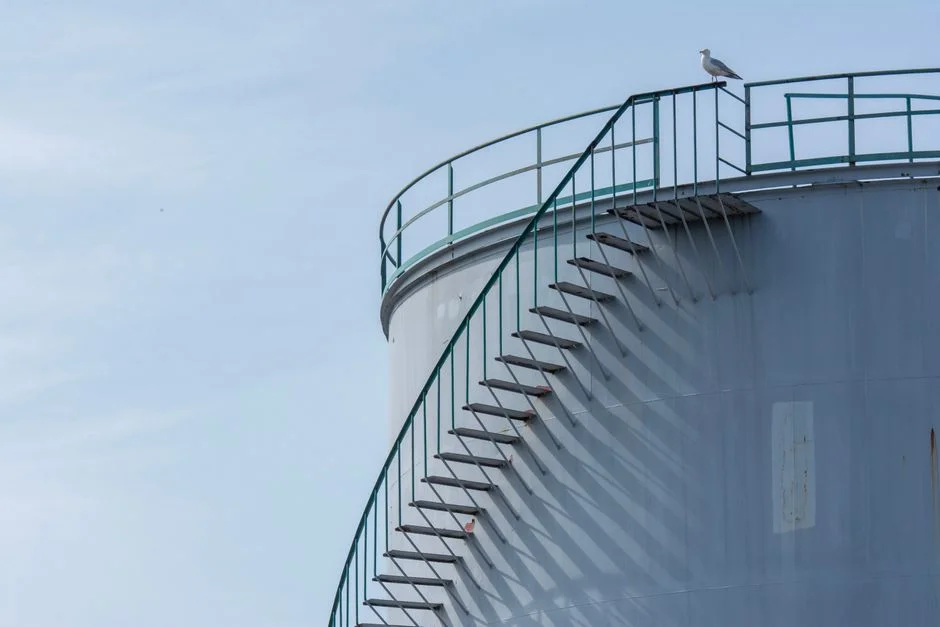
A workable MBBR train protects the biological stage from the variable particulate and emulsion load generated during tile production. The process sequence should be developed from measured wastewater characteristics, not from a standard reactor drawing.
- Screening or sieving: Remove rags, packaging fragments, and coarse debris before pumps, diffusers, and media-retention screens. Confirm the selected opening against the smallest material expected from equipment washing and glaze handling.
- Equalization: Mix and attenuate batch discharges before biological treatment. Record flow, COD, suspended solids, pH, and temperature variation across representative production cycles so the equalization volume and pumping arrangement reflect actual releases.
- Condition-dependent solids or emulsion control: Install DAF, chemical precipitation, or another separation step where suspended glaze, colloids, oil, grease, or emulsions would impair aeration, biomass retention, or downstream solids handling. Chemical addition should be based on jar tests and influent characterization; automatic chemical dosing for wastewater pretreatment may then be evaluated as a controlled part of the train.
- MBBR biological treatment: Combine the aerated tank, buoyant biofilm carriers, diffuser arrangement, and continuous carrier movement. Adequate aeration supports biological treatment and keeps the media mobile; the retention screen must hold carriers while allowing treated water to pass.
- Solids separation: Use clarification or filtration when discharge or reuse requires low suspended solids. A lamella clarifier for biological solids separation can be evaluated for this function, with the selected method confirmed by pilot solids behavior.
- Final polishing: Add disinfection, filtration, or other reuse-specific treatment where required by the receiving system or reuse specification.
The resulting process flow is:
Screening or sieving → equalization → condition-dependent solids or emulsion control → aerated MBBR with moving carriers → solids separation → disinfection or reuse polishing where required.
Media movement is an operating condition, not a decorative feature. If carriers accumulate, escape, or do not remain adequately distributed, the aeration and screen arrangement must be reviewed. Similarly, biological action does not remove detached biomass or residual solids. Downstream separation remains part of the treatment train when the specified effluent objective requires it.
Design Parameters That Determine MBBR Suitability
Reactor sizing must begin with representative hydraulic and contaminant data, not with a catalog reactor volume. The procurement package should identify average and peak flow, production schedule, batch-discharge behavior, COD, BOD, suspended solids, pH, temperature, nutrients, and inhibitory substances. Missing data should be identified as a pilot objective rather than filled with unsupported default ranges.
| Design input | What the supplier must use | Why it affects the MBBR |
|---|---|---|
| Hydraulic profile | Average flow, peak flow, batch releases, production schedule, equalization behavior | Defines equalization, reactor loading, pumping, and carrier-retention conditions |
| Organic load | Representative COD and BOD, with soluble and particulate fractions where available | Distinguishes biologically treatable load from material requiring physical or chemical separation |
| Solids and water quality | Suspended solids, pH, temperature, nutrients, oil, grease, surfactants, glaze residues, and other identified inhibitors | Establishes pretreatment need, biological compatibility, and downstream solids handling |
| Media and fill | Selected carrier geometry, fill volume, mixing characteristics, and compatibility with the reactor and diffusers | Influences biomass area, movement, hydraulics, and oxygen transfer |
| Aeration | Diffuser selection, layout, blower duty, oxygen-transfer basis, and dissolved-oxygen control | Supports biological activity and carrier movement |
| Operational requirements | Retention screens, carrier management, maintenance access, controls, and bypass provisions | Limits carrier loss, blockage, and operating risk |
| Effluent objective | Applicable discharge permit, sewer agreement, or reuse specification | Defines whether biological treatment alone is sufficient or polishing is indispensable |
Kaldnes K1 was used in the 2019 Tanjungpura laundry study, but that does not make it the default for every ceramic reactor. The research expressly called for evaluation of other media and fill volumes. Media selection should reflect wastewater chemistry, reactor geometry, mixing behavior, and the aeration system. The 20% fill used in that study is evidence about one experiment, not a universal design requirement.
Seeding and acclimation also require a commissioning plan. The laundry study used a 15-day seeding period before evaluating 6-, 8-, and 10-day treatment durations. Ceramic testing should confirm the equivalent start-up requirement using the proposed carrier, filling ratio, diffuser arrangement, and wastewater rather than assuming that acclimation time transfers directly.
Ask each bidder to define diffuser selection, aeration layout, retention screening, carrier-management provisions, dissolved-oxygen control, maintenance access, and the basis of any performance guarantee. The supplier should state whether the guarantee derives from site data, pilot data, ceramic-industry evidence, or another application. Equipment compatibility must cover media, diffusers, screens, and removal provisions; treatment valves and filter media should be specified where relevant. If reuse or low-solids discharge is required, evaluate multi-media filtration for final polishing, but confirm the actual filtration duty from the effluent specification.
Choosing MBBR, MBR, Coagulation, or a Combined Treatment Train
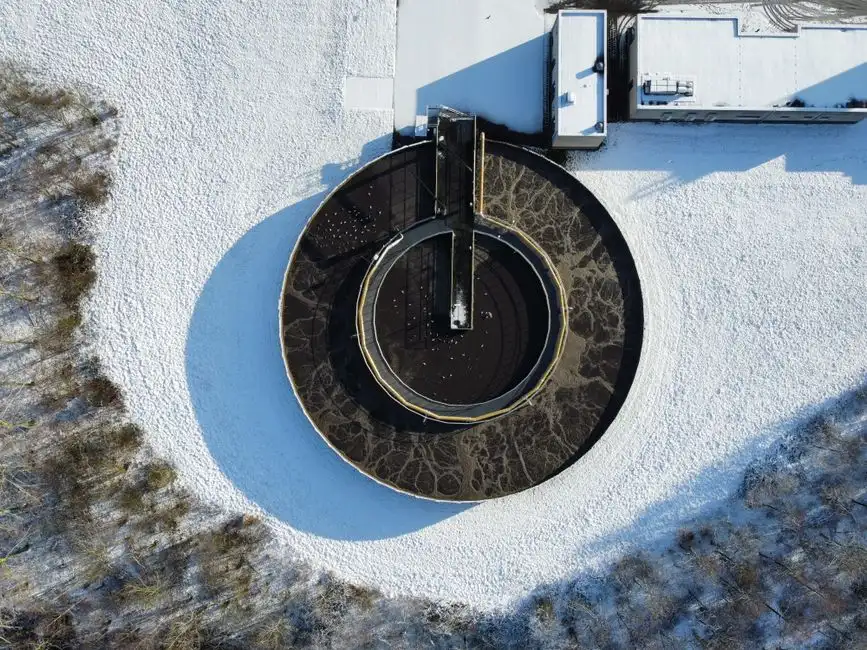
The correct process is determined by contaminant behavior and required effluent quality, not by the reactor name. MBBR is appropriate when the primary objective is biological removal of biodegradable COD with carrier-based biomass retention and relatively simple biological operation. It is not a substitute for removing suspended glaze, correcting unsuitable pH, separating emulsions, or polishing the final effluent.
| Measured need | Preferred process | Decision basis |
|---|---|---|
| Biodegradable COD with variable soluble load | MBBR with equalization and aeration | Use carrier-based biological treatment; pilot the proposed wastewater and operating conditions |
| Defined membrane separation or near-reuse-quality objective | MBR | HydropureWater product literature describes submerged PVDF membranes and a filtration level below 1 micrometer; verify project-specific effluent requirements |
| Suspended solids, colloids, emulsions, oil or grease, color, or glaze residues are principal challenges | Coagulation and/or DAF | HydropureWater’s DAF range is described as handling 4–300 m³/h across 13 standard models; suitability still depends on wastewater characterization |
| Both biodegradable COD and separable contaminants | Combined train | Use physical or chemical separation before or after biological treatment according to the identified interference and final objective |
| Low suspended solids or reuse polishing is required | Clarification or filtration after biological treatment | Define the required solids condition and confirm polishing performance with representative solids |
For comparison, an MBR membrane bioreactor alternative adds a defined membrane-separation step and may suit projects whose reuse specification makes that separation necessary. When solids or emulsions dominate the problem, DAF pretreatment for ceramic tile wastewater may be more relevant than expanding the biological reactor.
A combined train is often the most defensible arrangement for ceramic manufacturing effluent: biological MBBR for biodegradable load, upstream solids or emulsion control where required, and downstream separation where the effluent objective demands it. The final choice should be based on measured characteristics, reuse goals, footprint, operating complexity, and verified application evidence.
How to Procure and Pilot an MBBR System
A defensible procurement process starts with the wastewater, not with an MBBR price or model. Issue a site-survey request covering every production stream, drain, batch release, production schedule, reuse destination, existing treatment unit, and operating constraint. Characterize representative flows and contaminants across normal production cycles and document whether batch discharges can be segregated or equalized.
- Issue a common design basis: Give every supplier the same wastewater, operating, effluent, site, and maintenance information. This prevents proposals based on incompatible assumptions from being compared as if they were equivalent.
- Require a complete proposal: Request the process flow, mass balance, reactor basis, media and diffuser specification, aeration calculation, retention-screen arrangement, control narrative, carrier-management provisions, maintenance plan, and clearly stated performance assumptions.
- Pilot representative ceramic tile wastewater: Test the proposed media, fill, diffuser arrangement, seeding conditions, and treatment duration. Compare COD and BOD reduction, solids behavior, foam or emulsion conditions, pH response, carrier movement, aeration response, and operational stability.
- Verify integration: Use the pilot to confirm acclimation time, downstream solids handling, screen performance, and any assumed pretreatment or polishing requirements. Do not transfer study removal percentages directly into a guarantee.
- Set plant-specific acceptance criteria: Define sampling locations, analytical methods, acceptance values, uptime provisions, operator training, spares, warranty support, and corrective-action responsibilities.
The pilot is especially important because the supplied ceramic study used a specific upgrading configuration and the supporting laundry study used Kaldnes K1, 20% fill, 15-day seeding, and a 10-day treatment result. Those conditions provide test points for the ceramic trial, not universal acceptance criteria. The RO and UF membrane and filter-element options should be evaluated separately if the reuse or discharge specification requires membrane-based polishing.
Before signing, confirm which critical equipment remains exposed to grit, glaze solids, and biological fouling. Request a clear maintenance and carrier-recovery procedure, spare-parts list, access requirements, and operating-response plan for abnormal batch discharges. The acceptance package should connect each performance promise to a defined influent condition, sampling method, and test period.
Frequently Asked Questions
How much does an MBBR system for ceramic tile wastewater cost?
The supplied research does not establish a universal MBBR price. Request a site-specific capital and operating-cost estimate based on measured flow, COD and BOD loading, suspended solids, pretreatment, aeration, media, reactor volume, final solids separation, polishing, and site integration. Require the quotation to identify which items are included and which depend on the confirmed effluent specification.
Which MBBR supplier should a ceramic tile factory select?
Select a supplier that can show representative ceramic wastewater data, pilot support, and transparent design assumptions. Require compatible media and diffuser engineering, defined carrier-retention and maintenance provisions, and acceptance criteria tied to the plant’s influent. Ask whether any performance claim comes from ceramic data, site data, pilot data, or another wastewater application.
Can the reported media fill, seeding period, and treatment time be used for design?
Not as universal values. The 2019 Tanjungpura University laundry study used Kaldnes K1 at 20% fill, a 15-day seeding period, and treatment durations of 6, 8, and 10 days, with the reported 10-day results presented in the evidence table. Its authors recommended further work on fill volume, longer treatment times, and alternative media. Use those conditions to structure a ceramic pilot, then size the reactor from the measured load and verified pilot behavior.
What discharge or reuse standard should the final MBBR effluent meet?
The supplied research does not provide a universal ceramic tile effluent limit. Confirm the applicable location-specific discharge permit, sewer agreement, or reuse specification with the authority or receiving system. Use that confirmed requirement to decide whether clarification, filtration, disinfection, or further membrane polishing is necessary.