What an Effluent Treatment Plant Must Achieve in Baghdad
An effluent treatment plant in Baghdad should be selected by matching the wastewater source, required flow, effluent limits and reuse objective to a verified process train. For municipal sewage, a packaged A/O system may provide biological treatment, sedimentation and disinfection; MBR is an alternative where compactness and membrane solids separation are priorities. DAF can pretreat oil, grease and suspended solids in industrial influent, while UF can polish solids, colloids and bacteria before reuse. Baghdad evidence shows why local verification matters.
Three outcomes must be defined before selecting equipment: protection of the receiving water, compliance with requirements confirmed for the specific discharge point, and safe reuse where intended. Sewage treatment, industrial effluent treatment and tertiary polishing are different scopes. A municipal train addresses domestic wastewater and receiving-water protection; an industrial train must also handle source-specific pollutants; polishing is a downstream barrier rather than a substitute for biological treatment.
UNICEF Iraq reported on 9 December 2023 that eight wastewater treatment plants at Medical City in Baghdad would benefit more than 3.5 million people. Before those plants became operational, more than 2,300 m³ of untreated water was discharged into the Tigris River daily. This demonstrates the public-health consequence of inadequate treatment, but it does not establish one universal Baghdad discharge limit.
Each project needs a confirmed permit envelope and reuse specification. Selection should follow the same logic used in packaged sewage treatment plant design considerations: define the duty, establish the treatment functions, then compare equipment against those functions rather than starting with a preferred product.
Use Local Effluent Data to Define the Treatment Objective
Site-specific influent remains the sizing basis for any system, even when regional benchmarks exist. A University of Baghdad study sampled influent and effluent daily from November 2019 to June 2020 at the Maaymyrh biological activated-sludge plant. It reported an average effluent BOD5 of 15.82 mg/L, COD of 60.40 mg/L, TSS of 13.81 mg/L, pH of 7.46, total nitrogen of 9.54 mg/L and total phosphorus of 1.50 mg/L. The paper was published in 2021.
| Parameter | Mean influent, mg/L | Mean effluent, mg/L | Iraqi Quality Requirements cited by the study |
|---|---|---|---|
| BOD5 | 125.14 | 15.82 | 40 |
| COD | 284.74 | 60.40 | 100 |
| TSS | 222.50 | 13.81 | 60 |
| pH | 7.55 | 7.46 | 6–8.5 |
| Total nitrogen | 20.25 | 9.54 | <10 |
| Total phosphorus | 8.02 | 1.50 | <1 |
Two distinctions matter when reading this table. First, the study’s tabulated averages and its separate monthly-average table differ slightly; the values above use the study’s main influent and effluent table. Second, the study concluded that the eight-month average effluent complied with the cited Iraqi Quality Requirements, while its tabulated mean total phosphorus of 1.50 mg/L is above the cited “<1” entry. The buyer should therefore require parameter-by-parameter compliance under the applicable authority requirements rather than treating the overall conclusion as a substitute for checking.
Maaymyrh is in Al-Hilla, Babel governorate, south of Baghdad governorate. Its activated-sludge performance is useful regional context, not evidence that a Baghdad industrial effluent will behave like municipal sewage. The sampling record also predates current project conditions.
Before requesting sizing, obtain the flow curve, wastewater source, analytical results, discharge point, reuse destination, operating pattern and applicable authority requirements. Use the effluent treatment process and compliance guide as a check on how these inputs translate into treatment objectives.
Build the Right Process Train for the Wastewater Source
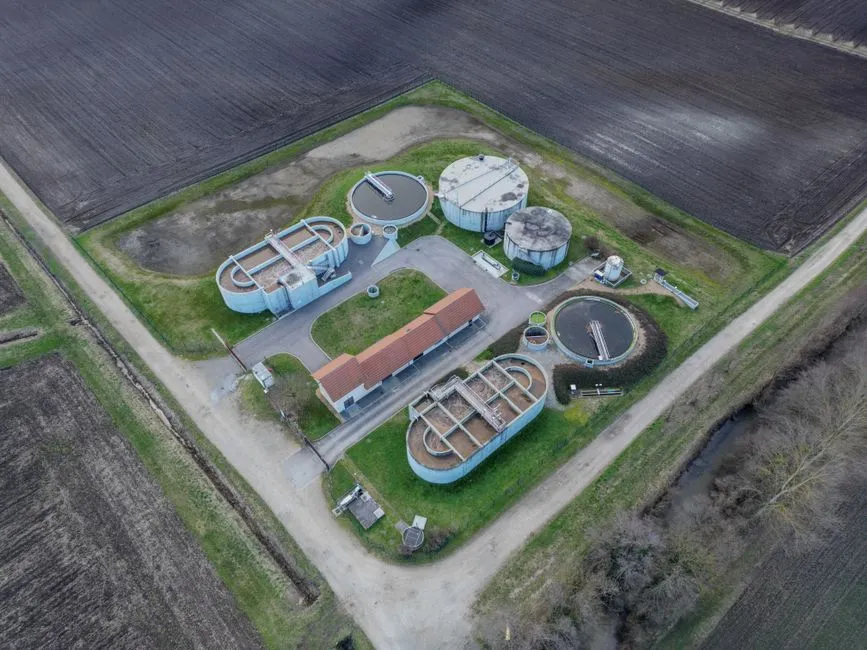
The required process train follows from the pollutant load and intended discharge or reuse. Begin with screening and equalization to remove debris and moderate hydraulic or quality variation. Add biological treatment where biodegradable organics require oxidation. Follow it with solids separation, disinfection where required, and tertiary polishing when the reuse specification demands additional barriers.
| Function | Technology position | Decision condition |
|---|---|---|
| Screening and equalization | Rotary mechanical bar screen followed by equalization | Establish the hydraulic peak, solids character and equalization requirement. |
| Industrial pretreatment | DAF pretreatment for industrial wastewater | Use for suspended solids, oil and grease, FOG and colloidal material; it does not replace biological degradation of biodegradable organics. |
| Integrated biological treatment | Integrated WSZ package sewage treatment plant | Consider for sewage requiring anoxic/aerobic contact oxidation, sedimentation and disinfection within a buried package. |
| Combined biological treatment and membrane separation | MBR membrane bioreactor for wastewater reuse | Consider where compact installation and membrane solids separation are important. |
| Tertiary polishing | UF polishing for wastewater reuse | Use as a downstream barrier for suspended solids, colloids and bacteria, or as pretreatment where justified. |
The integrated WSZ package sewage treatment plant combines anoxic and aerobic contact oxidation, sedimentation and disinfection in one buried package. That arrangement can simplify a municipal installation, but it does not remove the need to characterize incoming wastewater, arrange access and establish the discharge or reuse envelope.
An MBR combines activated sludge with membrane separation. Its footprint can suit constrained sites, but the offer must establish membrane design flux, cleaning strategy and replacement assumptions. DAF is usually a front-end unit for industrial streams, while UF is normally a downstream polishing or pretreatment barrier; either may become incomplete without the missing biological or solids-removal stages.
For higher-grade reclamation, University of Twente research published as a PhD thesis examined direct nanofiltration for polishing wastewater treatment plant effluent and assessing effluent reclamation. That supports membrane polishing as a research pathway, not a Baghdad specification. Project-specific testing remains necessary before selecting nanofiltration.
Compare Packaged Treatment, MBR, DAF and UF
The correct equipment pathway depends on treatment function, available footprint and the wastewater envelope. DAF and UF are not automatically complete wastewater treatment plants, and MBR performance must be tied to defined influent and effluent conditions rather than a generic reuse label.
| Technology | Catalog capacity | Principal function | Information still required |
|---|---|---|---|
| WSZ packaged A/O | 1–80 m³/h | Integrated biological treatment, sedimentation and disinfection | Influent flow and load, soil/groundwater conditions, installation access, discharge basis and utilities. |
| MBR | 10–2,000 m³/day | Activated-sludge treatment combined with membrane separation | Influent envelope, membrane flux basis, target solids, controls, cleaning, replacement and site constraints. |
| DAF | 4–300 m³/h | Industrial removal of suspended solids, oil and grease, FOG and colloidal matter | Source pollutants, settling/flotation tests, chemical demand, recovered-solids handling and downstream process. |
| UF | 2,000–40,000 L/h | Polishing for suspended solids, colloids and bacteria | Feed-water analysis, recovery requirement, solids loading, membrane configuration and backwash utilities. |
The UF catalog specifies 0.03 μm PVDF membranes, feed turbidity up to 300 ppm, automatic backwash and air scour, and chemical-free operation. These are equipment attributes, not a guarantee that the finished effluent will satisfy a particular reuse or discharge specification.
The MBR catalog describes filtration below 1 μm and identifies near-reuse-quality effluent. That supports comparison where compactness and fine solids separation are priorities, but it does not establish compliance with every reuse or discharge standard. Require a guarantee expressed against a defined influent envelope, with sampling points, test methods, availability assumptions and exclusions stated.
Commercial offers should also separate installation, commissioning, operator training, preventive maintenance, spare parts and warranty exclusions. Evaluate referenced standards, local utility requirements, long-term membrane or consumable costs, operator competency and the supplier’s support arrangements in Iraq.
Design for Baghdad Site Conditions and Operational Reality
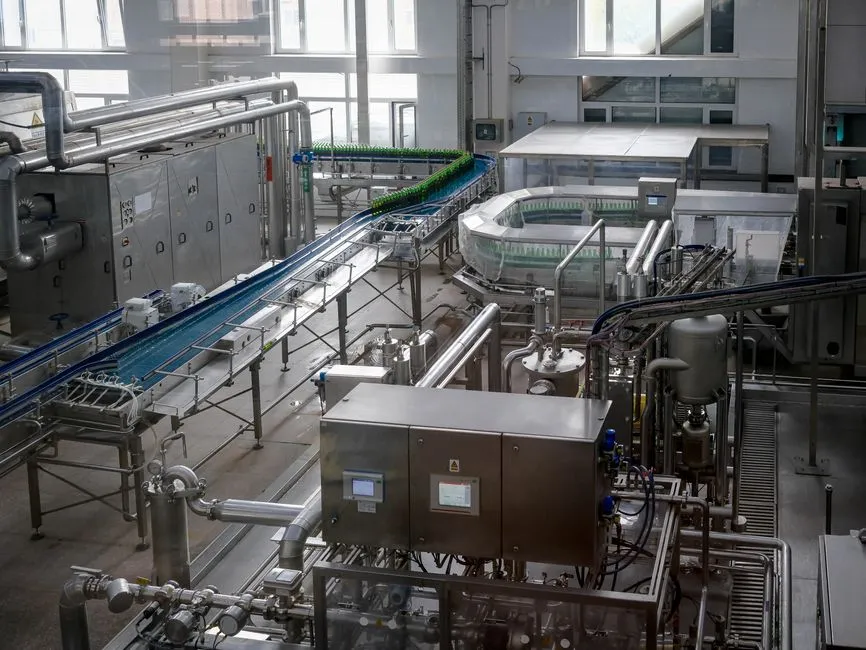
Site constraints determine whether a technically suitable train is buildable and maintainable in Baghdad. Decide whether equipment must remain above ground, fit below grade, occupy a constrained plot or support temporary deployment. A buried WSZ package reduces the visible footprint but requires excavation, structural and groundwater assessment, lifting access and safe entry arrangements. MBR offers a compact process footprint, while DAF and UF require skid space for equipment, access and drainage.
Resolve electrical supply, backup power, odor control, drainage, lifting constraints, maintenance access, spare-part logistics and operator availability before finalizing the layout. Local utility requirements must be identified by the project authority; the equipment catalog alone does not establish them.
Residual solids remain after liquid treatment. Include sludge generation, collection, conditioning, storage and dewatering in the process and site plan. Where sludge dewatering assessment is required, a sludge dewatering filter press can be evaluated, with the selected method based on sludge characteristics and disposal route.
Chemical dosing should be included only where the treatment train requires it. The automatic chemical dosing system may form part of a coagulation or disinfection train, but chemical type, dose and storage must follow jar testing and the agreed process basis.
Monitoring should cover influent variation, treated quality, membrane or flotation performance, energy use and sludge production. Define sample points, instruments, calibration duties, data recording and response actions before commissioning; otherwise, measured performance cannot support a meaningful guarantee.
Prepare a Supplier-Ready Design Brief
A comparable tender requires every supplier to design against the same duty and boundary. Request a process flow diagram, equipment list, hydraulic calculations, membrane or DAF sizing basis, control philosophy and preliminary general arrangement. State the design influent and required effluent parameters, sampling points, test methods, availability assumptions and performance guarantees.
Separate the offer into equipment, civil and installation works, electrical and control systems, commissioning, training, preventive maintenance, initial spare parts, consumables and warranty exclusions. Ask suppliers to identify referenced standards and any departures from the stated duty.
Do not transfer the Maaymyrh results into the permit. The project should obtain site-specific confirmation of discharge and reuse requirements from the relevant Baghdad authority. Include the accepted sampling method and authority route in the design brief.
Use the coagulant dosing system design criteria as a technical check only where chemical dosing is part of the selected train. Acceptance should be phased across incoming-water verification, start-up, stable operation, representative sampling and documented handover. A supplier should not be judged by equipment arrival alone; performance must be demonstrated under the agreed operating envelope.
Frequently Asked Questions
What is the difference between a sewage treatment plant and an industrial effluent treatment plant in Baghdad?
Municipal sewage treatment addresses domestic wastewater and receiving-water protection, while industrial effluent treatment begins with source-specific pollutants and may require DAF pretreatment before biological or polishing stages. Tertiary treatment adds a final barrier; it does not replace the primary treatment functions.
How much does an effluent treatment plant in Baghdad cost?
No defensible price can be given without the flow curve, wastewater analysis, treatment objectives, reuse specification, site conditions and installation boundary. Request itemized capital and operating quotations, including civil works, utilities, membranes or chemicals, maintenance, training, spares and consumable replacement assumptions.
Should I select MBR or a packaged A/O treatment plant?
Compare MBR when membrane