What MBBR Can and Cannot Treat in Denim Washing Effluent
MBBR is a strong biological stage for denim washing wastewater when the effluent is equalized and pretreated, but it should not be the entire treatment plant. A 2019 laundry study using Kaldnes K1 carriers at 20% fill reduced COD from 910 mg/L to 56.3 mg/L after 10 days and surfactant from 47.8 mg/L to 5.62 mg/L. Textile pilot evidence found that MBBR alone achieved 78% COD removal and 56% ± 7% color removal, while adding membrane filtration raised overall COD removal to 93% and color removal to 85% ± 2%. For denim washing projects, the practical design is segregation and equalization, pH and surfactant protection, biological MBBR, solids separation, and polishing or reuse treatment validated by a site-specific pilot.
A moving bed biofilm reactor is a suspended-carrier biological reactor: microorganisms attach to moving media and remove biodegradable organics under controlled oxygen conditions. It is not, by itself, a solids separator, adsorption stage, or membrane barrier. The process boundary should therefore be defined by the pollutants each unit is expected to remove and by the quality of water required after the next unit.
The best available laundry evidence comes from Kusuma, Fitria, and Kadaria at Tanjungpura University, published in 2019. In a reactor containing Kaldnes K1 sticky media at 20% fill, the reported day-10 results were BOD reduction from 441 to 39.67 mg/L, COD from 910 to 56.3 mg/L, phosphate from 38.24 to 5.31 mg/L, and surfactant from 47.8 to 5.62 mg/L. This demonstrates biological removal under the tested laundry conditions, not a universal guarantee for denim washing.
Textile wastewater may also contain dyes, surfactants, solvents, and other organic compounds. Biological treatment can remove biodegradable fractions and support azo-dye breakdown under appropriate anaerobic and aerobic conditions, but residual color and refractory compounds still require physical or chemical control. Washing and dyeing are related but distinct streams: the supplied evidence covers laundry, dyeing, or broader textile wastewater rather than a dedicated full-scale denim-washing installation. An integrated MBR membrane bioreactor for polishing may therefore be relevant only after the biological and pretreatment objectives have been established.
Build a Source-Segregated Denim Washing Treatment Train
Source segregation must come before reactor sizing because washing, rinsing, and contaminated first-rinse streams can carry different detergent, softener, sizing, bleach, dye, fiber, and solids loads.
The proposed process train is:
- Collect and segregate washing, rinse, and contaminated first-rinse streams where practical.
- Equalize flow and pollutant load, then screen or remove gross solids.
- Adjust pH and condition the water where the biological stage requires protection from chemical shocks.
- Apply DAF or another solids-removal stage when oils, fillers, fibers, or floating material are present.
- Treat biodegradable and selected dye-related organics in aerobic or anaerobic-aerobic MBBR.
- Separate biological solids in a secondary clarifier.
- Polish for the agreed discharge or reuse target.
Use a representative campaign to establish flow, pH, conductivity, COD, color, TSS, surfactant, and temperature. These data determine both hydraulic and organic loading; a production average will not adequately describe batch discharges. Where streams differ materially, separate equalization and treatment capacities may be more defensible than one mixed basin.
Do not assume MBBR can absorb detergent, bleach, or softener shocks. Equalization, controlled chemical dosing, and upstream solids removal should be evaluated together. DAF pretreatment for denim washing wastewater is a candidate where floating material and oils interfere with biological operation or clarification. Automatic dosing for pH and coagulation control can then be selected from jar and pilot tests rather than set by calculation alone.
Anaerobic and aerobic duties must remain distinct when color removal is an objective. In Kozak et al.’s 2021 textile study, adverse effects on anaerobic color removal appeared when ORP exceeded −300 mV under aeration rates above 0.019 m³ air/m³ reactor·min. Those findings support ORP monitoring and controlled aeration; they are not universal setpoints for denim plants.
| Process stage | Primary design question | Evidence required before selection |
|---|---|---|
| Segregation and equalization | Which sources have materially different chemical loads? | Flow-weighted sampling across washing and rinse cycles |
| Screening, DAF, or solids removal | Are oils, fillers, fibers, or floating solids present? | TSS, oil and grease, solids inventory, and pilot observations |
| pH and chemical conditioning | What shocks must be controlled before biology? | pH range, surfactant profile, chemical demand, and dosing response |
| MBBR | Which biodegradable or dye-related compounds require removal? | COD, BOD, color, surfactant, load, and pilot response |
| Clarification and polishing | What solids or residual contaminants remain? | TSS, turbidity, color, salinity, membrane or adsorption tests |
Use Research Data to Set Performance Expectations
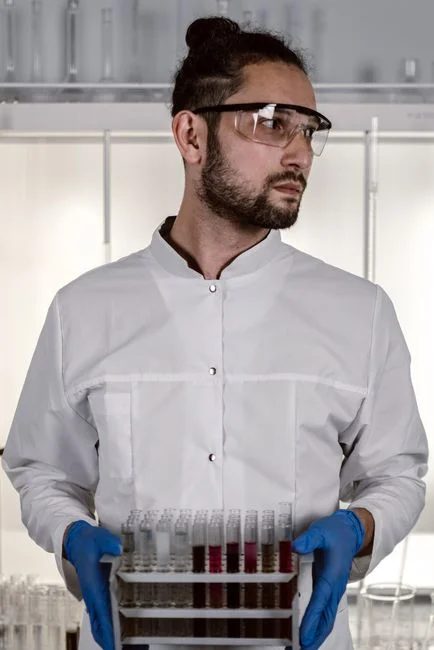
The laundry benchmark used Kaldnes K1 media at 20% fill, a 15-day seeding period, and treatment periods of 6, 8, and 10 days; its strongest reported results occurred on day 10.
The reported reductions correspond to a specific reactor and wastewater, not a generic sizing rule. The values below retain the study’s initial and final concentrations and removal efficiencies.
| Parameter | Initial concentration | Day-10 concentration | Reported removal |
|---|---|---|---|
| BOD | 441 mg/L | 39.67 mg/L | 91% |
| COD | 910 mg/L | 56.3 mg/L | 93.81% |
| Phosphate | 38.24 mg/L | 5.31 mg/L | 86.10% |
| Surfactant | 47.8 mg/L | 5.62 mg/L | 88.22% |
Source: Tanjungpura University’s 2019 laundry wastewater MBBR study. The evidence was generated with FRESCO laundry wastewater, Kaldnes K1 media, and the study’s stated operating periods.
Kozak et al.’s 2021 review of textile treatment evidence reported MBBR COD removal of 82%, compared with 83% for conventional activated sludge in a cited comparison; MBR achieved 91% COD removal and 80% color removal. These figures describe different systems and should not be converted into guarantees for a denim plant.
The UPC pilot provides stronger scale-up context. During solo MBBR operation, COD removal was 78%, color removal was 56% ± 7%, and TSS and turbidity removal fluctuated around 65%–85%. Adding the membrane raised COD removal to 93%, color removal to 85% ± 2%, TSS removal to 99%, and turbidity removal to 100% at a reported HRT of 1 day. The pilot then operated for 222 days while HRT was reduced from 2.5 days to 1 day and organic loading increased from 0.33 to 1.12 kg COD/(m³·d).
The wastewater type, reactor configuration, scale, HRT, media fill, and treatment objective must accompany every quoted result. The supplied research provides no universal MBBR sizing ratio for denim washing, so bidders should be required to supply a site-specific mass-loading calculation and pilot basis. The same engineering logic is explained in an MBBR design guide for another process wastewater.
Choose the Right Biological and Polishing Configuration
Configuration should follow the treatment objective: biodegradable-organics removal, azo-dye breakdown, solids separation, residual color control, or reuse quality.
| Configuration | Preferred objective | Main design issue |
|---|---|---|
| Aerobic MBBR | Biodegradable organics and surfactants | Oxygen transfer and inhibition from untreated detergent or bleach shocks |
| Anaerobic-aerobic MBBR | Azo-dye breakdown followed by aerobic treatment | Preserving anaerobic conditions and avoiding oxygen intrusion |
| MBBR-MBR | Lower TSS and turbidity with improved separation | Membrane fouling, cleaning, aeration, energy, and redundancy |
| MBBR plus adsorption or chemical polishing | Residual color and recalcitrant compounds | Chemical consumption, residual adsorbate, and waste handling |
The 2021 Kozak et al. study tested real textile wastewater in a hybrid sequence: an anaerobic MBBR with Kaldnes K1 at 40% fill and an HRT of 6 hours was followed by a powdered-activated-carbon aerobic membrane reactor. The study found adverse effects on anaerobic color removal when ORP rose above −300 mV under its tested aeration conditions. That result supports oxygen control in an anaerobic stage; it does not establish a universal ORP limit.
The UPC pilot demonstrates why the membrane changes the project objective. Solo MBBR COD removal was 78%; the hybrid achieved 93%. Color removal improved from 56% ± 7% to 85% ± 2%, while TSS removal reached 99% and turbidity removal 100%. For projects requiring finer separation or reuse-oriented effluent, an integrated MBR membrane bioreactor for polishing is an option, but bids should disclose fouling control, aeration demand, cleaning strategy, redundancy, and membrane replacement assumptions. A supplier may also need to define the MBR membrane bioreactor module design and operating envelope.
A membrane does not remove every dissolved dye, surfactant, salt, or conductivity component. Residual color, salinity, and the receiving process’s water chemistry remain separate acceptance items. The decision should be made against the final effluent use, not by assuming that MBBR-MBR automatically produces reusable water.
Size the Project from Real Wastewater Data
Defensible sizing requires a representative operating campaign and a mass-loading calculation, not a generic reactor-volume rule.
Sample normal production, intensive washing, cleaning operations, and batch-discharge conditions. Define sampling frequency, sample locations, composite-versus-grab protocol, and how each production event is weighted. A short campaign that misses a batch discharge will not establish peak loading or the required equalization volume.
Request COD, BOD, TSS, color, pH, temperature, conductivity, surfactant, salinity, oil and grease, and biological toxicity indicators relevant to the site and permit. If chemical or product-specific limits apply, identify the test method and acceptance boundary rather than accepting a generic “removal efficiency.”
| Bidder’s calculation or proposal | Information the buyer must verify |
|---|---|
| Reactor volume and HRT | Selected flow, load basis, peak and average conditions, and equalization contribution |
| Carrier fill | Media type, fill rationale, mixing energy, biofilm-development plan, and replacement assumptions |
| Oxygen and aeration | Transfer basis, diffuser arrangement, airflow control, and dissolved-oxygen strategy |
| Biomass control | Sludge age, wasting, separation, and response to shock loads |
| Peak-load response | Tested or modeled performance under the measured batch-discharge condition |
| Pilot acceptance | Pre-agreed COD, color, TSS, surfactant, pH, and reuse-quality endpoints |
The UPC pilot is a scale-up reference, not a denim design template: over 222 operating days, HRT was reduced from 2.5 days to 1 day as organic loading increased from 0.33 to 1.12 kg COD/(m³·d), using that pilot’s textile wastewater and configuration. The final MBBR proposal should be tested with the relevant pretreatment and polishing steps. If reuse is proposed, conduct a dye-bath compatibility and product-quality trial rather than relying on pollutant-removal percentages alone. Chemical optimization can be evaluated alongside the textile-industry polymer dosing guide.
Screen MBBR Suppliers with an Engineering Checklist
A credible MBBR proposal must expose its design basis, operating assumptions, and performance boundary rather than present headline removal percentages.
Request case studies identifying wastewater type, flow, inlet concentrations, reactor configuration, media type and fill, aeration method, HRT, final treatment, and achieved results. Then ask bidders to explain carrier selection, biofilm start-up, shear protection, tank mixing, aeration distribution, odor control, maintenance access, and spare-parts availability. Water-treatment parts, valves, and filter media should be specified by performance and compatibility, not merely by product list.
| Screening area | Question for the bidder | Evidence to request |
|---|---|---|
| Performance boundary | Which parameter, test method, influent range, and operating condition is covered? | Guarantee schedule and representative site data |
| Process scope | Is pretreatment, clarification, biological treatment, and polishing included? | Process flow, P&ID, mass balance, and equipment list |
| Equipment quality | How are mixing, aeration, membrane, controls, and access specified? | Datasheets, materials, redundancy, and maintenance plan |
| Lifecycle | What are the expected media, aeration, chemical, sludge, and cleaning burdens? | Quoted consumables, energy basis, and service scope |
| Local support | Who will commission, train operators, and respond to failures? | Named support model and local capability |
Compare guarantees against the published evidence. The supplied studies show that adding membrane filtration materially improved separation and overall performance compared with solo MBBR; they do not show that every MBBR supplier will reproduce those results on denim washing effluent.
Request lifecycle quotations for media replacement, aeration energy, sludge handling, chemical use, membrane cleaning, controls, remote monitoring, and service. Kozak et al. reported approximately 200–350 m³ of water use per ton of textile products as industry context in their 2021 paper; that is not a promised saving for each denim operation. DAF pretreatment for denim washing wastewater should also be compared by measured solids removal, footprint, sludge handling, and operating cost.
Verify Reuse and Compliance Before Purchasing
MBBR effluent quality, discharge permission, and internal reuse are separate acceptance questions with different evidence requirements.
A direct discharge authorization requires site-specific compliance with the applicable local requirements. An indirect sewer discharge may be governed by a different permit and receiving-works agreement. Internal reuse requires proof that the water remains suitable for the specified washing or dyeing operation. A supplier’s general “reuse-ready” statement is not sufficient for any of these routes.
For the Turkish example cited by Kozak et al. in 2021, the direct-discharge color limit was 260 Pt-Co for composite samples. That is a source-specific regulatory example, not a universal denim-plant limit. Current local permit requirements must be checked for the proposed discharge route.
The UPC study tested reuse in new dye baths using a mixture containing 70% treated effluent and 30% softened tap water; 100% treated effluent was also evaluated. The reported water and salt-saving example referred to a textile operation producing 1 ton of fabrics per day. For a denim buyer, the relevant test must use the intended washing or dyeing chemistry and assess fabric color and quality rather than extrapolate directly from that case.
Reuse testing should cover salinity, residual detergent or surfactant, color, temperature, suspended solids, and compatibility with the receiving process. Depending on reuse route, an high-efficiency sedimentation tank may support solids removal, but clarification alone does not establish reuse quality. Final acceptance should depend on site-specific pilot performance and applicable permit or reuse requirements.
Frequently Asked Questions
What wastewater data are needed to size an MBBR for a denim washing plant?
Request representative flow and water-quality data covering normal production, intensive washing, cleaning, and batch discharges. Include COD, BOD, TSS, color, pH, temperature, conductivity, surfactant, salinity, oil and grease, and relevant toxicity indicators. Ask each bidder to show the mass-loading calculation, carrier-fill rationale, oxygen-transfer basis, HRT, biomass-control strategy, and peak-load response. No supplied source provides a universal MBBR sizing ratio for denim washing wastewater.
How should an MBBR supplier be selected for a denim washing project?
Compare bids on demonstrated performance in the same or a clearly comparable wastewater, process scope, equipment details, and lifecycle support. Require the wastewater type, flow, inlet concentrations, media fill, aeration method, HRT, final treatment, test methods, and guarantee boundary for every case study. Also request quotations for aeration energy, chemical use, sludge handling, membrane cleaning, media replacement, commissioning, and local service.
Can MBBR effluent be reused in denim washing or dyeing?
Possibly, but pollutant removal alone does not prove reuse. The UPC study found 70% treated effluent was reused in new dye baths and investigated 100% reuse, but that result belongs to its wastewater and product-quality trial. Require a project-specific compatibility test covering residual surfactant, color, salinity, temperature, and suspended solids, with the receiving washing or dyeing process and product-quality criteria defined in advance.
When should MBBR be combined with membrane treatment?
Add membrane treatment when the required outcome includes lower TSS and turbidity, improved separation, or reuse-oriented quality that cannot be demonstrated by MBBR alone. In the UPC pilot, adding the membrane increased COD removal from 78% to 93%, color removal from 56% ± 7% to 85% ± 2%, and TSS removal to 99%. Supplier evaluation must still address fouling, aeration, cleaning, energy, and redundancy.
What is the main compliance risk when purchasing an MBBR system?
The main risk is confusing a research removal percentage with a site-specific compliance claim. The Turkish 260 Pt-Co composite-sample color limit cited in the 2021 Kozak et al. paper is not universal. Obtain the applicable local permit, define the discharge or reuse route, specify test methods and sampling, and make final acceptance conditional on site-specific performance and regulatory review.
Related Equipment
- DAF pretreatment for denim washing wastewater — specifications, capacity range, and technical data