What Residential Wastewater Treatment in Iraq Must Solve
Residential wastewater treatment in Iraq must be selected project by project because flow alone does not define the required system. The January 2024 Journal of Food Protection review reports that Iraqi wastewater treatment plants need upgrading and that polluted water sources and inadequate sanitation contribute to continued exposure to enteric diseases. A residential system must therefore address the actual wastewater load, hydraulic peaks, site constraints, effluent destination and operating responsibility. For an initial framework, see the Iraq domestic sewage treatment equipment guide.
A detached home, apartment compound and residential community are not equivalent procurement objects. A home may operate as a decentralized facility with limited inspection access; a compound introduces shared ownership and maintenance responsibilities; a community requires institutional operation, residual management and a credible path for future municipal connection. Mixed domestic flows may also include commercial, hospital, industrial or food-service contributions, while infiltration and inflow, seasonal variation and tanker or septic-tank discharges can change both composition and flow.
Four questions must precede equipment selection:
- What enters the system? Establish wastewater quality, non-residential contributions and chemical loads.
- How much must be treated? Verify average, peak and minimum hydraulic conditions.
- Where will the effluent go? Define river discharge, irrigation, groundwater infiltration or another reuse route.
- Who will operate it? Assign inspection, maintenance, residual handling and service responsibilities.
The supplied research does not establish one universal Iraqi discharge limit or reuse approval. Obtain the applicable requirements in writing from the authority responsible for the proposed destination. Environmental load also extends beyond bulk organic material: ASTM E2717-18R25 identifies pharmaceuticals, natural and synthetic hormones, detergent metabolites, plasticizers, insecticides and fire retardants among relevant residential contaminants.
Build a Verified Design Basis Before Choosing Equipment
A supplier comparison is only meaningful when every bidder receives the same verified design basis. Do not substitute occupancy estimates for flow measurement, catalog capacity for project duty, or generic national practice for site-specific evidence. The buyer needs enough information to test hydraulic and load assumptions, construction constraints, effluent objectives and long-term operating obligations.
Request the following from the owner, designer or site investigator:
- Verified design flow, average flow, peak flow and minimum flow, including the basis and time period used.
- Representative wastewater analysis and confirmation of commercial, hospital, industrial or food-service inputs.
- Site drawings, soil and groundwater information, flood exposure, available footprint and equipment-access arrangements.
- Power availability, treatment availability requirement, effluent destination and intended reuse or discharge route.
- Collection-system information covering septic-tank or tanker discharges, infiltration and inflow, seasonal variation and possible future municipal connection.
Use ASTM E2717-18R25 as a planning framework, not as a ready-made Iraqi design load. The standard states that its format is broadly applicable internationally, but its parameters reflect North American averages and must be modified elsewhere. It calculates environmental load from the number and type of fixtures, household chemicals and occupancy. Its Averages, Unique Product Parameters, Adjusted Averages, and Additional/Alternative Chemicals methods may also be combined.
| Design input | Evidence required before tender | Why it affects selection |
|---|---|---|
| Hydraulic duty | Verified average, peak and minimum flows | Sets equipment duty and equalizes bidder responses |
| Wastewater composition | Representative analysis and source review | Identifies treatment and residual-handling requirements |
| Residential load | Occupancy, fixture types and household products | Supports environmental-load assessment beyond bulk wastewater flow |
| Site conditions | Drawings, soil, groundwater, flood level, access and footprint | Determines civil design, installation method and resilience |
| Effluent route | Authority requirements and intended reuse or discharge | Sets the required treatment and polishing scope |
| Future obligations | Operating responsibility and municipal-connection plan | Prevents inaccessible assets and stranded treatment capacity |
For multi-unit buildings, adapt the standard’s home parameters for building size, occupancy and fixtures rather than treating the development as one average single-family home. The 2026 Iraq domestic sewage treatment equipment guide is useful for organizing these inputs before bids are opened.
Compare Buried Package Plants and MBR Systems
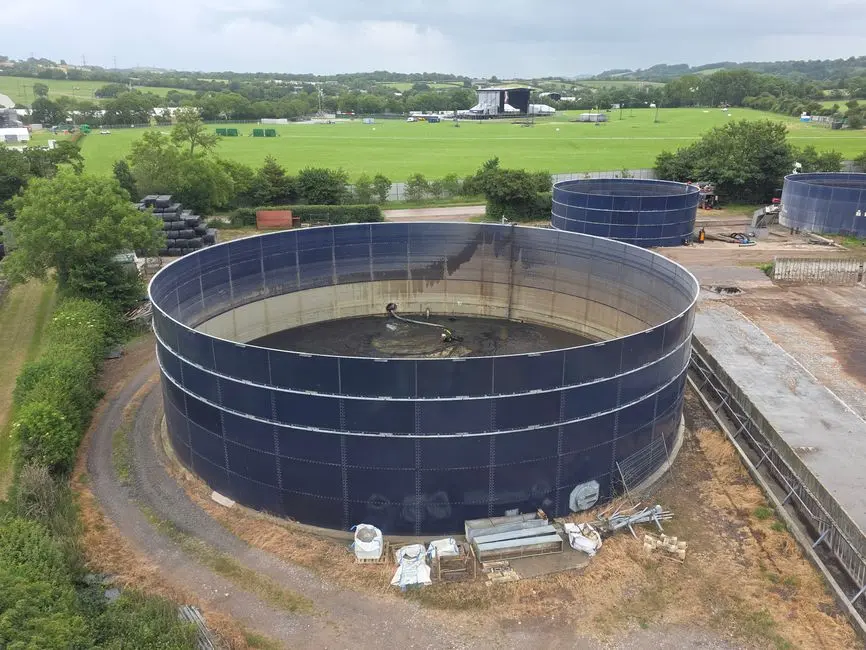
A buried WSZ package and an MBR should be compared against the same hydraulic duty, effluent objective, footprint, utilities, civil works and maintenance obligations. Proper design requires verified project data rather than relying on catalog capacity or footprint claims.
The buried WSZ package sewage treatment plant combines anoxic and aerobic A/O contact oxidation, sedimentation and disinfection below grade. Its product information states automated operation, a capacity range of 1–80 m³/h, and suitability for residential communities, rural sites and locations where the installation can be covered by landscaping. It is therefore a candidate where integrated underground installation and the stated residential-community duty align with the project.
The MBR membrane bioreactor for residential wastewater combines activated sludge with submerged PVDF membrane filtration. Its product information states filtration below 1 μm, capacity of 10–2,000 m³/day and a footprint reduction of 60% relative to conventional systems. It merits closer evaluation where high-quality reuse or a compact biological-treatment footprint is central to the design, but the required effluent quality and site conditions still need confirmation.
| Criterion | Buried WSZ | MBR |
|---|---|---|
| Treatment configuration | Anoxic/aerobic A/O contact oxidation, sedimentation and disinfection in one below-grade package | Activated sludge with submerged PVDF membrane filtration |
| Stated capacity | 1–80 m³/h | 10–2,000 m³/day |
| Stated physical feature | Underground installation suitable for covering with landscaping | Footprint stated as 60% smaller than conventional systems |
| Best fit for evaluation | Residential or rural projects requiring integrated buried civil installation | Projects prioritising reuse quality or compact biological treatment |
| Mandatory buyer check | Confirm peak duty, treatment objectives, excavation, access and utilities | Confirm peak duty, effluent objectives, footprint, utilities and maintenance access |
The WSZ capacity is stated in m³/h and the MBR capacity in m³/day. Require all bidders to use the same flow convention and peak-duty basis. Do not convert a catalog range directly into a guaranteed project capacity.
Match the Treatment Train to the Effluent Destination
The effluent destination determines the treatment objective, so define it before specifying disinfection or reuse equipment. A river discharge, irrigation route, groundwater infiltration point and other reuse application do not share one approval basis or one performance specification.
A complete residential treatment train has six functions in sequence:
- Inlet and flow control.
- Screening or solids exclusion.
- Biological treatment.
- Solids separation.
- Disinfection.
- Effluent handling.
Require bidders to identify which functions are included and where they sit. Clarify flow control, screening, odor management, sludge removal and the final effluent connection. The available rotary mechanical bar screen and plate-frame filter press illustrate equipment that may support solids-control or residual-handling functions, but neither should be treated as a complete treatment train.
Receiving-water consequences are material. The 2007 Evaluation of Wady ‘Eqab Wastewater Effluent and its Effect upon Tigris River study reported that, for its assessed stream effluent, suspended solids increased by 122% and other impurities increased by 16%–29%. That study does not establish a discharge limit for a different Iraqi project, but it demonstrates why discharge context must be considered.
| Effluent route | Question to resolve before equipment selection | Required buyer evidence |
|---|---|---|
| River discharge | What receiving-water criteria apply? | Authority requirements and receiving-water conditions |
| Irrigation | Is the proposed reuse route legally and technically acceptable? | Written approval and applicable effluent criteria |
| Groundwater infiltration | Will the receiving groundwater and infiltration method be accepted? | Site assessment, groundwater information and authority requirements |
| Other reuse | What end use is permitted and who receives the effluent? | Written reuse objective, approval pathway and monitoring requirements |
Include treatment, removal and disposal of residuals in the purchase scope. Treatment capacity alone does not establish an operating and maintenance plan. Because the supplied research provides no universal BOD, TSS or reuse limit, require the applicable Iraqi permit or authority criteria in writing rather than inserting an unsupported value into the specification.
Plan for Installation, Operation and Lifecycle Risk
The selected process must fit the site and remain operable through local maintenance and service conditions. Prepare a water balance before fixing the layout, then identify flood exposure, groundwater, soil conditions, access and available land. These inputs determine excavation, anchoring, control placement, sludge extraction and whether maintenance can be performed without disrupting the property.
Confirm power availability, automatic-control requirements and the intended level of operator involvement. The WSZ product description specifies fully automated operation without an operator, but automation does not remove inspection, consumable replacement, residual removal, performance monitoring or fault-response duties. Assign each of those duties in the contract.
For an MBR, define membrane or media maintenance, including cleaning, replacement and access. For either route, allocate responsibility for routine inspection, biological-process performance, sludge removal, odor control, spare parts and eventual media or membrane renewal. Clarify which tasks require local staff and which require supplier-supported service.
Commissioning should include installation verification, wastewater sampling, functional testing, controls demonstration, operator training and a documented maintenance schedule. Do not treat installation as mechanical delivery only.
Plan for a possible future municipal sewer connection. Establish how the installed system would operate, be bypassed or be retired if collection infrastructure becomes available, and document any residual obligations. A treatment package that cannot be integrated into that future pathway may carry unnecessary lifecycle risk.
Issue a Supplier-Neutral Technical Enquiry
A supplier-neutral enquiry allows bids to be checked against one verified design basis rather than competing sales claims. Provide every bidder with the design flow and load data, wastewater analysis, site drawings, effluent objective, power information, operating-availability requirement and residual-handling expectations. The Iraq domestic sewage treatment equipment guide provides the basis for a consistent enquiry package.
Each bid should include:
- A proposed process flow and equipment duty.
- Civil works, utilities, controls, access and final effluent connection.
- Sludge or other residual handling.
- Commissioning tests, wastewater sampling and operator training.
- Local service support, spare-parts arrangements and maintenance responsibilities.
- Identified project assumptions, including wastewater composition, peak flow and site constraints.
Ask suppliers which performance claims are guaranteed, how those claims will be demonstrated and which assumptions remain unresolved. Reject unsupported promises of universal compliance; require the bid to identify the applicable Iraqi authority requirements for the selected discharge or reuse destination.
Representativeness matters. A representative site assessment and wastewater analysis should precede final equipment selection, because they define whether the proposed process is technically suitable. The larger procurement context is also covered in the packaged sewage treatment plant selection for housing developments, while the packaged MBR selection guide provides a useful comparison framework for membrane-based bids.
Frequently Asked Questions
How should a residential treatment system in Iraq be sized?
Use verified average, peak and minimum flows to establish hydraulic duty. Use occupancy, fixture types and household chemical use to assess environmental load under ASTM E2717-18R25. For a multi-unit development, adjust the residential parameters for building size, occupancy and fixtures. Do not select a unit from occupancy or a catalog capacity alone.
How should
Frequently Asked Questions
How do I size a residential wastewater treatment plant for a house or housing development in Iraq?
Sizing is primarily based on the average daily hydraulic load, calculated using an assumption of 150 to 200 liters per person per day in the Iraqi climate. For residential developments, you must multiply the number of inhabitants by this flow rate and apply a peak factor of 2.0 to 3.0 to account for morning and evening usage surges.
In addition to hydraulic flow, the organic loading—typically measured in Biochemical Oxygen Demand (BOD5)—must be calculated at approximately 50 to 60 grams per person per day. Systems should be sized with a safety margin of at least 15% to handle potential population growth or seasonal variations in water usage.
Should I choose a buried package sewage treatment plant or an MBR for a residential community?
A buried package plant (typically moving bed biofilm reactor or extended aeration) is generally preferred for smaller, decentralized residential units due to lower capital costs and reduced mechanical complexity. These systems are robust, require less specialized maintenance, and are well-suited for sites where treated water is discharged into soil absorption fields or municipal storm drains.
Membrane Bioreactor (MBR) technology should be selected only if the treated effluent is intended for high-grade reuse, such as subsurface irrigation for landscaping or toilet flushing in large-scale residential complexes. While MBRs produce superior effluent quality with BOD5 levels often below 5 mg/L, they require higher energy consumption, frequent chemical membrane cleaning, and highly trained personnel to manage the sophisticated control systems.
What information should I request from a wastewater equipment supplier before getting a quotation?
Request a detailed process design report that specifies the hydraulic retention time (HRT), sludge age, and the expected effluent quality parameters (BOD5, TSS, TN, and TP). You should also demand a full bill of quantities identifying the origin and brand of critical components, specifically the blowers, pumps, and control panels.
Additionally, ask for the power consumption profile in kWh/day, the estimated frequency of sludge removal, and a comprehensive spare parts list with local availability guarantees. It is essential to obtain a written performance warranty that covers effluent compliance based on the influent water quality characteristics typical for Iraqi residential areas.
What permits and effluent standards apply before treated residential wastewater can be discharged or reused in Iraq?
Discharge of treated wastewater in Iraq is governed by the regulations set by the Ministry of Environment and the Ministry of Municipalities and Public Works. Systems must generally comply with the Iraqi National Environmental Standards for the protection of water resources, which typically mandate a BOD5 limit of 40 mg/L and TSS limit of 50 mg/L for discharge into surface water bodies.
If the treated water is intended for agricultural or landscape reuse, the quality must meet stricter biological criteria, often requiring total coliform counts to be below 1000 MPN/100ml. You must secure a formal discharge permit from the local environmental directorate in your specific governorate before commissioning the plant, ensuring the design meets the specific requirements of the receiving environment.
What costs should I include when comparing residential wastewater treatment systems?
Comparison must include the Total Cost of Ownership (TCO), which encompasses the initial capital expenditure (CAPEX) for the plant, civil works, excavation, and piping. Operational expenditure (OPEX) must factor in electricity consumption for 24/7 aeration, the cost of periodic sludge pumping and disposal by vacuum tankers, and the replacement cycle of consumables like membranes or filter media.
Do not overlook the costs associated with regular water quality laboratory testing required for regulatory compliance, as well as the annual service contract for mechanical and electrical maintenance. A comprehensive comparison should project these costs over a minimum 10-year period to accurately assess the financial viability of different treatment technologies.