Where MBBR Fits in a Citric Acid Wastewater Treatment Train
MBBR can treat biodegradable organic loads in citric acid wastewater, but it should normally follow equalization, pH control, and assessment of solids or inhibitory compounds. Its suitability depends on organic loading rate, hydraulic retention time, carrier filling ratio, aeration, pH, temperature, and biofilm control—not simply the presence of citric acid in the influent. Reviewed evidence shows strong organic removal in analogous wastewaters, including 95–98% BOD5 and 89–94% COD removal in commercial laundry wastewater, but these figures are not directly transferable to citric acid plants. Final sizing and guaranteed performance therefore require plant-specific characterization and pilot testing.
An MBBR is a moving bed biofilm reactor: floating plastic carriers provide protected surfaces on which an attached microbial population develops, while continuous movement keeps the carriers in contact with the wastewater and biodegradable pollutants. This attached-growth biological process can retain biomass without relying solely on suspended-growth sludge recycle.
Its role should be defined within the complete treatment train rather than treated as a stand-alone machine. A practical sequence is:
- Characterize production effluent, wash water, and cleaning discharges.
- Equalize variable flow and organic load, then adjust pH to the biological operating range.
- Remove suspended solids, colloids, oils, greases, or inhibitory constituents where characterization shows they are present.
- Apply aerobic MBBR for biodegradable organics, with anoxic or anaerobic stages only where the treatment objectives and wastewater chemistry justify them.
- Separate biomass and suspended solids, then polish the effluent against the applicable discharge or reuse requirements.
MBBR does not replace equalization or solids control, and it cannot be assumed to remove non-biodegradable material. The 2022 review specifically states that a biological process cannot serve as the sole treatment unit for highly polluted industrial wastewater containing non-biodegradable compounds.
Procurement should therefore begin with the wastewater, not with a reactor volume. Where variable chemical dosing is needed, compare an automatic chemical dosing system for pH and pretreatment control. If characterization shows removable solids or oil, evaluate a DAF system for industrial wastewater pretreatment as one possible upstream stage rather than an automatic selection.
The evidence boundary is important. The reviewed MBBR evidence covers laundry, municipal, and other industrial applications; it does not include a directly verified citric-acid manufacturing installation. Analogous results can support process selection, but they cannot substitute for site-specific testing or a performance guarantee.
Characterize the Wastewater Before Sizing the Reactor
COD and BOD data are essential starting points for determining whether the citric acid manufacturing effluent has a biodegradable organic load that MBBR can reasonably address. The sample plan must also capture the operating conditions that determine whether the attached biomass remains stable.
Request COD and BOD results together with pH, temperature, suspended solids, nutrients, flow variability, and process-specific constituents. For a production plant, include information on product concentration, washing operations, clean-in-place events, cleaning chemicals, and the timing and duration of batch discharges. A time series across production cycles is more useful than a single composite sample because it reveals both hydraulic shocks and changes in organic character.
The 2022 review identifies the following MBBR design and operating variables: hydraulic loading rate, organic loading rate, hydraulic retention time, sludge retention time, pH, temperature, carrier type, filling ratio, reactor configuration, microorganism type, biofilm thickness, attached and suspended biomass, and extent of aeration. The review also cautions that carriers affect mixing and aeration requirements.
| Data package | What the buyer must establish | Design implication |
|---|---|---|
| COD and BOD time series | Biodegradable organic load and variability | Organic loading rate and reactor volume |
| Flow and production records | Average flow, peak flow, and batch-dump behavior | Equalization and hydraulic loading rate |
| pH, temperature, dissolved oxygen | Whether aerobic biological treatment can be maintained | Chemical control, aeration, and operating envelope |
| Suspended solids, colloids, oils or greases | Potential carrier fouling or oxygen demand | Upstream separation or pretreatment |
| Nutrients and residual chemistry | Whether the biological process has adequate nutrient balance and tolerable residuals | Dosing requirements and process compatibility |
| Calibration and laboratory methods | Whether results are comparable with the selected design basis | Traceable design calculations and acceptance testing |
Hydraulic retention time and organic loading rate answer different questions. Satisfactory flow-based detention does not establish that the reactor can accept the concentration and variability of biodegradable COD. The supplier should therefore calculate reactor capacity from measured load data rather than from flow and a generic detention target alone.
Also request data across production cycles, batch dumps, clean-in-place events, and cleaning discharges. Missing data should be identified explicitly in the procurement specification; relevant carrier and media requirements can be compared using the water-treatment parts, valves, and media documentation, but media selection does not substitute for wastewater characterization.
Because the supplied research contains no direct citric-acid wastewater MBBR performance dataset, laundry and municipal removal percentages must not be presented as guaranteed performance for a citric acid plant.
Pretreatment Decisions That Protect MBBR Performance
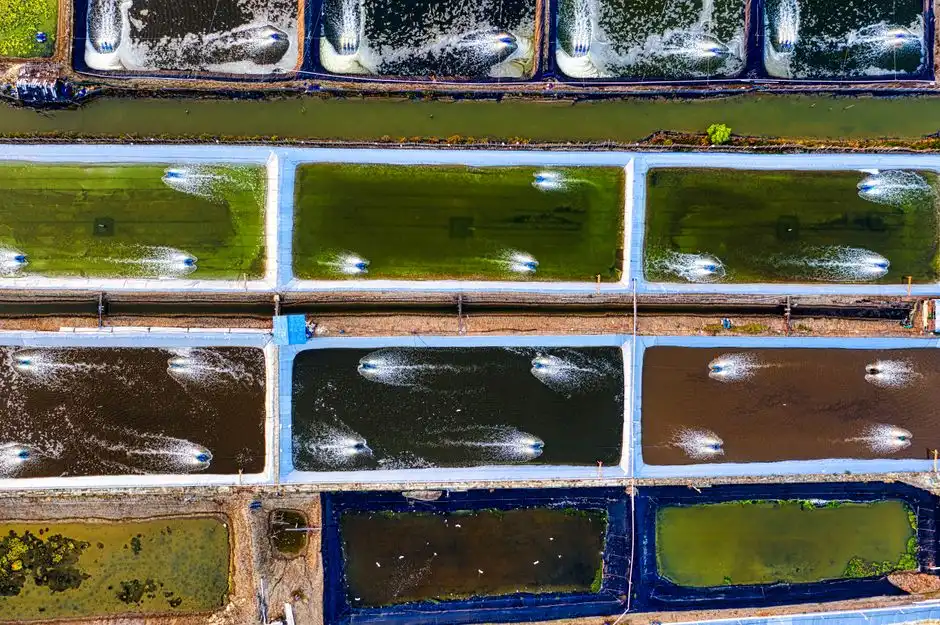
Equalization is the first load-control decision because MBBR performance depends on the substrate load presented to the attached biomass. A reactor selected for average flow can still be overloaded by a batch dump, cleaning discharge, or production-stage concentration change. Equalization should smooth both hydraulic and organic peaks before biological treatment, but its required volume must be derived from measured operating data.
pH adjustment is the second critical decision. The 2022 review identifies pH as a core performance parameter, so chemical addition should be controlled to the biological operating range established during design and verification. An automatic chemical dosing system for pH and pretreatment control can provide proportional control, but the selected chemical, dose, mixing, residual, and compatibility with downstream biology all require confirmation.
| Condition identified in characterization | Treatment decision | Verification required |
|---|---|---|
| Variable flow or batch discharges | Provide equalization before the biological reactor | Peak and recurring load profiles; reactor response |
| pH outside the proposed biological range | Provide controlled pH adjustment | Dosing demand, mixing, residual, and stable control response |
| Excess suspended solids or colloids | Evaluate solids removal before MBBR | Residual solids, biofilm condition, and oxygen demand |
| Oils, greases, or product-bearing cleaning streams | Evaluate physical removal where required | Oil and grease response, emulsion behavior, and biological compatibility |
| Potential inhibitory constituents | Determine removal or source-control requirement before sizing | Compound-specific effect on attached biomass |
Suspended solids, colloids, oils, and greases should not be left as an unexamined assumption. Material that fouls carrier surfaces can reduce the effective protected active surface area; biodegradable material can increase oxygen demand; and inhibitory constituents can disrupt biofilm acclimation.
A DAF system for industrial wastewater pretreatment is a candidate where characterization supports its use for solids or oil removal. The commercial source identifies DAF applications across food processing, pulp and paper, textile, metalworking, petrochemical, and municipal pretreatment. That breadth does not establish suitability for citric-acid effluent; feed characteristics and performance data must decide the issue.
Chemical pretreatment should be selected only after its interaction with biology is understood. Coagulant or pH-chemical residuals, mixing requirements, and sludge production belong in the train design rather than being treated as minor auxiliaries.
Select the MBBR Configuration and Operating Window
An aerobic MBBR uses process air for both oxygen supply and carrier movement, while anoxic and anaerobic configurations require mechanical mixing to keep carriers suspended, according to the 2022 review. The choice must follow the treatment objective: aerobic carbon removal is a different design basis from denitrification or anaerobic COD conversion.
Carrier filling ratio must be treated as a design variable tied to hydraulic and organic loading, mixing, aeration, and the selected carrier geometry. The 2019 laundry study used Kaldnes K1 at a 20% media fill ratio. Its authors called for further research on fill volume, treatment duration, and carrier type, which is a useful warning against treating 20% as a universal value.
Carrier procurement should compare protected active surface area per cubic metre of reactor, but supplier claims require verification. Ecologix Systems states that its Eco Chip provides more than 5,500 m²/m³ and compares that figure with a competing range of 350–800 m²/m³. These are commercial claims, not independent performance evidence. Bidders should identify the test method, whether the area is protected and wetted, the carrier material, and any conditions that alter the usable surface area.
| Supplier item to specify | Required information | Buyer check |
|---|---|---|
| Carrier | Protected active surface area per cubic metre, material, geometry, and verification method | Compare like-for-like measurements rather than catalogue volume |
| Filling ratio | Proposed volume and basis for the plant load | Require design justification and sensitivity to load variation |
| Mixing and aeration | Method, sequence, energy approach, and carrier-motion objective | Confirm full-volume movement without excessive energy use |
| Biofilm control | Expected establishment approach and excess-slough handling | Assess whether carrier surface remains active under expected shear |
| Solids separation | Clarifier or other separation duty after the reactor | Include carrier carryover and solids inventory in the scope |
| Performance basis | Actual wastewater, load, reactor dimensions, fill, and test duration | Reject guarantees lacking test conditions |
The mechanical scope must include biofilm control, carrier movement, oxygen transfer where aerobic treatment is selected, and downstream solids separation. The 2022 review identifies possible stagnant zones and notes the need for an additional separation unit in relevant configurations. Carriers lost with sludge or retained excessively in the clarifier should be addressed as operating and maintenance items.
Two trade-offs require explicit acknowledgement. The review reports that MBBR may require more aeration energy than sequencing batch reactor systems and can be less effective at high organic flux. A low carrier-price comparison does not address those constraints.
Require each proposal to show how reactor volume, filling ratio, aeration, mixing, HRT, and organic loading rate respond to the plant’s measured wastewater. A universal volume or HRT recommendation is not a basis for acceptance.
Read Performance Evidence Without Overstating It
The available review reports commercial-laundry MBBR removal of 95–98% for BOD5 and 89–94% for COD, as summarized by the 2022 review. These results are useful benchmarks for an attached-growth system handling biodegradable wastewater, but they are not citric-acid performance data.
The underlying 2019 study provides more specific test conditions: Kaldnes K1 carriers, 20% fill, 15 days for seeding, and treatment periods of 6, 8, and 10 days. Its best reported COD result was 910 mg/L to 56.3 mg/L, or 93.81%, on day 10. In the same test, BOD5 decreased from 441 mg/L to 39.67 mg/L, phosphate from 38.24 mg/L to 5.31 mg/L, and surfactant from 47.8 mg/L to 5.62 mg/L.
| Evidence item | Reported basis | Permitted interpretation |
|---|---|---|
| Commercial-laundry review results | 95–98% BOD5 and 89–94% COD removal, 2022 review | Analogous performance evidence only |
| 2019 laundry reactor test | Kaldnes K1, 20% fill, 15-day seeding, 6/8/10-day treatment | Evidence of test conditions that must accompany any performance claim |
| Best laundry COD result | 910 mg/L to 56.3 mg/L; 93.81% on day 10 | Not transferable to citric acid manufacturing effluent |
| Citric-acid MBBR evidence | No direct dataset in the supplied research | Plant-specific testing is required before a performance guarantee |
Transfer is invalid because citric acid manufacturing effluent can differ in concentration, pH, flow pattern, suspended material, cleaning chemicals, nutrient balance, and treatment objective. Even a similar COD concentration does not reproduce the same biodegradability or inhibition conditions.
The project test should use actual wastewater or a representative matrix documented against the production stream. It should establish stable biofilm attachment, demonstrate behavior under the intended load variation, and measure COD removal, solids carryover, and effluent stability against the applicable permit or reuse specification.
Reject supplier guarantees that quote only removal percentages. A defensible guarantee identifies the wastewater, reactor dimensions, carrier fill, operating loads, test duration, analytical methods, and acceptance criteria. Where no qualified citric-acid test exists, the honest commercial position is a conditional performance obligation linked to agreed test conditions.
Build the Equipment Package and Confirm the Supplier Scope
A bid should separate every process function so that omissions do not disappear inside a single reactor price. Required categories are pretreatment, equalization, pH control, the MBBR reactor and carriers, aeration or mixing, clarification, sludge handling, instrumentation, and final polishing.
| Scope package | Information required in the bid | Commercial risk if omitted |
|---|---|---|
| Equalization and pretreatment | Design flow, load-control basis, solids or oil removal, and chemical storage | Hydraulic and organic shocks reach the reactor |
| MBBR reactor and carrier | Dimensions, protected active surface area, filling ratio, configuration, and mixing | Installed capacity does not match the design load |
| Aeration or mixing | Oxygen-transfer approach, mixing method, controls, and energy basis | Carrier movement or aerobic performance is inadequate |
| Clarification and sludge handling | Solids-separation duty, sludge removal, and carrier-retention provisions | Biomass or carrier carryover compromises effluent quality |
| Instrumentation | Flow, pH, dissolved oxygen, level, and required control interfaces | Process cannot be operated to the design basis |
| Final polishing | Defined duty against the applicable discharge or reuse specification | MBBR effluent misses the compliance or reuse target |
Ask each supplier to document the carrier’s protected active surface area, filling ratio, mixing method, oxygen-transfer approach, expected biofilm-establishment period, and solids-separation duty. Confirm whether the proposed establishment period is based on relevant experience, the wastewater test, or an engineering assumption.
Compare whole-life cost by delivered treatment performance and required auxiliaries, not by the price of carrier volume. Ecologix Systems recommends comparing media offers by price per square metre of protected active surface area because media differ in area per cubic metre. The quotation should separately identify aeration, carrier replacement, sludge handling, chemicals, and any added polishing.
Clarification and sludge-management scope should also be checked against the supplier’s process concept. Where those functions are outside the package, make the interface explicit; do not leave them as implied exclusions. For broader industrial design principles, the MBBR design guide for industrial food-processing wastewater illustrates a comparable method based on equalization, pretreatment, reactor sizing, and operational controls, without supplying citric-acid-specific performance data.
Frequently Asked Questions
How should an MBBR treatment train be sized for citric acid manufacturing effluent?
Size it from plant-specific COD and BOD time series, flow peaks, pH, temperature, suspended solids, and nutrients—not from a generic HRT. Require the supplier to identify hydraulic loading rate, organic loading rate, carrier fill, reactor configuration, and aeration. Because the supplied research contains no direct citric-acid MBBR dataset, use actual wastewater in pilot testing before fixing the commercial capacity.
What should a buyer request before comparing MBBR capital cost?
Request itemized quotations for equalization, pretreatment, pH control, reactor and carriers, aeration or mixing, clarification, sludge handling, instrumentation, and final polishing. Ask for energy assumptions and whole-life operating inputs for chemical use, carrier replacement, aeration, and sludge handling. No supplied source provides a citric-acid-specific MBBR price, so a credible comparison requires the same wastewater basis, treatment duty, and auxiliary scope for every bidder.
How should carriers and supplier experience be evaluated?
Require protected active surface area, material, geometry, filling ratio, verification method, mixing method, and expected biofilm-establishment period. Treat catalogue claims such as Ecologix Systems’ stated carrier-area figures as claims to verify. A relevant pilot using representative plant wastewater is stronger evidence than removal percentages from laundry, municipal, or other industrial applications.
What pilot evidence is needed to reduce compliance risk?
Use actual or demonstrably representative wastewater, establish stable biofilm attachment, challenge the system with intended load variation, and measure COD removal, solids carryover, and effluent stability against the applicable permit or reuse specification. Reject guarantees that omit reactor dimensions, carrier fill, operating loads, test duration, analytical methods, or acceptance criteria. Final polishing remains necessary where the biological step alone does not meet the specified compliance route.