Start with the Phoenix permit and applicable sewer limits
Semiconductor and related-device plants near Phoenix meet sewer pretreatment limits by first determining whether they are Significant Industrial Users, obtaining the applicable City of Phoenix permit and local limitations, and submitting wastewater-related construction drawings and engineering manuals to the Industrial Pretreatment Program. Fab wastewater is segregated by chemistry, then treated through unit processes selected from representative wastewater testing. Compliance is demonstrated through permit monitoring and sewer-discharge records; water reclamation can reduce discharge volume but does not replace pretreatment compliance.
The enforceable discharge requirements come from the City of Phoenix Wastewater Discharge Permitting Information, Chapter 28, the issued industrial discharge permit, and any applicable categorical pretreatment standards—not from a generic semiconductor treatment article. The City identifies industrial users that operate federally regulated processes subject to categorical standards under Title 40 of the Code of Federal Regulations as Significant Industrial Users, or SIUs, and notes that its local limitations generally apply to specific industrial processes. Use the City’s permitting flow chart to determine whether a permit is required before fixing the treatment scope.
Request the following directly from the City’s Industrial Pretreatment Program:
- Applicable local limitations and pollutant concentration limits;
- Required monitoring frequencies, analytical methods, reporting forms, and discharge-point conditions;
- The applicable categorical pretreatment standards and any sewer-use permit conditions;
- Requirements for sampling locations, flow measurement, controls, and records retention; and
- The review path for production changes, new discharge points, or materially different wastewater chemistry.
Do not assign a numerical discharge limit until the City confirms it in the permit and Chapter 28 review. Construction drawings and engineering design manuals for industrial manufacturing or servicing facilities must go to the Industrial Pretreatment Program for review and approval before submittal to Planning Development, according to the City of Phoenix. During site or acquisition diligence, use this review path to examine Arizona semiconductor wastewater requirements and pretreatment due diligence.
| Permit question | Information needed from the City | Engineering consequence |
|---|---|---|
| Is the facility an SIU? | Applicability determination under Chapter 28 and applicable categorical standards | Establish the governing pretreatment requirements |
| What may be discharged? | Permit limits, local limitations, monitoring requirements, and discharge-point conditions | Set treatment objectives and acceptance tests |
| How will compliance be shown? | Sampling, laboratory, reporting, flow-measurement, and recordkeeping requirements | Design instrumentation and monitoring procedures |
| What must be approved? | Construction drawings, engineering manuals, and City review sequence | Align construction procurement with permit approval |
Characterize the wastewater before choosing a treatment train
Semiconductor wastewater cannot be designed safely from source descriptions alone; the engineer needs source-by-source flow, chemistry, batch behavior, and representative operating data. IDE’s 2026 semiconductor treatment overview identifies acid, alkaline, fluoride, ammonia, metals, CMP solids, solvents, organics, photoresists, and PFAS as relevant stream constituents, and warns that these streams cannot be mixed unchecked.
Build a drain-by-drain mass balance covering wafer cleaning and rinsing, chemical dilution, CMP, wet etching and stripping, photoresist removal, cooling, scrubbers, and tool-cleaning drains. For each family, document average and peak flow, batch-dump frequency, production-linked variability, chemical compatibility, and the proposed discharge or reuse destination.
The analytical program should match both the wastewater and the permit. It may need pH, fluoride, ammonia and nitrogen compounds, copper, nickel, tungsten, CMP solids, TOC, solvents, oils and greases, and PFAS where specialty chemistries or permit conditions indicate concern. PFAS should not be added merely as a universal requirement; request the permit basis and assess whether specialty chemistries create a credible source.
Use representative wastewater, not only clean production water or a single grab sample. TSMC Arizona reported in September 2025 that it could not fully design its planned reclamation plant until representative wastewater was available from the operating fab. That same discipline applies to pretreatment sizing because acid/base demand, solids loading, membrane fouling, and batch peaks determine equipment capacity and chemical consumption.
Retain chain-of-custody forms, sample points, operating conditions, calibration records, laboratory methods, and analytical results. These records establish what the design basis represented and whether later changes invalidate it.
| Wastewater family | Key characterization | Combination decision |
|---|---|---|
| Acid and alkaline drains | pH, acidity or alkalinity, flow, batch dumps | Keep isolated until neutralization demands and compatibility are established |
| Fluoride-bearing drains | Fluoride, pH, competing ions, flow variability | Assess separate pretreatment or controlled combination |
| Metal-bearing drains | Copper, nickel, tungsten, pH, particulate fraction | Consider precipitation or other metals-removal requirements |
| CMP drains | Suspended solids, particle distribution, abrasivity, flow | Protect downstream solids and membrane stages |
| Ammonia and nitrogen drains | Ammonia, nitrogen species, pH, biodegradable carbon | Evaluate biological suitability |
| Solvent and photoresist drains | TOC, specific compounds, surfactants, miscibility | Control organic loading and prevent solvent entry into biological systems |
For a structured comparison of DAF versus clarification, see DAF versus clarifier selection for semiconductor wastewater.
Segregate incompatible streams and equalize each treatment train
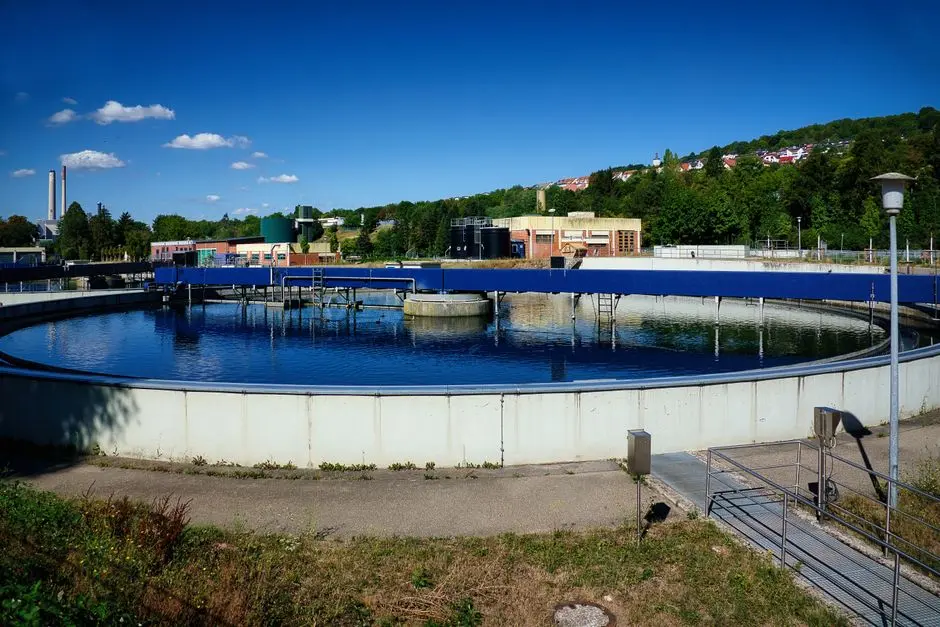
Segregation limits shock loading, chemical cross-reactions, and the spread of contaminants that are difficult to remove downstream. Keep strongly acidic, strongly alkaline, fluoride-rich, metal-bearing, ammonia-bearing, solvent-bearing, and high-solids streams isolated until engineering data establishes that a controlled combination train can handle their combined chemistry.
Provide equalization where production data shows batch dumps or material flow and composition swings. Size the usable volume from measured flow, batch-event records, operating scenarios, and the response time required for the selected treatment process; this article does not assume an arbitrary equalization factor. If a high-strength batch can exceed downstream hydraulic capacity, provide routing, storage, or controlled release rather than relying on dilution.
Adjust pH before biological treatment, membranes, precipitation, or flotation when required by the selected chemistry. The target pH and reagent demand must come from representative wastewater and process testing. Use automatic dosing where continuous or feedback control is necessary, with defined interlocks, alarms, and fail positions. Chemical feed design should address chemical strength, residual demand, storage, containment, and incompatible chemicals without double-dosing.
Protect downstream systems through physical separation and chemical control. Abrasive CMP solids can foul membranes; excessive organic loading can upset biological systems; and fluoride, metals, or solvents may require separate removal. Evaluate the automatic chemical dosing system as part of the full controls architecture rather than as an isolated skid.
- Map each drain and assign a wastewater family.
- Exclude uncontrolled cross-connections and incompatible batch dumps.
- Equalize each selected train using documented flow and batch data.
- Establish pH and chemical-control requirements by process test.
- Verify downstream protection under normal, startup, shutdown, and upset conditions.
Remove solids and metals before the sewer discharge stage
Solids removal must address both bulk particulate separation and the fine solids that can impair downstream membranes or carry metals into the discharge stream. IDE states in its 2026 semiconductor wastewater overview that CMP alone can account for 30–40% of a fab’s total wastewater volume, making slurry handling a central design issue.
Evaluate clarification or flotation according to stream chemistry. DAF is suited to suspended solids, oil and grease, and colloidal matter; lamella clarification emphasizes compact inclined-plate separation and sludge recirculation. These characteristics do not establish superiority without pilot or representative-water data.
Use ultrafiltration where finer solids removal or membrane protection is required. The listed hollow-fiber ultrafiltration system for fab solids separation uses 0.03-micron PVDF membranes, handles up to 300 ppm turbidity, and spans 2,000–40,000 L/h. The listed lamella design states surface-loading rates of 20–40 m/h, while the listed DAF range covers 4–300 m³/h across 13 standard models. These are equipment-selection boundaries, not proof of performance on a specific fab stream.
Metals may occur in solution or attached to slurry solids. Test both fractions, then evaluate chemical precipitation, pH control, clarification, or filtration and confirm residual metals against the City’s conditions.
| Technology | Primary treatment role | Design checks | |
|---|---|---|---|
| Listed equipment basis | |||
| DAF | Suspended solids, colloids, oil and grease | Solids loading, FOG, recycle behavior, sludge handling | 4–300 m³/h across 13 standard models |
| Lamella clarification | Compact solids separation with sludge recirculation | Hydraulic loading, settleability, solids removal, sludge outlet | Stated surface-loading rates of 20–40 m/h |
| Hollow-fiber UF | Fine solids removal and membrane protection | Turbidity, particle distribution, flux, cleaning chemistry, concentrate | 0.03-micron PVDF; up to 300 ppm turbidity; 2,000–40,000 L/h |
| Plate-and-frame filtration | Concentrated solids dewatering | Sludge volume, cake characteristics, filtrate return, polymer demand | Equipment suitability must be checked against sludge characteristics |
Manage separated sludge through an appropriate dewatering route rather than returning concentrated solids to the treatment headworks. Confirm the plate-frame filter press against actual cake formation, batch volume, polymer demand, and filtrate chemistry. No sludge disposal route should be assumed from equipment capacity alone.
Control dissolved contaminants and prepare the effluent for reuse or discharge
The remaining dissolved contaminants determine whether biological treatment, membranes, oxidation, or additional polishing are required. Treatment selection must follow the permit limits, reuse specification, residual-management route, and representative wastewater—not a promise that one technology handles every contaminant.
Gradiant’s 2026 semiconductor water overview identifies biological treatment as capable of stripping biodegradable organics such as IPA, ammonia, and BOD before remaining material is converted into reusable water and solids. Confirm biodegradability, inhibition potential, nutrient balance, and hydraulic loading with representative wastewater before selecting this route.
Use reverse osmosis when dissolved salts and ionic contaminants must be reduced. The listed industrial reverse osmosis system for semiconductor wastewater polishing provides ultrapure permeate at recovery rates up to 95%. Recovery is a system condition, not a guaranteed outcome: feed salinity, scaling, membrane condition, pretreatment, and concentrate disposal all affect achievable performance.
Advanced oxidation can treat persistent organics, solvents, photoresist residues, surfactants, PFAS, or azoles when the chemistry and destruction objective are established. IDE identifies UV/H₂O₂, ozone, and advanced catalytic systems as common AOP approaches and explains that hydroxyl radicals break down persistent organic compounds into simpler biodegradable material. Conventional oxidation alone should not be credited with PFAS destruction; IDE states that PFAS compounds are chemically stable and resistant to conventional oxidation, while identifying membranes, activated carbon, ion exchange, and specialized destruction as alternative approaches.
| Remaining contaminant or objective | Potential treatment | Required proof |
|---|---|---|
| Biodegradable organics, ammonia, BOD | Biological treatment | Representative-water biodegradability and loading evaluation |
| Dissolved salts and ionic contaminants | Reverse osmosis, potentially with polishing | Recovery, scaling, concentrate, and permeate-quality tests |
| Persistent organics, solvents, surfactants, photoresist residues | AOP and downstream biological or polishing treatment | Compound-specific analytical basis and destruction/byproduct review |
| PFAS | Membrane, activated carbon, ion exchange, or specialized destruction | PFAS-specific permit basis, analytical method, and residual-handling plan |
| Reuse quality | RO, EDI, or other polishing as required | Point-of-use specification and full-system mass balance |
Reclamation and sewer compliance are related but separate. TSMC Arizona reported in September 2025 that its planned reclamation plant uses reverse osmosis and ion exchange, anticipates 85% efficiency at launch, and targets 90% upon completion. Those objectives reduce discharge volume but do not replace Phoenix permit monitoring, representative wastewater data, treatment controls, or discharge records.
Verify compliance at the sewer discharge point
Compliance is demonstrated by sustained performance at the authorized sewer discharge point under representative conditions, not by a single favorable laboratory result. The City’s permit and Chapter 28 define the applicable limits, monitoring frequency, reporting route, and discharge-point conditions.
Before sampling, confirm that required pretreatment equipment is operating and that bypasses, interlocks, alarms, chemical feeds, and flow measurement are functional. Calibrate pH, flow, turbidity, conductivity, TOC, and other permit-relevant instruments. Use an approved laboratory method where the permit requires laboratory analysis rather than relying on an online reading alone.
Monitor critical treatment streams and the final discharge during representative production, startup, shutdown, and upset periods. If the permit specifies composited or grab sampling, follow that requirement. Compare results with permit conditions and retain the chain of custody, calibration history, laboratory reports, operating logs, flow records, and corrective-action records.
| Stage | Verification action | Record retained |
|---|---|---|
| Pre-startup | Confirm installed equipment, controls, calibration, sampling points, and City-approved drawings | Commissioning checklist, calibration certificates, approval correspondence |
| Representative operation | Monitor source streams, treatment stages, final discharge, flow, chemistry, and operating conditions | Trend data, field sheets, laboratory reports, chain of custody |
| Startup, shutdown, and upset | Confirm bypass prevention, response actions, and return-to-service criteria | Event logs, alarms, deviations, notifications, corrective actions |
| Reporting | Submit monitoring and discharge reports through the City-specified process | Submitted report and proof of submission |
| Change management | Review City requirements before production expansion, a new discharge point, or material chemistry change | Change assessment, revised permit or approval, updated design basis |
Treat permit review as part of operating the treatment system. A recycled-water project or equipment upgrade does not change the sewer obligations if it alters the final discharge or the wastewater characteristics. The treatment valves, filter media, and related equipment can support maintenance, but replacement parts do not substitute for calibration, sampling, or permit compliance.
Build a treatment and compliance decision framework
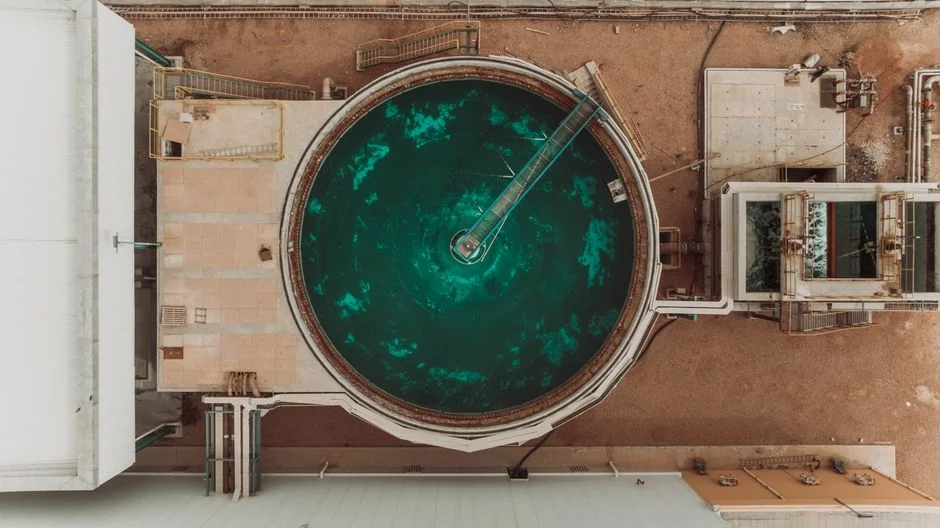
A defensible treatment decision starts with six inputs: City permit conditions, stream characterization, required reliability, reuse targets, residual-disposal route, and future expansion. A supplier’s headline removal percentage cannot replace those inputs.
Compare solids technologies by contaminant type and operating consequences. DAF is suited to suspended solids, FOG, oil, and colloidal matter; lamella clarification emphasizes compact inclined-plate separation and sludge recirculation. Compare membrane stages by pretreatment requirements, recovery, concentrate management, cleaning chemistry, and compatibility with variable fab wastewater.
For each supplier, request:
- The guaranteed performance basis and applicable wastewater dataset;
- Pilot or representative-water test results;
- The guarantee test protocol and acceptance criteria;
- Control philosophy, alarms, interlocks, and fail-safe operation;
- Chemical, power, space, and utility requirements;
- Redundancy and maintenance assumptions;
- Sludge, concentrate, and spent-media handling requirements;
- Commissioning, training, and O&M support; and
- Delivery schedule tied to permit review, construction, installation, and acceptance testing.
For chemical dosing, use coagulant and pH dosing system design criteria to define the demand basis, control response, storage, containment, and residual-handling requirements.
| Decision condition | Engineering action | Supplier information to require |
|---|---|---|
| Representative data show variable pH and chemical demand | Equalize and provide feedback-controlled dosing | Dosing range, control response, reagent consumption basis, interlocks |
| CMP solids threaten downstream equipment | Evaluate clarification or flotation followed by UF where required | Removal basis, hydraulic range, sludge production, cleaning and recovery |
| Dissolved salts limit reuse or discharge compliance | Evaluate RO with pretreatment and a defined concentrate route | Recovery basis, scaling analysis, concentrate quantity and disposal route |
| PFAS or specialty organics are confirmed | Select a compound-specific removal or destruction process | Analytical method, performance evidence, residual handling, treatment train compatibility |
| Reclamation is the primary objective | Model the complete water, salt, and solids balances | System-level recovery basis, brine and sludge route, operating envelope |
For the cost request, provide measured wastewater flows, complete analytical results, batch schedules, permit conditions, recovery targets, residual routes, site utilities, and required schedule. Request itemized equipment, installation, permits, commissioning, chemical costs, sludge handling, replacement media, energy, maintenance, and performance risk. No defensible capital or operating cost can be stated without those inputs.
Reclamation figures require equal scrutiny. Gradiant reports system-level water reuse above 90% at its largest scales, while TSMC Arizona reported an anticipated 85% efficiency at launch and a 90% long-term target in September 2025. Compare each claim on system boundaries, operating conditions, concentrate treatment, and residual disposal—not on recovery percentage alone.
Frequently Asked Questions
Which limits control discharge from a semiconductor plant near Phoenix?
The enforceable limits are those in the City of Phoenix industrial discharge permit, applicable local limitations under Chapter 28, and applicable categorical pretreatment standards. Generic treatment-guide values are not permit limits. Obtain the permit conditions, local limitations, monitoring frequency, analytical methods, and discharge-point requirements before finalizing equipment guarantees or compliance acceptance criteria.
How should pretreatment equipment be sized for a semiconductor fab?
Size it from representative wastewater and documented operating data, including average and peak flow, batch dumps, pH and chemical demand, solids loading, contaminant concentrations, and the selected process’s recovery and cleaning requirements. For reclamation, also include the reuse specification and the full residual-management system. TSMC Arizona’s September 2025 account demonstrates the sequencing: representative wastewater was needed before the reclamation plant could be fully designed.
How should an engineer compare treatment suppliers near Phoenix?
Compare suppliers against the complete wastewater profile, permit conditions, representative-water or pilot basis, guaranteed acceptance protocol, controls philosophy, chemical and utility requirements, redundancy, residual-handling route, commissioning plan, and delivery schedule. Flow capacity alone is not a sufficient selection criterion. Ask for the exact wastewater and operating conditions supporting every performance claim and identify who remains responsible for integrated-train performance.
Does a higher recycling rate eliminate the need for sewer pretreatment compliance?
No. Greater reuse can reduce discharge volume, but sewer compliance still depends on the City permit, representative wastewater data, effective treatment controls, monitoring, and retained records. A zero-liquid-discharge or high-recovery project also requires a defensible residual-management route; otherwise, the project may shift the compliance burden from liquid discharge to concentrated solids, brine, or spent treatment media. Review the City before modifying the treatment train or discharge basis.
Related Equipment
- industrial reverse osmosis system for semiconductor wastewater polishing — specifications, capacity range, and technical data