
How Pharmaceutical Wastewater Coagulant Dosing Works
A coagulant dosing system meters chemical into an equalized pharmaceutical wastewater stream so suspended solids, colloids, and some dissolved contaminants can form flocs for separation. Because pharmaceutical effluent quality can fluctuate, the system should combine flow-paced dosing with suitable water-quality signals and PLC control rather than relying on flow alone. Research comparing dosing models found correlations over 0.90 when models described the influent with multiple parameters, versus 0.58 for a flow-and-effluent-turbidity model (Ratnaweera, Blom, and Aasgaard, 1994). Typical project decisions include chemical compatibility, storage, metering pumps, mixing, containment, control logic, and integration with flocculation, DAF, or clarification.
In pharmaceutical effluent pretreatment, coagulation is the step immediately before flocculation and solids separation. The coagulant destabilizes particles so that they aggregate into flocs that can be removed in a DAF system for pharmaceutical wastewater solids separation or another suitable clarifier. The 2025 Scientific Reports study identifies three mechanisms: charge neutralization, adsorption-bridging, and sweep flocculation. It also cites aluminum sulfate and ferric chloride among commonly used coagulants. Neither chemical is universally correct for a pharmaceutical stream; selection and operating pH require representative jar testing and characterization of the actual effluent.
The treatment sequence is:
- Equalize the wastewater and establish a representative sampling point.
- Store the selected chemical in an appropriate tank with containment and access.
- Prepare the required solution or slurry where necessary.
- Meter the chemical with calibrated dosing pumps.
- Inject it into the wastewater and distribute it through rapid mixing.
- Form flocs in the flocculation stage.
- Separate the solids in DAF or clarification.
- Route the resulting sludge to an appropriate dewatering and disposal route.
Coagulation is usually pretreatment that reduces pollutant loading before biological or membrane processes. The 2025 Scientific Reports study states that it can remove colloidal particles and certain dissolved contaminants while improving the performance of downstream treatment.
Why Flow-Only Dosing Is Not Enough
Flow-only dosing often misses changes in chemical demand when pharmaceutical effluent composition changes faster than the flow signal. Ratnaweera, Blom, and Aasgaard reported correlation coefficients above 0.90 for models with good multivariable descriptions of influent quality, compared with 0.58 for a model written as dosage equals a function of flow and effluent turbidity (1994). That comparison supports adding relevant quality signals where flow is not a stable proxy for coagulant demand.
Feedback control is unusually difficult because sedimentation times can be 2–6 hours while influent quality may change significantly during that interval, according to Ratnaweera, Blom, and Aasgaard (1994). A delayed effluent signal can therefore describe conditions that no longer match the water being dosed.
The same study reports that plants commonly monitor flow and may also monitor pH, conductivity, and temperature, while influent turbidity and phosphates are seldom measured in municipal plants (1994). That finding is not a pharmaceutical monitoring specification. Pharmaceutical teams must determine which variables track the relevant pollutant loading and coagulant response in their own effluent.
| Control approach | Inputs | Main limitation |
|---|---|---|
| Flow-paced | Wastewater flow and a defined dose | Flow may not represent changes in pollutant load or chemical demand |
| Feed-forward | Measured demand-related parameters | Requires a valid relationship between the selected signal and dose |
| Feedback-trimmed | Forward dosing plus a measured treatment response | Separation delay can make feedback slow or mismatched to influent conditions |
| Model-assisted | Multiple influent and operating variables | Requires representative calibration data and validation for the treatment train |
Coagulation effectiveness depends on pollutant type and concentration, pH, temperature, and coagulant selection. These factors make a universally valid dosing rule unlikely.
Pharmaceutical Dosing System Design Criteria
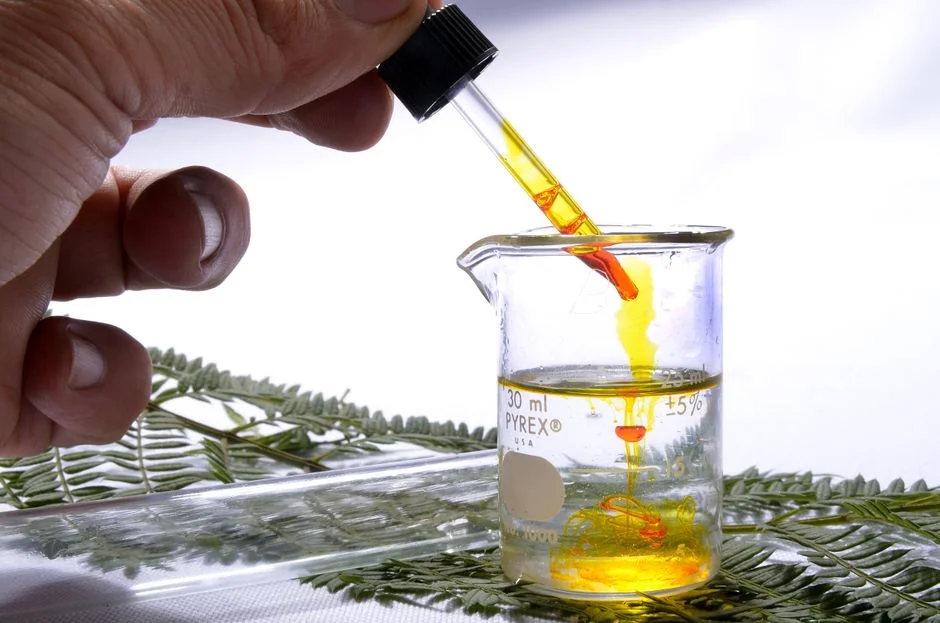
The required dose and injection point must come from jar tests using representative pharmaceutical effluent; the supplied research does not support a universal dose range. Jar tests should establish chemical selection, pH condition, mixing sequence, floc behavior, and the relationship between dose and treatment performance. Those results become the basis for pump capacity, solution concentration, control logic, and downstream separation requirements.
A chemical injection system is an integrated skid, not just a pump. The PLC-controlled automatic chemical dosing system should be evaluated together with its tank, metering equipment, injection assembly, controls, containment, and downstream interfaces.
| Specification area | Information to establish or request |
|---|---|
| Process basis | Representative jar-test dose, chemical type, concentration, wastewater flow, operating pH, injection point, and downstream separation duty |
| Wetted materials | Compatibility schedule covering pumps, seals, hoses, tanks, piping, and injection components |
| Metering | Dosing range, accuracy, calibration method, operating-pressure limits, pump type, and expected duty cycle |
| Storage and handling | Tank arrangement, bunding, agitation, ventilation, access, drainage, and site-specific chemical requirements |
| Controls | Flow, pH, tank-level, pump-status, high-level, and fault inputs; alarms, interlocks, and control sequence |
| Signal quality | Sampling method, sensor location, calibration, validation, signal response, and data availability |
Do not accept an unspecified claim of “precise dosing.” Ask for accuracy under the specified flow, chemical concentration, operating pressure, and required turndown. The available treatment valves, media, and dosing components should be checked against the confirmed chemical and installation conditions.
Storage and containment must be engineered around the selected chemical, its concentration, site drainage arrangements, ventilation requirements, and applicable site rules. Functional design should also establish which alarms inhibit dosing, which faults require operator acknowledgement, and what happens during low tank level, pump failure, or loss of a required control signal.
Choose the Right Dosing Control Mode
Flow-paced control is appropriate only when flow remains a defensible proxy for coagulant demand. It is the simplest baseline, but pharmaceutical production, cleaning, and batch discharges can change composition independently of flow. Adding control complexity without representative measurements does not remove that risk.
Use pH-trimmed dosing only where pH is shown by project testing or operating experience to relate to the required dose. pH is not an independent demand signal when pH-adjusting chemicals are added upstream or when coagulation itself changes pH. A combined flow-and-pH architecture is useful only when both inputs have a defined role.
Feedback-trimmed control becomes more useful when a reliable treatment response can be measured within the process response time. Because Ratnaweera, Blom, and Aasgaard identified 2–6-hour sedimentation delays (1994), pharmaceutical teams should examine whether DAF, lamella clarification, or another separation stage provides a more useful control response and how that response maps back to the current influent.
The 2025 Scientific Reports study discusses artificial neural networks, extreme learning machines, and random forests for nonlinear relationships among multiple water-quality parameters. These are advanced options. Field implementation requires representative historical or trial data, validation for the actual coagulant and treatment train, and a controlled fallback when the model is outside its calibration envelope.
| If the project has… | Then evaluate… | Required evidence |
|---|---|---|
| Stable flow-to-demand relationship | Flow-paced dosing | Representative operating data and an agreed dose basis |
| Relevant pH response | Flow-paced dosing with pH trim | Jar tests and evidence that pH remains a valid proxy |
| Several reliable online signals | Combined or feedback-trimmed control | Signal response, delay, calibration, and process-response testing |
| Representative historical data | Model-assisted dosing | Training data, cross-validation, model monitoring, and fallback control |
Model validation must also account for changes in coagulant type, treatment targets, plant configuration, and the number of real-time monitoring parameters, which Ratnaweera, Blom, and Aasgaard identified as important model-flexibility considerations (1994).
Integrate Dosing with Flocculation and Solids Separation
Chemical performance depends on how rapidly the coagulant is distributed through the wastewater. The injection point, rapid-mixing arrangement, residence path, and transition into flocculation should therefore be reviewed as one hydraulic system. A correctly selected pump does not compensate for poor mixing or a poor injection point.
For a DAF duty, the relevant equipment basis includes hydraulic capacity, flotation loading, recycle behavior, and the properties of the formed floc. The supplied product information for the DAF system for pharmaceutical wastewater solids separation states that its range covers 13 standard models from 4–300 m³/h and identifies suspended solids, FOG, oil and grease, and colloidal matter among its intended removal duties. Those supplier figures require confirmation against the selected configuration and project effluent.
For lamella clarification, the supplied catalog information states a 20–40 m/h surface-loading range for preliminary comparison. It also reports potential chemical-consumption reductions of up to 30% through sludge recirculation, flocculation, and inclined-plate separation; the applicability of that claim must be verified with the supplier and supported by process-specific testing. The high-efficiency sedimentation tank should be evaluated against the clarified-water target, hydraulic load, sludge handling, and the coagulant response established by jar testing.
Sludge removal is part of the design. Route DAF float or clarifier sludge to an appropriate dewatering method; the plate-and-frame filter press is one possible downstream option whose selection depends on sludge structure and dewatering performance. Batch production, clean-in-place washes, variable pH, and trace contaminants may justify segregation, additional equalization, or project-specific testing before the final control strategy is fixed.
Questions to Ask Before Ordering a Dosing Skid
A comparable supplier quotation should state what is guaranteed rather than relying on general performance language. Ask for chemical-compatibility confirmation, a wetted-material schedule, and evidence that the proposed pump operates at the design chemical concentration and injection pressure. Require the metering range, accuracy method, operating-pressure limits, expected duty cycle, calibration procedure, and pump-maintenance requirements.
| Procurement question | Evidence required in the offer |
|---|---|
| How is chemical compatibility established? | Material schedule and compatibility statement for the selected chemical and process conditions |
| What does “accurate dosing” mean? | Accuracy, calibration method, turndown, pressure limits, and duty-cycle data |
| What is included in the controls? | PLC I/O list, alarm and interlock matrix, communications, and remote-monitoring options |
| How is the skid tested? | Factory-acceptance test scope and documentation, plus defined site commissioning tasks |
| What is delivered? | Skid-mounted, pre-wired, and factory-tested scope; battery limits; installation exclusions |
| What experience supports the design? | Project references for pharmaceutical or comparable high-variability industrial wastewater |
| What are the commercial terms? | Project-specific price, lead time, shipping, installation, commissioning, training, warranty, and spare-parts support |
The PLC-controlled automatic chemical dosing system is described as skid-mounted, pre-wired, and factory-tested, so those terms are useful comparison fields when reviewing other suppliers. The supplied research provides no universal price or lead-time range. Require each bidder to quote the defined scope, with exclusions and site responsibilities identified.
Also ask what data will be accepted for model-assisted control, how calibration will be witnessed, and how the system reverts to a validated fallback if a model loses confidence or an input becomes invalid.
Frequently Asked Questions
What information is required to size and price a coagulant dosing system for pharmaceutical wastewater?
Request a project-specific quotation using design wastewater flow, chemical type and concentration, operating pressure, jar-test dose, storage arrangement, required controls, and downstream treatment duty. The supplied research does not establish a universal system size, dose, price, or lead time, so the bidder must state the design basis and exclusions. Review the
Frequently Asked Questions
How do I size a coagulant dosing system for pharmaceutical wastewater?
Sizing must be based on the maximum influent flow rate and the peak coagulant demand determined through jar testing. Systems should be designed to handle a dosage range of 50 to 500 mg/L, depending on the specific organic load and suspended solids concentration, with a turndown ratio of at least 10:1 to accommodate fluctuating pharmaceutical production cycles.
Ensure the pump capacity accounts for a 20% safety margin above the calculated peak demand to compensate for potential pump wear or viscosity variations in the coagulant polymer. The storage tank sizing should provide a minimum of 7 to 14 days of chemical supply based on average daily usage rates to minimize logistics risks.
What should I ask a chemical dosing system supplier before requesting a quotation?
Request documentation regarding the chemical compatibility of wetted parts, specifically ensuring seals and diaphragms are constructed from materials like PVDF or EPDM that resist aggressive coagulants. Verify the supplier’s ability to provide a performance curve that validates the pump's accuracy within ±1% across the entire operational range.
Ask for the availability of integrated leak detection sensors, secondary containment monitoring, and the ability to interface with existing plant SCADA systems via protocols such as Modbus TCP/IP or Profibus. Inquire about the availability of local field service support and the typical lead time for critical spare parts like pump heads and check valves.
Is flow-paced coagulant dosing sufficient when pharmaceutical wastewater quality changes?
Flow-paced dosing is generally insufficient for pharmaceutical wastewater because it fails to account for rapid shifts in chemical oxygen demand (COD), total organic carbon (TOC), or pH levels characteristic of batch processing. Relying solely on flow-pacing often leads to under-dosing during high-load production spikes or over-dosing during low-flow periods, resulting in poor flocculation and increased sludge disposal costs.
A more robust approach involves feed-forward or feedback control loops that incorporate real-time water quality sensors. By integrating UV-Vis spectral analysis or online turbidity monitoring, the system can dynamically adjust dosages to maintain optimal water quality despite the inherent variability of pharmaceutical effluent.
Which control signals should a pharmaceutical coagulant dosing system use?
The system should utilize a 4-20 mA analog signal or digital communication (Modbus) to receive flow-proportional inputs from inline flow meters. Additionally, the controller should accept a secondary input from online turbidity or streaming current detectors to perform closed-loop trim adjustments to the base flow-paced dosage.
Digital status signals, such as pump run/fault, low-level tank alarms, and pulse-count feedback, must be integrated into the plant's distributed control system (DCS). This ensures comprehensive monitoring of chemical injection integrity and allows for automated emergency shutdowns if a dosing deviation is detected.
What compliance risks come from poor coagulant dosing in pharmaceutical wastewater treatment?
Inadequate dosing leads to the carryover of colloidal particles and active pharmaceutical ingredients (APIs) into the effluent, resulting in violations of National Pollutant Discharge Elimination System (NPDES) permits or local pretreatment standards. Exceeding discharge limits for total suspended solids (TSS), phosphorus, or heavy metals can trigger significant regulatory fines and potential revocation of discharge permits.
Furthermore, poor flocculation performance can cause downstream fouling of membrane bioreactors (MBR) or reverse osmosis (RO) systems, leading to premature membrane degradation. This not only increases maintenance costs but also threatens the facility's ability to maintain environmental compliance, potentially resulting in forced production halts and reputational damage.