What Wastewater Does a Seongnam Data Center Generate?
A Seongnam data center needs two treatment plans: one for sanitary sewage and one for industrial process wastewater, chiefly cooling-tower blowdown. Blowdown can contain concentrated minerals, treatment chemicals, suspended solids, heat and residual biocides, so the package may include pH adjustment, filtration, dechlorination, cooling and reuse treatment. Final limits and equipment sizing must come from written Seongnam and Korean authority requirements, actual blowdown sampling, cooling-water chemistry, and average and peak flows. Because the receiving system and discharge route can determine the design, confirm the sewer authority and permitting pathway before equipment procurement.
RSP Engineers identifies cooling-tower blowdown as the principal process-wastewater source in many large data centers. Sanitary sewage from restrooms and kitchens is normally much smaller, but it is distinct from blowdown and should not be combined with process wastewater until their regulatory routes are confirmed. A data center cooling blowdown treatment methodology provides a useful comparative framework, while the regional data center blowdown engineering guide illustrates why local criteria must replace generic assumptions.
Evaporative cooling leaves dissolved minerals behind, while the water-treatment program adds biocides, corrosion inhibitors and anti-scaling agents. The resulting blowdown is therefore more than hot potable water. Site-specific data must replace every flow and limit shown as “to be established” below.
| Stream | Expected contaminants | Likely flow pattern | Sampling requirement | Treatment relevance | Discharge route |
|---|---|---|---|---|---|
| Sanitary sewage | Domestic wastewater | To be established from campus population and fixtures | Representative site data | Separate sanitary handling | To be confirmed with sewer authority |
| Cooling-tower blowdown | TDS, chlorides, sulfates, phosphates, suspended matter, biocides, corrosion inhibitors and anti-scaling agents | To be established; operation and heat dependent | Actual blowdown across operating states | Industrial wastewater pretreatment and possible reuse | Written sewer or other authority decision |
| RO or softener reject | Concentrated salts and treatment chemicals | To be established from recovery and operating schedule | Each reject stream | Segregate until chemistry is confirmed | To be confirmed; no assumed sewer acceptance |
| Equipment-cleaning wastewater | Suspended solids, cleaning chemicals and variable pH | To be established from cleaning schedule | Event-based representative samples | Filtration, pH control or segregated collection | To be confirmed with receiving authority |
| Air-handling condensate | Potentially dissolved and suspended contaminants | To be established from HVAC operation | Representative condensate | Usually less intensive, subject to analysis | To be confirmed |
Water consumption and water usage should also be separated. Genesis Water Technologies defines Water Usage Effectiveness as annual site water usage divided by IT-equipment energy; it explains that WUE does not reveal whether discharged water remains recoverable. A data center cooling blowdown treatment methodology should therefore include a measured water balance, not a WUE score alone.
How Much Cooling Blowdown Must the Site Treat?
Blowdown volume must come from the mechanical engineer’s cooling design, climate and makeup-water quality, not from a generic rule of thumb. Black & Veatch states that every gallon of makeup water not evaporated becomes wastewater; it also reports that utilities have studied extreme cooling discharges during heat waves, when multiple facilities may increase discharge simultaneously. The hydraulic design therefore needs both normal operating flow and coordinated peak events.
The supplied relationship calculates blowdown as a share of makeup water equal to 1/(CoC−1). At 4 cycles of concentration, the calculated share is 25%; at 6 CoC, it is 20%. Moving from 4 to 6 CoC therefore reduces blowdown by 5 percentage points, or 20% of the 4-CoC blowdown—not 50%. This is a mass-balance relationship, not a substitute for metering.
Genesis Water Technologies indicates that cooling blowdown commonly represents 20–40% of intake water. That indication should be validated against the actual campus through a water balance and flow meters. The mechanical engineer should also identify whether the value includes periodic drain-down, water-treatment reject, emergency dumps or other unmeasured losses. The site-specific cooling blowdown calculation framework provides a useful structure for separating those flows.
| Required input | Engineering use | Acceptable project evidence |
|---|---|---|
| Makeup-water flow | Establishes the base of the water balance | Metered operating history or mechanical-engineer projection |
| Evaporation | Separates consumptive loss from recoverable flow | Cooling-design calculation and field reconciliation |
| Continuous blowdown | Sets normal pretreatment duty | Per-stream flow metering |
| Drain-down and emergency discharge | Defines storage and peak treatment requirements | Operating procedure and event log |
| Water-treatment reject | Adds a separate hydraulic and chemical load | Softener, RO and treatment-system data |
| Operating CoC and operating hours | Tests the water balance and identifies variability | Trend data for the circulating system |
| Makeup-water chemistry | Supports scaling, corrosion and membrane analysis | Representative source-water analysis |
Equipment sizing should be based on the measured average and peak basis agreed with the mechanical engineer, including the selected disposal or reuse route. Hydraulic and pollutant acceptance must be checked separately: Black & Veatch warns that a treatment plant may have treatment headroom while the connecting sewer, lift station or other conveyance remains constrained.
What Must Be Measured Before the Treatment Train Is Designed?
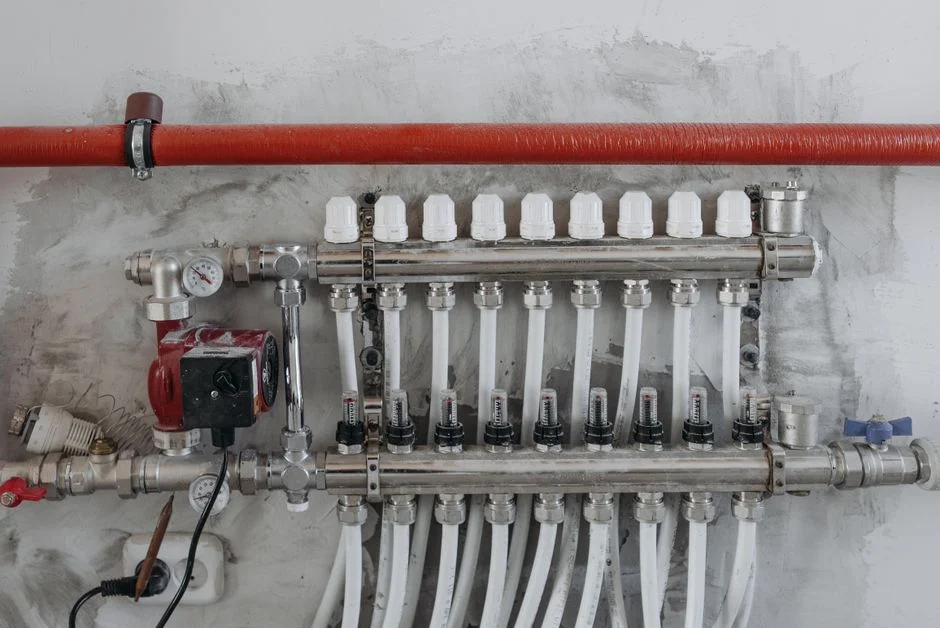
Characterize the actual blowdown, not the source water alone. The cooling program changes the discharge, and the water balance determines which samples represent normal, peak and upset conditions. RSP Engineers lists high TDS, chlorides, sulfates, phosphates, suspended matter, biocides, corrosion inhibitors, anti-scaling agents, copper and zinc among constituents relevant to cooling-blowdown assessment.
Build a sampling plan that spans normal operation, high-load operation, maximum CoC, chemical rotation, storm events and maintenance drains. The supplied research does not establish a universal sampling frequency for a Seongnam campus; that must come from the written permit and a statistical review of the operating regime. Composite and grab samples may answer different questions, so the sampling method should be agreed with the authority and laboratory rather than specified informally.
| Parameter or input | Engineering question | Procurement implication |
|---|---|---|
| pH | Is neutralization required, and over what operating range? | Confirm whether automatic chemical dosing is required and define the control basis |
| Conductivity or TDS | How concentrated are dissolved salts? | Determine whether physical treatment alone is sufficient |
| Total suspended solids | What solids load must be removed? | Define filtration, clarification or flotation performance requirements |
| Temperature | Could hot blowdown affect the receiving system? | Establish cooling, holding or routing requirements |
| Residual chlorine or specified biocides | Which oxidant or biocide must be reduced? | Define dechlorination and chemical-compatibility requirements |
| Corrosion- and scale-inhibitor residuals | What dissolved treatment compounds persist in discharge? | Assess advanced treatment and reuse compatibility |
| Copper, zinc and other applicable metals | Is there a metal-removal duty? | Define precipitation, ion exchange or specialized filtration if required |
| Complete chemical inventory | What compounds are added, and under which operating rotations? | Use the inventory in permit submittals and reuse-compatibility review |
Request the full cooling-water chemical package, including product names, compounds, dosing methods and rotation schedules. This inventory directly determines pretreatment needs and permit information. It also prevents a reuse design from being based on conductivity alone while overlooking persistent biocides, corrosion inhibitors or scale-control chemistry.
Include monitoring architecture in the treatment scope. RSP Engineers notes that industrial permits may require continuous pH and flow measurement, with laboratory analysis supporting compliance reporting. A wastewater monitoring and compliance data-logger guide can inform analyzer selection, but the final parameters, recording and reporting requirements should follow written Korean and Seongnam criteria.
Which Treatment Route Fits a Seongnam Project?
The correct route follows from chemistry, written authority criteria, sewer capacity, reuse demand and operating capability—not from a preferred piece of equipment. Obtain an early discharge-route decision from the relevant Seongnam and Korean authorities, including pollutant limits, temperature and pH criteria where applicable, monitoring duties, connection conditions and conveyance capacity. A sewer discharge may be feasible even when the receiving plant has treatment headroom if the connecting sewer or lift station is constrained.
For sewer discharge, the train is designed to protect the receiving system and meet the written pretreatment requirements. For reuse, define the receiving application before selecting technology. The supplied research identifies landscape irrigation, construction dust control, equipment washing, toilet flushing and, after advanced treatment, cooling-tower makeup as possible applications. For blowdown-to-makeup reuse, dissolved salts and treatment chemicals must be addressed; industrial RO may be justified only where pretreatment, recovery, concentrate management and operator requirements are resolved.
A hybrid route can treat a metered portion for a non-critical reuse demand while routing the remainder through an authority-approved disposal path. The bypass requires independent metering, isolation and control so that untreated or off-spec flow cannot reach an unauthorized destination.
| Decision factor | Sewer discharge | On-site reuse | Hybrid treatment |
|---|---|---|---|
| Primary objective | Comply with the confirmed sewer or industrial-user route | Replace makeup or other approved demand | Meet a defined reuse demand while maintaining an approved disposal path |
| Typical pretreatment need | Equalization and only the unit operations required by confirmed limits | Treatment matched to the reuse application, potentially including advanced dissolved-solids removal | Route-specific treatment and a controlled, independently metered bypass |
| Key risks | Local limits, sewer capacity, interference or pass-through, permit conditions | Chemical carryover, biological risk, scaling, concentrate disposal and operator capability | Flow-control errors, cross-connections, permit breaches and more complex operations |
| Operational burden | Chemical dosing, filtration, sampling and reporting as required | Adds storage, distribution, reuse monitoring and advanced-treatment maintenance | Requires reliable routing, interlocks and two treatment or disposal interfaces |
| Monitoring emphasis | Written permit parameters, flow and sampling points | Reuse-water quality, compatibility and distribution controls | Independent route flows, treated-water quality and bypass status |
| Additional inputs required | Authority criteria, sewer capacity, average and peak flow, actual chemistry | Reuse demand, water-quality target, concentrate route, operator resources | Route allocation, storage, bypass rules and authority acceptance |
Do not begin a reuse project with a CoC target alone. Genesis Water Technologies notes that moving above 5–6 CoC can increase scaling, microbiologically influenced corrosion and chemical complexity. A comparative industrial-treatment framework and a non-potable reuse equipment guide can support route development, but neither substitutes for the site’s written criteria.
How to Build the Treatment Process Train
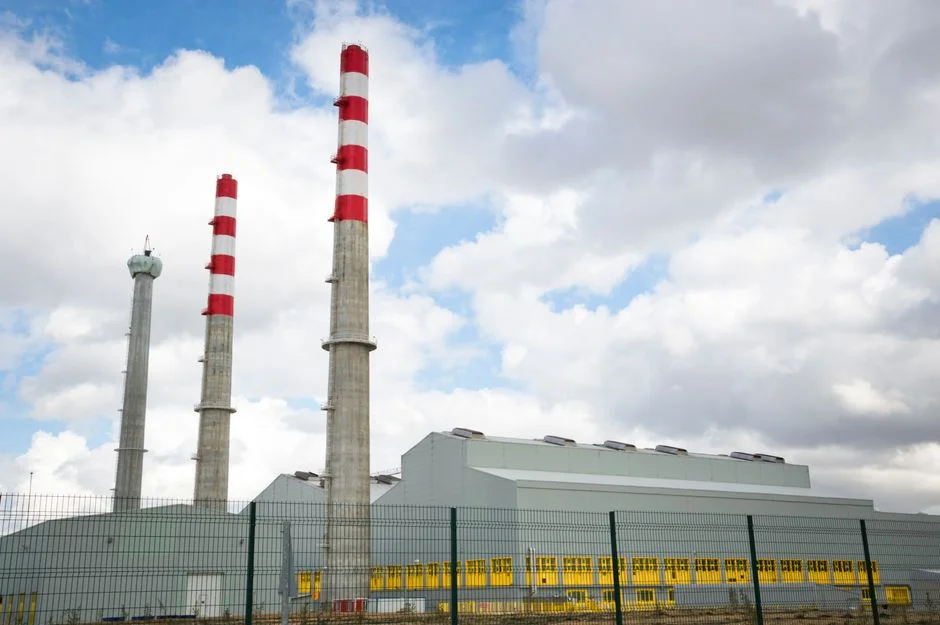
Start with segregation and wastewater flow equalization. Keep cooling blowdown, RO or softener reject, and cleaning wastewater separate until their chemistry, peak flows and destinations are confirmed. Equalization should absorb normal variation without concealing a persistent off-spec condition; emergency drain capacity should be handled explicitly rather than hidden in the average flow.
Then assign a treatment duty to each confirmed contaminant. Add pH adjustment only against written discharge or reuse criteria. RSP Engineers gives 6.0–9.0 as a commonly required pH range in its cited example, but this is not a Seongnam limit. An automatic chemical dosing system for pH adjustment should therefore be specified around the confirmed operating band, reagent, control response, containment and sampling requirements.
Use physical separation for suspended solids and colloidal material where pretreatment is required. The supplied process references include media filtration and dissolved air flotation; a DAF system for cooling-blowdown pretreatment can be evaluated where the sample data and flow conditions support its duty. Apply dechlorination or a compatible non-persistent biocide strategy only where residual oxidant or a specific biocide criterion has been identified.
Provide cooling or holding when hot blowdown could affect the receiving treatment system. RSP Engineers cites 150°F as an example maximum-temperature value; the applicable Seongnam criterion remains unverified and must not be inferred from that example.
| Process step | Primary duty | Design input or handoff criterion |
|---|---|---|
| Segregation and equalization | Separate incompatible streams and moderate hydraulic variation | Stream inventory, average and peak flows, emergency-drain procedure |
| pH adjustment | Correct confirmed acidity or alkalinity | Written pH criterion, actual sample data, reagent and control strategy |
| Filtration or flotation | Remove suspended solids and colloidal material | TSS and particle characterization, required treated-water quality |
| Dechlorination or biocide control | Reduce or manage confirmed residual biocide | Specific compound and acceptance criterion |
| Cooling or holding | Protect the receiving system from heat | Written temperature criterion, peak-flow duration |
| UF for advanced reuse | Provide membrane pretreatment and suspended-solids control | UF pretreatment for blowdown-to-makeup reuse, feed-water data, recovery and cleaning requirements |
| Industrial RO | Remove dissolved salts for advanced reuse | industrial RO system for advanced blowdown reuse, recovery testing, concentrate destination and operator training |
For advanced reuse, use UF as pretreatment where required, followed by industrial RO where dissolved-solids removal is necessary. Concentrate management, recovery testing and operator training are part of the process—not optional accessories. Connect the selected train to automatic controls, flow and pH monitoring, sample points, chemical containment, drainage, equipment access and an operations-and-maintenance plan. Commission the complete train using the site’s actual chemical inventory and operating modes.
What Should Seongnam Buyers Confirm Before Ordering Equipment?
Obtain the written discharge route and applicable authority criteria before requesting a final equipment quotation. International examples in general engineering guides are not Korean legal limits. The Seongnam project should identify the responsible authorities, discharge authorization path, sewer or conveyance capacity, required pretreatment, monitoring and reporting duties, and any connection or reuse conditions in writing.
Require each supplier to define the design flow, average and peak basis, process duty, treated-water objective, reject or sludge destination, utility consumption and control philosophy. Ask for performance boundaries and acceptance tests tied to the completed design basis. A skid offered at an average flow without emergency or reject-flow treatment is not a complete bid.
Confirm physical and operational requirements. RSP Engineers says a simple pH-neutralization system may occupy a few hundred square feet, while filtration and chemical precipitation may require several thousand square feet for equipment, tanks and chemical storage. The buyer should also verify access, chemical storage, secondary containment, drainage, noise, power and future maintainability. A DAF system for cooling-blowdown pretreatment and UF pretreatment for blowdown-to-makeup reuse should be quoted with their supporting equipment, not as stand-alone process claims.
| Procurement check | Information to require | Reason for the check |
|---|---|---|
| Authority basis | Written route, applicable criteria, sewer capacity and permit responsibilities | Prevents redesign after a late limit or capacity finding |
| Design basis | Average and peak flows, operating CoC, stream segregation and emergency drains | Prevents undersizing from theoretical flow alone |
| Performance scope | Process duty, feed and treated-water objectives, acceptance tests | Makes supplier commitments testable |
| Residual handling | Sludge, reject and concentrate destination | Prevents an unclosed waste stream |
| Site requirements | Footprint, access, containment, drainage, power, noise and utilities | Confirms physical and operational fit |
| Lifecycle cost | Chemicals, energy, membranes, monitoring, laboratory work, disposal and operator time | Supports comparison beyond purchase price |
| Commercial terms | Quoted price, delivery schedule, commissioning, training and warranty | Supplies missing project-specific commercial data |
The supplied research contains no universal Seongnam equipment price, delivery lead time or guaranteed removal efficiency; these should be quoted against the completed basis. For reuse economics, Genesis Water Technologies illustrates a 15 MW facility recovering 60% of blowdown with a $200,000 capital cost and a 6.7-year simple payback, while noting that omitted cost savings can change the result. That is an example, not a Seongnam estimate, and the campus model must use measured flows, local utility costs, treatment costs, recovered-water value, residual disposal and operational labor.
Frequently Asked Questions
How much does a data center cooling blowdown treatment system cost in Seongnam?
The supplied research provides no Seongnam price. Cost depends on measured average and peak flow, actual chemistry, discharge limits, reuse target, footprint, utilities, residual handling and operating requirements. Request a measured-basis quote with itemized equipment, installation, controls, chemical storage, commissioning, monitoring and lifecycle operating assumptions; a generic price per gallon is not defensible without those inputs.
What treatment system is best for a small Seongnam data center?
A modular train may be more practical than hyperscale infrastructure, but “small” does not establish the correct process. Check measured blowdown, contaminants, required pretreatment, reuse demand, available footprint and operator capability. Equalization, pH adjustment and targeted solids removal may suffice for one route, while blowdown-to-makeup reuse can require UF, RO, concentrate management and specialized operation.
Can cooling blowdown be reused as cooling-tower makeup?
Simple physical separation may support lower-grade reuse, but cooling-tower makeup generally requires advanced treatment for dissolved solids, treatment chemicals and biological risk. The design also needs cooling-water compatibility review, recovery testing, concentrate management and an operator-training plan before the reuse route is committed.
What size pretreatment system should a data center buy?
Size from measured average and peak blowdown, not only the 1/(CoC−1) relationship. Include water-treatment reject, cleaning drains, drain-down and emergency flows where they share the destination. Check conveyance capacity and written authority criteria as part of sizing, because a hydraulically adequate skid may still not be accepted by the receiving system.
Which local approvals are needed before selecting equipment?
Before ordering, obtain written confirmation of the discharge route, authority criteria, sewer capacity, pretreatment requirements, monitoring duties and reuse conditions from the relevant Seongnam and Korean authorities. The supplied research does not identify a definitive site-specific permit list, so the project team should request the applicable approval path in writing rather than infer it from foreign examples or general guidance.