
Which treatment should a State College semiconductor factory choose?
For semiconductor wastewater in State College, favor dissolved air flotation when the primary objective is separating suspended solids, colloids, oil and grease, or other floatable material; favor a lamella clarifier when well-characterized, flocculated solids are the dominant load and compact inclined-plate separation fits the footprint. Neither device should be assumed to remove dissolved metals, fluorides, nutrients, or other dissolved contaminants. The 2024 comprehensive review in PMC states that industrial treatment must be selected case by case using influent characteristics, regulatory standards, land availability, technology availability, and economics. Characterize each stream, confirm local requirements, pilot the proposed process, and define downstream treatment before buying.
The practical distinction is the mechanism being used. A HydropureWater DAF system uses microbubbles to attach selected material to bubbles so it can be skimmed. A HydropureWater lamella clarifier uses sludge recirculation, flocculation, and inclined plates to separate conditioned solids from the liquid phase.
That distinction should be applied to individual wastewater streams, not to an entire semiconductor facility. A plant may need DAF for an oily or colloidal stream and lamella clarification for a different stream carrying flocculated solids. The supplied research does not establish a universal sizing rule, guaranteed removal percentage, or default equipment arrangement for semiconductor wastewater.
Treat the purchase as a pretreatment decision tied to discharge, reuse, and downstream-treatment objectives. A physical separator can remove the target particulate fraction while leaving dissolved contaminants for a subsequent process. The 2024 PMC review, Comprehensive review of industrial wastewater treatment, emphasizes sequential treatment because no single process addresses every industrial contaminant.
Characterize the wastewater before selecting equipment
The 2024 PMC review states that influent wastewater properties, including pollutant concentration, must be analyzed to determine wastewater-treatment-plant specifications. For a semiconductor facility, that means building a stream-by-stream dataset rather than sizing from total plant flow or one averaged sample.
First, map where each wastewater stream originates, when it is generated, and whether it is continuously discharged, batch dumped, diverted, or segregated for treatment. Industrial wastewater can contain solids, sediments, organic compounds, nutrients, and heavy metals, and the PMC review notes that contaminant concentrations can differ substantially among industrial wastewaters.
Next, define the treatment objective. The buyer must establish whether the project serves sanitary sewer discharge, industrial-user pretreatment, an applicable direct-discharge permit, or an internal reuse objective. The supplied research contains no State College-specific numeric limits, so the current sewer requirements, pretreatment permit, discharge permit, and reuse criteria must be obtained from the applicable authorities rather than inferred from general guidance.
Finally, record the operating envelope: existing treatment, chemical consumption, available footprint, operator coverage, control-system requirements, and the route for sludge or float. For reuse projects, review the broader integrated circuit wastewater recycling design, but do not use a recovery claim from a different project as a guaranteed outcome for the facility.
| Characterization item | Question the plant must answer | Why it affects equipment selection |
|---|---|---|
| Flow | What are the average, peak, batch, and combined flows for each stream? | Establishes equalization and hydraulic loading needs. |
| Particulate load | How much suspended solids, colloidal material, settleable solids, oil and grease, or FOG is present? | Determines whether flotation or gravity separation is the better starting point. |
| Dissolved load | Which metals, fluorides, nutrients, organics, or other dissolved constituents require treatment? | Defines the need for downstream chemical, biological, or advanced treatment. |
| Water chemistry | What are the relevant pH, temperature, and chemical-conditioning conditions? | Affects coagulation, flocculation, flotation, and settling behavior. |
| Destination and constraints | Is the outlet for sewer discharge, permitted discharge, or reuse, and what space and operating constraints apply? | Sets the outlet specification, treatment-train boundary, and equipment arrangement. |
How DAF and lamella clarification remove contaminants
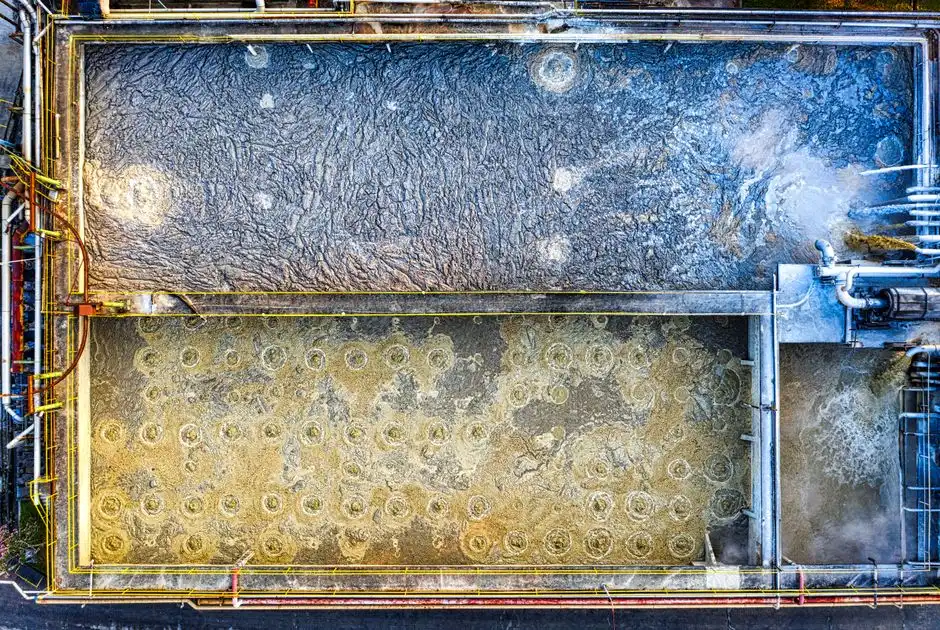
The 2024 PMC review identifies dissolved air flotation and sedimentation as primary-treatment methods for removing suspended solids, grit, fats, and oils. Both therefore belong at the physical-separation stage of a semiconductor wastewater treatment train, but they separate material through different mechanisms.
DAF introduces microbubbles into conditioned wastewater. Particles that can attach to the bubbles rise and are removed by a skimming mechanism. The HydropureWater DAF system identifies suspended solids, FOG, oil and grease, and colloidal matter among its target applications. This makes flotation a logical starting point when floatability or bubble attachment is a defining characteristic of the contaminant load.
Lamella clarification is a compact sedimentation process. Inclined plates shorten the effective settling path, allowing conditioned solids to separate from the liquid within a smaller footprint than a conventional settling arrangement. The HydropureWater lamella clarifier combines sludge recirculation, flocculation, and inclined-plate separation, making it a stronger starting point for flocculated solids that can be conditioned and settled.
The PMC review classifies DAF and sedimentation as physical treatment methods. Chemical and biological treatment address different objectives, so neither physical process should be presented as a universal solution for semiconductor wastewater. Both are also sensitive to stream behavior: a DAF that handles a stable oily stream may not be suitable for every waste stream, while a clarifier receiving poorly conditioned or highly variable solids may produce unstable separation.
Most importantly, flotation and clarification do not automatically remove dissolved metals, fluorides, nutrients, or other dissolved species. Their role is to prepare the stream for the downstream unit that must meet the applicable discharge or reuse specification.
DAF versus clarifier: select by waste and operating conditions
DAF is the stronger starting point for floatable oil and grease, FOG, colloids, and suspended solids that can be attached to bubbles. A lamella clarifier is the stronger starting point for flocculated, settleable solids and a compact gravity-separation footprint. That distinction is a screening rule, not a guarantee; the final choice depends on representative wastewater and the required outlet quality.
| Decision factor | Dissolved air flotation | Lamella clarification |
|---|---|---|
| Best starting fit | Oil and grease, FOG, colloids, and floatable suspended solids | Flocculated, settleable solids |
| Separation mechanism | Microbubble attachment followed by flotation and skimming | Flocculation followed by settling and inclined-plate separation |
| Conditioning | May require coagulation and flocculation; determine the recipe by jar and pilot testing | May require coagulation and flocculation; determine the recipe by jar and pilot testing |
| Hydraulic anchor | No comparable DAF surface-loading figure is supplied in the research | HydropureWater lists surface loading rates of 20–40 m/h |
| Catalog capacity anchor | HydropureWater lists 13 standard models from 4–300 m³/h | Final capacity must be established from wastewater and hydraulic criteria |
| Removed solids stream | Skimmed float requiring an appropriate collection and dewatering route | Settled sludge requiring withdrawal, recirculation, and dewatering |
| Key operating checks | Flow variability, bubble attachment, float removal, chemical availability, and skid access | Floc quality, flow variability, sludge withdrawal, plate access, and recirculation |
The 4–300 m³/h DAF range and 13-model span are catalog limits, not a State College design recommendation. Likewise, the clarifier’s 20–40 m/h surface-loading range is a product anchor, not a guaranteed project value. Final sizing must follow the characterized flows, contaminant behavior, selected surface-loading basis, hydraulic profile, and required outlet quality.
Both technologies can depend on chemical conditioning, so neither avoids the need for a dosing system. The engineer should evaluate an automatic chemical dosing system and confirm tankage, metering, mixers, controls, and maintenance access in the overall scope.
Solids handling can decide the result. Compare the character, volume, and destination of DAF float with clarifier sludge. If dewatering is required, a plate and frame filter press is a downstream option for the selected solids stream, but its suitability must be established using actual solids properties.
Use a staged treatment train for semiconductor wastewater
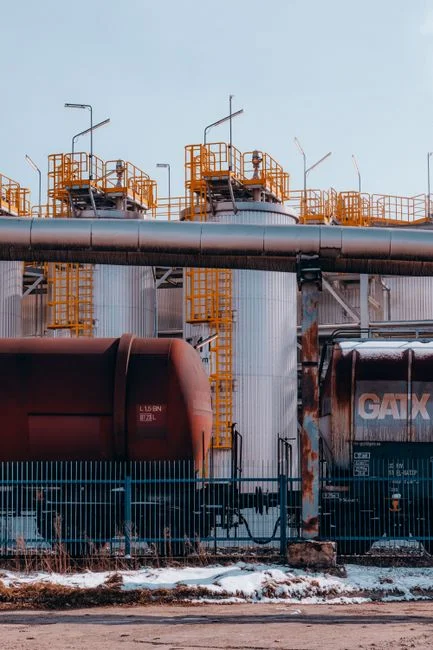
The 2024 PMC review divides wastewater treatment into preliminary, primary, secondary, and tertiary stages, while also cautioning that industrial facilities may need parallel unit operations because streams differ. A semiconductor plant should therefore map each stream to a treatment route rather than force every waste through one linear train.
Preliminary treatment protects downstream equipment through screening, comminution, grit removal, or equivalent measures. Primary treatment then addresses suspended solids, grit, fats, and oils; the PMC review specifically lists sedimentation and DAF at this stage. A lamella clarifier or DAF unit is commonly evaluated here because both are physical separation processes.
The next unit must follow from the characterization. The 2024 review identifies membrane filtration, adsorption, and chemical oxidation as tertiary or advanced treatment examples. Biological treatment is a separate secondary-treatment category and should not be presumed suitable for every semiconductor stream.
| Treatment stage | Function in the semiconductor train | Selection condition |
|---|---|---|
| Preliminary | Remove debris, grit, and protective solids before fine separation | Screen and protect the selected DAF or clarifier from unsuitable material. |
| Primary physical separation | Remove selected suspended solids, colloids, FOG, oil and grease, or floatable material | Use DAF for floatability and bubble attachment; use lamella clarification for conditioned, settleable solids. |
| Secondary or chemical treatment | Address treatment objectives not met by physical separation | Select only after identifying dissolved constituents, organics, toxicity, and applicable limits. |
| Tertiary or advanced treatment | Polish water for discharge or reuse requirements | Evaluate membrane filtration, adsorption, or chemical oxidation against characterized contaminants and reuse goals. |
| Solids management | Dehydrate and route sludge or float | Use a filter press only where solids testing supports the selected dewatering route. |
For reuse-oriented projects, connect the physical separator to a polishing sequence selected for the water quality and end use. Depending on the treatment objective, the supplier’s broader equipment scope may include industrial reverse-osmosis equipment or ultrafiltration. The supplied research does not establish a semiconductor-specific recovery rate, so reuse claims must remain project-specific and tied to verified feedwater and product-water requirements.
Turn the comparison into a State College procurement plan
The procurement sequence should move from permit requirements to representative testing, then to a performance-backed bid. Brand comparisons come last because the installed treatment train—not the tank or flotation skid—determines whether the facility can meet its obligations.
- Confirm the governing requirements. Obtain the current State College sewer rules, industrial-user pretreatment requirements, applicable discharge permit, and internal reuse criteria. The supplied research does not contain local numeric limits, so no concentration, loading, or reuse threshold should be invented.
- Complete characterization and design criteria. Define peak and average flow, batch behavior, contaminant fractions, required outlet quality, footprint, operating mode, chemical system, and sludge or float destination.
- Test the process. Conduct jar testing for chemical conditioning and, where the project risk warrants it, compare DAF and lamella clarification using representative semiconductor wastewater. The Comprehensive review of industrial wastewater treatment in PMC, 2024, supports case-by-case treatment selection based on influent characteristics, standards, land, technology availability, and economics.
- Request a guaranteed design basis. Ask bidders for hydraulic calculations, a P&ID, materials of construction, control narrative, chemical-consumption estimate, startup procedure, maintenance plan, commissioning protocol, acceptance tests, and spare-parts list.
- Confirm interface scope. Check whether the offer includes equalization, screening, chemical dosing, solids removal, instrumentation, controls, power, utilities, sludge handling, and downstream connections rather than only the separator.
| Procurement stage | Required deliverable | Acceptance question |
|---|---|---|
| Permit and reuse basis | Current governing requirements and project objectives | Does the proposed outlet basis match the actual State College route? |
| Characterization | Stream inventory, flow data, and analytical results | Was the design based on representative and variable wastewater? |
| Pilot work | Jar-test and, where appropriate, pilot comparison data | Does the selected mechanism remove the intended contaminant fraction? |
| Supplier guarantee | Performance basis, drawings, controls, and acceptance criteria | Are responsibilities, test methods, and remedies unambiguous? |
| Operations and solids | Startup, maintenance, chemical, and dewatering scope | Can plant staff operate and maintain the installed train? |
Screen solids using a rotary mechanical bar screen where the stream inventory indicates protective screening is needed. For solids dewatering, a plate and frame filter press should be evaluated as a downstream item with its own feed and cake-disposal basis.
As of 2026, evidence-based acceptance testing and current permit verification are more defensible than selecting a unit from a catalog range. A 2025 electronics-manufacturing reference on chromium wastewater treatment for electronics manufacturing may help structure project questions, but its stated performance and compliance claims should not be transferred to a different factory or wastewater stream.
Frequently Asked Questions
What should the budget comparison include for DAF versus a lamella clarifier?
Compare the complete installed cost, not the separator price alone. Request quotations covering equalization, screening, chemical conditioning, controls, float or sludge removal, energy, maintenance, dewatering, residuals disposal, downstream treatment, startup, and acceptance testing. The supplied research contains no project-price range, so the buyer should require each bidder to price the defined scope using the characterized wastewater and outlet requirements.
How should a State College factory size the DAF or clarifier?
Size from wastewater characterization, peak and average flow, contaminant behavior, required outlet quality, hydraulic conditions, and downstream constraints. The DAF catalog range of 4–300 m³/h across 13 standard models and the clarifier’s listed surface loading rates of 20–40 m/h are product anchors, not final design values. Request the bidder’s hydraulic calculation and performance basis for the actual flow profile.
Which questions should be used to select an equipment supplier?
Evaluate wastewater-specific evidence, pilot or historical performance, guaranteed outlet conditions, controls, service scope, commissioning support, acceptance testing, and delivery details. Ask how the supplier will handle failed performance tests and include the integrated circuit wastewater recycling design only as a source of project questions—not as proof of this plant’s outcome. Tank dimensions alone are not a selection basis.
Do DAF and lamella clarification make the wastewater compliant?
No. The 2024 PMC review requires treatment selection to consider regulatory standards, but the supplied research contains no State College-specific numeric limits. The supplier and project engineer must therefore work from the facility’s current permit and sewer requirements. DAF and lamella clarification should be treated as pretreatment steps unless verified data demonstrates otherwise.
Can either unit remove dissolved metals, fluorides, or nutrients?
Do not assume so. Physical flotation and clarification primarily target the particulate or floatable fraction. Dissolved metals, fluorides, nutrients, and other dissolved contaminants require an appropriate downstream assessment, which may involve chemical, membrane, adsorption, oxidation, or another validated treatment method. The required sequence must follow characterization and the final discharge or reuse specification.