What Every Chemical Plant Near Menominee Must Establish First
The controlling document for a chemical plant discharging to the Menominee POTW is the industrial user permit issued for that facility, together with applicable prohibited-discharge rules, local discharge limits, and monitoring conditions. EPA’s Local Limits Development Guidance, published in 2021, explains that indirect dischargers are governed by permits or equivalent control mechanisms issued to POTW industrial users, or by regulatory requirements. The 134-page guidance is not itself a regulation and does not substitute for permit or regulatory requirements. Its cited federal framework includes 40 CFR Parts 122, 123, 124, and 403, and Chapter I, Subchapter N. Categorical pretreatment standards, local limits, and permit conditions can apply together, so the plant must review all three rather than rely on a single concentration limit. A chemical plant’s pretreatment limits guide can support the same permit-first review, but it cannot supply Menominee requirements.
Begin by asking the Menominee POTW for the current industrial pretreatment program materials, the plant’s permit or permit application status, applicable local limits, categorical-standard determinations, and required monitoring. Also check the city’s water and wastewater utility board agenda and meeting records for current policy. The available Menominee municipal board agenda was published in 2023, but an agenda is not a permit, adopted ordinance, or enforceable local limit. It is a place to identify current policy discussions and records, not a substitute for controlling documents.
Do not import numerical limits from another utility. For example, Cedar City’s pH range, oil-and-grease limit, and pollutant table are Cedar City requirements and have no evidentiary force in Menominee. Likewise, the Menominee PFAS results discussed below describe city wastewater testing, not an industrial-user limit. The plant’s defensible position rests on the issued permit, applicable federal requirements, the receiving authority’s current local limits, and documented treatment performance.
Build a Complete Picture of the Chemical Plant Wastewater
Chemical wastewater characterization must cover every route by which material can reach the sewer because characterization of only the largest batch stream cannot establish compliance for a segregated, intermittent, or hauled waste. The plant should map wash water, product-contact cleaning, laboratory drains, cooling blowdown, stormwater, floor drainage, and hauled waste where applicable. For each stream, request flow records, production schedules, batch and dump histories, chemical inventories, disposal routes, and representative analytical results. These inputs establish both concentration and mass loading, including peak and episodic conditions that an average flow value can conceal.
EPA’s 2021 guidance provides a useful project framework even though it is not binding on the plant: determine pollutants of concern, collect and analyze data, calculate maximum allowable headworks loadings, designate and implement local limits, and address collection-system concerns. During discussions with the POTW, ask which pollutants its industrial-user permits must address, what data the authority uses for local-limit development, and how industrial loadings are allocated. The term maximum allowable headworks loading refers to the mass loading available for treatment after accounting for upstream removal and the receiving facility’s operating constraints; it is not a substitute for a concentration limit in an individual permit.
Test for the pollutants identified by the permit, categorical standards, local pretreatment program, and characterization plan—not a generic chemical-plant panel. The 2021 Menominee PFAS article identifies chemical manufacturers, metal finishers, paper and packaging manufacturers, landfill leachate, centralized waste treaters, and sites where AFFF was used as industrial categories for monitoring. Those categories indicate where PFAS source control may be warranted, but they do not establish that every chemical plant near Menominee is subject to a PFAS-specific discharge limit.
| Decision input | Evidence to obtain | Compliance use |
|---|---|---|
| Wastewater stream inventory | Source, destination, flow history, production linkage, chemical inventory, batch and dump records | Identifies every stream that may require treatment, segregation, authorization, or alternate disposal. |
| Pollutants of concern | Permit, applicable categorical standards, POTW local-limit materials, analytical data | Defines the analytes to characterize and the conditions the treatment system must address. |
| Local-limit development | EPA’s five-part sequence: pollutants of concern, data collection and analysis, MAHL calculation, implementation, collection-system concerns | Structures plant-POTW discussions and distinguishes receiving-factory loading from the plant’s permitted discharge conditions. |
| PFAS relevance | Facility activities, AFFF history, product use, representative analytical results, POTW direction | Supports PFAS source control without treating citywide wastewater results as plant-specific limits. |
Use Source Control Before Choosing a Treatment Unit
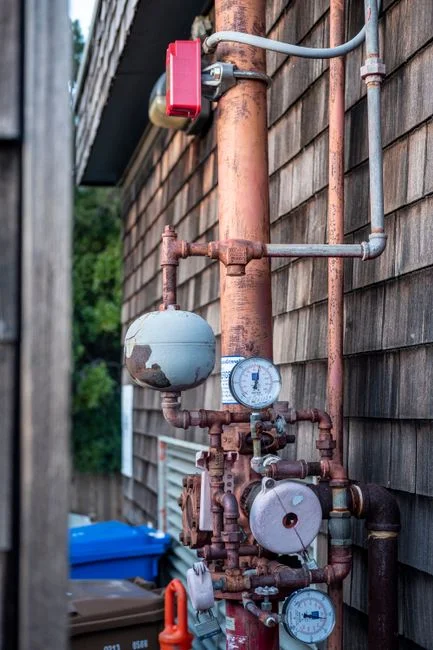
Source control is the first engineering barrier because concentrated chemicals can make a treatment system undersized and can create sewer, treatment-plant, or sludge problems before end-of-pipe treatment begins. Proper management of these streams requires a thorough understanding of the plant's operational controls. The Cedar City pretreatment program illustrates the best management practice concept through schedules of activities, prohibited practices, maintenance procedures, and other management practices used to implement discharge prohibitions. For a chemical plant, that concept translates into documented operating controls: segregate incompatible streams, isolate floor drains during chemical handling, provide secondary containment, protect drains during tank and vehicle movements, and maintain a spill-response procedure.
The DAF versus clarifier for chemical wastewater discussion provides a useful process comparison, but Cedar City remains only a source-control model. Its 2011 BMP document states that BMP implementation does not exempt an industrial user from obtaining the wastewater discharge permit. It also warns that accidental chemical discharge must be prevented rather than merely rinsed away. That principle is more important than copying its numerical table: Cedar City’s 5.0–12.5 pH range, 100.0 mg/L oil-and-grease value, and listed metal limits are not Menominee standards.
Dilution should not be treated as a substitute for containment or treatment. It may assist a permitted treatment process only when the receiving authority’s requirements, the treatment design, and downstream process compatibility support it. Incompatible streams should remain isolated until their disposal route is approved. Each stream should have a documented destination, including direct disposal where sewer discharge is not acceptable.
- List each waste stream and its chemical constituents.
- Identify prohibited or incompatible constituents and segregate them.
- Assign an authorized treatment or disposal route to every residual stream.
- Define inspections, containment, spill response, and waste-handling responsibilities.
- Verify that the final combined discharge remains within all permit conditions.
Match the Treatment Train to the Contaminants
Treatment selection should begin with the issued permit and measured wastewater, then choose the smallest process that can reliably satisfy every applicable condition. A DAF system for chemical wastewater pretreatment is a candidate when characterization identifies suspended solids, oil and grease, floatable material, or colloidal matter that could interfere with the sewer or POTW. The supplied product catalog identifies those contaminants as DAF targets and includes chemical manufacturing among its industrial applications. That supports DAF as an evaluated option, not as a default treatment or proof of permit compliance.
Use an automatic chemical dosing system for pretreatment pH control when the authorized process requires pH adjustment, coagulation, flocculation, or another specialty chemical. The supplied equipment information describes the dosing system as PLC-controlled and factory-tested. Factory testing does not establish site performance; the design still needs flow-paced chemical demand, tank capacity, containment, calibration, alarms, and safe handling based on the characterized wastewater.
| If characterization shows | Treatment decision | Design evidence required |
|---|---|---|
| Oil and grease, floatables, suspended solids, or colloidal matter | Evaluate DAF as a physical-separation step, with performance demonstrated for the actual waste. | Measured flows and loadings, waste variability, oil characteristics, solids data, solids or sludge handling route, and control philosophy. |
| pH outside authorized conditions or a permit-defined treatment requirement | Evaluate chemical dosing and associated mixing or equalization. | Permit condition, pH profile, chemical demand, storage, containment, dosing controls, and fail-safe response. |
| Dissolved metals or other dissolved pollutants | Evaluate a process specifically supported by analytical data; physical separation alone is not a substitute. | Species and concentration data, treatment chemistry, residuals, sludge disposition, and demonstrated performance criteria. |
| Biodegradable organic load | Evaluate biological treatment only after local characterization and POTW compatibility review. | Organic loading, toxicity or inhibition information, treatment objectives, and confirmation that the selected process is permitted. |
| Multiple incompatible objectives | Develop a sequenced train and verify that each stage protects the next. | Stream segregation, unit-by-unit mass balance, bypass prevention, and combined-discharge compliance. |
Do not transfer Cedar City’s pH, oil-and-grease, or metal values to Menominee. Obtain the permitted limits from the receiving authority and reconcile them with the plant’s own data. The design review should also address variable production chemistry, bypass prevention, fail-safe controls, chemical storage, secondary containment, and sludge or spent-chemical handling. Physical separation, pH control, dissolved-metal removal, and biological treatment solve different problems; their functions are not interchangeable.
Document Compliance at the Point of Discharge
Compliance must be demonstrated at the location and under the conditions specified in the plant’s permit. Follow its monitoring point, frequency, sample type, analytical method, and reporting procedure rather than creating an internal schedule independently. EPA’s 2021 guidance identifies sampling at the POTW, in the collection system, and at industrial users as relevant locations for local-limit development, which supports coordinated data exchange without replacing the plant’s monitoring obligations.
Maintain an auditable record that links each significant wastewater stream to its treatment or disposal route and links the final discharge to the permit. Depending on the permit and process, the record should include wastewater characteristics, operating conditions, chemical use, bypass events, calibration, maintenance, analytical results, and corrective actions. The industrial pretreatment compliance workflow provides a useful record-structure model, but Kankakee requirements cannot be used as Menominee requirements.
Establish an escalation procedure before commissioning. Define who stops or isolates a discharge, who informs the POTW, how the sample is collected, when resampling is required, and what evidence closes the corrective action. The trigger set should include an upset, analytical exceedance, bypass, unauthorized waste stream, or changed production chemical. Exact notification, reporting, and resampling duties must come from the issued permit and applicable regulation.
The 2021 Menominee PFAS article reported wastewater results of 7.2 nanograms per liter for PFOS and 39 nanograms per liter for PFOA. Those were city wastewater testing results discussed with the utility board, not plant-specific industrial discharge limits. A chemical plant should use them as context for PFAS source control, not as compliance thresholds.
Frequently Asked Questions
How much should pretreatment equipment cost near Menominee?
No supported Menominee price range is available, so a generic budget would be misleading. Request a written offer tied to measured peak flow, pollutant loading, operating variability, permit conditions, utilities, chemical consumption, controls, foundations or installation requirements, commissioning, training, and residuals handling. Require the supplier to identify any exclusions. Compare quotations on the same process basis rather than using a production-rate rule of thumb.
How should a supplier be selected for chemical wastewater treatment?
Select a supplier that provides a complete process basis rather than only a vessel or pump package. The submittal should identify target contaminants, measured design inputs, treatment sequence, control philosophy, utility and chemical requirements, performance basis, bypass strategy, commissioning plan, and compliance documentation. For DAF versus clarification, use the comparison of DAF and clarifier applications to define what must be demonstrated, but do not import another city’s limits.
Is DAF sufficient for every chemical-plant wastewater discharge?
No. DAF is a candidate for oil, grease, floatables, suspended solids, and colloidal matter; it does not by itself satisfy every pH, dissolved-metal, or other specialty treatment requirement. Select the train from permit conditions and representative analytical data, and verify each unit’s function in the combined discharge.