Which unit fits the wastewater, not the sales pitch?
Choose DAF when FOG, product-loss organics, phosphorus, or fine solids are the main constraint; choose a lamella clarifier when the load is predominantly heavy, settleable solids and operating energy is the priority. Dissolved air flotation attaches micro-bubbles to suspended solids, organics, and FOG so the float can be skimmed, while a lamella clarifier uses gravity and inclined plates to collect settleable sludge. DAF costs more energy because air must be compressed, whereas clarification generally consumes less. The final selection should follow wastewater characterization, jar and pilot testing, and a written guarantee against the plant’s discharge or reuse limits—not a catalog removal claim.
Neither technology is a complete treatment train by default. Dissolved or biodegradable pollutants may still require biological treatment, filtration, or additional reuse treatment after physical separation. The relevant comparison for Ogden is therefore not “DAF versus clarifier” in the abstract; it is which configuration reduces the specified risk at the lowest total operating and compliance burden.
Review the HydropureWater DAF system and the high-efficiency lamella clarifier against the plant’s current pretreatment train, sewer connection, and written reuse standard. Current discharge and pretreatment requirements are project-specific and must be confirmed with the applicable authorities; no generic Ogden limit should be assumed.
Characterize the factory wastewater before comparing equipment
Equipment selection should begin with written records of hourly average flow, peak hourly flow during CIP cleaning, influent TSS, FOG, BOD or COD, pH, and temperature, because the DAF design guidance in HydropureWater’s 2026 beverage-wastewater article identifies these as required site inputs. Sampling must represent production, cleanup, and product-loss periods. One routine composite can conceal the dilute production load, concentrated cleaning discharge, and transient syrup loss that determine whether flotation is justified.
Map each stream before combining it. Syrup or product loss, fruit pulp, spent grains, bottle-wash detergent, and other cleaning chemicals can differ materially in density, particle size, soluble organic content, and chemical demand. The wastewater overview published by Scribd in 2011 identifies food-processing streams with organic particles, fruit material, soluble organics, fats, and oils. It also defines BOD as the oxygen demand associated with biodegradable pollutants and COD as the broader oxygen demand from oxidizable pollutants.
Identify the document that will become the acceptance basis. Target values must come from the current permit, sewer authority, or internal reuse standard, and the project must determine whether physical separation is being purchased for discharge, sewer pretreatment, water recovery, odor control, or downstream equipment protection.
| Required input | What the buyer should obtain | Why it affects selection |
|---|---|---|
| Flow | Hourly average and CIP peak | Sets hydraulic equipment size and equalization need |
| Solids and FOG | TSS and FOG during representative operating periods | Indicates whether flotation or gravity separation is more appropriate |
| Organics | BOD and COD | Shows whether physical separation leaves a biological or oxidation load |
| Process chemistry | pH and temperature | Influences coagulation, flocculation, and downstream biology |
| Separate streams | Source, duration, and characteristic load for syrup loss, pulp, grains, and CIP | Prevents a diluted average from masking concentrated events |
| Acceptance basis | Current discharge, sewer, or reuse specification | Converts a catalog claim into a testable guarantee |
Screen protection should also be evaluated with the actual stream composition rather than added later as an uncontrolled accessory; a rotary mechanical bar screen may be relevant where the characterization shows material that could foul or overload downstream equipment.
How DAF and lamella clarification separate different contaminants
DAF separates material by flotation, while lamella clarification separates it by sedimentation. In DAF, screening and flow equalization are followed by coagulant dosing, floc formation, saturated recycle-water introduction, micro-bubble attachment, and surface skimming. HydropureWater’s 2026 beverage-wastewater guide, citing WWD Magazine, identifies suspended solids, organic matter, hydrocarbons, phosphorus, and nitrogen as the five general DAF removal targets. That is a process description, not a guarantee for an Ogden plant.
A lamella clarifier uses flocculation, sludge recirculation, and inclined-plate separation to collect settleable solids as bottom sludge. HydropureWater’s catalog lists surface-loading rates of 20–40 m/h and states that chemical consumption can be up to 30% below the source’s comparison basis. Those are catalog values, not site guarantees; the project must obtain the proposed surface loading, chemical basis, sludge-recirculation rate, and effluent performance in writing.
| Process step | DAF | Lamella clarifier |
|---|---|---|
| Conditioning | Coagulant dosing and floc formation | Flocculation before inclined-plate separation |
| Separation mechanism | Micro-bubbles attach material to the surface for skimming | Gravity and inclined plates collect settleable sludge |
| Preferred load | FOG, hydrocarbons, fine solids, and floatable product-loss organics | Heavy, settleable solids |
| Residual solids route | Float plus possible sinking sludge | Bottom sludge |
| Polymer use | May be needed for fragile floc or incomplete skimming | Depends on floc formation and sludge behavior |
| Key design output | Hydraulic and air loading, recycle rate, retention time, skimmer performance | Surface loading, recirculation, sludge removal, effluent performance |
DAF has a specific failure mode: chemicals or particles that do not float can form sinking sludge. HydropureWater’s 2026 guide identifies fruit pulp, spent grains, and pulp fines as materials that can change particle density. Require the vendor drawing to show both float withdrawal and bottom-sludge withdrawal. The same source notes that sugar- or surfactant-affected streams can produce fragile floc; polyelectrolyte or polymer dosing in the flocculation stage may then be necessary.
Compare DAF and clarifier performance, cost and operating burden
DAF has the better contaminant fit where oil, FOG, fine solids, and product-loss organics dominate, while a clarifier is better suited to heavy, settleable solids. The principal operating trade-off is air compression: HydropureWater’s 2026 guide, citing WWD Magazine, states that DAF consumes more energy than sedimentation. A clarifier’s relative advantage is therefore lower operating energy, not automatically lower whole-life cost.
Footprint and mechanical complexity require a project-specific comparison. Ecologix’s vendor-published selection guide describes DAF as compact and suitable for oil, grease, and fine-solids removal, but the final arrangement should be based on the bidder’s hydraulic and solids loading, available floor area, and access. Do not accept a footprint claim without the proposed general arrangement and utility connections.
Vendor examples must retain their original scope. Ecologix reports that a food-processing plant with high-oil wastewater achieved 95% oil-and-grease removal with DAF versus 70% with a clarifier on the same stated stream. It separately reports 90% solids reduction at lower cost with a clarifier at a mining facility handling heavy sediment. The first is vendor-published food-processing evidence; the second is a different heavy-solids application. Neither is an Ogden food-processing guarantee.
| Decision factor | DAF | Lamella clarifier | Buyer’s required evidence |
|---|---|---|---|
| Dominant contaminant | FOG, hydrocarbons, fine solids, floatable organics | Heavy, settleable solids | Representative influent analysis and operating envelope |
| Energy | Higher because of air compression | Generally lower | Connected-load and operating-energy model |
| Sludge | Skimmable float and possible sinking sludge | Bottom sludge | Solids concentration and downstream dewatering interface |
| Variability | Must absorb CIP and product-loss events within the tested envelope | Must maintain settling at peak solids loading | Pilot data from CIP-spiked and product-loss wastewater |
| Performance evidence | Removal and hydraulic claims must be tied to curves | Surface-loading and effluent claims must be site-specific | Curves, guarantees, and acceptance test |
| Combined treatment | Can precede clarification where both floatable and settleable solids matter | Can follow DAF for residual settling | Pilot-verified treatment train |
A hybrid arrangement can be rational: DAF removes oil and floatable material before clarification handles residual settleable solids. Treat that as a train to pilot and price, not a default. The governing commercial question is whether the added FOG and organics recovery justifies the air, pumping, chemical, control, and maintenance burden.
Use a three-stage test to prove the selected process
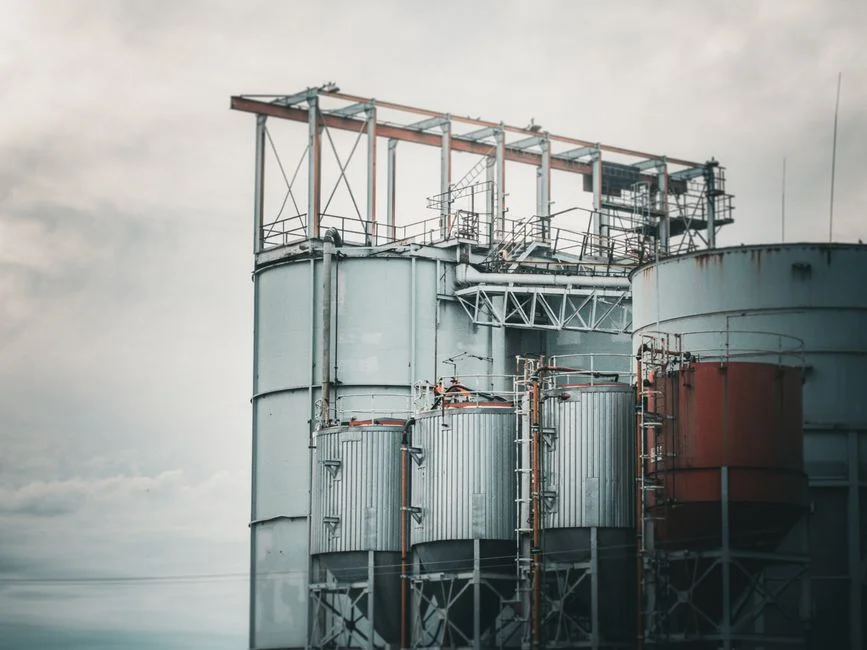
A defensible selection uses bench testing, pilot verification, and written acceptance in sequence. HydropureWater’s 2026 guide specifies a minimum jar-test matrix of three coagulants selected from alum, poly aluminum chloride, poly aluminum sulfate, ferric chloride, bentonite, and organic polymers, crossed with at least one polymer at three dose levels each. This matrix identifies the chemistry that creates stable, skimmable or settleable floc under actual production, cleanup, and product-loss conditions.
- Jar test: Test the stated coagulant-polymer matrix, recording TSS, FOG, COD, pH, float recovery, bottom-sludge behavior, and chemical consumption.
- Pilot test: Run the shortlisted DAF or clarifier with CIP-spiked and product-loss wastewater, then measure the plant’s written TSS, FOG, BOD, COD, phosphorus, nitrogen, and pH targets as applicable.
- Acceptance: Define the operating scenario, sampling method, load conditions, guarantee, remedy, and retest procedure in the purchase agreement.
For DAF, request performance curves rather than a single operating point. Hydraulic loading must be stated in m³/m²·h; the air-to-solids ratio in g air/g TSS must be given as a curve; recycle rate must be a percentage of forward flow; and flocculation retention time must be stated in minutes. Confirm the recycle pump, saturation tank, compressor, skimmer, and chemical controls together, because a performance curve without the operating envelope is incomplete.
| Test stage | Required inputs | Required output |
|---|---|---|
| Jar test | Three coagulants; at least one polymer; three polymer dose levels | Selected chemistry, dose, settled or floated solids behavior, and measured removals |
| Pilot | Production, CIP-spiked, and product-loss wastewater | Performance under the proposed hydraulic and solids loading |
| DAF acceptance | Hydraulic loading, air-to-solids curve, recycle rate, retention time, skimmer performance | Guaranteed effluent results at stated operating conditions |
| Clarifier acceptance | Surface loading, recirculation, sludge removal, influent loading | Guaranteed effluent results and sludge interface |
| Final acceptance | Current discharge or reuse specification | Written pass/fail criteria, remedies, and retest procedure |
The documented aluminum comparison is a starting point, not a selection rule: monomeric aluminum was more efficient for TSS and soluble COD removal, while polymeric and colloidal forms were more effective for soluble silica. Confirm the actual choice by jar testing. A packaged automatic chemical dosing system should then reproduce the selected dose with documented turndown.
Build an RFQ that exposes hidden equipment scope
A comparable RFQ must state the performance envelope, not just a unit price and headline removal percentage. Require each shortlisted supplier to identify hourly average flow, CIP peak flow, influent and target effluent values, hydraulic loading, recycle ratio, flocculation retention time, skimmer type, sludge interface, PLC scope, training, and commissioning responsibilities.
For DAF, require the hydraulic loading rate in m³/m²·h, air-to-solids ratio in g air/g TSS as a curve, recycle rate as a percentage of forward flow, and flocculation retention time in minutes. Request the cone-bottom, float-thickening beach, or equivalent geometry where the proposed configuration relies on it, together with both float and sinking-sludge withdrawal paths.
| RFQ package | Items bidders must state | Why procurement needs them |
|---|---|---|
| Design basis | Average and CIP peak flow; influent loads; target effluent; operating scenario | Prevents bids based on different assumptions |
| DAF performance | Hydraulic loading, air-to-solids curve, recycle ratio, retention time, skimmer performance | Tests whether the unit can absorb variable load |
| Clarifier performance | Surface loading, sludge recirculation, sludge removal, effluent guarantee | Separates catalog capacity from site performance |
| Solids handling | Float and sinking-sludge routes; thickening geometry; dewatering interface | Prevents an upstream flotation or settling bottleneck |
| Controls and service | PLC scope, instrumentation, chemical dosing, training, site acceptance testing | Defines commissioning and operating responsibility |
| Commercial assurance | Named food-and-beverage references, pilot evidence, written guarantee and remedy | Tests relevant operating experience and contractual exposure |
Ask for named food-and-beverage references rather than generic industrial references. Beverage influent is not interchangeable with refinery or metalworking wastewater. Require site acceptance testing, operator training, the full PLC and automation scope, a performance guarantee tied to the written discharge or reuse specification, and a clear downstream dewatering interface.
Use the DAF catalog range of 4–300 m³/h across 13 standard models as a range check, as published in HydropureWater’s 2026 guide. If the required duty falls outside it, require a custom-engineered proposal with a separately defined scope. Compare the plate-and-frame filter press for float and sludge only as a downstream interface, not as part of the DAF or clarifier quotation unless the bidder explicitly states that it is included.
Match solids handling to the plant's next treatment step
The selected separation unit must deliver solids at a concentration and physical form accepted by the downstream dewatering equipment. Check DAF float, DAF sinking sludge, and clarifier bottom sludge against the selected press or thickener’s minimum feed-solids acceptance. If the float is too dilute for direct dewatering, specify thickening before the press rather than accepting a wider dewatering scope later.
For DAF, the vendor arrangement should connect float thickening to the downstream plate-and-frame filter press for float and sludge or another specified dewatering step, while preserving a route for sinking material. For a lamella clarifier, define how bottom sludge is withdrawn, thickened, and transferred. Dewatering acceptance and the waste-disposal route remain part of the process guarantee.
Use an automatic chemical dosing system to hold the jar-tested dose through changing beverage flows, but include dose limits, turndown, chemical storage, containment, and operator controls in the scope. Finally, confirm utilities, available footprint, and plant access during vendor review. The supplied research provides no Ogden-specific energy tariff, water-reuse requirement, or disposal cost, so those must be obtained as project inputs before any life-cycle-cost comparison is accepted.
Frequently Asked Questions
Is DAF or a clarifier cheaper for an Ogden food and beverage plant?
A clarifier generally has lower operating energy because it does not compress air, while DAF can be more cost-effective when removable oil or FOG is the main problem. There is no defensible quotation from the supplied research because electricity prices, chemical use, labor, sludge disposal, and reuse value are site-specific. Request each bidder to model those inputs and quote an operating-cost breakdown, while comparing bids on the same flow, load, and effluent guarantee.
What size DAF or clarifier does a food-processing plant need?
Neither the DAF catalog envelope of 4–300 m³/h nor the lamella clarifier’s 20–40 m/h surface-loading claim establishes final size by itself. Size from hourly average and CIP peak flow, influent solids and FOG loading, physical settleability or floatability, target effluent, available footprint, and the required operating scenario. Use the catalog figures as range checks, then require a site-specific proposal and pilot-verified design point.
What should an Ogden buyer require when selecting a wastewater equipment supplier?
Require named food-and-beverage references, relevant pilot or performance evidence, written guarantees, hydraulic and air-loading curves where DAF is proposed, site acceptance testing, operator training, and a defined PLC and automation scope. Check references for comparable wastewater variability and confirm that the supplier is guaranteeing the written discharge or reuse specification—not reproducing a commercial example from another industry.
What Ogden wastewater requirements must be confirmed before purchasing equipment?
Confirm the current requirements with the applicable sewer authority and the Utah Air Pollution Control District pretreatment program for the plant’s specific discharge connection. Also confirm any internal water-reuse specification. Do not insert a generic limit into the RFQ: the current written requirement should become the basis for pilot acceptance, the performance guarantee, and the remedy if the unit fails.