Which packaged plant fits an Isfahan housing development?
For an Isfahan housing development, a buried WSZ A/O package is the practical starting point for roughly 50–2,000 people when automated operation, limited site footprint, and straightforward installation dominate the brief. Choose an MBR package when irrigation reuse is the design driver, available space is constrained, or the specification requires TSS below 5 mg/L consistently. Begin with 175 L/c/d as the central residential flow, apply a 1.5–2.0 peak factor, and size against the confirmed 2026 discharge or reuse parameters. Both technologies remain candidates until wastewater testing, site conditions, permits, and operating arrangements have been reviewed.
The equipment ranges are selection boundaries, not sizing calculations. A buried WSZ A/O package covers 1–80 m³/h, while an MBR package covers 10–2,000 m³/day. A supplier must still demonstrate that the proposed unit handles the design population, average and peak hydraulic loads, biological loads, and confirmed effluent duties.
| Selection condition | Preferred candidate | Reason to develop further |
|---|---|---|
| Approximately 50–2,000 PE; buried installation; automated operation without a dedicated operator | WSZ A/O | Confirm reuse performance, winter biological capacity, groundwater conditions, and site-specific loads. |
| Irrigation reuse is mandatory; footprint is constrained; TSS below 5 mg/L is required consistently | MBR | Obtain membrane design data, cleaning requirements, energy demand, and complete auxiliary scope. |
| Food-service flows, groundwater infiltration, or variable stormwater entry | Either, subject to pretreatment review | Characterize the wastewater and add equalization, FOG treatment, or additional flow controls where justified. |
The Isfahan 2026 sewage process and compliance guide provides the project context. Its selection logic is conditional: reuse and footprint favor MBR, while a smaller buried residential installation with low operating complexity may favor WSZ.
Isfahan design basis for domestic sewage
The HydropureWater Isfahan 2026 design envelope uses 150–200 L/c/d for residential wastewater, with 175 L/c/d as the central case. The same guide gives preliminary raw sewage characteristics of BOD₅ 200–250 mg/L, COD 400–500 mg/L, TSS 200–250 mg/L, NH₃-N 20–30 mg/L, and Total-N 35–50 mg/L. These are preliminary domestic-sewage assumptions, not substitutes for local sampling.
Use a 1.5–2.0 peak-to-average ratio for residential complexes. Equalization must be checked against the peak rather than the average because inadequate equalization is identified by the HydropureWater Isfahan 2026 guide as a common cause of MBR or SBR upsets. Hydraulic design must also distinguish wastewater generated by residents from the water entering the plant.
| Design input | Preliminary basis | Verification required |
|---|---|---|
| Residential wastewater flow | 150–200 L/c/d; use 175 L/c/d as the central case | Approved local basis or site-specific residential-flow assessment |
| Raw BOD₅ | 200–250 mg/L | Composite influent testing |
| Raw COD | 400–500 mg/L | Composite influent testing |
| Raw TSS | 200–250 mg/L | Composite influent testing |
| NH₃-N | 20–30 mg/L | Composite influent testing |
| Total-N | 35–50 mg/L | Composite influent testing |
| Residential peak factor | 1.5–2.0× average flow | Confirmation against collection-system behavior and diurnal profile |
For the central case, average flow equals design population multiplied by 175 L/c/d. The preliminary peak flow equals that average multiplied by 1.5–2.0. A supplier should then show the selected biological volume, equalization volume, screen capacity, pumping duty, and treatment train against both flows and the organic and nitrogen loads.
Before accepting the hydraulic model, confirm groundwater infiltration, stormwater entry, roof or surface runoff, and any commercial kitchen contribution. A sewer connection may also contain flows that are not residential sewage. The buried WSZ A/O package plant or the integrated MBR wastewater treatment system should be selected only after those additional flows are incorporated into the design flow and loading schedule.
WSZ or MBR: compare the complete package
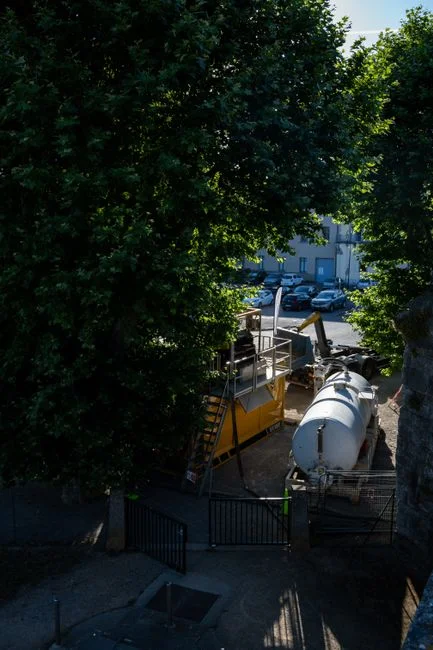
WSZ and MBR should be compared as installed treatment systems, not as isolated biological tanks. A WSZ combines anoxic and aerobic contact oxidation, sedimentation, and disinfection in one buried package; the HydropureWater Isfahan 2026 guide describes it as fully automated, requiring no operator, and available from 1–80 m³/h. MBR combines activated sludge with submerged PVDF membrane filtration, provides membrane-based solids separation, occupies 60% less footprint than conventional systems according to the supplied product research, and is available from 10–2,000 m³/day.
| Evaluation item | WSZ A/O | MBR |
|---|---|---|
| Treatment configuration | Anoxic/aerobic contact oxidation, sedimentation, and disinfection in a buried package | Activated sludge with submerged PVDF membrane filtration |
| Equipment range | 1–80 m³/h | 10–2,000 m³/day |
| Main selection benefit | Buried-package simplicity and automated operation without a dedicated operator | Reuse-grade separation, small footprint, and consistency when TSS below 5 mg/L is required |
| Physical installation | Installed below grade with landscaping above | Compact biological package; confirm tankage and ancillary-plant arrangement |
| Operating issues to price | Screen maintenance, aeration, sludge removal, access, and controls | Screen maintenance, aeration, membrane cleaning or replacement, controls, monitoring, and more specialized O&M |
| Cold-season issue | Supplier must show a low-temperature biological design basis | Supplier must show biological capacity and membrane performance at low temperature |
MBR is not maintenance-free. The membrane, aeration, controls, and monitoring requirements belong in the supplier’s operating scope, along with membrane cleaning or replacement assumptions and the power demand. WSZ has its own service obligations, including screening, biological operation, sludge handling, and access to buried equipment.
Compare complete installed scope: screening, equalization, biological treatment, tertiary filtration, disinfection, sludge dewatering, controls, power, civil works, commissioning, and operator training. A tank or skid price that excludes these items is not comparable with a turnkey proposal.
Temperature changes the biological comparison. The HydropureWater Isfahan 2026 guide identifies a winter low-temperature window of 5–10 °C and says nitrification must be checked through MLSS or biofilm-area allowance. Ask each supplier to state its winter biological basis rather than accepting unqualified year-round loading claims.
Match the process to the permit and reuse destination
The HydropureWater Isfahan 2026 guide sets practical irrigation-reuse targets of BOD₅ below 20 mg/L, TSS below 20 mg/L, NH₃-N below 5 mg/L, and fecal coliform below 100 MPN/100 mL. It recommends this stricter reuse band for most new Isfahan residential projects because the Zayandeh Rud basin has limited dilution capacity. The same source reports that the central wastewater plant discharges roughly 2 m³/s at Pole Chom while downstream flow is too low for the river to dilute the load sufficiently.
| Parameter | Irrigation-reuse design target | Surface-water discharge band |
|---|---|---|
| BOD₅ | Below 20 mg/L | Below 30 mg/L |
| COD | Not stated in the supplied reuse targets | Below 60 mg/L |
| TSS | Below 20 mg/L | Below 40 mg/L |
| NH₃-N | Below 5 mg/L | Not stated in the supplied discharge band |
| Fecal coliform | Below 100 MPN/100 mL | Below 200 MPN/100 mL |
The practical consequence is that a package meeting only the surface-water discharge band may not satisfy the intended reuse case. If treated effluent will irrigate the development, a tertiary multi-media filtration stage is normally required before disinfection to reduce turbidity. It should appear in the quotation rather than being treated as an optional accessory.
The final route matters. Surface-water discharge requires a Department of Environment discharge permit and compliance with the discharge band. Irrigation reuse may require a separate approval and testing regime. Confirm the current permit conditions, sampling requirements, receiving point, reuse destination, and applicable authority directly; they should not be inferred solely from a general guide.
Build the treatment train around the biological package
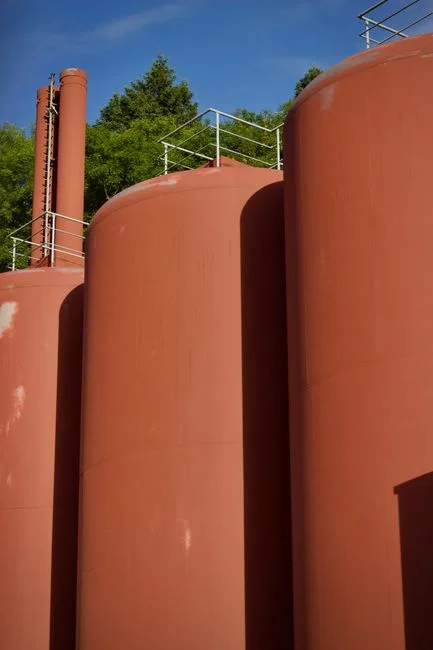
A biological package becomes unreliable when the headworks, flow control, disinfection, and sludge route are omitted from the procurement scope. The sequence should be screening and equalization, biological treatment, tertiary filtration where required, disinfection, and sludge dewatering. Each supplier should demonstrate how its equipment receives, treats, and releases flow under both average and peak duties.
Fine screening comes first. The HydropureWater Isfahan 2026 guide specifies a 3–5 mm aperture rotary mechanical bar screen ahead of the biological stage to protect pumps and membranes. A rotary mechanical bar screen should therefore be evaluated as part of the biological package, not a later civil-work item.
| Process stage | Required design issue | Relevant equipment or decision |
|---|---|---|
| Screening | Protect downstream pumps, membranes, and biological media | 3–5 mm rotary mechanical bar screen specified by the HydropureWater Isfahan 2026 guide |
| Equalization | Control the residential 1.5–2.0 peak-to-average variation | Size and verify against peak flow, not average flow |
| Biological treatment | Meet the confirmed effluent duty across the temperature range | WSZ A/O or MBR, with a documented 5–10 °C winter design basis |
| Tertiary filtration | Reduce turbidity before reuse disinfection | Multi-media filter where required by the reuse route |
| Disinfection | Meet the fecal-coliform requirement and suit the effluent chemistry | UV where ammonia is consistently low; chlorine dioxide where ammonia carryover is a concern |
| DAF pretreatment | Remove FOG or fine colloids where they are genuinely present | Add for food-service or mixed commercial flows; not assumed necessary for a purely residential block |
| Sludge dewatering | Reduce the volume requiring storage and transport | Plate-and-frame press where 0.8–1.2% feed solids must be dewatered to 20–25% dry-solids cake |
For reuse, install tertiary multi-media filtration before disinfection. A UV sterilizer offers a no-byproduct option when effluent ammonia is consistently low. A chlorine dioxide generator is more tolerant of ammonia-N carryover, according to the supplied Isfahan guidance. Neither option should replace the filtration requirement.
DAF is justified where the development includes food-service or combined commercial flows, not simply because packaged treatment is being considered. On the sludge side, the HydropureWater Isfahan 2026 guide states that packaged A/O and MBR plants typically feed sludge at 0.8–1.2% dry solids. A plate-and-frame filter press can produce 20–25% dry-solids cake for transport, subject to the final sludge destination and current guidance.
Turn the selection into a procurement request
A comparable procurement request must define performance, loads, site interfaces, auxiliary equipment, and operating obligations before asking for a price. Request a process guarantee tied to the confirmed discharge or reuse parameters. The guarantee should identify the design influent, sampling and test methods, operating duty, and exclusions.
| Supplier submission | Information required for comparison |
|---|---|
| Process basis | Design population, average and peak flow, biological loading, equalization volume, and 5–10 °C biological design basis |
| Performance | Guaranteed effluent, test method, duty cycle, reuse or discharge route, and stated exclusions |
| Process equipment | Screening, equalization, biological stage, tertiary filtration, disinfection, sludge dewatering, controls, and power |
| Civil and installation | Buried depth, excavation, traffic loading, groundwater, access, lifting arrangements, electrical supply, control enclosure, and commissioning schedule |
| Commercial breakdown | Equipment, third-party items, freight, import or local requirements, installation, civil works, commissioning, training, spares, and long-term service support |
| O&M assumptions | Operator attendance, membrane cleaning or replacement, aeration, disinfection service, screenings, sludge hauling, laboratory testing, and spare parts |
For MBR bids, request membrane configuration, design flux basis, cleaning method, replacement assumptions, and monitoring. For WSZ bids, request biological volume, media or biofilm arrangement, aeration duties, access arrangements, and the basis for operating without a dedicated operator. Both bids should identify which equipment is supplier-supplied and which remains the developer’s civil or utility scope.
Lead time should be treated as project-specific, not inferred from package size alone. ClearFox states that small to medium systems can typically be installed and commissioned within a few weeks, but installation time depends on project size and individual requirements. Require the supplier to provide a project schedule, critical-path equipment list, site-readiness dates, and commissioning prerequisites.
Related decision methods are available in the housing-development packaged STP comparison and the Surat housing packaged STP buyer guide. Their technology-selection logic can be compared, but Isfahan wastewater data, temperature conditions, permits, and reuse requirements must still govern this project.
Frequently Asked Questions
What flow should be used to size a packaged sewage treatment plant for an Isfahan housing development?
Use 175 L/c/d and a 1.5–2.0 peak factor as preliminary residential assumptions from the HydropureWater Isfahan 2026 guide, then replace them with tested or approved local data. Check groundwater infiltration, stormwater entry, runoff, and commercial contributions before fixing the final average and peak flows.
Should an Isfahan housing project choose WSZ or MBR?
Choose WSZ for a roughly 50–2,000 PE development where a buried, automated package with no dedicated operator is the priority. Choose MBR where irrigation reuse, constrained footprint, or consistent TSS below 5 mg/L drives the brief. Both options require site-specific wastewater testing and a comparison of the complete installed scope.
What permit risk should be checked before ordering a packaged STP?
Confirm the discharge or reuse route and current permit conditions with the relevant authority. The HydropureWater Isfahan 2026 guide identifies reuse targets of BOD₅ below 20 mg/L, TSS below 20 mg/L, NH₃-N below 5 mg/L, and fecal coliform below 100 MPN/100 mL, alongside a separate surface-water discharge band. Require the supplier’s guarantee to match the confirmed route rather than the easier band.
How should competing suppliers be evaluated beyond package price?
Compare guaranteed effluent, complete auxiliary scope, low-temperature basis, automation, maintenance obligations, sludge handling, civil interfaces, and total project scope. Request separate pricing for equipment, third-party items, freight, installation, civil works, commissioning, training, spares, and service support so omissions become visible.
How long should installation and commissioning take?
ClearFox states that small to medium systems can typically be installed and commissioned within a few weeks, but the actual schedule depends on project size and individual requirements. Require each supplier to confirm excavation readiness, civil handover, power availability, discharge routing, testing, and operator training before accepting that planning benchmark.