How an MBR Treats Domestic Sewage
An MBR for domestic sewage combines biological treatment with microfiltration or ultrafiltration to remove solids from treated wastewater. The membrane retains biomass inside the bioreactor, replacing the secondary clarifier used in conventional activated sludge. Selection depends on sewage characteristics, flow, treatment objectives, pretreatment, membrane format, aeration, solids handling, and local discharge or reuse requirements. UF is generally preferred for MBR service because it removes colloids and some viruses and has a lower pore-clogging tendency than MF, according to PCI Membranes.
PCI Membranes defines an MBR as a process combining a microfiltration or ultrafiltration membrane with a suspended-growth bioreactor. The biological zones perform different functions: aerobic zones remove organic matter and oxidize ammonia, anoxic zones reduce nitrate to nitrogen gas, and anaerobic zones treat organic matter in the absence of oxygen and nitrates. The membrane is a solid–liquid separation device that keeps biomass in the reactor and takes the place of the clarifier normally used after activated sludge.
- Headworks and equalization: Remove rags, plastics, suspended solids, and flow peaks that could overload the biological process or damage the membrane.
- Biological treatment: Apply aerobic, anoxic, and, where justified, anaerobic zones according to the organic, ammonia, and nitrogen objectives.
- Membrane separation: Retain biomass and solids while producing permeate.
- Solids handling: Return selected solids to the reactor and waste the remainder for stabilization and dewatering.
- Disinfection and reuse treatment: Add the required disinfection and, where necessary, reverse osmosis or other polishing.
A conventional pressure-driven MBR is mechanically different from a forward-osmosis membrane bioreactor. A Materials (Basel) study published on 10 August 2026 states that an MBR is pressure-driven, whereas an OMBR is osmosis-driven. That distinction matters when evaluating vendor terminology and design assumptions. For a conventional domestic-sewage MBR, the MBR wastewater cost per m³ in 2026 discussion should be read with the treatment boundary and equipment configuration in view.
When MBR Is the Right Choice for Domestic Wastewater
MBR is most defensible when compact biological treatment, retained biomass, or reuse preparation outweighs the added membrane, aeration, and maintenance burden. It can suit decentralized developments, space-constrained sites, and wastewater plants needing a secondary clarifier replacement, but the project inputs must be developed before selecting a treatment train.
Newterra’s published deployment ranges are market examples, not universal engineering limits: its pre-engineered MBR systems are described for flows below 100,000 GPD, custom systems for 100,000 GPD to 1.5 MGD, and self-contained off-grid systems below 50,000 GPD. Newterra also identifies prefabricated, factory-tested modules, expandability, remote monitoring, and reduced operator intervention as design features.
| Decision | What supports MBR selection | What should trigger another review |
|---|---|---|
| Site footprint | Land is constrained or a clarifier cannot be accommodated conveniently. | The saving is reduced by added aeration, equalization, access, electrical, or sludge-handling structures. |
| Effluent use | Reuse preparation or a sensitive receiving water requires low suspended solids. | The reuse standard requires additional treatment beyond membrane separation. |
| Operation | Automation, remote monitoring, and a skilled maintenance arrangement are available. | No owner is assigned for membrane cleaning, controls, spares, and condition monitoring. |
| Treatment route | The biological load, nitrogen objective, and variability suit suspended-growth treatment. | A simpler packaged or conventional route meets the same duty with less process complexity. |
The conventional activated-sludge route remains a valid benchmark: MBR removes suspended solids by membrane rather than secondary clarification, but it also introduces membrane condition monitoring, air scouring, cleaning access, and replacement planning. Where anoxic/aerobic contact oxidation, sedimentation, disinfection, underground installation, and limited on-site operator attendance are the priorities, compare packaged sewage treatment systems for housing through the packaged sewage treatment systems for housing guide.
Request the client’s average and peak flow, domestic composition, COD, BOD, suspended solids, ammonia, total nitrogen, pH, temperature, reuse or discharge targets, site area, power availability, sludge destination, and applicable regulatory requirements before comparing bids.
Process Design for Stable Domestic Sewage Treatment
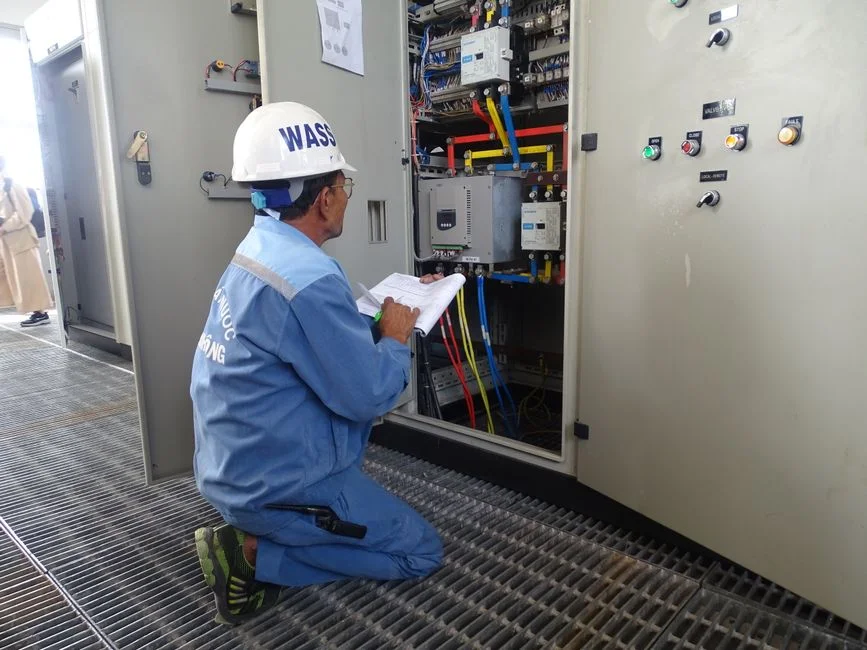
Stable MBR performance depends on protecting the membranes and matching biological zoning to the treatment objective. A vendor proposal should show how each unit handles the design influent envelope rather than present membrane area and nominal flow without a process basis.
Headworks must match the waste stream. The GX rotary mechanical bar screen is described as removing suspended solids, rags, plastics, and fibrous debris, helping protect downstream biological and membrane systems. Equalization should then address the hydraulic and load variations established during preliminary design.
Biological zoning is not interchangeable. Aerobic operation supports organic-matter removal and ammonia oxidation; anoxic operation supports nitrate reduction to nitrogen gas; anaerobic operation supports organic-matter treatment without oxygen or nitrates. The required zones should therefore be tied to the requested ammonia, nitrogen, and organic-load outcomes.
PCI Membranes states that UF is typically preferred in MBR applications because its separation characteristics remove some colloids and viruses and its smaller pores carry a lower pore-clogging risk than MF. For a submerged PVDF design, specify the air-scour arrangement rather than treating it as a generic accessory. The DF flat-sheet MBR membrane module is described as combining 0.1 μm flat-sheet modules with an integrated aeration box for continuous membrane scouring.
| Design element | Bid information required | Failure mode to interrogate |
|---|---|---|
| Headworks | Screen type, removal duty, extracted-solids handling, and maintenance access. | Rags or plastics carryover to the membrane and downstream piping. |
| Biological zones | Zone objectives, mixing, dissolved-oxygen control, recycle arrangement, and loading basis. | Excess aeration, incomplete nitrogen removal, or biomass washout. |
| Membrane | Material, pore size, geometry, active area, flux basis, aeration method, and cleaning strategy. | Blinding, pore clogging, biofilm accumulation, or inaccessible elements. |
| Solids handling | Return, wasting, thickening, stabilization, dewatering, and disposal route. | Solids recycle instability or incompatible dewatering equipment. |
| Reuse train | Disinfection, residual management, polishing needs, and monitoring points. | UF permeate is treated as directly fit for an unverified reuse application. |
Membrane fouling control must be treated as an operating-design issue involving wastewater character, pretreatment, biomass condition, aeration, cleaning access, and solids removal. A Water Science & Technology study identified membrane fouling and the optimum SRT/HRT ratio, dissolved oxygen, and shear conditions as important research subjects in a high-loaded MBR. For domestic sewage, use that work as a design prompt, not as a substitute for project-specific testing.
Build disinfection and reuse treatment into the process. Membrane separation supports a high-quality effluent, but PCI Membranes also identifies reverse osmosis as an option for further polishing and as a process that can receive suitable MBR effluent.
Membrane Configurations and Equipment Selection
Submerged and side-stream MBRs should be compared by hydraulics, fouling control, access, and installation constraints rather than by configuration name alone. PCI Membranes reports that pressure-driven membranes are usually used for smaller installations or difficult industrial wastewaters, while submerged membranes are used for medium and large installations. The same guidance indicates that submerged configurations avoid the high recirculation flow associated with cross-flow systems.
Side-stream systems can still fit smaller installations or difficult-to-treat applications, but their pumping and cleaning strategy must be evaluated against the project flow, solids loading, and maintenance access. For a domestic-sewage bid, request the design flux basis, peak-flow provisions, train arrangement, and condition indicators rather than accepting a nominal capacity statement.
| Item | Source-qualified information | What the buyer must verify |
|---|---|---|
| Integrated submerged-PVDF MBR system | The HydropureWater verified product catalog specifies 10–2,000 m³/day, filtration below 1 μm, and an approximately 60% smaller footprint than conventional systems. | Whether the stated duty matches the project’s average, peak, organic, and temperature basis. |
| DF flat-sheet configurations | The product catalog specifies 80–225 m² and 32–135 m³/day configurations. | Flux, train configuration, aeration, cleaning, and redundancy behind the selected case. |
| Energy comparison | The verified product catalog states that the DF series uses 10–20× less energy than external cross-flow systems. | The comparison boundary, operating conditions, and project-specific energy model. |
| Further polishing | PCI Membranes identifies reverse osmosis as an option for polishing suitable MBR effluent. | The final reuse quality, pretreatment needs, recovery, controls, and reject route. |
Ask each supplier to identify membrane material, pore size, active area, module geometry, design flux basis, aeration method, backwash or cleaning strategy, controls, service access, spare-parts policy, installation requirements, and acceptance tests. The integrated submerged-PVDF MBR system can be checked against these same commercial requirements; verified product specifications should remain distinct from project-dependent civil and performance design.
For a reuse application, establish whether UF is the final treatment step. PCI Membranes describes MBR effluent as suitable for reverse-osmosis feed when it meets the relevant process requirements. Therefore, “reuse ready” is not an acceptable standalone guarantee without the intended application, treatment steps, and monitoring basis.
Footprint, Operating Risks, and Lifecycle Costs
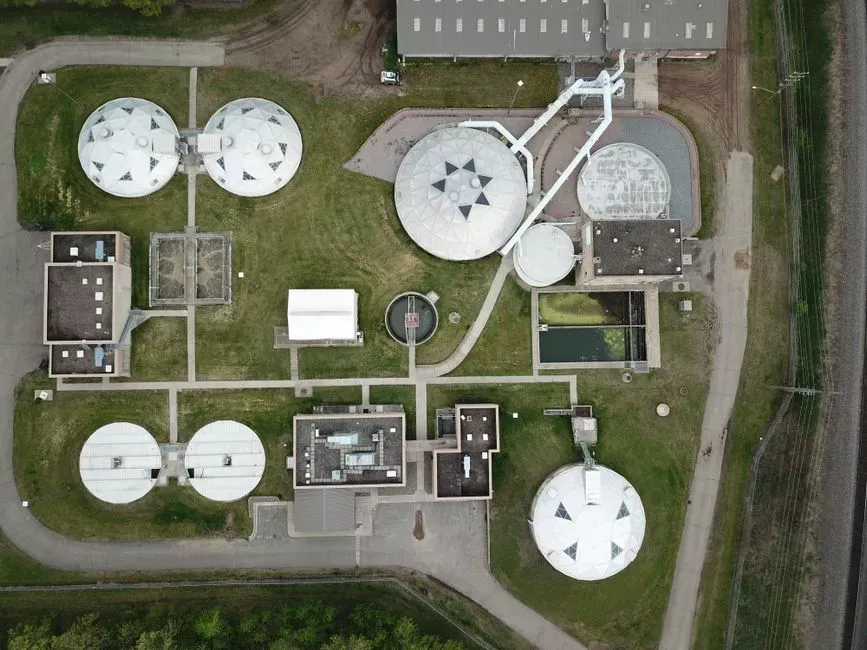
Footprint and energy claims are useful screening criteria, but neither becomes a project budget until the supplier defines the comparison boundary. PCI Membranes reports that MBR can achieve up to 50% smaller footprint than conventional activated sludge, while the HydropureWater verified product catalog specifies approximately 60% smaller footprint for that integrated system. These are source-qualified product or technology claims, not automatic site savings.
A complete layout must include tankage, aeration galleries, equalization, headworks, sludge handling, access routes, electrical rooms, controls, and space for future module replacement or expansion. A membrane footprint comparison that omits those items can understate the civil and installation requirement.
Energy is a design outcome. Air scouring, permeate production, recirculation, cleaning, pumping, and site temperature all affect consumption. The supplied evidence provides product-specific comparisons, including the DF series’ 10–20× lower energy claim against external cross-flow systems, but it does not establish a universal kWh/m³ benchmark. Request a transparent calculation with equipment loads, operating hours, flow conditions, and site climate identified.
The lifecycle-cost schedule should include membrane replacement, cleaning water or chemicals, aeration power, labor, spare membranes, control-system maintenance, sludge dewatering, downtime, and disposal. The plate and frame filter press is described as covering manual, hydraulic, and fully automatic PLC-controlled dewatering for municipal and industrial sludge; suitability still depends on the MBR waste characteristics and final disposal route.
For pathogen-risk planning, the review by The Science of The Total Environment cites an estimated faecal SARS-CoV-2 load of 5·10³ to 10⁷·⁶ copies/mL, depending on the infected patient, and examines fate through wastewater treatment plants. This is a prompt to assess current public-health guidance and site exposure pathways, not a substitute for a project-specific risk assessment. See the MBR wastewater cost per m³ in 2026 guide when defining the cost boundary.
A Practical Vendor Evaluation and Acceptance Checklist
A defensible MBR bid separates verified equipment data from project-dependent engineering and converts design assumptions into measurable acceptance conditions. Newterra’s modular approach identifies prefabrication, factory testing, faster installation, expandability, remote monitoring, and reduced operator intervention as relevant procurement features, but each should be tied to a contractual deliverable.
- Define the basis: Require design flow, peak-flow behavior, influent envelope, treated-water targets, applicable reuse or discharge standard, and the basis for every performance claim.
- Review the process: Obtain membrane details, redundancy strategy, aeration calculations, control philosophy, cleaning intervals, expected condition indicators, and the maintenance schedule.
- Assign responsibilities: State who performs routine maintenance, membrane replacement, instrument calibration, remote support, corrective action, and spare-parts supply.
- Test performance: Define treated-water quality, stable hydraulic operation, membrane condition, automatic-control demonstrations, alarm tests, access checks for replaceable elements, and operator training.
- Price the project: Request an installed-cost breakdown and lifecycle-cost schedule, including civil works, equipment, controls, commissioning, financing, membrane assumptions, energy, sludge handling, and replacement.
| Bid package | Minimum evidence | Acceptance outcome |
|---|---|---|
| Design basis | Flow, load, temperature, reuse or discharge targets, and applicable local requirements. | Supplier states the design envelope and any excluded conditions. |
| Equipment and controls | Drawings, membrane schedule, aeration calculation, control narrative, maintenance plan, and spares list. | Components and service duties are measurable. |
| Factory and site tests | Factory test records, installation checks, hydraulic and quality tests, alarm demonstrations, and training records. | Results meet agreed acceptance criteria before handover. |
| Commercial schedule | Installed-cost breakdown, energy assumptions, membrane replacement basis, sludge route, warranties, and support responsibilities. | Cost scope is complete and exceptions are explicit. |
Reject a generic cost per cubic metre that omits the project boundary, duty, membrane assumptions, civil works, or financing. Also reject generic footprint claims that exclude equalization, aeration, sludge handling, access, electrical rooms, and future module space.
Frequently Asked Questions
What size MBR is suitable for domestic sewage?
The HydropureWater verified product catalog specifies an integrated MBR from 10–2,000 m³/day and DF flat-sheet configurations from 32–135 m³/day, with 80–225 m² of membrane area. Those are verified product ranges, not a site design. Final sizing requires actual average and peak flow, organic and nitrogen loads, temperature, fouling risk, and the applicable reuse or discharge target.
How should an MBR supplier be selected?
Prioritize demonstrated membrane geometry, aeration design, controls, maintenance access, acceptance criteria, and lifecycle support over generic footprint claims. Require the supplier to provide the design basis, cleaning strategy, condition indicators, spares policy, and a measurable commissioning plan. Verify whether responsibility for membrane replacement, calibration, remote support, and corrective action is assigned contractually.
What does an MBR for domestic sewage cost?
The supplied research does not provide a universal MBR price. Request a quotation based on average and peak duty, membrane configuration, pretreatment, civil works, controls, installation, commissioning, energy assumptions, sludge handling, membrane replacement, and financing. A generic cost per cubic metre is not comparable unless both bidders use the same project boundary and duty.
Does MBR effluent automatically meet domestic sewage reuse requirements?
No. Membrane separation can produce a high-quality effluent, but the reuse application and applicable local requirements determine the remaining treatment. PCI Membranes identifies reverse osmosis as an option for further polishing suitable MBR effluent, so the bid must define disinfection, polishing, monitoring, residual management, and reject handling where relevant. The broader MBR wastewater cost per m³ in 2026 should be used as a scoping reference, not as a guarantee of reuse suitability or price.